Leviticus 19
YAUBADA YANA VONA'AWAUFAUFA 'IVAUNA · Tap a verse to see its cross-references.
Sauluva magemagetana wata mia 'atumaina 'ana veimea
1Wata 'Auvea i veifufu Mosese 'waineye i vo, 2Me Isileli 'adi 'aila'a matatabuna 'waidie 'u na veifufu 'u na vo, Yau 'Auvea yami Yaubada, magemagetaku begaidi i lubwainemi 'omi wata magemagetami.
17'Ai'edi tamu iamu i na vesauluva-sako 'waimuye, kebu ma yamu nuasako 'u na nuanuaniga we'e i lubwainemu 'u na nago 'waineye yana sauluvanina 'u na sivemageseni nika kebu 'u na sakona yana sauluvanina 'wainega.
18'Ai'edi tamu 'ami 'aila'a i na vesauluva sakoina 'waimuye, kebu 'amu mewa 'u na 'ewai 'alo yana sauluvanina 'u na tutuli wata kebu ma yamu nuasako 'u na nuanuani, siwe 'asa'aiana iamu 'u na nuakalikalieni taunimu 'amu nuakalikali bani'odiga. Yau kumaniku 'Auvea.”
Did you know?
Holiness and Community Life
- Leviticus 19 contains the command to love your neighbor as yourself. It explicitly extends this same requirement to resident foreigners, reminding the Israelites that they were once strangers in the land of Egypt.Sources: the Bible text itself
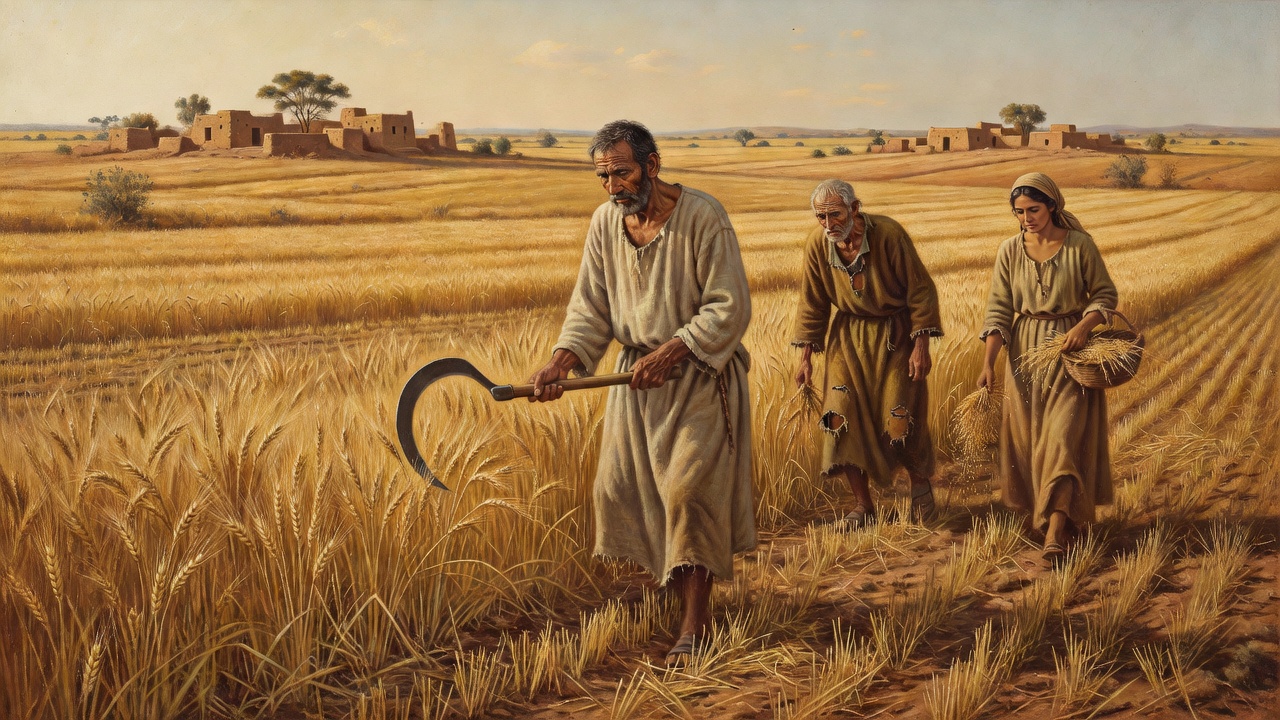
- The law required farmers to leave the outer edges of their fields unharvested and forbade gathering dropped grain or fallen grapes. These remaining crops were reserved specifically for the poor and the resident foreigner.Sources: the Bible text itself
- Holiness was tied directly to practical ethics, prohibiting actions such as cursing the deaf, placing a stumbling block before the blind, perverting justice, and withholding a laborer's wages overnight.Sources: the Bible text itself
Notes written with AI assistance from open sources (Theographic Bible Metadata, CC BY-SA 4.0; Easton’s Bible Dictionary, public domain) and reviewed before publishing.
Places in this chapter
Only places identified with high confidence are shown (90% or more according to the scholarly sources compiled by OpenBible). Period map: DARE (Digital Atlas of the Roman Empire), CC BY 4.0; modern map: © OpenStreetMap contributors; places: OpenBible.info (CC BY 4.0).
Credits and license for this translation
YAUBADA YANA VONA'AWAUFAUFA 'IVAUNA
The New Testament in the Iamalele dialect of the Ubuvala Language of Papua New Guinea
Nupela Testamen long tokples Ubuvala long Niugini
copyright © 1984, 1988, 2025 Wycliffe Bible Translators, Inc. and SIL Papua New Guinea
Language: Ubuvala (Iamalele)
Dialect: Iamalele
Translation by: SIL PNG
Contributor: Wycliffe Bible Translators
This translation is made available to you under the terms of the
Creative Commons Attribution-Noncommercial-No Derivatives license 4.0.
You may share and redistribute this Bible translation or extracts from it in any format, provided that:
You include the above copyright and source information.
You do not sell this work for a profit.
You do not change any of the words or punctuation of the Scriptures.
Pictures included with Scriptures and other documents on this site are licensed just for use with those Scriptures and documents.
For other uses, please contact the respective copyright owners.
2026-09-30
Source: http://png.bible/yml/ · eBible.org