Leviticus 17
YAUBADA YANA VONA'AWAUFAUFA 'IVAUNA · Tap a verse to see its cross-references.
Me Isileli kebu 'aisaya ma dayagina i na 'aniaga
10Wata 'Auvea Mosese i voneni i vo, 'Ai'edi aitoi me Isileli 'alo wakawaka taiadi 'wa na miamianaga 'aisaya ma dayagina i na 'aniaga, 'alo dayaga i na yemuyaga, yau 'Auvea tomogonina a na vedumwe'ai'aieni, wata yana tomotoga matatabudi 'waidiega a na lu'idieni. 11Dayaga 'wainega nani matatabuna ma yawaina i miamia, begaidi dayaga yau a velemiga 'wa na iwagi 'eba velomu 'waineye bega tomotoga yami sakona a na 'u'umidi dayaganina 'wainega. Dayaga kumanina yawai lamuna, 'eba tuveobu sakona 'ana 'u'uma faifaina.”
Did you know?
Sacrificial Slaughter and the Sacredness of Blood
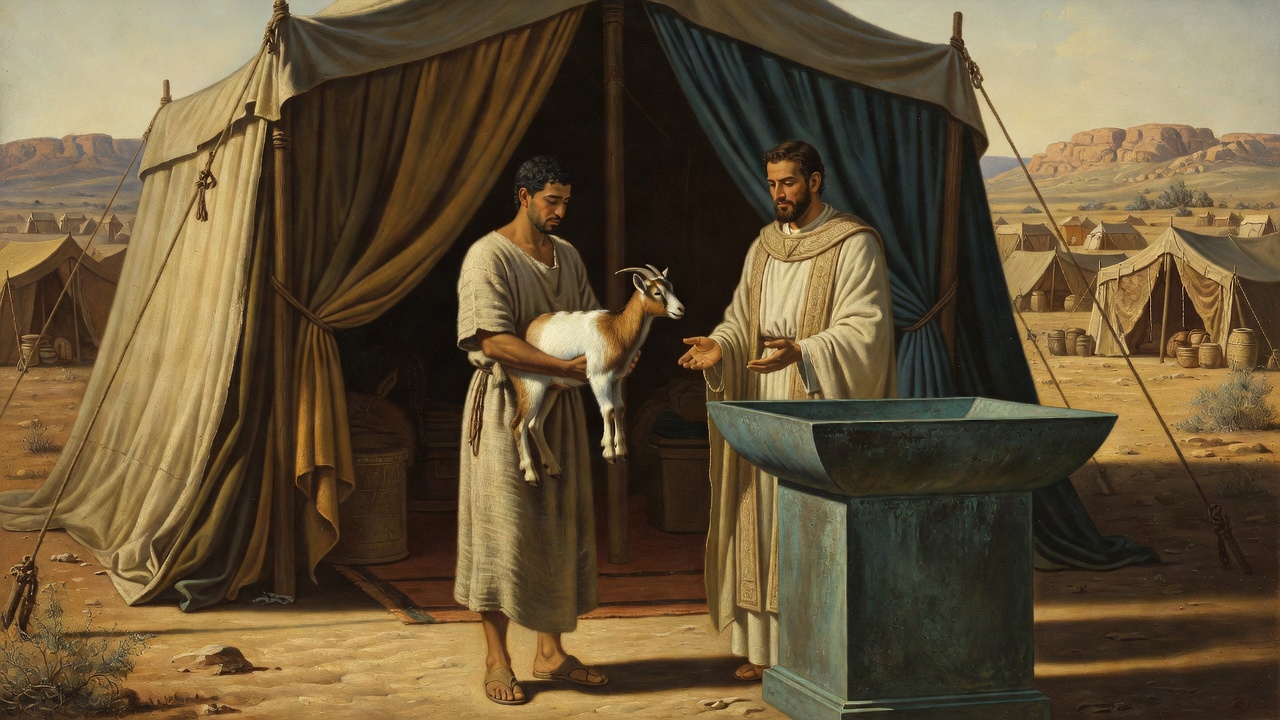
- Leviticus mandates that domestic animals such as oxen, lambs, and goats be brought directly to the entrance of the Tent of Meeting rather than slaughtered in open fields. This rule ensured sacrifices were presented exclusively as peace offerings to the LORD and halted illicit sacrifices to goat demons.Sources: the Bible text itself
- Both native Israelites and resident foreigners were strictly prohibited from eating blood, on penalty of being cut off from the community. The text grounds this law in the theological principle that the life of the flesh is in the blood, which God appointed specifically for making atonement upon the altar.Sources: the Bible text itself
- When Israelites or resident aliens hunted wild animals or birds that were clean for food, they were commanded to drain the blood upon the ground and cover it with dirt. This instruction reinforced that life belongs to God and preserved the sanctity of blood outside the sacrificial sanctuary.Sources: the Bible text itself
Notes written with AI assistance from open sources (Theographic Bible Metadata, CC BY-SA 4.0; Easton’s Bible Dictionary, public domain) and reviewed before publishing.
Credits and license for this translation
YAUBADA YANA VONA'AWAUFAUFA 'IVAUNA
The New Testament in the Iamalele dialect of the Ubuvala Language of Papua New Guinea
Nupela Testamen long tokples Ubuvala long Niugini
copyright © 1984, 1988, 2025 Wycliffe Bible Translators, Inc. and SIL Papua New Guinea
Language: Ubuvala (Iamalele)
Dialect: Iamalele
Translation by: SIL PNG
Contributor: Wycliffe Bible Translators
This translation is made available to you under the terms of the
Creative Commons Attribution-Noncommercial-No Derivatives license 4.0.
You may share and redistribute this Bible translation or extracts from it in any format, provided that:
You include the above copyright and source information.
You do not sell this work for a profit.
You do not change any of the words or punctuation of the Scriptures.
Pictures included with Scriptures and other documents on this site are licensed just for use with those Scriptures and documents.
For other uses, please contact the respective copyright owners.
2026-09-30
Source: http://png.bible/yml/ · eBible.org