Judges 2
YAUBADA YANA VONA'AWAUFAUFA 'IVAUNA · Tap a verse to see its cross-references.

About this book
About Judges
- The book is called Judges because it contains the history of Israel's deliverance and government by the men who bore that title. Easton's Bible Dictionary (1897) sets their story in repeated times of servitude under neighboring peoples and of deliverance by the judges, and it states that the chronology of the whole period is uncertain.Sources: Easton: Judges, Book of
- Easton's Bible Dictionary (1897) holds that the author was most probably Samuel, and that the book was probably composed during Saul's reign or at the very beginning of David's reign. Easton notes that the words in Judges 18:30–31 imply a date after the Philistines took the ark and after it was set up at Nob, whereas in David's reign the ark was at Gibeon.Sources: Easton: Judges, Book of
- As Easton outlines it, the book has an introduction (1–3:6) linking it with the narrative in Joshua, a history of thirteen judges (3:7–16:31) in four periods, and an appendix (chapters 17–21) with no formal connection to what goes before. If Eli and Samuel are included, Easton counts fifteen judges.Sources: Easton: Judges, Book of
- Easton's outline presents the setting as a succession of servitudes: under Chushan-rishathaim of Mesopotamia, under Eglon of Moab, under Jabin of Hazor in Canaan, under Midian with Amalek and the children of the east, under the Ammonites together with the Philistines, and again under the Philistines. Gideon, also called Jerubbaal, begins what Easton calls the second period; Jephthah, brought from Tob by the elders of Gilead, judged Israel for six years after delivering the people from the Ammonites; Samson, son of Manoah of Zorah, was a Nazirite to God from birth.Sources: Easton: Judges, Book of · Gideon · Jephthah · Samson
- The appendix records the conquest of Laish by a portion of the tribe of Dan, and the near extinction of Benjamin at the hands of the other tribes because Benjamin had assisted the men of Gibeah. Easton places these events only a few years after Joshua's death and says they show the people's religious and moral degeneracy. Easton also notes that Ruth originally formed part of Judges and was separated from it about A.D. 450, then placed in the Hebrew scriptures immediately after the Song of Solomon.Sources: Easton: Judges, Book of · Gibeah
Notes written with AI assistance from open sources (Theographic Bible Metadata, CC BY-SA 4.0; Easton’s Bible Dictionary, public domain) and reviewed before publishing.
Naninidi i souyedi Iosua yana wafa mulineye
7Me Isileli 'Auvea yana nuanua i 'i'idewadi Iosua yana tutuye, wata bani'odi 'ifwaidi to'edakumeta 'au'auveadi bola ma yawaidi i miamiani. To'edakumetanidi naninidi bwaikidi 'Auvea i 'idewadiga me Isileli faifaidi i 'isedi.
8'Auvea yana tofolova Iosua, Nuni natuna, 'ana malamala 110 mulieta yawaina i 'a'ava. 9Yana 'aila'avo i ve'ufai yana fwayafwaya 'ana veuveuta Temata-sela 'waineye, me Ifeleimi yadi 'oya siaidi 'waidie, we'e 'Oya Gasi bolimana weyaginega.
10Tutuyanina 'waineye lakata kumekumetana i wafa'a'ava, we'e tubuga 'ivauna i velamu, kumanidiavo 'Auvea kebu i da 'asetaiga wata naninidi i 'idewadiga me Isileli faifaidi i bavuyedi. 11Me Isileli i sakosakona 'Auvea mataneye, kumaea Beli 'waidie i 'odu'odu. 12Nika 'Auvea yadi Yaubada, kumanina tubudiavo i vagavaidi i souyedi Itifitayega, 'ana 'odu'odu i 'ailove. Ma'itufa i 'odu'odu yaubada vekavekali 'waidie, tomotoganidi lilivadie i miamiani yadi yaubadavo, 'wainega 'Auvea i 'ivenuasakoi. 13Me Isileli 'Auvea i vedumwe'ai'aieni we'e Beli wata Asitoleta 'waidie i 'odu'odu. 14Yadi sauluva 'wainega 'Auvea i 'ivekamogali, begaidi i 'anivelenedi to'ivesako 'waidie yadi kukua i lueloelodi, wata i tauyedi 'adi gaviavo 'waidie, kumanidiavo i miamiani lilivadie, nika kebu 'adi fata taunidi i na 'ibababaledi. 15Tutuyanina me Isileli i nunagoi vetalaga faifaina, 'Auvea 'adi gaviavo i kikiavetoketokedi bega i leoleodi, bani'odi basenadi i vona'awaufaufa 'ana mogitana i souyeni, nika veviga wata vita bwaikina i veveluagai.
16Bega 'Auvea toveimeavo i vevenua'ivinedi me Isileli i 'i'ita'ita'iedi tovainago wata to'ainike 'waidiega 17Siwe me Isileli kebu yadi toveimeavo yadi vona i da noganogaidi, begaidi yadi Yaubada mogitana i 'iawelovei we'e ma'itufa taunidi i tauyedi yaubada vekavekali 'waidie i 'odu'odu. Basenadi tubudiavo i veve'ililibu 'Auvea 'waineye wata yana veimea i vevematayakeyakedi, we'e tomotoganidi de'e kebu bani'odi i da vevesauluvediga.
18Tutuyanina 'adi gaviavo i 'i'ivekokovidi, tomotoga i taidaida 'Auvea 'waineye bonadi i noganogaidi, fai i 'isanuakalikaliedi begaidi toveimeavo i vevenua'ivinedi faifaidi. Toveimeanidi 'aitamogana 'aitamogana i labilabinidi bega bola ma yawaidie Yaubada yana tomotogavo i 'i'ita'ita'iedi 'adi gaviavo 'waidiega. 19Siwe tutuyanina tamu toveimea yawaina i na 'a'ava, tomotoga i vilaviladi yadi sauluva tuatuaidi 'waidie. Sauluvanidi i 'i'idewadiga sakoiotogidi, we'e tubudiavo sai'afo. Yaubada vekavekali 'waidie i 'odu'odu wata yadi sauluva i vevematayakeyakedi, kebu nuanuadi yadi sauluva sakoidi i na vedumwe'ubu'ubusedi.
20'Auvea i nuasako-'afo'afo me Isileli 'waidie bega i vo, Tomotoganidi yaku veakutagona a 'idewaiga tubudiavo 'waidie, i geuya wata yaku veimea i bailedi. 21'Awalawanidi 'adi tomia kebu wata a na sogiedi i na souyedi, kumanidiavo Iosua i luvegalaladi mulieta i wafa. 22'Adi gaviavonidi a na vefolovedi, nika 'wainega a na 'asetai me Isileli yaku awave'eda'eda i na vevetutuyamedi basenadi tubudiavo bani'odi.” 23Side kumanina faifaina 'awalawanidi 'adi tomia 'Auvea i tauyedi bei i miamiani, kebu i da sogiedi wata Iosua kebu i da vetoketoke-'iawedi.
Did you know?
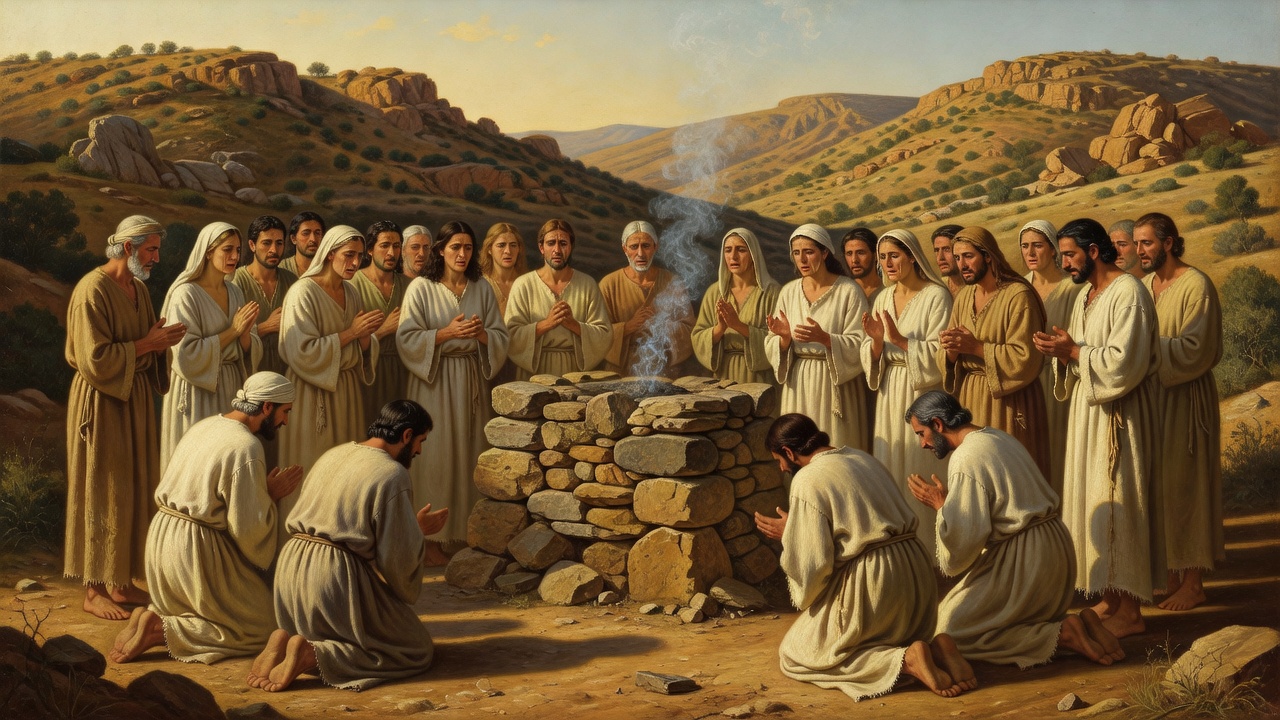
Israel's Cycle of Disobedience and the Judges
- The name Bochim means "weepers." The site, likely situated between Gilgal and Shiloh, received this name after the Israelites wept aloud when the angel of the Lord rebuked them for making compromises with the inhabitants of the land.Sources: Bochim · the Bible text itself
- Joshua was buried at Timnath-heres, which means "portion of the sun," located north of the hill of Gaash in the hill country of Ephraim. He had led the Israelites following the death of Moses and died at the age of 110.Sources: Timnath-heres · Gaash · Joshua · the Bible text itself
- The term Baalim is the plural form referring to local manifestations of Baal, the principal male deity of the Phoenicians. Judges 2 establishes the book's recurring cycle: Israel abandons the Lord for regional gods, suffers under enemies, and is delivered when God raises up a judge.Sources: Baal · the Bible text itself
Notes written with AI assistance from open sources (Theographic Bible Metadata, CC BY-SA 4.0; Easton’s Bible Dictionary, public domain) and reviewed before publishing.
Places in this chapter
Only places identified with high confidence are shown (90% or more according to the scholarly sources compiled by OpenBible). Period map: DARE (Digital Atlas of the Roman Empire), CC BY 4.0; modern map: © OpenStreetMap contributors; places: OpenBible.info (CC BY 4.0).
Credits and license for this translation
YAUBADA YANA VONA'AWAUFAUFA 'IVAUNA
The New Testament in the Iamalele dialect of the Ubuvala Language of Papua New Guinea
Nupela Testamen long tokples Ubuvala long Niugini
copyright © 1984, 1988, 2025 Wycliffe Bible Translators, Inc. and SIL Papua New Guinea
Language: Ubuvala (Iamalele)
Dialect: Iamalele
Translation by: SIL PNG
Contributor: Wycliffe Bible Translators
This translation is made available to you under the terms of the
Creative Commons Attribution-Noncommercial-No Derivatives license 4.0.
You may share and redistribute this Bible translation or extracts from it in any format, provided that:
You include the above copyright and source information.
You do not sell this work for a profit.
You do not change any of the words or punctuation of the Scriptures.
Pictures included with Scriptures and other documents on this site are licensed just for use with those Scriptures and documents.
For other uses, please contact the respective copyright owners.
2026-09-30
Source: http://png.bible/yml/ · eBible.org