Genesis 4
YAUBADA YANA VONA'AWAUFAUFA 'IVAUNA · Tap a verse to see its cross-references.
Keni wata Ebeli
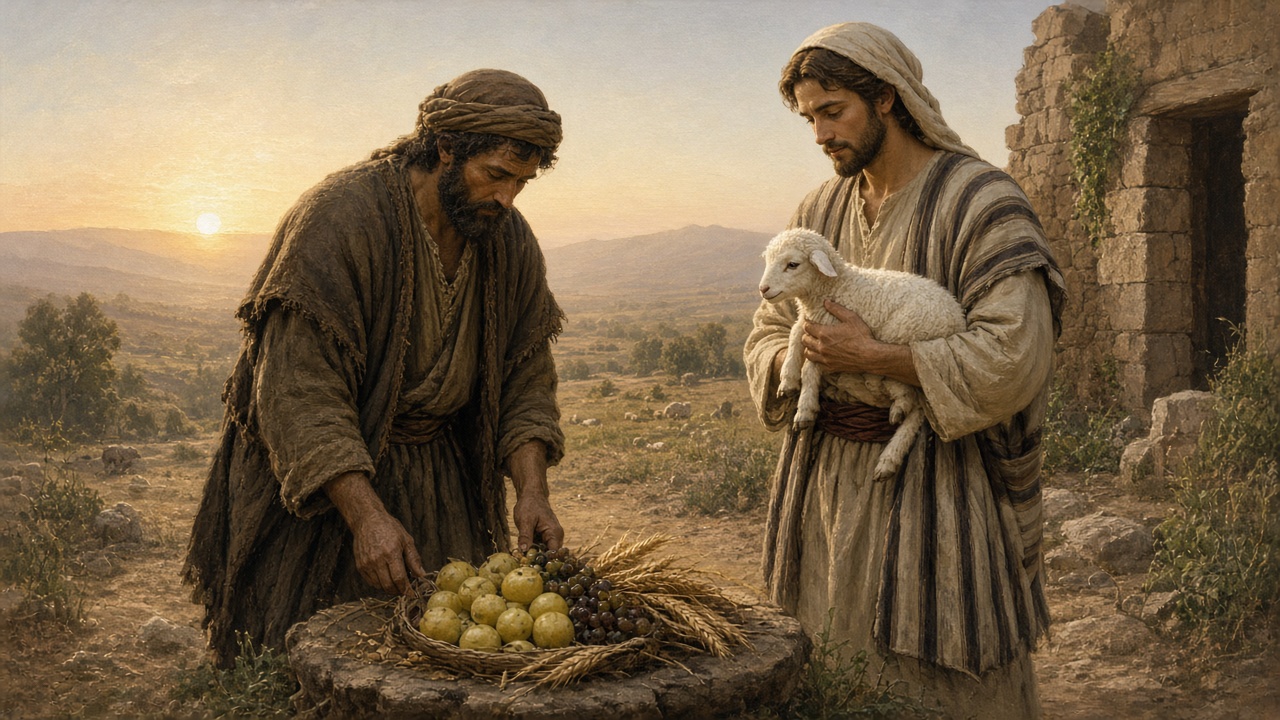
1Adama yana vavine taiadi i veluaga nika i veinainage, mulieta kwamana iavetana i tubuga i goleni Keni. Ive i vona i vo, 'Auvea yana 'aivaita 'wainega kwamana iavetana i tubuga 'waimega.” 2'Ifwaidi tutuya i 'a'avana, natudi 'ana veluga i tubuga i goleni Ebeli, Keni taina. Natudiavo i taulai, Ebeli 'aisaya sifi 'adi to'isave'avina we'e Keni tobakula. 3Tamu tutuya 'waineye, Keni 'ani'ani yana bakulayega i miedi bega i na 'anivelenedi 'Auvea 'waineye. 4We'e Ebeli yana 'aisaya sifi akavau 'adi tubuga 'atumaidi wata yafayafadi i miedi i 'anivelenedi 'Auvea 'waineye. 'Auvea Ebeli yana 'anivelena i awave'atumaieni, we'e Keni yana 'anivelena kebu i da awave'atumaieni, begaidi Keni i nuasako ma yana luvulewa. 6'Auvea Keni i velutolieni i vo, Awale 'u nuasako? Maigimu 'ana 'isa ma yamu luvulewa? 7'Ai'edi yamu sauluva 'atumaina wata magemagetana yau a na awave'atumaiemu. We'e 'ai'edi kebu, sakona i lulukamata vita i na velemu 'wa da vo bani'odi 'aisaya kasikasisina i bodaboda nuanuana tomogo i na luvela'ovi. Sakona nuanuana i na veveimeyemu siwe i lubwainemu 'u na vetoketoke-'iaweni.”
8Keni taina Ebeli i voneni i vo, Ta na nago wala'aie ta na yabayaba.” Tutuyanina i le'wa wala'aie nika Keni taina i nikei i wafa. |src="CD-051.tif" size="span" loc="After Genesis 4:8, half page" copy="WBT" ref="4:8" 9Mulieta 'Auvea Keni i voneni i vo, Taimu Ebeli, ava'aibe bei?” Keni i tutula i vo, Kebu a da 'asetaiga, yau kebu 'ana to'isave'avinaga.” 10'Auvea i vo, Ava'ai 'u 'idewai? Fwayafwayayega taimu dayagina i taidaida 'waikuye. 11Tutuya de'e bega i na nagoga 'amu vematavuloga 'u na 'ewai fwayafwaya 'wainega, we'e fwayafwayanina 'waineye taimu dayagina nimamuyega i lolo i obu, 'wa da vodiga fwayafwaya 'awana i da o'ei dayaganina i da tononi. 12Tutuyanina 'u na folofolova fwayafwayanina 'waineye, kebu 'aile'wa 'u na veluagai. Tomotoga 'omu 'adi gavia bega 'u na yaba-vuvua fwayafwaya matatabuna 'waineye.”
25Adama yana vavine wata taiadi i veluaga nika i veinainage mulieta i venatuna, kwamana iavetana i tubuga i goleni Seti. Ive i vo, Kwamana de'e Yaubada i velema Ebeli tutulina, kumanina Keni i luvewafai.”
26Seti i vebwaika i nagi, yana vavine i venatuna natuna iavetana i tubuga i goleni Inosi. Tutuyanina 'waineye tomotoga i velamu ma yadi subia 'Auvea 'waineye i 'odu'odu.
Did you know?
Cain, Abel, and Life East of Eden
- Abel’s Hebrew name means “breath” or “vanity.” He kept sheep, while his brother Cain tilled the soil: Abel brought the best portions of the firstborn of his flock, and Cain brought fruit of the ground. Easton's Bible Dictionary (1897) reads the phrase “in process of time” (margin, “at the end of days”) as probably referring to the Sabbath.Sources: Abel · Cain · the Bible text itself
- After Abel’s death, Cain settled in the land of Nod, east of Eden, a name meaning exile, wandering, or unrest. There he built a city and named it after his son Enoch. Easton's Bible Dictionary notes that this is the first city mentioned in Scripture.Sources: Nod · Enoch (son of Cain) · the Bible text itself
- Lamech, fifth in descent from Cain, married two women, Adah and Zillah. Easton's Bible Dictionary calls his address to them the only extant example of antediluvian poetry, sometimes known as “Lamech’s sword-song.” Their children are tied to early ways of life: Jabal with tents and livestock, Jubal with the harp and flute, and Tubal-cain with forging bronze and iron.Sources: Lamech (descendant of Cain) · Adah (wife of Lamech) · Zillah · the Bible text itself
Notes written with AI assistance from open sources (Theographic Bible Metadata, CC BY-SA 4.0; Easton’s Bible Dictionary, public domain) and reviewed before publishing.
Credits and license for this translation
YAUBADA YANA VONA'AWAUFAUFA 'IVAUNA
The New Testament in the Iamalele dialect of the Ubuvala Language of Papua New Guinea
Nupela Testamen long tokples Ubuvala long Niugini
copyright © 1984, 1988, 2025 Wycliffe Bible Translators, Inc. and SIL Papua New Guinea
Language: Ubuvala (Iamalele)
Dialect: Iamalele
Translation by: SIL PNG
Contributor: Wycliffe Bible Translators
This translation is made available to you under the terms of the
Creative Commons Attribution-Noncommercial-No Derivatives license 4.0.
You may share and redistribute this Bible translation or extracts from it in any format, provided that:
You include the above copyright and source information.
You do not sell this work for a profit.
You do not change any of the words or punctuation of the Scriptures.
Pictures included with Scriptures and other documents on this site are licensed just for use with those Scriptures and documents.
For other uses, please contact the respective copyright owners.
2026-09-30
Source: http://png.bible/yml/ · eBible.org