Genesis 26
YAUBADA YANA VONA'AWAUFAUFA 'IVAUNA · Tap a verse to see its cross-references.
Aisake wata Abimeleki
1Loka bwaikina i souyeni 'awalawa Kenani, bani'odi basenadi Ebelamo yana tutuye. Bega Aisake i nago Gelai, Filisitia yadi kini Abimeleki 'waineye. 2Nika 'Auvea i souyeni Aisake 'waineye i voneni i vo, Kebu 'u na obu Itifita, we'e 'awalawanina yau a na vonemuga, bei 'u na mia. 3Side bei Gelai 'u na miamia 'u na vewakawaka de'e 'awalawanina nageneye, we'e yau 'omu taiadi, wata a na vevesauluva 'atumaina 'waimuye. Yau fwayafwaya de'e matatabuna a na velemu tubumwavo taiadi, bani'odi basenadi yaku vona'awaufaufa toketokena tamamu Ebelamo a veleni. 4Yau 'amu wauma a na 'ivefuei, lu'iawawa-wayoga wala'ai 'ana 'ilukulukuta bani'odi wata 'ubwana, we'e fwayafwaya de'e matatabuna tubumwavo a na veledi. 'Amu wauma 'wainega tomia fwayafwaya matatabuna 'adi 'aila'a tulina tulina yadi 'atumaina i na veluagai. 5Yaku vona'awaufaufanina a na 'idewai 'waimuye fai Ebelamo i vematayakeyakeku. Yaku nuanua, yaku veimea wata yaku awave'eda'eda matatabudi i 'idewadi.”
6'Auvea i vona'a'avana, Aisake i miamia Gelai.
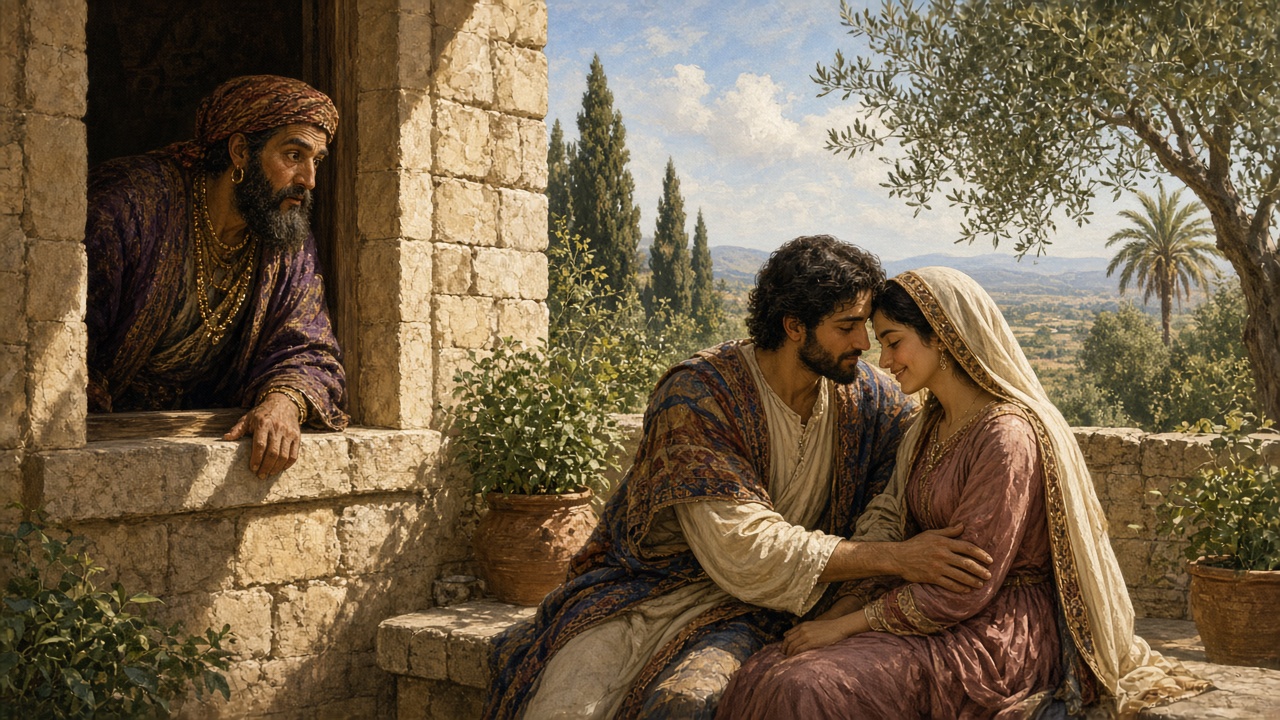
Did you know?
Isaac in Gerar
- During a famine, Isaac sought refuge with Abimelech, king of Gerar, an ancient town and district on the southern border of Palestine. Easton's Bible Dictionary (1897) notes that Isaac acted toward his wife Rebekah much as his father Abraham had acted toward Sarah there: he said she was his sister. Abimelech later rebuked him when the deception was discovered.Sources: Abimelech (King of Gerar) · Gerar · the Bible text itself
- The names of wells in the Valley of Gerar recall the disputes over them. Esek means “quarrel,” because the herdsmen of Gerar claimed the water, and Sitnah means “strife.” Isaac also reopened wells that his father Abraham’s servants had dug and that the Philistines had stopped up, and he gave them the same names his father had given them.Sources: Esek · Sitnah · the Bible text itself
- Beersheba means “well of the oath” or “well of seven.” According to Easton's Bible Dictionary (1897), Abraham dug a well there and named it after a compact with Abimelech, and Isaac gave it the same name when he reopened it. The dictionary also identifies Phicol—“great”—as chief captain of Abimelech’s army, and says he took part in Abraham’s alliance over that well.Sources: Beersheba · Phichol · the Bible text itself
Notes written with AI assistance from open sources (Theographic Bible Metadata, CC BY-SA 4.0; Easton’s Bible Dictionary, public domain) and reviewed before publishing.
Places in this chapter
- Egypt · 30.129, 31.308 · verse 2
- Valley of Gerar · Today: about 3 km around Tel Haror · 31.382, 34.606 · verses 17, 19
Only places identified with high confidence are shown (90% or more according to the scholarly sources compiled by OpenBible). Period map: DARE (Digital Atlas of the Roman Empire), CC BY 4.0; modern map: © OpenStreetMap contributors; places: OpenBible.info (CC BY 4.0).
Credits and license for this translation
YAUBADA YANA VONA'AWAUFAUFA 'IVAUNA
The New Testament in the Iamalele dialect of the Ubuvala Language of Papua New Guinea
Nupela Testamen long tokples Ubuvala long Niugini
copyright © 1984, 1988, 2025 Wycliffe Bible Translators, Inc. and SIL Papua New Guinea
Language: Ubuvala (Iamalele)
Dialect: Iamalele
Translation by: SIL PNG
Contributor: Wycliffe Bible Translators
This translation is made available to you under the terms of the
Creative Commons Attribution-Noncommercial-No Derivatives license 4.0.
You may share and redistribute this Bible translation or extracts from it in any format, provided that:
You include the above copyright and source information.
You do not sell this work for a profit.
You do not change any of the words or punctuation of the Scriptures.
Pictures included with Scriptures and other documents on this site are licensed just for use with those Scriptures and documents.
For other uses, please contact the respective copyright owners.
2026-09-30
Source: http://png.bible/yml/ · eBible.org