Ezekiel 2
YAUBADA YANA VONA'AWAUFAUFA 'IVAUNA · Tap a verse to see its cross-references.

About this book
About Ezekiel
- Easton's Bible Dictionary (1897) presents the Book of Ezekiel as the prophet Ezekiel's words, opening with the account of his call to the prophetic office in chapters 1-3. It places later prophecies after Nebuchadnezzar's destruction of Jerusalem, and notes that Ezekiel mentions Daniel fourteen years after Daniel's deportation from Jerusalem and again about five years later.Sources: Easton: Ezekiel, Book of · Nebuchadnezzar
- These words are set among Jews of the captivity beside the river Chebar, in the land of the Chaldeans. Easton records two identifications of that river: some have taken it for the Habor, the Chaboras or modern Khabour, while another opinion, which he says has much to support it, identifies Chebar with Nebuchadnezzar's royal canal, the Nahr Malcha. From that exile the prophet warns of the certain destruction of Jerusalem, contrary to false prophets, and later speaks after the city has fallen.Sources: Easton: Ezekiel, Book of · Chebar · Jerusalem
- Easton says the book consists mainly of three groups of prophecies. After the call, Ezekiel denounces the Jews and warns of Jerusalem's ruin, with symbolic acts in chapters 4 and 5 that Easton says show acquaintance with Levitical legislation; then come prophecies against the Ammonites, Moabites, Edomites, Philistines, Tyre and Sidon, and Egypt. After Jerusalem's destruction, chapters 33-39 concern the triumphs of Israel and of the kingdom of God on earth, and chapters 40-48 what Easton calls Messianic times and the establishment and prosperity of that kingdom.Sources: Easton: Ezekiel, Book of
- Easton's Bible Dictionary (1897) characterizes Ezekiel's prophecies by symbols, allegories, and symbolic actions, and calls them obscure and enigmatical. It records that Jerome called the book "a labyrinth of the mysteries of God," and states that because of this obscurity the Jews forbade anyone to read it until the age of thirty. The same entry notes that the closing visions are referred to in the book of Revelation, and that Ezekiel refers with unusual frequency to the Pentateuch and shows acquaintance with Hosea, Isaiah, and especially Jeremiah, his older contemporary.Sources: Easton: Ezekiel, Book of
Notes written with AI assistance from open sources (Theographic Bible Metadata, CC BY-SA 4.0; Easton’s Bible Dictionary, public domain) and reviewed before publishing.
Yaubada Isikeli i venua'ivineni Tutuyanina Isikeli i miamia me Iuda taiadi Babiloni 'atamana bwaikina nageneye, i 'iseni abama i 'anikililia Yaubada yana mageta mataududulina i mageseni. Naninidi i 'isediga side bani'odi i lu'ivoneyedi.
1Tutuyanina Yaubada yana mageta mataududulina a 'iseni, a be'u fwayefwayeye a lumata'afufu. A nogai bona i vo, 'Omu tomia fwayafwaya, 'u tovoi a na vonemu.” 2Bola i veveifufu nika Yaubada 'Anu'anununa i ageku i silakaiku a tovoi a vavainenega aitoi i veveifufu. 3I vona i vo, 'Omu tomia fwayafwaya, a vevetunemu me Isileli 'waidie, kumanidiavo kebu i da vematayakeyakeku, tubudiavo yadi sauluva basenadi bani'odi i vevedumwe'ai'aieku. 4Fai kebu bonaku i da nogai wata i da ve'ililibuyekuga, 'omu a vevetunemu 'u na nago 'u na vonedi, naninidi matatabuna yau 'Auvea Yaubada a veveifufu 'waidie. 5'Ai'edi 'aku tovedumwe'ai'aivo bonamu i na nogai 'alo i na bailemuga, nika bei i na 'asetai tamu yaku tolu'ivona 'awasasamie taiadi 'wa miamia.
Did you know?
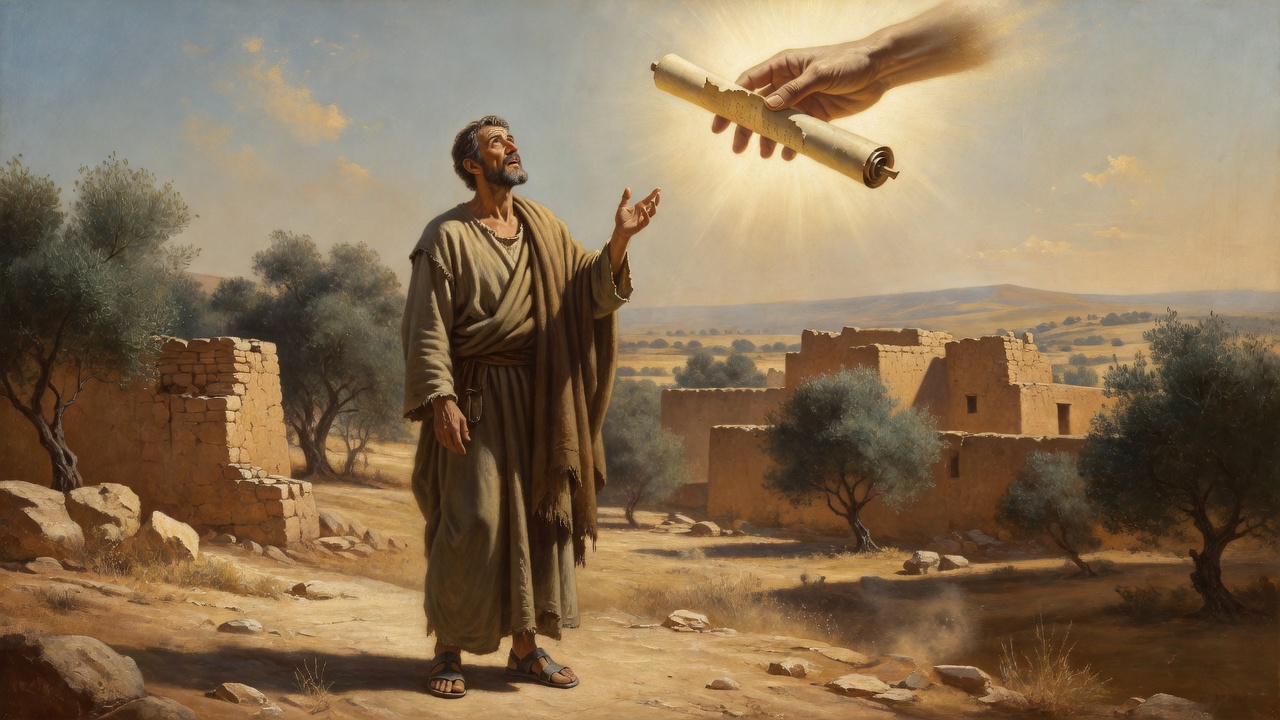
Ezekiel's Commission and the Written Scroll
- In this vision, Ezekiel is repeatedly addressed by the title 'son of man' and is empowered by the Spirit to stand and receive a divine commission to speak to the rebellious house of Israel.Sources: the Bible text itself
- Ezekiel's recorded prophetic ministry began in approximately 592 BC and extended over a period of about 23 years.Sources: Prophecies of Ezekiel
- The scroll presented to the prophet was written on both the front and the back, filled completely with words of lamentation, mourning, and woe.Sources: the Bible text itself
Notes written with AI assistance from open sources (Theographic Bible Metadata, CC BY-SA 4.0; Easton’s Bible Dictionary, public domain) and reviewed before publishing.
Credits and license for this translation
YAUBADA YANA VONA'AWAUFAUFA 'IVAUNA
The New Testament in the Iamalele dialect of the Ubuvala Language of Papua New Guinea
Nupela Testamen long tokples Ubuvala long Niugini
copyright © 1984, 1988, 2025 Wycliffe Bible Translators, Inc. and SIL Papua New Guinea
Language: Ubuvala (Iamalele)
Dialect: Iamalele
Translation by: SIL PNG
Contributor: Wycliffe Bible Translators
This translation is made available to you under the terms of the
Creative Commons Attribution-Noncommercial-No Derivatives license 4.0.
You may share and redistribute this Bible translation or extracts from it in any format, provided that:
You include the above copyright and source information.
You do not sell this work for a profit.
You do not change any of the words or punctuation of the Scriptures.
Pictures included with Scriptures and other documents on this site are licensed just for use with those Scriptures and documents.
For other uses, please contact the respective copyright owners.
2026-09-30
Source: http://png.bible/yml/ · eBible.org