Daniel 7
YAUBADA YANA VONA'AWAUFAUFA 'IVAUNA · Tap a verse to see its cross-references.

About this book
About Daniel
- Jews place the book of Daniel in the Hagiographa, the division called Khethubim in Hebrew. The book itself presents Daniel as its writer. Easton's Bible Dictionary (1897) notes that the book's genuineness has been much disputed.Sources: Easton: Daniel, Book of
- The historical chapters treat the period of the captivity. Easton calls Daniel the historian of that time, whose narrative fills out the Chronicles sketch: Nebuchadnezzar carried the survivors to Babylon, where they served him and his sons until the reign of the kingdom of Persia. A notice of Cyrus dates the fall of Babylon to his army in 538 B.C., on the night of Belshazzar's feast; Belshazzar is called the last king of Babylon, and the city stood on the Euphrates.Sources: Easton: Daniel, Book of · Cyrus · Belshazzar · Babylon
- The book consists of two distinct parts. The first six chapters are chiefly historical, and the remaining six are chiefly prophetic, consisting of three visions and one longer prophetic communication.Sources: Easton: Daniel, Book of
- One notable feature is its language. Certain portions, Daniel 2:4 and chapter 7, are written in Chaldee, while the Hebrew portions have a close affinity with the later books of the Old Testament, especially Ezra. The writer passes from one language to the other as the subject requires.Sources: Easton: Daniel, Book of
- Nebuchadnezzar gave Daniel a Chaldean name meaning "Beltis protect the king!" Hananiah was given the Chaldean name Shadrach, "Aku's command," and Azariah, of the royal family of Judah, was given the name Abed-nego. Meshach, one of the three Hebrew youths trained with Daniel in Babylon, was later promoted to the rank of the Magi.Sources: Daniel · Shadrach · Azariah · Meshach
Notes written with AI assistance from open sources (Theographic Bible Metadata, CC BY-SA 4.0; Easton’s Bible Dictionary, public domain) and reviewed before publishing.
Kumanina yana veimea 'eno'eno-vagaina Daniela i 'iseni Daniela i vona i vo,
13Tamu lovana 'waineye a 'enoneganega, i veku 'wa da vo tamu tomotogaotoga 'ana 'isa'isa bani'odi, waowa i umeni i mimai, kumanina Miamia-vagaina lilivaneye i le'wale'wa, nika tamu aitoi i 'edakumeseni i naweni 'waineye. 14Tomia-vagatanina veimea, ve'ililibu wata toketokena i veleni bega i na vevetoveimea. Tomotoga 'adi 'aila'a tulina tulina bonadi tulina tulina 'waidiega i na subisubiai wata i na vematayakeyakeni. Yana veimea kebu i na 'a'avaga i na 'eno-vagata, wata yana 'eba veimea kebu 'ana fata i na luvela'oviga.
Did you know?
Daniel's Vision of the Four Beasts
- Daniel received this vision during the first year of Belshazzar, the last king of Babylon. The ancient imperial capital stood along the Euphrates River in Mesopotamia.Sources: the Bible text itself · Belshazzar · Babylon
- The chapter describes four monstrous beasts emerging from a wind-stirred sea, which are interpreted to Daniel as four successive earthly kingdoms that will rise before an everlasting divine kingdom is established.Sources: the Bible text itself
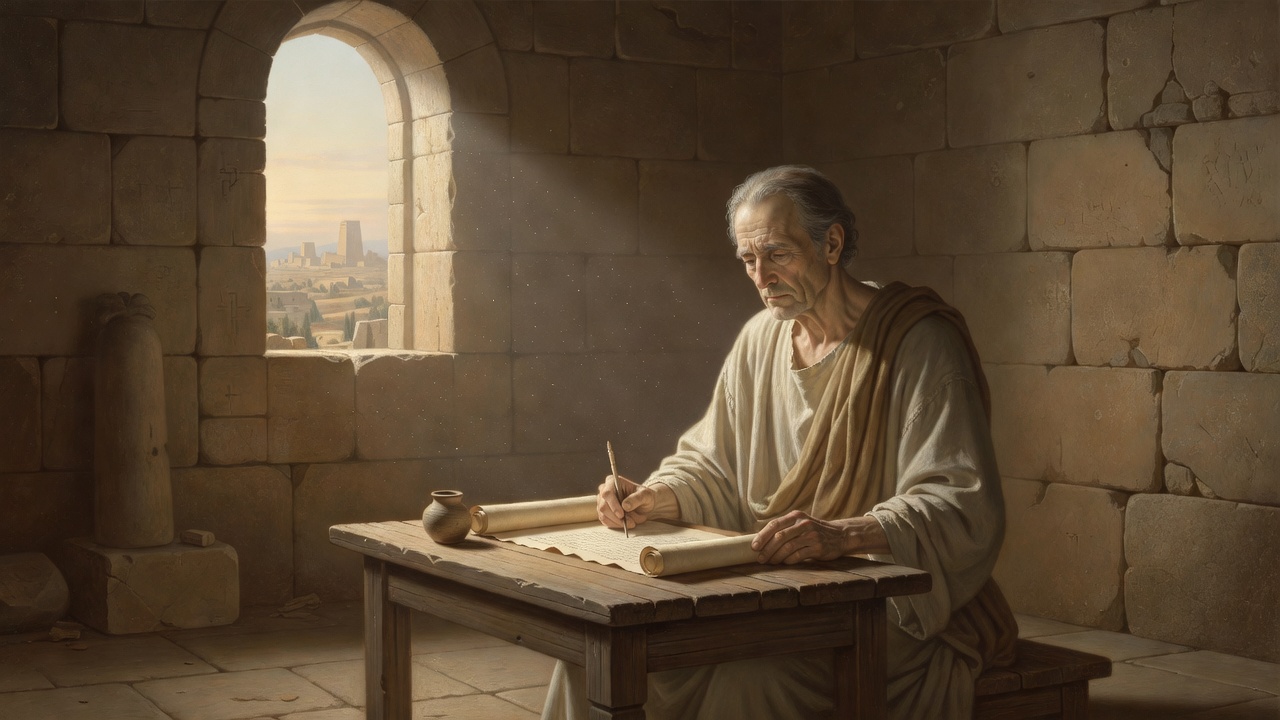
- After witnessing the vision of the beasts and the court scene where one like a Son of Man is given everlasting dominion, Daniel recorded the dream while feeling deeply troubled and visibly pale.Sources: the Bible text itself
Notes written with AI assistance from open sources (Theographic Bible Metadata, CC BY-SA 4.0; Easton’s Bible Dictionary, public domain) and reviewed before publishing.
Places in this chapter
Only places identified with high confidence are shown (90% or more according to the scholarly sources compiled by OpenBible). Period map: DARE (Digital Atlas of the Roman Empire), CC BY 4.0; modern map: © OpenStreetMap contributors; places: OpenBible.info (CC BY 4.0).
Credits and license for this translation
YAUBADA YANA VONA'AWAUFAUFA 'IVAUNA
The New Testament in the Iamalele dialect of the Ubuvala Language of Papua New Guinea
Nupela Testamen long tokples Ubuvala long Niugini
copyright © 1984, 1988, 2025 Wycliffe Bible Translators, Inc. and SIL Papua New Guinea
Language: Ubuvala (Iamalele)
Dialect: Iamalele
Translation by: SIL PNG
Contributor: Wycliffe Bible Translators
This translation is made available to you under the terms of the
Creative Commons Attribution-Noncommercial-No Derivatives license 4.0.
You may share and redistribute this Bible translation or extracts from it in any format, provided that:
You include the above copyright and source information.
You do not sell this work for a profit.
You do not change any of the words or punctuation of the Scriptures.
Pictures included with Scriptures and other documents on this site are licensed just for use with those Scriptures and documents.
For other uses, please contact the respective copyright owners.
2026-09-30
Source: http://png.bible/yml/ · eBible.org