2 Kings 2
YAUBADA YANA VONA'AWAUFAUFA 'IVAUNA · Tap a verse to see its cross-references.

About this book
About 2 Kings
- Easton's Bible Dictionary (1897) states that the authorship of the books of Kings is uncertain. Nearly identical passages shared with Jeremiah, together with events Jeremiah knew personally, give some support to the tradition that he wrote them, yet Easton regards it as more probable that Ezra compiled the books after the Captivity from earlier documents. Easton dates their composition between 561 B.C., when Evil-merodach released Jehoiachin, and 538 B.C., the year of Cyrus's decree of deliverance.Sources: Easton: Kings, The Books of
- The two books of Kings originally formed a single book in the Hebrew Scriptures. The Septuagint first divided them into two, and together with the Vulgate numbers them as the third and fourth books of Kings, counting the books of Samuel as the first and second.Sources: Easton: Kings, The Books of
- These books contain the annals of the Jewish commonwealth from the accession of Solomon until the subjugation of the kingdom by Nebuchadnezzar and the Babylonians, a period Easton describes as apparently about four hundred and fifty-three years. While Chronicles gives greater prominence to the priestly or Levitical office, Kings gives greater prominence to the kingly office, and the narrative refers to sources such as the book of the acts of Solomon and the chronicles of the kings of Judah and of Israel.Sources: Easton: Kings, The Books of
- In the threefold division of the Scriptures by the Jews, the books of Kings are ranked among the Prophets. Easton notes that they are frequently quoted or alluded to by Jesus and the apostles.Sources: Easton: Kings, The Books of
Notes written with AI assistance from open sources (Theographic Bible Metadata, CC BY-SA 4.0; Easton’s Bible Dictionary, public domain) and reviewed before publishing.
'Auvea Ilaitia i vagavaia i lakaveni abame
1'Auvea sai'afoga Ilaitia i na vagavaia i na lakaveni abame kaukau luluvivilina 'wainega, Ilaitia wata Ilaisa i tauya Giligali wainega i nunagoi. 2Ilaitia Ilaisa i voneni i vo, 'Omu side bei 'u na miamia, yau 'Auvea i voneku a na nago Bedeli.” Siwe Ilaisa i vona i vo, 'Auvea miamia-vagaina wata 'omu ma yawaimu 'u miamia, wata bani'odi a vona'awaufaufa kebu tamu sai'afo a na bailemuga.” I vona'a'ava nika i tauya i nago Bedeli.
3Bedeli nageneye Yaubada yana vona 'ana tolu'ivonavo ma 'aila'adi i maia Ilaisa i velutolieni i vo, 'Omu yamu to'edakumeta 'ako 'Auvea i na vagavaia 'waimuyega, 'u 'asetai?”
Ilaisa i tutula i vo, E'e a 'asetai, siwe kebu faifaina 'wa na veifufu.”
4Ilaitia Ilaisa i voneni i vo, 'Omu side bei 'u na miamia, yau 'Auvea i voneku a na nago 'atamana Ieliko.” Siwe wata i tutula i vo, 'Auvea miamia-vagaina wata 'omu ma yawaimu 'u miamia, wata bani'odi a vona'awaufaufa kebu tamu sai'afo a na bailemuga.” I vona'a'ava nika i tauya i nago Ieliko.
5'Atamana Ieliko bei 'Auvea yana vona 'ana tolu'ivonavo ma 'aila'adi i miamiani nika Ilaisa i le'wa i velutolieni i vo, 'Omu yamu to'edakumeta 'ako 'Auvea i na vagavaia 'waimuyega, 'u 'asetai?”
Ilaisa i tutula i vo, E'e a 'asetai, we'e kebu faifaina 'wa na veifufu.”
6Ilaitia Ilaisa i voneni i vo, 'Omu side bei 'u na miamia, yau 'Auvea i voneku a na nago Ufa Iolidani.” Siwe i tutula i vo, 'Auvea miamia-vagaina wata 'omu ma yawaimu 'u miamia, wata bani'odi a vona'awaufaufa kebu tamu sai'afo a na bailemuga.” I vona'a'ava nika i tauya taiadi i nago.
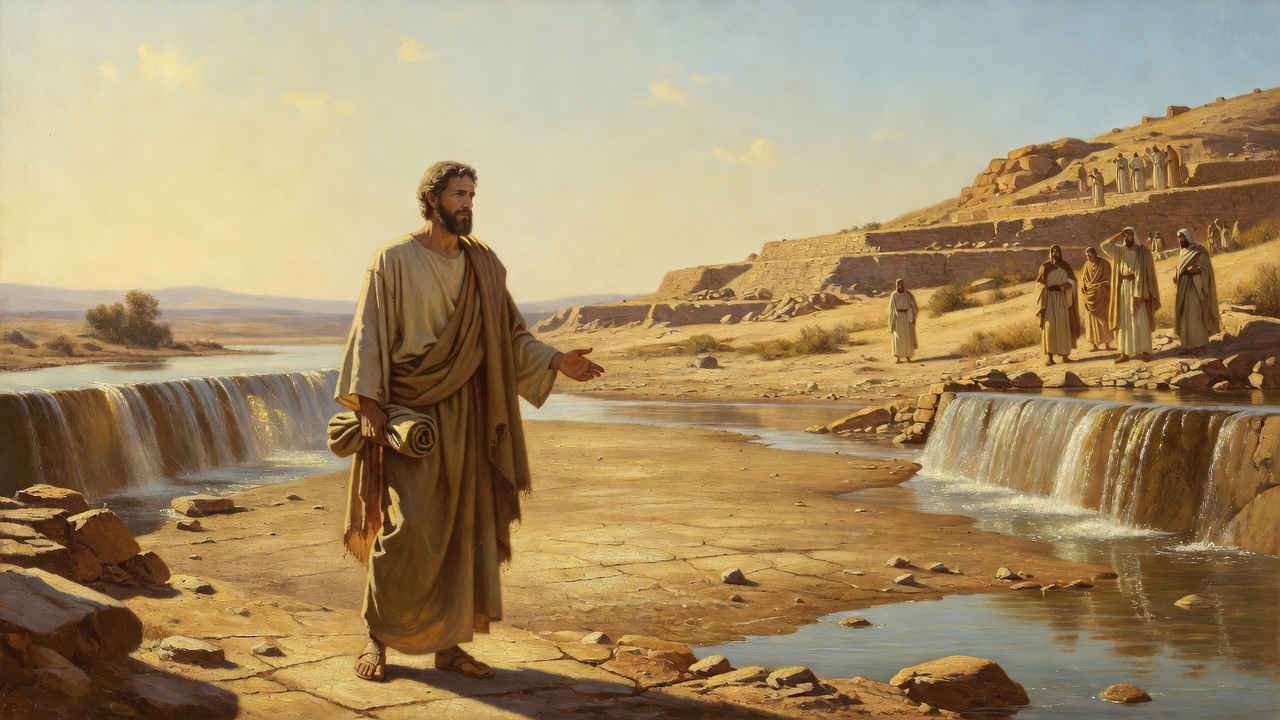
7Yadi nagonina 'waineye, 'Auvea yana vona 'ana tolu'ivonavo 'adi 'aila'a 50 taiadi i nagoi. Tutuyanina Ilaitia wata Ilaisa i le'wa Ufa Iolidani 'waineye bei i 'ailove, we'e tolu'ivonanidi 'ani'ieyega i tovotovoi i vemata'i'i'iedi. 8Ilaitia 'ana talauma i ta'ia i 'a'avana i nunumi, 'wainega ufa i nikei i 'awa'idia nika 'adi 'ailuga fwayafwaya lalaneamo i damana.
9Tutuyanina i le'wa tamu vi'ai 'waineye Ilaitia Ilaisa i voneni i vo, 'Ai'edi ava'ai yamu nuanua 'u na voneku, bega faifaimu a na 'idewai, mulieta 'Auvea 'waimuyega i na vagavaiku.”
I tutula i vo, A velu'ui-nuakalikali 'waimuye, nuanuaku yamu toketokena ma 'ana 'imoso'i 'u da veleku bega 'amu 'ivi a da 'ewai a da vetolu'ivona 'Auvea faifaina.”
10Ilaitia i tutula i vo, Naninina faifaina 'u velu'uiga vitana 'waikuye. 'Ai'edi 'u na 'iseku 'Auvea 'waimuyega i na vagavaikuga, bei yamu velu'ui 'ana tutula 'u na veluagai. 'Ai'edi kebu, wata kebu.” |alt="Elijah departs" src="12_2Ki_02_08_RG.jpg" size="span" loc="half page" copy="WBT" ref="2:10"
11'Adi 'ailuga i veveifufu'eda'eda nika 'aisaya osi 'ala'alaidi wata salioti 'ala'alaina i souyedi Ilaitia wata Ilaisa kamwadie, nika 'Auvea Ilaitia kaukau luluvivilina 'wainega i vagavaia i lakaveni abame. 12Tutuyanina Ilaisa i 'iseni bonana bwaikinega i vegole i vo, Tamaku, tamaku. Me Isileli yada salioti wata 'ana tododogavo a 'ise'isedi.” We'e kebu 'ana fata Ilaitia i na 'isa-vaitugani. Ilaisa ma yana nuavita 'ana talauma i ta'ia bega i silabu'alugedi.
13Tutuyanina 'Auvea Ilaitia i vagavaia i lakalakaveni 'ana talauma i ve'anita'ia i obu fwayefwayeye, Ilaisa i 'ewai bega i vilai i nago Ufa Iolidani lilivaneye i tovoi. 14Bega talaumanina Ilaitia i ve'anita'ia i 'ewai, 'wainega ufa i nikei i ta'ala i vo, Ilaitia yana 'Auvea, 'omu ava'aibe bei?” Tutuyanina ufa i nikei i 'awa'idia nika Ilaisa i damana.
15'Ani'ieyega 'Auvea yana tolu'ivonavo Ieliko 'wainega i 'isanaweni ava'ai i souyeniga, fuedi i vona i vo, Ilaitia yana toketokena i damana Ilaisa 'waineye,” bega fuedi i nagoi ma yadi ve'ililibu i 'odu 'waineye. 16Fuedi i vona i vo, De'e bei ta miamiaga tomotoga toketokedi 'adi 'aila'a 50, 'ana fata 'u da tauyedi i da nago yamu to'edakumeta i da lualeni? Voke 'Auvea 'Anu'anununa i vagavaia i naweni 'oya deba'aineye i siobuyeni 'alo tamu 'awakovana 'waineye.”
Ilaisa i tutula i vo, Kebu 'wa na nagoiga.”
17Siwe i toke i lulukakadeni nika i 'ivebunumayagi bega i vonedi i vo, 'Atumaina, 'wa nagoi.” Iaveta 'adi 50 i nagoi Ilaitia i lualeni 'aiata aitonu nagedie siwe kebu i da veluagai. 18Ilaisa 'atamana Ieliko bei i miamia, bega tutuyanina tolaualanidi i viladi i vonedi i vo, Bagase a vonemi a vo, Kebu 'wa na nagoga,’ fai kebu 'ami fata 'wa na veluagai.”
Did you know?
The Departure of Elijah and the Succession of Elisha
- Elijah's rough mantle had first marked Elisha's calling when Elijah threw it over his shoulders in the field. When Elijah was taken into heaven in a whirlwind, Elisha picked up the fallen cloak and struck the Jordan River with it, demonstrating to the watching prophets that he had received Elijah's spirit and succeeded him as prophet.Sources: Elisha · the Bible text itself
- The spring near Jericho, historically identified with Ain es-Sultan or Elisha's Fountain, had unwholesome water that left the surrounding land barren. Elisha purified the water by casting salt from a new bowl directly into the spring.Sources: Jericho · the Bible text itself
- Before crossing the Jordan, Elijah and Elisha visited communities of the sons of the prophets located at Bethel and Jericho. Fifty men from these prophetic groups watched the miraculous crossing from afar and later spent three days searching the surrounding hills and valleys for Elijah.Sources: Bethel (of Palestine) · Jericho · the Bible text itself
Notes written with AI assistance from open sources (Theographic Bible Metadata, CC BY-SA 4.0; Easton’s Bible Dictionary, public domain) and reviewed before publishing.
Places in this chapter
- Jericho · Today: Tell es Sultan · 31.872, 35.445 · verses 4, 5, 15, 18, 19, 23
- Jordan · Today: Jordan River · 31.761, 35.558 · verses 6, 7, 13
- Mount Carmel · 32.672, 35.023 · verse 25
- Samaria · 32.276, 35.195 · verse 25
Only places identified with high confidence are shown (90% or more according to the scholarly sources compiled by OpenBible). Period map: DARE (Digital Atlas of the Roman Empire), CC BY 4.0; modern map: © OpenStreetMap contributors; places: OpenBible.info (CC BY 4.0).
Credits and license for this translation
YAUBADA YANA VONA'AWAUFAUFA 'IVAUNA
The New Testament in the Iamalele dialect of the Ubuvala Language of Papua New Guinea
Nupela Testamen long tokples Ubuvala long Niugini
copyright © 1984, 1988, 2025 Wycliffe Bible Translators, Inc. and SIL Papua New Guinea
Language: Ubuvala (Iamalele)
Dialect: Iamalele
Translation by: SIL PNG
Contributor: Wycliffe Bible Translators
This translation is made available to you under the terms of the
Creative Commons Attribution-Noncommercial-No Derivatives license 4.0.
You may share and redistribute this Bible translation or extracts from it in any format, provided that:
You include the above copyright and source information.
You do not sell this work for a profit.
You do not change any of the words or punctuation of the Scriptures.
Pictures included with Scriptures and other documents on this site are licensed just for use with those Scriptures and documents.
For other uses, please contact the respective copyright owners.
2026-09-30
Source: http://png.bible/yml/ · eBible.org