Matthew 11
Deftera Lfiɗa Dzratawi · Tap a verse to see its cross-references.
Ghunafta Yuhwana ta mnduha
1Manda kɗakwa Yesu ta tsa tagha skwiha ŋa tsa duhwalhani ghwaŋpɗə his ya ná, ka sliʼaftá tsi hada ka laghwi da ra luwaha ma tsa haɗik ya ŋa tagha skwiha, nda ya ŋa mna Lfiɗa Gwaɗa.
Ɗawutá vla Yuhwana mnda maga batem
2Ma tsa fitik ya, ma gamak na Yuhwana mnda maga batem. Ka snaŋtá tsi ta mna gwaɗa ta Kristi nda slnaha ta magə tsi. Ka ghunaftá tsi ta sanlaha ma duhwalhani 3da ɗawaŋta da Yesu kazlay: Kagha Kristi dzaʼa sagha ya re, ari ka kzla ŋni ta sana mndu a na kəʼa. 4Ka Yesu nda həŋ mantsa: «Lawa mnanatá Yuhwana ta skwi ya snaŋ kuni nda skwi ya nghaŋ kuni. 5Nda ngha gwal si nda ghulpa ta vli. Ta mbaɗa gwal si nda raghwa səla taŋ. Nda mbamba gwal si nda rɗa mndu ta həŋ. Nda sna gwal si ka matghəm ta sləməŋ. Sliʼagapsliʼa gwal si ta rwuta. Mnanamna lu ta Lfiɗa Gwaɗa ta gwal ka pɗu. 6Rfu da mndu ya kul kwalaghutá zlghaftá iʼi,» kaʼa.
Gwaɗa Yesu ta ghəŋa Yuhwana
7Ta sliʼi duhwalha Yuhwana ka vru, ka mnə Yesu ŋa dəmga ta gwaɗa ta Yuhwana, kaʼa mantsa: «Nahgani laghu kuni da nghay ma mtak na? Gagaɗak ta vyə falak rki laghu kuni da nghay na? 8Nahgani laghu kuni da nghay ɓa? Mndu ta suɗavata lgut nda bla rki laghu kuni da nghay? Ya wya gwal ta suɗavatá lgut nda bla nda bla ta həŋ ná, ma həga ga mghamha həŋ. 9Nu va skwi laghu kuni da nghay tama? Anabi rki laghu kuni da nghay? Mantsa nzakwani, ka yu ta mnaghunata ná, malaghumala tsa mndu ya ta anabi. 10Tsatsi tsa mndu mnə deftera Lazglafta ta gwaɗa ta ghəŋani kazlay: Wya yu ta tiŋlaghutá ghunafta mnda ɗa ka kagha ŋa payaghatá tvi kəʼa ya. 11Kahwathwata ka yu ta mnaghunata na: Mataba inda mndu ya yaga marakw nda ya ná, haɗ mndu ya ta zlagapta ka malaghutá Yuhwana mnda maga batem wa. Tsaw tama ná, mndu ya ta htuta katakata ma ga mghama Lazglafta ná, malaghumala ta tsatsi. 12Daga ta fitika Yuhwana mnda maga batem, ha ka sagha ta gitana, ta hwisay lu nda mbraku ta ga mghama Lazglafta. Ta zbay tsa gwal ta hwisay nda mbraku ya ta zluʼatá tsa ga mghama Lazglafta ya guli. 13Inda la anabi nda deftera Musa tani, mnumna həŋ ta gwaɗa ta ghəŋa tsa ga mghama Lazglafta ya, ha ka sagha ta fitika zlagapta Yuhwana. 14Kata kumay kuni ta snaŋta katsi ná, Yuhwana tsa Iliya dzaʼa vragaghata ya. 15Ka mamu mndu nda sləməŋa snay ka sna tsi.
16«Nda wa dzaʼa gra yu ta mnduha ta na zamana na na? Manda tskatá vgha zwani ta luma ta tsgha lwi ŋa graha taŋ 17kazlay: Vyanafha ŋni ta siŋlak ná, skala a kuni wu, fanafha ŋni ta laha ta ŋaɗa ghəŋ, tawa a kuni wu kəʼa ya həŋ. 18Saghaha Yuhwana, za a ta skwi wu, sa a ta skwi wu, “aʼ nda halaway ma ghəŋani!” ka mnduha nda tsi. 19Saghaha Zwaŋa mndu, ta zay ta skwi, ta say ta skwi, “aʼ mamblahawa ya, dagala sasakwani, aʼ gra gwal tska dzumna, nda gwal dmaku ya,” ka həŋ nda tsi. Kulam nda tsa, ta nghaku ɗifla Lazglafta ma slnahani.»
Sana luwaha ta kwalaghutá zlghaftá Yesu
20Tahula tsa tama, ka tsukunustá tsi nda gwaɗa ta luwaha ya maga tsi katakata ta mazəmzəmhani mida, kabga kwalaghuta taŋ ta mbəɗanaftá nzakwa taŋ. Kaʼa mantsa: 21«Ɗaŋwa ŋa gha luwa Kwariziŋ! Ɗaŋwa ŋa gha luwa Betsayda! Ka má tsa mazəmzəm magə lu ma luwa gha ya, má maga ma luwa Tir, nda luwa Siduŋ lu katsi ná, má gitagita a ta mbəɗanaftá həŋ ta nzakwa taŋ ka pghavatá buhu nda hutiɗif ta vgha wa. 22Tsaya ta kəl yu ka mnaghunata kazlay: Baɗu tsay dzaʼa tsə Lazglafta ta guma ta ghəŋa mnduha ná, ta dərdər ŋa luwa Tir nda luwa Siduŋ dzaʼa nzakwa tsi ka ŋa ghuni.
23«Kagha guli Kafarnahum! Dzaʼa kapay Lazglafta ta iʼi ta luwa ka kagha ta gray ra? Bukwa a gha tsa! Dzaʼa vradaghavra lu tɗəm da vla gwal nda rwa. Ka má tsa mazəmzəm maga lu ma luwa gha ya, má maga ma luwa Suduma lu katsi ná, má ta tekeʼa luwa Saduma gita na. 24Tsaya ta kəl yu ka mnaghunata kazlay: Baɗu tsay dzaʼa tsə Lazglafta ta guma ta ghəŋa mnduha ná, ta dərdər ŋa luwa Suduma dzaʼa nzakwa tsi ka ŋa gha kəʼa.»
Snanamta Yesu ta Dani ta gwal ka zwanani
25Ma va tsa fitik ya, ka Yesu mantsa: «Ta rfay yu ta kagha Da, Mghama luwa nda haɗik tani, kabga ɗifana ɗifa ka ta na skwiha na da gwal nda ɗifil ma ghəŋa taŋ, nda gwal nda sna ta skwi, ka maranatá ka ta zwani. 26Manda va tsa nzakwani Da, ta rfay yu ta kagha, ma zɗakwa gha nzakwa tsi mantsa.
27«Da ɗa ta vliha ta inda skwi. Haɗ sana mndu nda sna ta Zwaŋ wa, ba Da yeya nda sna. Haɗ sana mndu nda sna ta Da guli wa, ba Zwaŋ yeya nda sna, nda mndu ta kumə Zwaŋ ta maranata,» kaʼa.
Sagha da Yesu ŋa mutsa mbiʼa vgha
28«Saghawasa da iʼi inda kaghuni gwal nda hərfa da ndəgaku ka mbiʼaghunapta yu ta vgha. 29Zba a yu ta nzaghunaghata wa. Klawakla ta ndəgaku ya ta klə yu, ka tagha kuni ta skwi da iʼi, mantsa ya dzaʼa kəl kuni ka mutsaftá mbiʼa vgha. 30Manda va tsaya nzakwani, skwi ya dzaʼa faghunaghata yu ná, ndəgaghunata a wa. Kafkafani nzakwani,» kaʼa.
Did you know?
John's question and the cities that did not repent
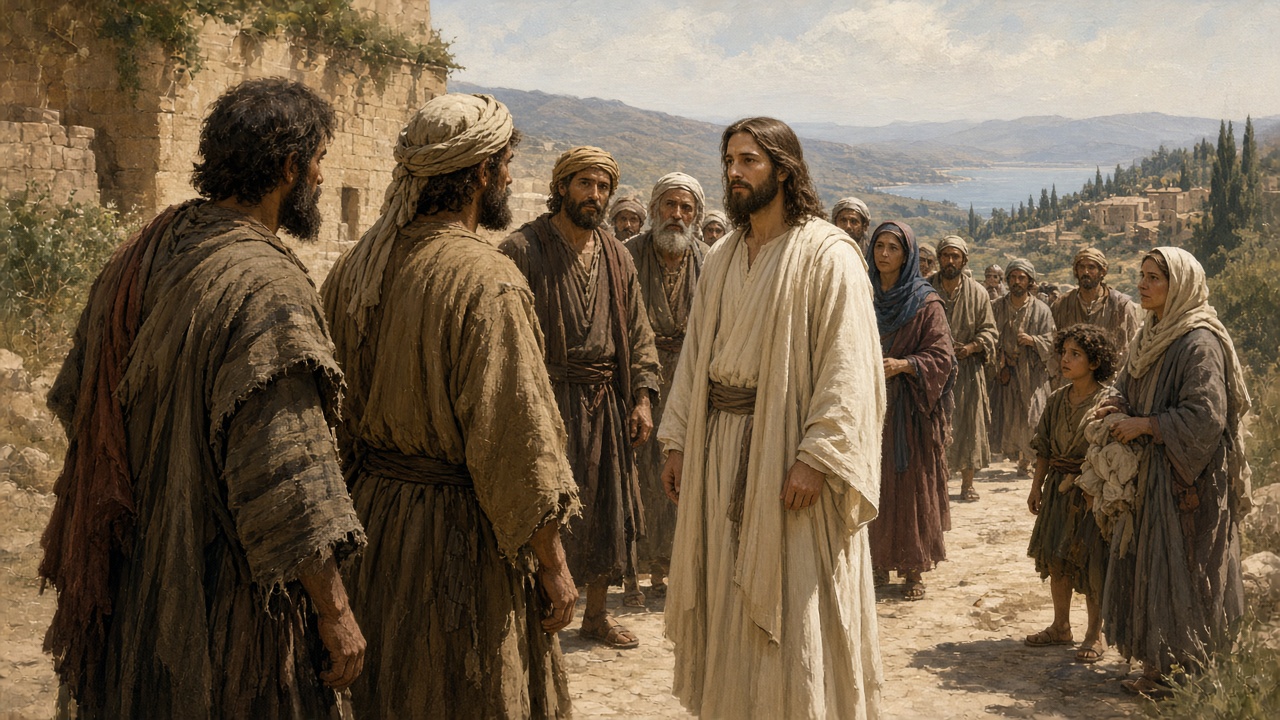
- From prison, John sent his disciples to ask whether Jesus was the one who was to come. Jesus told the crowds that John was more than a prophet—the messenger sent ahead to prepare the way—and, if they were willing to accept it, the Elijah who was to come. A Bible dictionary calls John the forerunner and says his mission was already the subject of prophecy, citing Isaiah 40:3 and Malachi 3:1; it also introduces Elijah as the Elias of the New Testament.Sources: the Bible text itself · John the Baptist · Elijah
- Jesus then denounced Chorazin, Bethsaida, and Capernaum, where most of his miracles had been performed, because they did not repent. A dictionary identifies Chorazin with modern Kerazeh, about two and a half miles up the Wady Kerazeh from Capernaum, and says that Capernaum, absent from the Old Testament, became Jesus' own city after he left Nazareth. It places Bethsaida on the east side of the lake, two miles up the Jordan in Gaulonitis, enlarged by Philip the tetrarch and named Julias after the emperor's daughter, though some have supposed there was only one Bethsaida, near where the Jordan enters the lake.Sources: the Bible text itself · Chorazin · Capernaum · Bethsaida
- He set those cities against Tyre and Sidon, which he said would have repented long ago in sackcloth and ashes, and against Sodom, which he said would have remained to this day. Sidon, on the Mediterranean coast about twenty-five miles north of Tyre, was the oldest Phoenician city there and the mother city of Tyre. A dictionary says the commerce of the whole world was gathered into Tyre's warehouses, and that Sodom, in the vale of Siddim, was destroyed by fire from heaven so completely that no trace of it has been found.Sources: the Bible text itself · Sidon · Tyre · Sodom
Notes written with AI assistance from open sources (Theographic Bible Metadata, CC BY-SA 4.0; Easton’s Bible Dictionary, public domain) and reviewed before publishing.
Places in this chapter
- Galilee · 32.760, 35.527 · verse 1
- Sidon · Today: Sandikli archaeological site in Sidon · 33.561, 35.372 · verses 21, 22
- Tyre · 33.271, 35.196 · verses 21, 22
Only places identified with high confidence are shown (90% or more according to the scholarly sources compiled by OpenBible). Period map: DARE (Digital Atlas of the Roman Empire), CC BY 4.0; modern map: © OpenStreetMap contributors; places: OpenBible.info (CC BY 4.0).
Credits and license for this translation
Deftera Lfiɗa Dzratawi
New Testament in Hdi
copyright © 2013 Wycliffe Bible Translators, Inc.
Language: Hdi
Translation by: Wycliffe Bible Translators
Contributor: Wycliffe Bible Translators, Inc.
Copyright Information
© 2013, Wycliffe Bible Translators, Inc. All rights reserved.
This translation text is made available to you under the
terms of the Creative Commons License: Attribution-Noncommercial-No Derivative Works.
( http://creativecommons.org/licenses/by-nc-nd/3.0/ )
In addition, you have permission to port the text to different file formats, as long as you
do not change any of the text or punctuation of the Bible.
You may share, copy, distribute, transmit, and extract portions
or quotations from this work, provided that you include the above copyright
information:
You must give Attribution to the work.
You do not sell this work for a profit.
You do not make any derivative works that change any of the actual words or punctuation of the Scriptures.
Permissions beyond the scope of this license may be
available if you contact
us with your request.
The New Testament
in Hdi
© 2013, Wycliffe Bible Translators, Inc. All rights reserved.
This translation is made available to you under the terms of the
Creative Commons Attribution-Noncommercial-No Derivatives license 4.0.
You may share and redistribute this Bible translation or extracts from it in any format, provided that:
You include the above copyright and source information.
You do not sell this work for a profit.
You do not change any of the words or punctuation of the Scriptures.
Pictures included with Scriptures and other documents on this site are licensed just for use with those Scriptures and documents.
For other uses, please contact the respective copyright owners.
2015-03-18
Source: http://ebible.org/xed/ · eBible.org