Jonah 4
Godna Hundi · Tap a verse to see its cross-references.
Got Ninifaka saréfa nandéka Jona dé mawuli wi
1Huruhafi yandéka dé Jona hélék ya. Hélék ye dé Gotka mawuli wi. 2Mawuli wiya dé Gotka wa, “Néma Du, méni wuna hundi mé xéké. Wuni getéfa yatakahafi ye wundé xékélakiwu, méni wungi maki male hurumékandé. Wungi xékélaki wuni Tarsisré yaange yinjoka wundé yiwu. Yiwun mo angi dé, wuni xékélaki méni saréfa naakwa Got méni. Méni bari hari mawuli wihafi méni. Méni nanika saréfa male naméka dé. Méni nanika mawuli mawuli yaméka dé. Mawuli mawuli yaméka di nawulak du deka haraki sémbut yatakandat, dika saréfa nae méni diré haraki huruhafi méni. 3Méni wungi maki némbuli diré haraki huruhafi yamét, wuni hiyanjoka wuni mawuli ye. Wuni némbuli hiyawut, wu yikafre dé. Wuni némbuli hiyahafi yawut, wu haraki dé.” Jona dé wungi wa. 4Wungi wandéka dé Néma Du Got déré wa, “Méni wungi mawuli wiméka yikafre wana haraki wana?” 5Wungi wandéka dé Jona getéfa yatakataka gwande ye dé nukwa xalekwa sakumbu re. Reta dé boro yakitaka dé hakélékombu re. Reta dé haxéta re, joo nak Ninifambu xakundét xénjoka. 6Haxéta rendéka dé Néma Du Got wandéka dé bangwi nak wara dé Jonaré wundé takatéfindé. Takatéfindéka dé nukwa Jonaré xéhambandé. Xéhafi yandéka dé Jona wun bangwikombu reta mawuli sawuli dé ya. 7Mawuli sawuli yata rendéka dé gan hunyindéka xitélakéndéka dé Got hawe nakéka wandéka dé ya. Yae dé wun bangwina moré dé sa. Sandéka dé bangwi wungi hiya. 8Hiyandéka dé nukwa xale. Xalendéka dé Néma Du Got takandéka dé séfi ya xérékékwa mur nukwa xalekwa sakumbu dé ya. Yandéka dé nukwa Jonana anéngambambu dé xé. Xéndéka dé déka anéngamba jinjawe yandéka dé xakrinjoka huru. Xakrinjoka hura dé wa, “Wuni hiyanjoka wuni mawuli mawuli ye. Hiyawut, wu yikafre dé.” 9Wandéka dé Got Jonaré dé angi wa, “Wumba bangwi hiyandéka méni biya mawuli wi. Biya mawuli wiméka yikafre wana?” Wandéka dé Jona wambula angi wa, “Yawundu! Wuna mawuli wi wu yikafre dé. Wuni némafwimbu wuni biya mawuli wi. Wuni hiyanjoka wuni we.” 10Mawuli windéka dé Néma Du Got déré angi wa, “Wumba bangwi natafa male ganmbu dé bari hari waré. Wara dé nakémba gan dé hiya. Méni déré yalefu huratakahambaméni. Méni huratakaméka waréhambandé. Méni wumba yalefu jooka méni saréfa nae. 11Wuni hafu wuni Ninifaka saréfa wuni nae. Ninifa némafwi getéfa dé. Séfélak yikama nyangwal wumbu di re (120,000). Di deka yika tamba aki tambaka yike di ye. Séfélak bulmakau bali akwi wumbu di re.” Néma Du Got wungi dé wa.
Did you know?
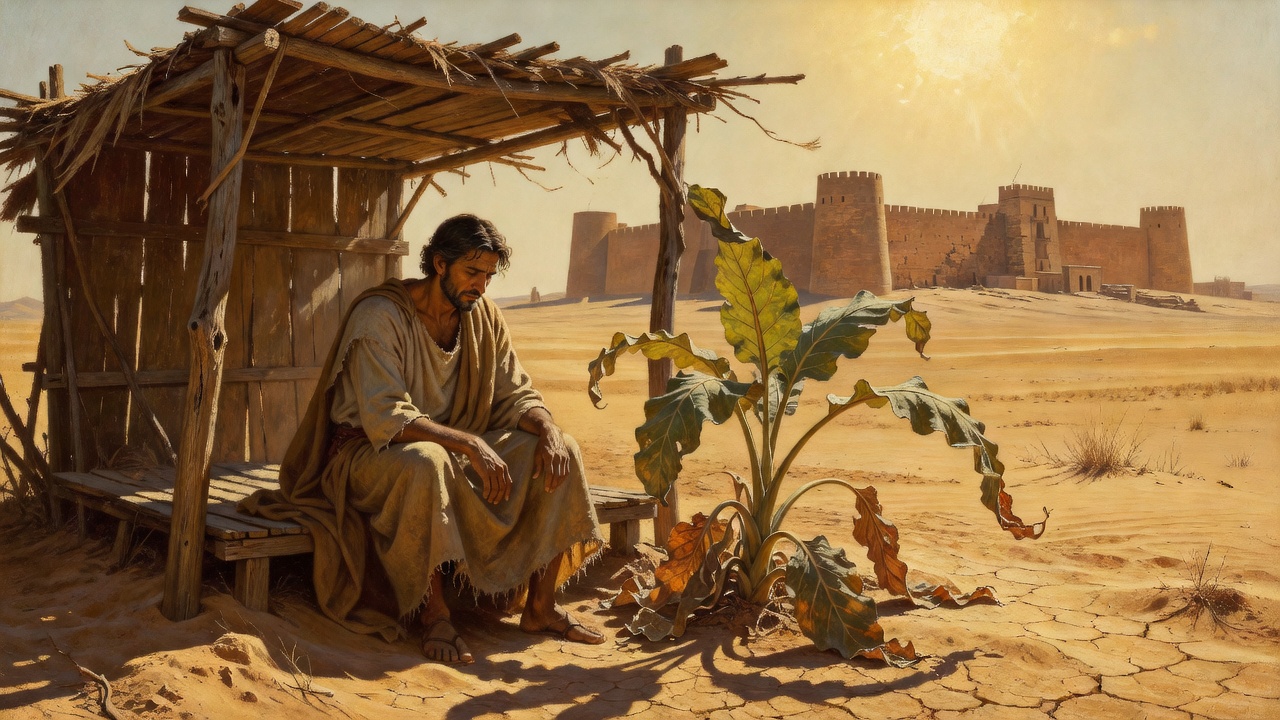
Jonah's Anger and God's Compassion
- Jonah admits that he originally attempted to flee toward Tarshish precisely because he knew God is gracious, compassionate, slow to anger, and relents from sending disaster. His distress arose when God chose to spare Nineveh rather than destroy it.Sources: the Bible text itself · Tarshish
- Nineveh, the flourishing capital of the Assyrian empire, is described at the conclusion of the book as home to more than 120,000 people who cannot discern between their right and left hand, along with many cattle. God highlights this massive population to contrast divine compassion with Jonah's concern for a single withered plant.Sources: the Bible text itself · Nineveh
Notes written with AI assistance from open sources (Theographic Bible Metadata, CC BY-SA 4.0; Easton’s Bible Dictionary, public domain) and reviewed before publishing.
Places in this chapter
- Nineveh · 36.359, 43.153 · verse 11
Only places identified with high confidence are shown (90% or more according to the scholarly sources compiled by OpenBible). Period map: DARE (Digital Atlas of the Roman Empire), CC BY 4.0; modern map: © OpenStreetMap contributors; places: OpenBible.info (CC BY 4.0).
Credits and license for this translation
Godna Hundi
The New Testament and Jonah in the Hanga Hundi language of Papua New Guinea
Nupela Testamen na Jona long tokples Hanga Hundi long Niugini
copyright © 1997 Wycliffe Bible Translators, Inc.
Language: Hanga Hundi
Translation by: Wycliffe Bible Translators
This translation is made available to you under the terms of the
Creative Commons Attribution-Noncommercial-No Derivatives license 4.0.
You may share and redistribute this Bible translation or extracts from it in any format, provided that:
You include the above copyright and source information.
You do not sell this work for a profit.
You do not change any of the words or punctuation of the Scriptures.
Pictures included with Scriptures and other documents on this site are licensed just for use with those Scriptures and documents.
For other uses, please contact the respective copyright owners.
2013-02-02
Source: http://png.bible/wos/ · eBible.org