Jonah 1
Godna Hundi · Tap a verse to see its cross-references.
About this book
About Jonah
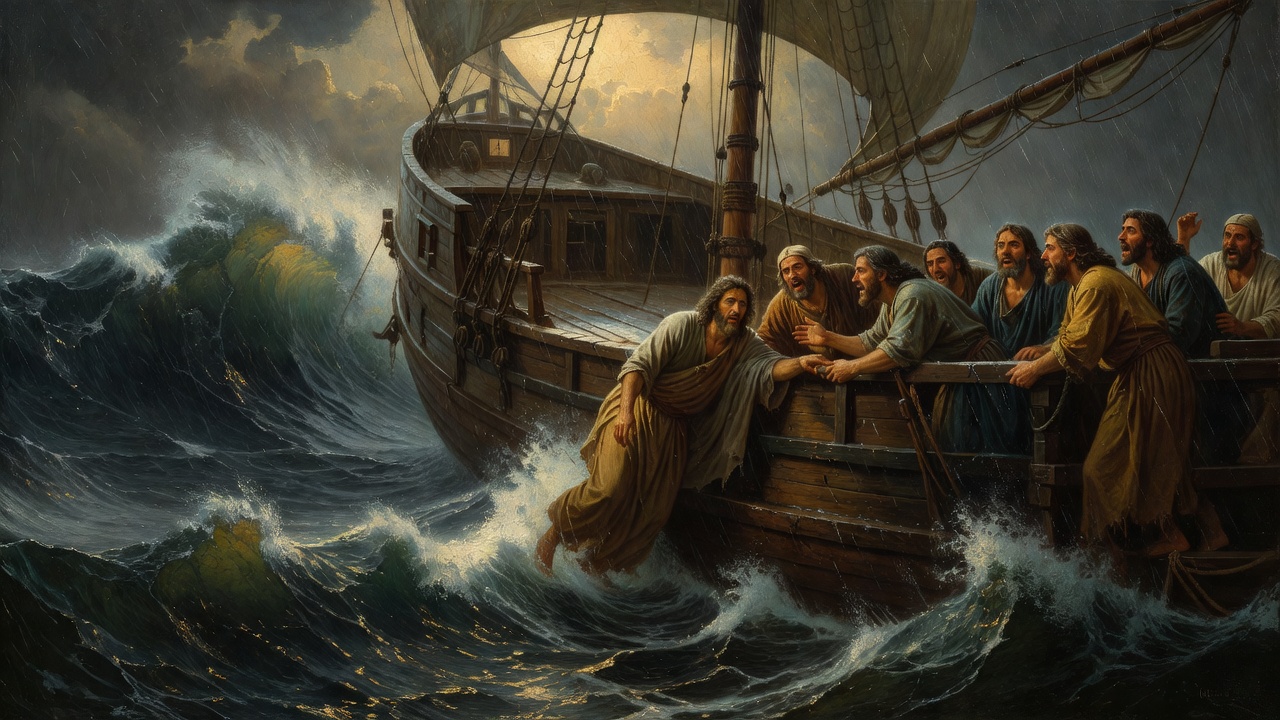
- Jonah, whose name means “a dove,” was the son of Amittai of Gath-hepher and a prophet of Israel. Easton's Bible Dictionary (1897) holds that he wrote the book himself. His ministry is placed very early in the reign of Jeroboam II: he was contemporary with Hosea and Amos, or possibly earlier, and so may have been the oldest of the prophets whose writings survive.Sources: Jonah · Amittai · Easton: Jonah, Book of
- The book professes to tell what actually happened to the prophet. Some critics have read it as a parable or allegory rather than history, because miracle is so prominent and the form is narrative rather than prophecy, or because they deny miracles altogether. Easton's Bible Dictionary (1897) instead treats it as history, attaching great weight to the mention of Jonah in Matthew 12:39-40 and Luke 11:29.Sources: Easton: Jonah, Book of
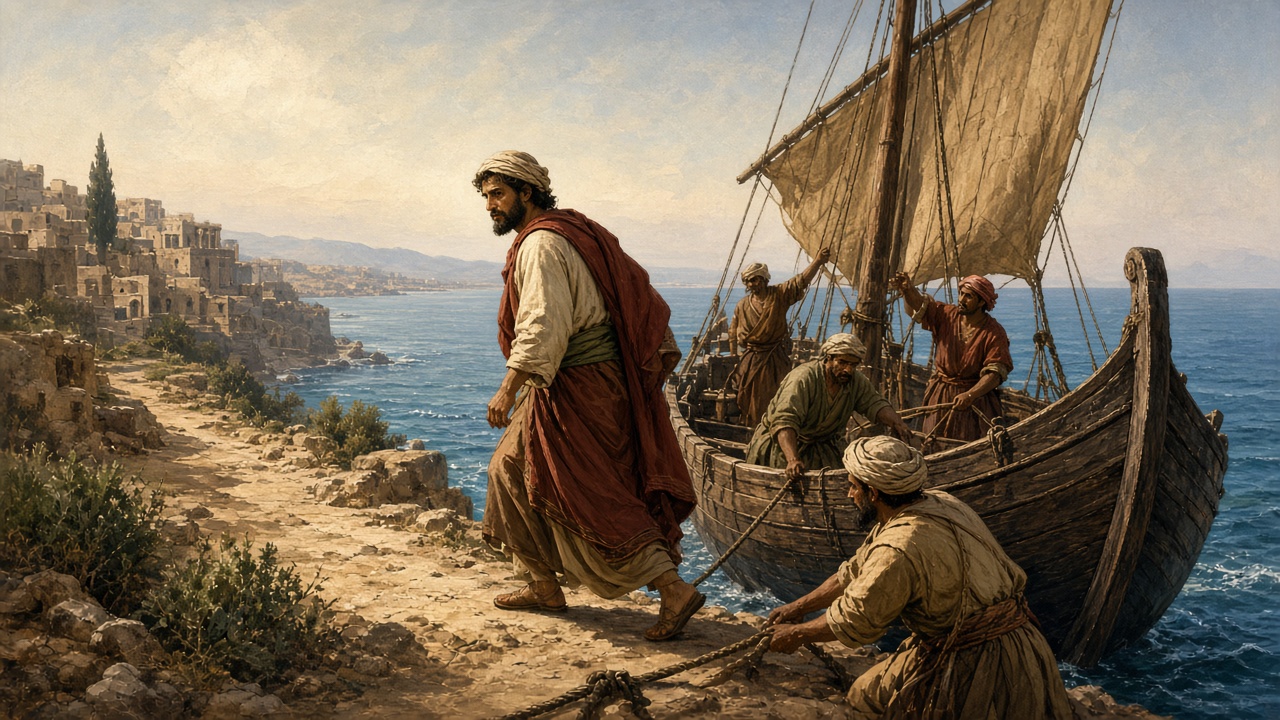
- Jonah was commissioned to go to Nineveh, described as a great and populous city and the flourishing capital of the Assyrian empire, but he sailed from Joppa, Judea's chief seaport, to flee toward Tarshish. Where Tarshish lay is disputed: some place it in the east, on the Indian coast, some identify it with Carthage, and Easton's dictionary takes it to be a Phoenician port in Spain.Sources: Easton: Jonah, Book of · Nineveh · Joppa · Tarshish
- Easton's outline has four movements: the divine commission, disobedience, and punishment; Jonah's prayer and deliverance; a second commission, the Ninevites' repentance, and God's sparing mercy; and Jonah's anger at that mercy, followed by a rebuke. The same dictionary notes that Nineveh was spared for more than a century after his mission.Sources: Easton: Jonah, Book of
- As a prophet of Israel, Jonah foretold the restoration of the kingdom's ancient borders. A biographical note presents him both as a missionary to Nineveh and as a type of the Son of man. The book of Nahum is taken up almost entirely with denunciations of that city, and Zephaniah also predicts its destruction.Sources: Jonah · Nineveh
Notes written with AI assistance from open sources (Theographic Bible Metadata, CC BY-SA 4.0; Easton’s Bible Dictionary, public domain) and reviewed before publishing.
Jona dé yaange yi
1Nak nukwa Néma Du Got Jonaka dé hundi wa. Jona dé Amitaina nyan dé. 2Got déré dé angi wa, “Méni sé raama yi nukwa xalekwa sakuré. Ye méni wun némafwi getéfa Ninifambu xakutaméni. Xaakwa hundi hambukmbu wa, Ninifana du takwaka. Wuni wundé xéwu di haraki saraki sémbut hurundaka.”
3Wungi wandéka dé Jona hélék ya. Métaka we? Ninifa di Isrelna mama di. Hélék ye dé Gotré yatakanjoka dé Tarsisré yaange yi. Tarsis afakémbu dé re, nukwa nandikwa sakumbu. Ye dé Jopambu xaku. Xaakwa dé xé gunjambé Tarsisré yinjoka yae téléka. Xétaka dé gunjambéka hatikwa duka yéwa hwe. Hwetaka dé gunjambéré wulayi, di wali Tarsisré yinjoka. Dé Gotré yatakataka yinjoka dé mawuli ya.
4Ye di gu nyéndékmbu téndaka dé Néma Du Got némafwi mur takandéka dé ya. Yandéka dé gu némafwimbu dé ramé. Raama dé gunjambéré yafélaménjoka huru. 5Wungi hurundéka di gunjambémbu jémba yakwa du di roo. Roota di deka nak nak gotka di wa. Wataka di gunjambémbu rendé jondu héraata di guré yaki gunjambé xéréfweka xalendéte. Wungi huta téndaka Jona gunjambéna biyakombu dé némafwi xéndi dé hwa.
6Wungi hwandéka dé gunjambéka hatikwa du Jonaka dé hwaké. Hwaka xétaka dé sérkené. Sérkena dé wa, “Métaka méni xéndi hwae? Sé raama ména gotka mé wa. Wamét nanika saréfa nakéndé wana yingi wana. Nanika saréfa nandét, nani yamba hiyakéme.” Dé wungi wa.
7Gunjambémbu jémba yakwa du waréngéna di wa, “Mé yangut nana atéfék xi haaye bu wurmbu lakwakwa. Lakwataka bu yawiwalendotaka tara bu xékwa, héndé du dé haraki hurundéka dé ané xakéngali xaku.” Wungi wataka di wandanéngala nae di xé Jonana xi takumbu rendéka. 8Xétaka di Jonaka wa, “Méni naniré mé wa! Méta yaméka dé ané xakéngali xaku? Méta jémba yaméka? Méni yénéna méni ya? Méni yén getéfana méni? Méni yén héméngwal méni?”
9Wungi wandaka dé wa, “Wuni Hibruna du wuni. Wuni Néma Du Gotna xi harékéwuka dé. Dé anwarmbu dé re. Dé hafu dé atéfék gu héfa akwi atéfék jondu akwi dé hurataka.” 10Wungi we dé wa, “Wuni Gotré yatakataka yaange yinjoka wuni ya.” Wandéka xékétaka di wungi roo. Roota di wa, “Métaka méni wungi huru? Wungi haraki méni huru!” 11Wungi wandaka dé gu némafwimbu dé ramé. Raméndéka di Jonaré wa, “Méniré métaki yambet gu jémba tékéndé?” 12Wungi wandaka dé wa, “Wuniré hura guré yakingut, gu jémba tétandé. Wuni wuni xékélaki wuni haraki huruwuka dé némafwi xakéngali xaku.”
13Wungi wandéka di déré guré yakinjoka di roo. Roota di gu némafwimbu tu. Tuwa hari Jonaré tufwambu takanjoka di hurufatiké. Gu tuwa yindaka dé gu némafwi némafwimbu dé ramé. 14Raméndéka di Néma Du Gotka wa, “Néma Du, nani ménika nani we. Nani amba duré guré yakimbet, naniré hasa xiyakéméni. Méni nana sémbutré du xiyana sémbut maki sarékékéméni. Méni mawuli yamékangalambu dé ané xakéngali xaku. Xakundéka déré hura guré yakikwe.”
15Wataka di Jonaré hura di guré yaki. Yakindaka dé némafwimbu raméndé gu bari jémba té. 16Gu jémba téndéka di gunjambémbu rekwa du némafwimbu di roo, Gotka. Roota di Néma Du Gotka nawulak jondu hweta di dé wali hundi bulésékéréké.
17Guré yakindaka dé Néma Du Got némafwi xéri hamwika wandéka dé ya. Yae dé Jonaré nyéréké. Nyérékéndéka dé Jona xéri hamwina biyakombu dé re, nukwa hufuk gan hufuk.
Did you know?
Jonah Flees from the Lord
- Jonah, the son of Amittai from Gath-hepher, is also recorded in 2 Kings 14:25 as a prophet active in the northern kingdom of Israel during the reign of Jeroboam II. God instructed him to travel east to Nineveh, the prominent and populous capital of the Assyrian empire, to preach against its wickedness.Sources: Jonah · Amittai · Nineveh · the Bible text itself
- Rather than traveling northeast overland to Nineveh, Jonah journeyed down to the Mediterranean seaport of Joppa to board a ship for Tarshish. Tarshish is traditionally identified as a Phoenician trading port located far to the west in southern Spain, representing the exact opposite direction.Sources: Joppa · Tarshish · the Bible text itself
- The sailors aboard the cargo ship came from polytheistic backgrounds, each calling out to his own deity during the violent tempest. After throwing the ship's cargo overboard to lighten the vessel, they turned to the ancient practice of casting lots to determine who was responsible for the calamity.Sources: the Bible text itself
Notes written with AI assistance from open sources (Theographic Bible Metadata, CC BY-SA 4.0; Easton’s Bible Dictionary, public domain) and reviewed before publishing.
Places in this chapter
Only places identified with high confidence are shown (90% or more according to the scholarly sources compiled by OpenBible). Period map: DARE (Digital Atlas of the Roman Empire), CC BY 4.0; modern map: © OpenStreetMap contributors; places: OpenBible.info (CC BY 4.0).
Credits and license for this translation
Godna Hundi
The New Testament and Jonah in the Hanga Hundi language of Papua New Guinea
Nupela Testamen na Jona long tokples Hanga Hundi long Niugini
copyright © 1997 Wycliffe Bible Translators, Inc.
Language: Hanga Hundi
Translation by: Wycliffe Bible Translators
This translation is made available to you under the terms of the
Creative Commons Attribution-Noncommercial-No Derivatives license 4.0.
You may share and redistribute this Bible translation or extracts from it in any format, provided that:
You include the above copyright and source information.
You do not sell this work for a profit.
You do not change any of the words or punctuation of the Scriptures.
Pictures included with Scriptures and other documents on this site are licensed just for use with those Scriptures and documents.
For other uses, please contact the respective copyright owners.
2013-02-02
Source: http://png.bible/wos/ · eBible.org