John 6
Etulo NT · Tap a verse to see its cross-references.
IYesu byi inggisɛ idubu eda enbwa
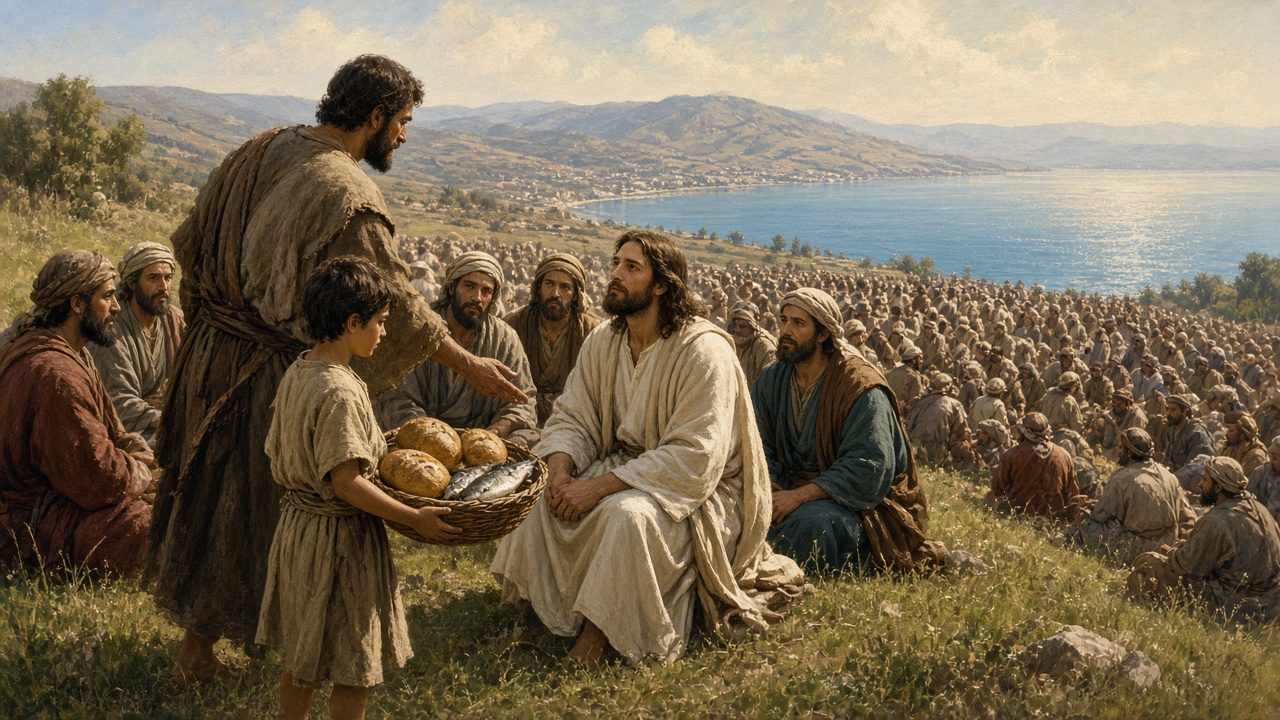
1Ngwi ungwɔnɛ wa nyɛ nɛ, iYesu fooye lu byulu mi agya Ekyoo Okwukwo mgbi iGalalia (ngwi a di li kwun di ekyoo iTiberia kpaa nani), 2nɛ ibyi inggisɛ kpakpa kyɛdɔn ikyekyɛ a di ambɛ okwulewo ngwi o kyɔ mbi emi ootse mani. 3Man iYesu tɔ lu unggwɔ ka sisɛ yi emi ongwafɔɔn. 4Oga owɛ owatɔ-watɔ mgbi emi iJuda dzɛ kwɛkwɛ mi onɔ mani.
5Ngwi iYesu kyile inɛ esho di ibyi inggisɛ kpakpa kyɛ le ba mbi ongwu nɛ, o si byi iFyilipi gbɛɛ, <<Li mi ole ngwi eyi ka gya ibredi nu inggisɛ ntonɛ gye?>> 6IYesu byita nɛ ikye ombadun ta, ikyesinɛ o teyi ye mi itukwu mgban ungwɔ ngwi ongwu ka kyɔ.
7IFyilipi nun uka gbɛɛ, <<Udza okpa idɔ mgbi ofyia egyata kpaa ka mɛ ogya ibredi nu ma tsan aba kpatsɛ ba!>>
8Ongwafɔ mgbi iYesu oka, Andru, ongwunɔ iSaimɔn iPyita si gbɛɛ, 9<<Ongwongyulɔ dzɛ mmɛnɛni ngwu dzɛ yi ibredi ngwi a kyɔ mi ibale nghi eda bɛyi ongwɛ abatsa efa, ntonɛ ka to ole mbi ibyi inggisɛ ntonɛ?>>
10IYesu si gbɛɛ, <<Ni inggisɛ ntonɛ sisɛ.>> Oshɛ kyinda mi imbe na kpakpa man inggisɛ ntona sisɛ mi ele, engyulɔ mɛ dafi idubu eda sini. 11IYesu si kyelu ibredi kye angba nu Imgbasho man kye nu engwafɔ mgban nu ma kye gha inggisɛ ntonani, o di kyɔ ngha yi mmbweni yɛyɛ, ama duu gye dafi a mina mani.
12Ngwi inggisɛ duu tu gye gyɔlo ma nɛ, o si nya engwafɔɔn gbɛɛ, <<Kyi salu ambulu nsisi ma kwakye mbonyi ni unkonyi ka nyanya ba na.>> 13A si kye salu ambulu ibredi ibale nghi eda ngwi a gye sisi ma mbwo uya nghi iwyodefa.
14Dafi inggisɛ ntona di ambɛ okwulewo ngwi iYesu kyɔ nɛ, a gbɛɛ, <<Mi otsitsi yɔ, nɛnɛ li oyegbɔ nwogyɔ gbɛɛ o ka ba ɛsɛ mani.>> 15Ngwi iYesu di gbɛɛ, a wewo ogye ongwu utɔ mi abumfye nɛ, o wulɛ lu unggwɔ ka dzɛ yuon.
IYesu kyikyɛ mi ikye eni
16Mi onɔdɛ nani, engwafɔɔn kɛ utɔ, 17a kaka uwaa le fooye lu iKapenahun dafi imbe yifu wa, kpaa iYesu ba wa tu ma waba. 18Awo wa le fa fyumfye, dile gbe akpeni. 19Dafi a fa uwaa kɛ mɛ imai eta naadi eta dɔ itsitsi nɛ, a di iYesu kyikyɛ mi ikye eni le ba kwɛkwɛ yi ama, ta imio wo ma. 20Nghaduu o nya ma gbɛɛ, <<Li Ani, ka mio ba na.>> 21Nɛ a mina okyon kaka uwaa, ntunto nɛta uwaa to ondu esɛ mi imbe ngwi a le kɛ mani.
22Tegblifan ibyi inggisɛ ama nto oye utɔ agya oka nɛ difwi gbɛɛ li uwaa onyi ta bɛdzɛ mmana edɛdɛ ma iYesu edɛdɛ kaka yi engwafɔɔn ba, a lu yuoma. 23Nɛ uwaa angbeka kyɛ iTiberia wa bɛsɛ kwɛkwɛ yi imbe ngwi inggisɛ ntona gye ibredi mi onɔ ngwi Otsɛ iYesu nose kye angba nu Imgbasho nani. 24Ngwi ibyi inggisɛ ntona di gbɛɛ, iYesu naadi engwafɔ mgban to mmana wuba nɛ, a kaka uwaa ntona lu oyombo iKapenahun oka pitan.
IYesu ungwogye mgbi oshishe
25Ngwi a tun mi oyombo utɔ nɛ, a byun gbɛɛ, <<Otsetse, li alonɔ ngwi abu to mmɛnɛ?>>
26IYesu nu ma uka gbɛɛ, <<N nya ema otsitsi, ema le pita ani ikyegbɛɛ di ema di ambɛ okwulewo ba, kpaa li ikyegbɛɛ ema gye ungwogye kpakpa tolo. 27Ka kyidɔ mi ikye ungwogye nli mbe ba, kpaa mi ikye ungwogye nka dzɛ ba oshishe igyegwu ngwi Ongwɛ Inggisɛ ka kye nu ema mani, ikyesinɛ Imgbasho Otsɔn teyi kye ambɛ mgbi ogbela ungwɔ nun.>>
28Nɛ a byi iYesu gbɛɛ, <<Li alungwɔ ngwi eyi ka kyɔ kyɛmɛ ikye okyidɔ ama ngwi Imgbasho mina?>>
29IYesu si nu uka gbɛɛ, <<Idɔ mgbi Imgbasho ma li ongwu aani: li onoyɛyɛ mbi ongwu Imgbasho dɔn esɔ nɛni.>>
30Nghanɛ a byun gbɛɛ, <<Li ali ambɛ okwulewo ngwi abu ka kyɔ ikye ni eyi diyɛ nu abu oyɛyɛ? Li alungwɔ ngwi abu ka kyɔ? 31Emi otsikyeyi nose gye imana nkyɛ esho kyɛ, mi okwɛsɛ dafi ngwi a tsekise lɔ gbɛɛ: <O kye ungwogye kyɛ esho nu ma gye mani.> >>
32IYesu nya ma gbɛɛ, <<N nya ema otsitsi, li iMose kye ungwogye nkyɛ esho na nu ema ba, kpaa li Otsani kye ungwogye otsitsi nkyɛ esho na nu ema. 33Ikyekyɛ ungwogye mgbi Imgbasho li ongwu nkyɛ esho ba esɛ wa kye oshishe nu ɛsɛ nɛni.>>
34A gbɛɛ, <<Ongyukwo, le nu eyi ungwogye na alegbe-alegbe.>>
35Nɛ iYesu nya ma gbɛɛ, <<Li ani li ungwogye mgbi oshishe, inggisɛ nba mbi ani yɔ enbwa ka dɔn wuba, inggisɛ ndi nu ani oyɛyɛ yɔ ekweni ka kwun wuba. 36Kpaa dafi Ani nya ema ma, ema di ani wa, nghaduu ema noyɛyɛ ba. 37Ama ngwu Otsani kye ma nu ani duu a ka ba mbi ani, ali inggisɛ ndi ba mbi Ani duu n ka lɔn onya ba. 38Ikyena Ani kyɛ esho ba esɛ owa kyɔ owitukwu mgbi ani ba, kpaa okyɔ owitukwu mgbi ongwu ndɔ ani esɔ mani. 39Ma nɛnɛ li owitukwu mgbi ongwu ndɔ ani esɔ ma aani: gbɛɛ ama ngwu ongwu gbe nu ani duu onyi kpaa no ka byulu mi ele ba, kpaa ni Ani kyile ma esho mi egbe ongwi olɛlɛ. 40Lubana owitukwu mgbi Otsani li ogbɛɛ, ali inggisɛ ndi Ongwɛ di nun oyɛyɛ ka tu oshishe gyegwu, Ani dika kyilen mi ikwu mi egbe ongwi olɛlɛ mani.>>
41Mi ungwɔnɛ emi iJuda wita ondandu mi ikye odzɛ mgbi iYesu ikyekyɛ o gbɛɛ, <<Ani li ungwogye nkyɛ esho ba esɛ.>> 42A gbɛɛ, <<Nɛnɛ li iYesu lo, ongwɛ iJose, ongwu eyi ye otsɔn yi onɔn nɛ baa? Kyɔsinɛ ngwi o ka gbɔ onɛnɛ gbɛɛ, Ani kyɛ esho ba esɛ?>>
43IYesu nya ma gbɛɛ, <<Nya ondandu yi ewema na.>> 44<<Inggisɛ onyi kpaa ka ba mbi ani ba se Otsani ndɔ ani esɔ ma kwon ba mbi ani, ani dika kyilen mi ikwu mi egbe ongwi olɛlɛ mani. 45A teyi lɔ mi afɛ mgbi ama ogbɛɛsɛ gbɛɛ: <Imgbasho ka tso ma tsatsa.> Ali inggisɛ ngaadɔ mbi Otsani di kpayi mbon yɔ ka ba mbi ani. 46Inggisɛ onyi kpaa di Otsani ye ba, li ongwu nkyɛ mbi Imgbasho nɛ ta, li ongwu yuon di Otsɔn aali. 47N nya ema otsitsi, inggisɛ nnoyɛyɛ dzɛ yi oshishe gyegwu. 48Ani li ungwogye mgbi oshishe. 49Emi otsikyema gye imana mi imbe okplagada ungwogye nkye esho ba esɛ nani, nghaduu kpaa a kwulu. 50Kpaa ungwogye nkyɛ esho ba esɛ dzɛ mmɛnɛni, ngwi inggisɛ ka gye di kwulu wuba. 51Ani li ungwogye mgbi oshishe nkyɛ esho ba esɛ. Inggisɛ ta ngye ungwogye nɛ o ka dzɛ oshishe gyegwu, ungwogye nɛ li ikpewo mgbi ani ongwu ani ka kye nu mi ikye oshishe mgbi ɛsɛ.>>
52Nɛ emi iJuda ntona wita otangwɛ yi ewoma mi itɔdzɛ ngwi iYesu gbɔ nani, gbɛɛ, <<Kyɔsinɛ ngwi inggisɛ nɛ ka kye ikpewo mgban nu eyi gye?>>
53IYesu nya ma gbɛɛ, <<N nya ema otsitsi se ni ema gye ikpewo mgbi Ongwɛ Inggisɛ di wa eyi mgban bayɔ, ema dzɛ yi oshishe mbi ema ba. 54Ali inggisɛ ngye ikpewo mgbi ani diyɛ wa eyi mgbi ani dzɛ yi oshishe igyegwu, ani dika kyilen mi ikwu mi egbe ongwi olɛlɛ. 55Ikyesinɛ, ikpewo mgbi ani li ungwogye otsitsi, eyi mgbi ani di li ungwɔ owawa otsitsi. 56Inggisɛ ta ngye ikpewo mgbi ani di wa eyi mgbi ani wodzɛ mbi ani, ani kpaa wodzɛ mbon. 57Yɛyɛ dafi Otsani ndzɛ oshishe dɔ ani esɔ mani, ani di dzɛ oshishe li ikye Otsani nani, nghanɛ inggisɛ ngye di wa mbi ani yɔ, ka dzɛ oshishe ikye ani. 58Nɛnɛ li ungwogye nkyɛ esho ba esɛ mani, emi otsikyema gye imana nghaduu a kwulu, kpaa inggisɛ nbyi ewon enbwa yi ungwogye ngwi ani kye nu nɛ, ka dzɛ oshishe gyegwu.>> 59IYesu gbɔdzɛ nɛ mi onɔ ngwi o le tsungwɔ mi ozu okwakye mgbi emi iJuda mi iKapenahun mani.
Engwafɔ mgbi iYesu kwuba dzatan
60Ngwi a fwo odzɛ nɛ nghanɛ, engwafɔ mgbi iYesu kwuba gbɛɛ, <<Otsootso nɛ fyumfye, li emɛ ka gbelan?>>
61IYesu ye dafi engwafɔɔn tole ndandu mi odzɛ nɛni, o si byi ma gbɛɛ, <<Odzɛ nɛ nu ema ka dzani taa? 62Kini ema di Ongwɛ Inggisɛ yɛ lu esho mi imbe ngwi o teyi dzɛ ma ema ka gbɔsinɛ? 63Onodzi mgbi Imgbasho li nu oshishe; mfye mgbi inggisɛ owamyɛ dzɛ yi oyabɔ ba duudu. Elodzɛ ngwi ani gbɔ nya ema ntonɛ li onodzi, a di li oshishe kpaa. 64Nghaduu ema angbeka to ma ngwu noyɛyɛ ba.>> Ikyesinɛ iYesu teyi ye mi owita-wita ama ngwu noyɛyɛ ba mi idzidzɛ ema, yi ongwu nka wa kyen gya mani. 65O kiyayi gbɛɛ, <<Li ungwɔ ngwi ani nya ema gbɛɛ inggisɛ onyi kpaa ka ba mbi ani ba se Otsani nun ofɛ ma aani.>>
66Wita mi onɔ na emi ongwafɔɔn kwuba kyata iyikpa di kyɛdɔn wuba.
67Nghanɛ iYesu byi engwafɔ mgban iwyodefa ntona gbɛɛ, <<Ema kpaa i mina ema odzata anii?>>
68ISaimɔn iPyita nu uka gbɛɛ, <<Otsɛ li mbi emɛ eyi ka kɛ? Abu dzɛ yi elodzɛ mgbi oshishe ogyegwu. 69Eyi noyɛyɛ di ye gbɛɛ abu li iKrestu, ongwɛ Imgbasho oshishe.>>
70Nɛ iYesu gbɛɛ, <<Ani sadu ema nghi iwyodefa baa? Nghaduu onyi mbi ema li olodu!>> 71(O gbɔdzɛ mgbi iJuda ongwɛ Iskarɔti, ikyesinɛ ngwi o li onyi mbi engwafɔɔn nɛ kpaa, o ka wa kye ongwu gya.)
Did you know?
The Bread of Life
- In this chapter John calls the lake both the Sea of Galilee and the Sea of Tiberias. Easton's Bible Dictionary describes it as twelve and a half miles long and from four to seven and a half miles wide, with its surface 682 feet below the Mediterranean. Tiberias, on the western shore, is said to have been founded by Herod Antipas in A.D. 16 and named for the emperor Tiberius; some boats from that city landed near the place where the people had eaten the bread.Sources: the Bible text itself · Sea of Galilee · Tiberias
- That evening the disciples set out by boat for Capernaum, and the next day the crowd crossed and found Jesus there. He delivered the teaching about the bread of life in the synagogue at Capernaum. Easton's Bible Dictionary notes that the city, not mentioned in the Old Testament, became Jesus' own city after his expulsion from Nazareth and was the scene of many episodes in his ministry.Sources: the Bible text itself · Capernaum
- As the crowd drew near, Jesus asked Philip where they could buy bread, a question the narrative says was meant to test him, for Jesus already knew what he would do. Philip, like Andrew and Peter, was from Bethsaida; he answered that two hundred denarii would not buy enough for each person to have a small piece. Andrew, Peter's brother, then pointed out a boy with five barley loaves and two small fish, and Easton's Bible Dictionary, citing this exchange among other passages, says Philip seems to have held a prominent place among the apostles.Sources: the Bible text itself · Phillip the Apostle · Andrew · Simon Peter
Notes written with AI assistance from open sources (Theographic Bible Metadata, CC BY-SA 4.0; Easton’s Bible Dictionary, public domain) and reviewed before publishing.
Places in this chapter
Only places identified with high confidence are shown (90% or more according to the scholarly sources compiled by OpenBible). Period map: DARE (Digital Atlas of the Roman Empire), CC BY 4.0; modern map: © OpenStreetMap contributors; places: OpenBible.info (CC BY 4.0).
Credits and license for this translation
Etulo NT
Portions of the Holy Bible in the Etulo language of Nigeria
copyright © 2024 Initiative for the Translation and Development of African Languages
Language: (Etulo)
Contributor: The Seed Company
This translation is made available to you under the terms of the
Creative Commons Attribution Share-Alike license 4.0.
You have permission to share and redistribute this Bible translation in any format and to make reasonable revisions and adaptations of this translation, provided that:
You include the above copyright and source information.
If you make any changes to the text, you must indicate that you did so in a way that makes it clear that the original licensor is not necessarily endorsing your changes.
If you redistribute this text, you must distribute your contributions under the same license as the original.
Pictures included with Scriptures and other documents on this site are licensed just for use with those Scriptures and documents.
For other uses, please contact the respective copyright owners.
Note that in addition to the rules above, revising and adapting God's Word involves a great responsibility to be true to God's Word. See Revelation 22:18-19.
2025-07-09
Source: http://ebible.org/utr/ · eBible.org