Matthew 7
Tupã Je'ẽha · Tap a verse to see its cross-references.
Mã peja amõ ta rehe pehẽ juru ai ym
1A'e pandu tĩ:
—Amõ ta rehe har kuja ym pepandu: “Peme'ẽ ta katu ym” aja. Aja pepandu rahã, aja juja katu te pehẽ rehe har Tupã pandu ta tĩ. A'erehe aja ym pepandu. Myja me'ẽ amõ ta rehe har pepandu, aja juja katu te pehẽ rehe har Tupã pandu ta tĩ. Myja me'ẽ amõ ta pe ma'e ke pema'e, aja juja katu te pehẽ pe Tupã ma'e ta tĩ — aja ngã pe.
3(Ma'e ka'u te'eha ke amõ ma'ema'e, ame'ẽ riki myra kurer aja saka, aja Jesu mujekwa.) A'erehe kuja a'e pandu:
—Ne mu reha ke myra kurer mupuk, ame'ẽ rehe nde eresak. (Aja rahã, ta'yr mi ma'e ka'u te'eha ke a'e ma'e, aja mujekwa.) Mã peja ame'ẽ rehe har ekwa ekwa ym exo. Nde reha rehe myra keruhũ mupuk riki. (Aja rahã, mãte hũ nde ereka'u te'eha ke nde erema'ema'e, aja mujekwa.) Mã peja ame'ẽ rehe har ekwa ekwa py exo. 4Nde reha rehe myra keruhũ ihĩ, ame'ẽja saka. A'erehe kuja ym nde mu pe epandu: “Nde reha ngi myra kurer ke ihẽ ajo'ok ta” aja epandu ym. (Aja rahã, kuja riki: “Ta'yr mi ma'e nde ereka'u te'eha ke nde erema'e. Ame'ẽ ke mã peja ehijar” aja nde erepandu.) Mã! Nde eresak ym my? Nde reha rehe myra keruhũ ihĩ. (Aja rahã, mãte hũ ma'e nde ereka'u te'eha ke nde atu erema'ema'e, aja nde eremujekwa.) 5Mã! Nde katu, aja nde erekwa nde jupe. Anĩ. Mokõi erekwaha namõ erexo. Nde reha ngi myra keruhũ ejujo'ok py nde jupe. (Aja rahã, mãte hũ ma'e nde ereka'u te'eha ke nde erema'ema'e, ame'ẽ ke nde erehijar katu py.) Aja rahã, upa ma'e ke nde eresak katu ta. Aja rahã, nde mu reha ngi myra kurer ta'yr mi nde erejo'ok katu ta. (Aja rahã, nde mu pe nde erepandu: “Ma'e nde ereka'u te'eha ke nde erema'e, ame'ẽ ke ehijar” aja nde erepandu katu) — aja Jesu pandu.
6A'e pandu tĩ:
—Ihẽ amu'e ame'ẽ ke katu te me'ẽ ke. Ame'ẽ ke amõ ta putar ym rahã, ame'ẽ ta pe pemujekwa ym. Hendu tipe rahã, putar ym. Jawar jarõ aja saka jumai mai ta. Je'ẽ je'ẽ hũ ta.
—Ihẽ amu'e ame'ẽ ke katu te me'ẽ ke. Ame'ẽ ke amõ ta jaxer, aja ukwa rahã, ame'ẽ ta pe pepandu ym tĩ. Kure aja saka riki. Jaxer aja ukwaha, a'erehe pyrũ ehe aja saka ta. “Ihẽ amu'e ame'ẽ ke te'e” aja ame'ẽ ta ukwaha naĩ. Putar ym tĩ. (A'erehe ame'ẽ ta pe pepandu ym tĩ) — aja Jesu pandu.
Tupã namõ pepandu pandu
7Tupã namõ pandu pandu, ame'ẽ rehe har Jesu mu'e rahã, kuja pandu:
—Pehẽma'e nixói te rahã, ame'ẽ rehe har Tupã namõ pepandu pandu katu. Aja rahã, ame'ẽ ke a'e muwyr ta pehẽ pe. Tupã namõ pepandu rahã, pekekar, ame'ẽja saka. Pe, Tupã muwyr rahã, pemahem, ame'ẽja saka. (Amõ rok pe pexe tar katu rahã, pehẽ po penupã nupã. Pe, hukwen ke ijar pirar.) Tupã namõ pepandu pandu rahã, hukwen pirar ame'ẽja saka. Pirar rahã, pepandu ame'ẽ ke a'e muwyr ta pehẽ pe. 8Upa inamõ pandu ame'ẽ ta pe a'e muwyr ta. Amõ kekar rahã, mahem ta. Ipo nupã nupã rahã, hukwen ke a'e pirar ta. Aja saka riki. 9Ipái pe ta'yr pandu: “Papa! Mbeju ihẽ aputar. A'u ta” aja. Aja rahã, ta'yr pe ita ra'yr ke ipái me'ẽ my? Anĩ. Aja ym ta. Mbeju me'ẽ ta ipe. 10Pe, ta'yr pandu: “Papa! Pira ka'ẽ ihẽ aputar. A'u ta” aja. Aja rahã, ta'yr pe mbói ke ipái me'ẽ ta my? Anĩ. Aja ym ta. Pira ka'ẽ me'ẽ ta ipe. 11Awa ta ke te'e pehẽ. Ma'e peka'u te'eha ke pema'ema'e ame'ẽ ta ke pehẽ. Pe, pehẽ ra'yr ta pe ma'e katu ame'ẽ ke peme'ẽ katu. Aja rahã, pehẽ 'ar koty te we ma'e katu ame'ẽ ke jande pái keruhũ me'ẽ ta. Ma'e ke amõ pandu ipe, ame'ẽ ke a'e muwyr ta. A'e riki ywatehar ke.
12—Ma'e katu ame'ẽ ke pehẽ pe amõ ta ma'e, aja amõ ta pe pema'e katu tĩ. Aja riki Moise je'ẽha mu'e. Aja ymanihar Tupã je'ẽha pandu ame'ẽ ta mu'e tĩ — aja Jesu pandu.
Tupã koty ohoha
13A'e pandu tĩ:
—Tupã ixo ame'ẽ pe ohoha riki hukwen rupi asa oho, ame'ẽja saka. Asa oho rahã, uhã te hũ aja ixo. Ame'ẽ hukwen riki ta'yr mi. Ame'ẽ hape aja tĩ. Ta'yr mi tĩ. Ame'ẽ hape ohoha riki janam, ame'ẽja saka. Marã ka ym ohoha, ame'ẽja saka. Heta ym ame'ẽ rupi oho ame'ẽ ta ke.
—Mupyraraha renda pe ohoha anĩ. Hukwen riki tiha. Hape riki aja tĩ. Tiha tĩ. Ame'ẽ rape ohoha riki sorok katu hũ, ame'ẽja saka. Pe, heta te hũ ame'ẽ rupi wata oho ame'ẽ ta ke — aja riki.
Ma'eywa ame'ẽ rehe har
15A'e pandu tĩ:
—Tupã je'ẽha pandu ame'ẽ ta ran rehe har mã peja pekwa katu. Arapuharan ipy'a pitu te'e aja a'eta ixo tĩ. (Aja rahã, katu ame'ẽ ta aja pehẽ koty uwyr naĩ.) A'engi ma'e so'o jarõ aja a'eta rehe har amõ ukwa. Ma'e ke jukwa, ame'ẽja saka. (Aja rahã, pehẽ pexoha ke mujaxer ta. Pe, pehẽma'e ke te'e raho tar katu tĩ.) 16Myja ame'ẽ ta rehe har pekwa ta my? Kuja. Ima'e ma'eha namõ pekwa ta. Juruwe'y ngi akaju ke amõ po'ok ym. Ju'y ngi ama'yrary po'ok ym tĩ. 17Ma'eywa'y riki katu rahã, i'a katu. Aja amõ katu rahã, ima'e ma'eha katu tĩ. Ma'eywa'y katu ym rahã, anĩ. I'a ym. Aja amõ katu ym rahã, ima'e ma'eha katu ym tĩ. 18Ma'eywa'y riki katu rahã, marã ka ym i'a ym ha. I'a katu ta. Ma'eywa'y katu ym rahã, marã ka ym i'a katuha. I'a ym ta. 19Ma'eywa i'a ym te rahã, jaxer rahã, ame'ẽ'y ke ijar mondok. Pe, myra ke hapy. Upa ukwái ta. Aja amõ jaxer rahã, Tupã mupyrara ta tĩ. (Myra ke hapy, ame'ẽja saka tĩ.) 20Aja riki Tupã je'ẽha pandu ame'ẽ ta ran rehe har pekwa katu ta. Ma'eywa i'a ym aja a'eta tĩ. Aja rahã, a'eta ma'eha riki katu ym. A'erehe ame'ẽ ta rehe har pekwa katu ta. A'eta ma'eha namõ a'eta rehe har pekwa katu ta — aja Jesu mujekwa.
Tupã renda pe oho ame'ẽ ta ke
21A'e pandu tĩ:
—Amõ ta pandu: “Nde riki jandema'e sawa'e te” aja ihẽ pe pandu naĩ. Upa katu te ame'ẽ ta Tupã ixo ame'ẽ pe oho ym ta. Amõ amõ oho. Upa katu te anĩ. Ihẽ pái keruhũ putar ame'ẽ ke amõ ma'ema'e. Ame'ẽ ta jõ henda pe oho katu ta. Ihẽ pái riki ywatehar ke a'e. 22Ngã ke Tupã mupyrara rahã, heta ihẽ pe pandu ta: “Sawa'e! Nde je'ẽha rupi Tupã je'ẽha ke japandu pandu riki. Nde je'ẽha rupi ãjã ta ke amõ ta py'a ngi jamuhem jamondo riki. Nde je'ẽha rupi marã ka ym amõ ma'eha, ame'ẽ ke nema'e pyrãtãha namõ jama'ema'e katu riki” aja ihẽ pe. 23Pe, ame'ẽ ta pe ihẽ apandu ta: “Anĩ. Pehẽ rehe har ihẽ akwa ym te. Ihẽ kotyhar ta ym pehẽ. Ma'e peka'u te'eha ke pema'ema'e ame'ẽ ta ke pehẽ. Sengi peho. Ihẽ ngi peho” aja riki — aja Jesu pandu.
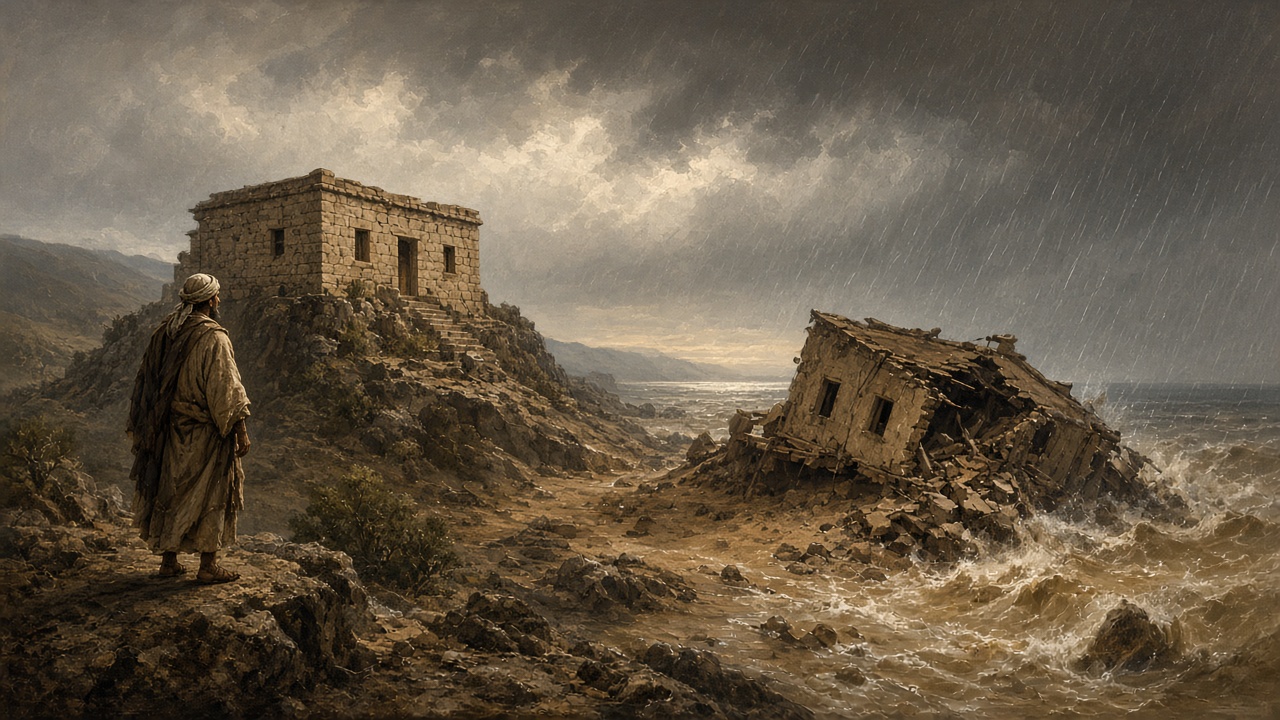
Ma'e ok mujã ame'ẽ ta ke
24A'e pandu tĩ:
—Pesarahã! Ihẽ je'ẽha rehe amõ hendu katu. Pe, aja ma'ema'e rahã, ukwa katu ame'ẽ ke a'e. Kuja saka. Y rake ok ke a'e mujã. Ok pyter ke a'e jytyka katu te. Ok kangwer aja tĩ. Jytyka katu te tĩ. A'erehe katak ym te. 25Pe, aman ukyr hũ. Ywytu keruhũ peju hũ tipe. Y tiha tĩ. Upa munde. Y ombor ym. Ywytu keruhũ ombor ym tĩ. Ok pyter ke jytyka katu te. Ok kangwer ke aja tĩ. Jytyka katu te tĩ. A'erehe u'ar ym ame'ẽ ok.
26—Pe, amõ riki ihẽ je'ẽha rehe hendu tipe. Pe, aja a'e ma'ema'e ym rahã, ka'u te'e ame'ẽ ke a'e. Kuja saka. Y rake ok ke a'e mujã. Ywy ku'i 'ar pe mujã. 27Pe, aman ukyr hũ. Y tiha oho. Pe, ywytu keruhũ peju hũ ok rehe. Pahar ame'ẽ ok u'ar. Tũ! Aja riki — aja Jesu mu'e.
(Ok riki amõ ixoha aja saka. A'erehe Jesu je'ẽha rehe amõ hendu katu ta me'ẽ te'e. Je'ẽha mujekwa, aja ma'ema'e ta me'ẽ te'e tĩ.)
Jesu ukwa katu
28Upa aja me'ẽ Jesu pandu rahã, hendu ame'ẽ ta pandu:
—Mã! A'e mu'e katu! 29Moise je'ẽha mu'e, ame'ẽ ta aja ym a'e. Anĩ. Jesu pandu rahã, a'e je'ẽha te reko aja a'e mu'e — aja ukwa.
Did you know?
Judgment, the narrow way, and a firm foundation
- The event record dates the start of the Sermon on the Mount to AD 28 and its duration to one day. This chapter ends as the crowds are astonished at Jesus’ teaching, because he taught as one who had authority, and not as their scribes.Sources: Sermon on the Mount · the Bible text itself
- Jesus warns that the judgment a person pronounces, and the measure that person uses, will be turned back on them. He pictures someone who notices a speck in a brother’s eye yet misses a beam in their own, and he says the beam must be removed first.Sources: the Bible text itself
- The chapter calls doing to others as you would have them do to you the essence of the Law and the Prophets. It contrasts a wide gate and broad way that leads to destruction, which many enter, with a small gate and narrow way that leads to life, which few find, and it compares hearing these words and acting on them to a house built on rock rather than on sand.Sources: the Bible text itself
Notes written with AI assistance from open sources (Theographic Bible Metadata, CC BY-SA 4.0; Easton’s Bible Dictionary, public domain) and reviewed before publishing.
Credits and license for this translation
Tupã Je'ẽha
New Testament in Kaapor (BR:urb:Kaapor)
copyright © 2012 Wycliffe Bible Translators, Inc.
Language: Kaapor
Translation by: Wycliffe Bible Translators, Inc.
Copyright Information
© 2012, Wycliffe Bible Translators, Inc. All rights reserved.
This translation text is made available to you under the
terms of the Creative Commons License: Attribution-Noncommercial-No Derivative Works.
( http://creativecommons.org/licenses/by-nc-nd/3.0/ )
In addition, you have permission to port the text to different file formats, as long as you
do not change any of the text or punctuation of the Bible.
You may share, copy, distribute, transmit, and extract portions
or quotations from this work, provided that you include the above copyright
information:
You must give Attribution to the work.
You do not sell this work for a profit.
You do not make any derivative works that change any of the actual words or punctuation of the Scriptures.
Permissions beyond the scope of this license may be
available if you contact
us with your request.
The New Testament
in Kaapor
© 2012, Wycliffe Bible Translators, Inc. All rights reserved.
This translation is made available to you under the terms of the
Creative Commons Attribution-Noncommercial-No Derivatives license 4.0.
You may share and redistribute this Bible translation or extracts from it in any format, provided that:
You include the above copyright and source information.
You do not sell this work for a profit.
You do not change any of the words or punctuation of the Scriptures.
Pictures included with Scriptures and other documents on this site are licensed just for use with those Scriptures and documents.
For other uses, please contact the respective copyright owners.
2014-04-27
Source: http://ebible.org/urbNT/ · eBible.org