John 7
Tupã Je'ẽha · Tap a verse to see its cross-references.
Jesu mu ta rehe har
1Ajame'ẽ ke Ngariréi ywy rupi Jesu wata oho ixo. Jundéi ywy rupi a'e wata tar ym. Jywyr tar ym. A'ep pe har ta a'e ke jukwa tar katu. A'e ke jundéu awa tama'e kapitã ta jukwa tar katu. A'erehe ame'ẽ rupi oho tar ym. 2Pe, jundéu awa ta mi'u matyriha ke rehe uhyk tate. Arahã kupixa rymy'y rehe xipa mujã. (Ame'ẽ wyr pe jundéu awa ta ukwer. Aja ymanihar ta ma'ema'e.) Ame'ẽ ke jundéu awa ta ukwa ukwa ta ixo apo tĩ. Ame'ẽ rehe imi'u ngã matyr. 3[Jesu rehe imu ta jurujar ym. A'erehe puka puka hũ ehe.] A'erehe kuja pandu ipe.
—Sengi eho. Jundéi ywy pe eho, Jerusarẽ ok ta pe. Aja rahã nde erema'ema'eha ke rehe jumu'eha ta usak ta. Marã ka ym amõ ma'eha, ame'ẽ ke nde erema'ema'e. Ame'ẽ ke rehe a'eta usak ta. Jande jasak ta tĩ. Ima'e ma'eha ke amõ ta pe amõ mujesak tar katu rahã, ima'e ma'eha ke mukanim ym awa. Aja nde tĩ. Emujesak katu. Aja rahã, nde ke Tupã muwyr, aja ngã ukwa ta. Jande jakwa ta tĩ — aja Jesu pe.
6A'e pandu:
—Ihẽ ahoha angaha rehe uhyk ym we rĩ. Tupã rehe ipy'a ym ame'ẽ ta parahy ihẽ rehe. Upa ma'e ka'u te'eha ke a'eta ma'ema'e ixo, aja ihẽ apandu pandu a'eta pe. A'erehe ihẽ rehe a'eta parahy. Pehẽ rehe parahy ym. A'erehe ngã mi'u matyriha pe peho tar katu rahã, pesak peho. Ihẽ ahoha angaha ke rehe uhyk ym we rĩ. A'erehe pehẽ namõ ihẽ aho ym ta — aja imu ta pe Jesu pandu.
9Aja me'ẽ a'e pandu. Pe, Ngariréi ywy pe a'e pyta we rĩ.
Ngã mi'u matyriha rehe Jesu usak oho
10Ngã mi'u matyriha rehe imu ta upa oho rahã, haikwer rupi Jesu oho tĩ. Ngã ukwa ym ha rupi oho. 11Ngã mi'u matyr, ame'ẽ pe heta ngã ixo. Ame'ẽ ta rupi Jesu ke jundéu awa tama'e kapitã ta kekar kekar ixo tipe. “Myp ixo my?” aja a'eta pandu pandu. 12Hetaha ta ngi har amõ amõ ta pandu pandu hũ ehe har. Amõ ta pandu:
—Sawa'e katu ame'ẽ ke a'e — aja.
Amõ ta pandu:
—Anĩ. Muka'u te'e hũ ngã ke — aja naĩ.
13Jundéu awa tama'e kapitã ta ngi a'eta kyje. A'erehe hetaha ta ukwa ym ha rupi a'eta pandu pandu ehe har. Wewe katu pandu pandu.
14Ngã mi'u matyriha rehe heta ngã ukwer ta. Awa po wajar mokõi hetaha ukwer ta. Pe, mahapyrihar rehe uhyk. Pyter pe uhyk. Arahã Tupã rehe ngã jumu'eha renda keruhũ pe Jesu mu'e oho. 15Pe, jundéu awa tama'e kapitã ta pandu pandu a'eta jupe:
—Mã! Myja a'e ukwa katu my? Jundéu awa tama'e paper renda pe a'e jumu'e ym riki — aja a'eta jupe.
16Jesu pandu:
—Ihẽ atu akwa ame'ẽ ke ihẽ amu'e ym ngã pe. Ihẽ ke muwyr. A'e ukwa katu ame'ẽ ke ihẽ amu'e katu. 17Ihẽ akwa ame'ẽ ke ihẽ amu'e my? Anĩ. Aja ym. Ko Tupã mujekwa ame'ẽ ke ihẽ amu'e. Tupã putar ame'ẽ ke amõ ma'ema'e rahã, kuja ukwa katu ta. Ko Tupã mujekwa ame'ẽ ke ihẽ amu'e, aja ukwa katu ta. 18Amõ ukwa ame'ẽ ke a'e pandu rahã, katu ehe har amõ pandu. Ame'ẽ ke putar. Ihẽ anĩ. Ihẽ ke muwyr. Katu ehe har amõ ta pandu. Ame'ẽ ke ihẽ aputar katu. A'erehe ihẽ apandu ame'ẽ ke jetehar te ke. Ngã ke ihẽ amuka'u te'e ym. 19Yman Tupã je'ẽha ke Moise mupinim pehẽ pe tipe. Anĩ. Pehendu ym te ehe. Moise je'ẽha rehe ihẽ riki ahendu ym, aja pekwaha naĩ. A'erehe ihẽ ke pejukwa tar katu — aja Jesu pandu.
20Amõ amõ pandu:
—Mã! Anĩ. Nde ke jukwa tar ym awa! Ãjã nde py'a rehe ihĩ nahã my, a'erehe: “Ihẽ ke pejukwa tar katu” aja nde erepandu — aja Jesu pe.
21A'e pandu:
—Jundéu awa tama'e putu'uha 'ar rahã, marã ka ym amõ ma'eha, ame'ẽ ke ihẽ ama'ema'e. Ma'e ahy ixo ame'ẽ ke ihẽ amukatu. “Ihẽ aparaky te'e” aja pekwaha naĩ. “Ma'ewã my?” aja pepandu. 22(Pehẽ aja tĩ. Peparaky te'e tĩ. Putu'uha 'ar rahã, ma'e ke pema'ema'e tĩ.) Jundéu awa tama'e putu'uha 'ar rahã, kurumĩ ra'yr rehe ihĩ, ame'ẽ pirer ke pejupã. (Aja rahã, jundéu awa ke a'e. Tupã usak katu ehe, aja mujekwa.) Moise mupinim aja pejupã. (Aja rahã, peparaky te'e tĩ.) [Ame'ẽ jupãha ke Moise mupinim py ym. Amõ mupinim py. Ymanihar Moise ramũi riki pandu py.] 23Moise mupinim, ame'ẽ ke rehe pehendu katu, a'erehe kurumĩ ra'yr rehe ihĩ pirer ke pejupã. Putu'uha 'ar rahã, pejupã tĩ. (Aja rahã, peparaky te'e tĩ.) Aja rahã putu'uha 'ar rahã, amõ ke ihẽ amukatu rahã, ma'erehe peparahy ihẽ rehe my? Katu ym aja. 24Ma'e ke rehe pesak, pe, pahar: “Ko katu” aja pepandu ym. Anĩ rahã, pahar: “Ko katu ym” aja pepandu ym tĩ. I'i atu te pekwa pekwa pexo. Aja rahã jõ: “Ko katu.” Anĩ rahã: “Ko katu ym” aja pepandu katu. Jetehar rupi pepandu katu — aja Jesu pandu.
Jesu riki Kirisutu, Tupã muwyr ame'ẽ ke
25Jerusarẽ ok ta pe har ta ngi har amõ amõ ta pandu:
—Ko riki Jesu. A'e ke jundéu awa tama'e kapitã ta jukwa tar katu. 26Pesarahã! Ngã pe a'e pandu pandu ixo. Jumukanim ym a'e ixo. Je'ẽha ke muputu'u ym awa. A'e riki Tupã muwyr ame'ẽ ke, aja jundéu awa tama'e kapitã ta ukwa katu nahã my apo. 27Anĩ nahã my. Tupã muwyr ame'ẽ ke uwyr rahã, my ngi uwyr my? Ukwa ym awa. Hekoha jakwa ym. Peme'ẽ sawa'e anĩ. Hekoha jakwa katu. (Nasare ok ta pe har ke a'e.) A'erehe my ngi a'e uwyr ame'ẽ ke jakwa katu. A'erehe peme'ẽ sawa'e Tupã muwyr ame'ẽ ke a'e aja ym nahã my — aja ngã pandu pandu naĩ.
28Tupã rehe ngã jumu'eha renda keruhũ pe Jesu mu'e u'am rahã, hãtã pandu ngã pe:
—Ihẽ rehe har pekwa katu my? Anĩ. Pekwa ym riki. Pesarahã! Ihẽ aputar, a'erehe ihẽ ajur. Anĩ. Aja ym. Ihẽ ke amõ muwyr. Jetehar te ke pandu ame'ẽ ke a'e. Ehe har pekwa ym. 29Ehe har ihẽ akwa katu. A'e ixo. Ingi ihẽ ajur, a'erehe ehe har akwa katu. Ihẽ ke a'e muwyr. (Tupã ke a'e) — aja Jesu pandu.
30A'e pyhykiha ke jundéu awa tama'e kapitã ta manga te'e ixo. Anĩ. Pyhyk ym ngã. A'e manõha angaha ke rehe uhyk ym we rĩ. A'erehe pyhyk ym te ngã. 31Ko riki heta ame'ẽ ta ngi har amõ amõ ta jurujar katu ehe. A'eta pandu:
—Tupã muwyr ame'ẽ ke uwyr rahã, marã ka ym amõ ma'eha, ame'ẽ ke a'e ma'ema'e ta. Aja katu ame'ẽ ke peme'ẽ sawa'e ma'ema'e. A'erehe a'e riki Tupã muwyr ame'ẽ ke, aja jakwa katu — aja jurujar katu ehe ame'ẽ ta pandu. |src="CN01723B.TIF" size="col" copy="© 1978 David C. Cook Publishing Co." ref="Juãw 7.30-31"
Jesu ke harõha ta pyhyk ta oho
32“A'e riki Tupã muwyr ame'ẽ ke” aja heta ame'ẽ ta wewe pandu pandu. Ame'ẽ ke rehe parise ta hendu. A'erehe Jesu koty harõha ta ke a'eta mondo. Tupã rehe ngã jumu'eha renda keruhũ harõha ta ke ame'ẽ ta. Jundéu awa tama'e pa'ihu ta mondo tĩ. Jesu ke harõha ta pyhyk ta oho. 33Jesu pandu:
—Pehẽ namõ ihẽ apyta we ta rĩ. Pe, ihẽ aho ta. A'engi ihẽ ke muwyr, ame'ẽ koty ihẽ ajywyr ta aho. 34Ihẽ ke pekekar ta. Ihẽ ke pemahem ym te ta. Ihẽ aho ame'ẽ pe marã ka ym pehoha — aja ngã pe Jesu pandu. (“Ihẽ aho ta” aja pandu rahã: “A'e manõ ta” aja mujekwa.)
35Pe, jundéu awa tama'e kapitã ta pandu pandu a'eta jupe:
—Jande jamahem ym, ame'ẽ pe a'e oho ta. My ihon ta my? Amõ awa tama'e ok ta pe a'e oho ta my? A'ep jundéu awa aja ym ame'ẽ ta ke a'e mu'e ta oho my? 36A'e pandu: “Ihẽ ke pekekar ta. Ihẽ ke pemahem ym ta. Ihẽ aho ame'ẽ pe marã ka ym pehoha” aja a'e pandu. Myja ame'ẽ my? Jakwa ym jande — aja a'eta jupe.
Y mundu aja saka awa rehe ihĩ katu
37Ngã mi'u matyriha riki upa. Weraha a'ejõhar ke. Ame'ẽ wera rahã, hury katu te ngã. Arahã Jesu pu'am. Pe, hãtã pandu ngã pe:
—Jyngwéi ame'ẽ ke mã peja ihẽ koty ejur. Amõ y ke ihẽ ame'ẽ ta. Mã peja ame'ẽ ke e'u katu. 38Kuja Tupã je'ẽha rehe panduha ihĩ:
“Ihẽ rehe amõ jurujar katu rahã, y aja saka ipy'a ngi uhem ta. Ame'ẽ ke muxuwe katu ngã ke” aja Tupã je'ẽha rehe panduha ihĩ — aja Jesu pandu.
39[Y aja saka ipy'a ngi uhem, aja Jesu pandu rahã, Tupã'ã ipy'a rehe ihĩ katu, ame'ẽ rehe har a'e pandu. Jurujar katu ehe ame'ẽ ta py'a pe a'e muwyr ta. Arahã ngã py'a rehe Tupã'ã ihĩ ym we rĩ. Ipái koty Jesu jywyr ym we rĩ. A'ep ipái pandu ta: “Nde katu te ame'ẽ ke nde” aja. A'ep jywyr ym we rĩ. A'erehe ngã py'a rehe Tupã'ã ihĩ ym we rĩ.]
Amõ koty koty ngã ukwa
40Jesu pandu ame'ẽ ke rehe heta ngã hendu. Amõ ta pandu:
—Jete. Peme'ẽ riki Tupã je'ẽha pandu ame'ẽ ke a'e. Jaharõ jaxo ame'ẽ ke a'e — aja pandu.
41Amõ ta pandu:
—Anĩ. A'e riki Kirisutu. Kapitã keruhũ aja Tupã mu'am ame'ẽ ke a'e — aja.
Amõ ta pandu:
—Anĩ. Peme'ẽ riki ngariréi ywy pe har ke a'e. Ame'ẽ ywy ngi Kirisutu uwyr ym ta. A'erehe peme'ẽ riki Kirisutu ym a'e. 42Kuja Tupã je'ẽha rehe panduha ihĩ:
“Kirisutu riki Ndawi rainõ. Merẽ ok ta pe a'e u'ar ta. A'ep yman Ndawi ixo, ame'ẽ ok ta pe Kirisutu u'ar ta” aja Tupã je'ẽha rehe panduha ihĩ.
—Peme'ẽ riki ngariréi ywy pe har ke a'e. A'erehe peme'ẽ riki Kirisutu ym — aja amõ ta pandu naĩ.
43Jesu rehe har muka'u te'e ngã panduha. A'erehe amõ koty koty ngã ukwaha. 44Amõ ta pyhyk tar katu a'e ke. Pe, jukwa tar katu. Anĩ. Pyhyk ym we rĩ.
Jundéu awa tama'e kapitã ta jurujar ym ehe
45Tupã rehe ngã jumu'eha renda keruhũma'e harõha ta jywyr oho. Jundéu awa tama'e pa'ihu ta koty jywyr oho. Parise ta koty jywyr oho tĩ. Pe, harõha ta pe ame'ẽ ta pandu:
—Ma'erehe perur ym Jesu ke my? — aja a'eta pe.
46Harõha ta pandu:
—Mã! A'e pandu katu te. A'e je'ẽha te reko, aja pandu katu te a'e. A'erehe jarur ym — aja pandu.
47Parise ta pandu:
—Mã! Pehẽ ke a'e muka'u te'e rãi tĩ. 48Jundéu awa tama'e kapitã ta ngi har amõ jurujar katu ehe my? Anĩ. Nixói. Parise ta ngi har aja tĩ. Jurujar ym ehe tĩ. 49Mã! Paite ame'ẽ hetaha ta jurujar katu ehe. Anĩ. Peme'ẽ ta Moise je'ẽha ke ukwa ym. A'erehe ame'ẽ ta ke Tupã mupyrara ta — aja parise ta pandu.
50Parise ta ngi har amõ ixo. Her Nikonde. Amukwehe we Jesu rehe a'e usak oho. Ame'ẽ ke a'e. Inamõ ixo ame'ẽ ta pe a'e pandu:
51—“A'e jaxer” aja Jesu rehe har japandu rahã, katu ym. “Peme'ẽ riki ma'e ka'u te'eha ke ma'ema'e” aja jande japandu rahã, ehe har jahendu py ta. A'e ma'ema'eha ke jande jakwa py ta. Aja jande je'ẽha rehe panduha ihĩ. A'erehe: “A'e jaxer” aja japandu rahã, katu ym — aja Nikonde pandu.
52Pe, amõ parise ta pandu ipe, Nikonde pe:
—Mã! Nde Jesu kotyhar nahã my tĩ. A'erehe ngariréi ywy pe har nde my tĩ? Tupã je'ẽha rehe esak katu! Aja rahã, nde erekwa katu ta tĩ. Esarahã! Ngariréi ywy ngi Tupã je'ẽha pandu ame'ẽ ke uwyr ym te ta. Mã! Nde ereka'u te'e — aja ipe.
Arahã, parise ta jy'ariha upa. Upa pandu rahã, hok pe a'eta jywyr oho.
Did you know?
Jesus at the Feast of Tabernacles
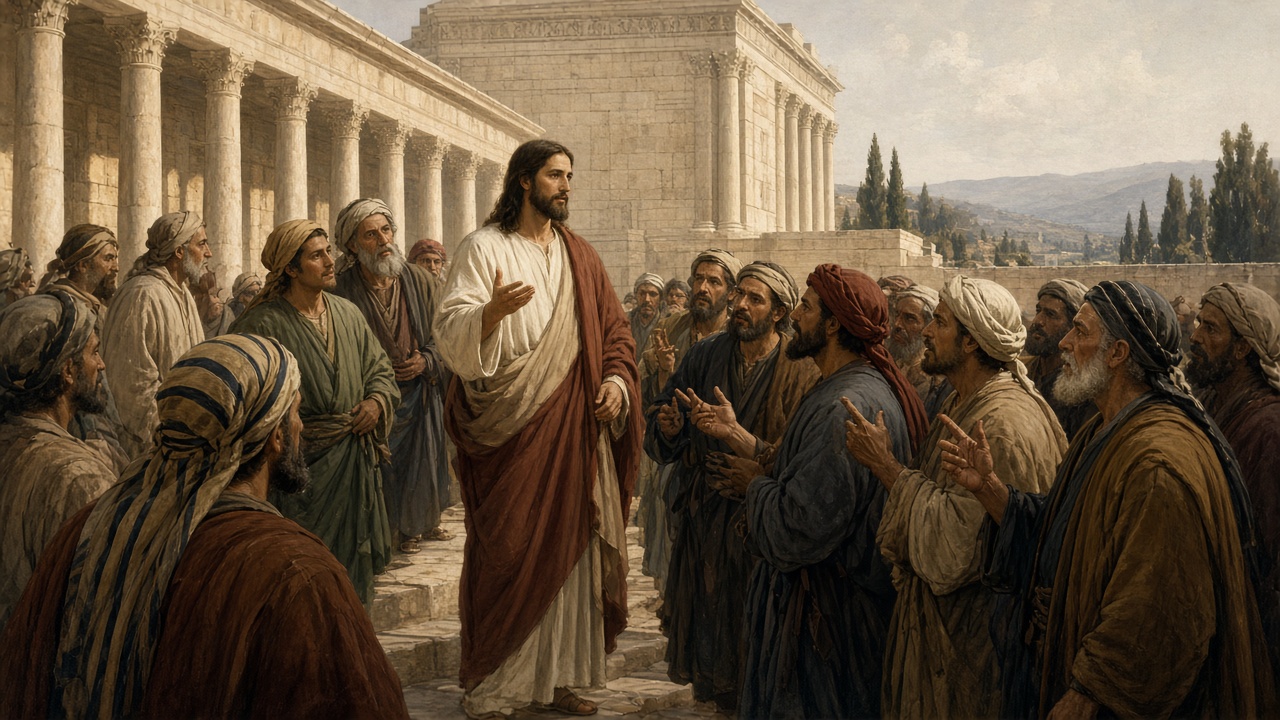
- As the Jewish Feast of Tabernacles, a seven-day feast, drew near, Jesus stayed in Galilee and avoided Judea, where people were trying to kill him. In his time Judea was the southernmost of the three Roman divisions of Palestine, distinct from Galilee and Samaria; he later went up to the feast in secret and taught in the temple courts.Sources: the Bible text itself · Feast of Tabernacles · Judea
- The crowds were divided over where the Christ would come from. Some said that Scripture places him in David's line and in Bethlehem, the village where David, the eighth and youngest son of Jesse, lived; others objected that he could not come from Galilee, a region long called Galilee of the Gentiles, and the Pharisees insisted that no prophet comes from there.Sources: the Bible text itself · David · Galilee
- Nicodemus, a Pharisee and a member of the Sanhedrin, had earlier come to Jesus at night. When the officers sent to arrest Jesus returned without him, Nicodemus protested and asked whether their law condemned a man before hearing him and finding out what he had done.Sources: the Bible text itself · Nicodemus
Notes written with AI assistance from open sources (Theographic Bible Metadata, CC BY-SA 4.0; Easton’s Bible Dictionary, public domain) and reviewed before publishing.
Places in this chapter
- Galilee · 32.760, 35.527 · verses 1, 3, 9, 41, 52
- Judea · Today: Judea 1 · 31.777, 35.234 · verses 1, 3
- Jerusalem · 31.777, 35.234 · verse 25
- Bethlehem · 31.704, 35.208 · verse 42
Only places identified with high confidence are shown (90% or more according to the scholarly sources compiled by OpenBible). Period map: DARE (Digital Atlas of the Roman Empire), CC BY 4.0; modern map: © OpenStreetMap contributors; places: OpenBible.info (CC BY 4.0).
Credits and license for this translation
Tupã Je'ẽha
New Testament in Kaapor (BR:urb:Kaapor)
copyright © 2012 Wycliffe Bible Translators, Inc.
Language: Kaapor
Translation by: Wycliffe Bible Translators, Inc.
Copyright Information
© 2012, Wycliffe Bible Translators, Inc. All rights reserved.
This translation text is made available to you under the
terms of the Creative Commons License: Attribution-Noncommercial-No Derivative Works.
( http://creativecommons.org/licenses/by-nc-nd/3.0/ )
In addition, you have permission to port the text to different file formats, as long as you
do not change any of the text or punctuation of the Bible.
You may share, copy, distribute, transmit, and extract portions
or quotations from this work, provided that you include the above copyright
information:
You must give Attribution to the work.
You do not sell this work for a profit.
You do not make any derivative works that change any of the actual words or punctuation of the Scriptures.
Permissions beyond the scope of this license may be
available if you contact
us with your request.
The New Testament
in Kaapor
© 2012, Wycliffe Bible Translators, Inc. All rights reserved.
This translation is made available to you under the terms of the
Creative Commons Attribution-Noncommercial-No Derivatives license 4.0.
You may share and redistribute this Bible translation or extracts from it in any format, provided that:
You include the above copyright and source information.
You do not sell this work for a profit.
You do not change any of the words or punctuation of the Scriptures.
Pictures included with Scriptures and other documents on this site are licensed just for use with those Scriptures and documents.
For other uses, please contact the respective copyright owners.
2014-04-27
Source: http://ebible.org/urbNT/ · eBible.org