John 10
Tupã Je'ẽha · Tap a verse to see its cross-references.
Arapuharan ta usakiha rehe har Jesu pandu
1Ajame'ẽ ke arapuharan ta usakiha rehe har Jesu pandu ngã pe:
—Pesarahã! Arapuharan kurar rukwen rupi amõ ixe ym oho rahã, ame'ẽ riki mukanĩha ke. Amõ koty rupi ixe oho, mukanim raho. 2Hukwen rupi ixe oho, ame'ẽ riki usakiha ke. Arapuharan ta usakiha ke. 3Hukwen harõha hukwen ke pirar ta ipe. Pe, her rupi usakiha pukái rahã, arapuharan ta hendu katu. Pe, soroka pe upa muhem raho. 4Upa muhem raho rahã, usakiha riki oho py. Arapuharan ta haikwer rupi oho. Usakiha pukáiha ukwa katu. Haikwer rupi oho. 5Amõ pukái rahã, ame'ẽ raikwer rupi oho ym ta. Ijar pukáiha aja ym hendu, a'erehe haikwer rupi oho ym ta. Ujan ta oho ingi — aja Jesu pandu.
6Myja me'ẽ arapuharan ta usakiha my, ame'ẽ ke Jesu pandu. Anĩ. (Arapuharan ta usakiha rehe har Jesu pandu rahã, juehe har a'e mujekwa uĩ.) Ame'ẽ ke parise ta ukwa ym.
Jesu riki arapuharan ta usakiha katu aja a'e
7Kuja Jesu pandu tĩ:
—Pesarahã! Ihẽ riki arapuharan kurar rukwen aja saka. (Aja rahã, ihẽ rehe jurujar katu ame'ẽ ta riki ihẽ pái keruhũ koty oho ta.) 8Amõ usakiharan ta heta ixo. Tupã rehe har mu'eharan ta ke ame'ẽ ta. Ame'ẽ ta mukanĩha aja saka. Ihẽ nixói rahã, uwyr. Ame'ẽ ta te'e pandu. Anĩ. Ame'ẽ ta rehe arapuharan ta hendu ym. (Aja rahã, Tupã rehe jurujar katu ame'ẽ ta hendu ym.) Mu'eharan ta rehe hendu ym.
9—Kurar rukwen aja saka ihẽ. Arapuharan ta ixe oho. (Aja rahã, ihẽ rehe jurujar katu ame'ẽ ta ke ihẽ pái keruhũ namõ ixo ta.) Pe, hukwen rupi arapuharan ta ixe oho. Uhem oho tĩ. Pe, kãpĩ heta ame'ẽ rupi u'u oho. Aja usakiha usak katu, arapuharan ta rehe. Aja ihẽ tĩ. Ihẽ kotyhar ta rehe ihẽ asak katu tĩ. A'eta rehe ahaihu katu tĩ. 10Mukanĩha uwyr rahã, mukanim ta uwyr. Arapuharan ke jukwa ta tĩ. Mai ta uwyr tĩ. Ihẽ anĩ. Ihẽ rehe jurujar katu ame'ẽ ta pe uhãha ihẽ ame'ẽ ajur. Hury katu hũ ta.
11—Ihẽ riki usakiha katu ame'ẽ ke ihẽ. Usakiha katu ame'ẽ manõ ta. Aja rahã, arapuharan ta manõ ym ta. Aja ihẽ tĩ. Ihẽ amanõ ta. A'erehe ihẽ rehe jurujar katu ame'ẽ ta Tupã namõ ixo ta. Mupyraraha renda pe oho ym te ta. 12Amõ paraky ame'ẽ rehe arapuharan jar muhepy. Usakiha muhepyha ke. Pe, so'o jarõ ame'ẽ ke uhyk rahã, ame'ẽ parakyha ujan ta oho. Usakiha te aja ym a'e. Arapuharan ta ima'e ym. Ijar ym a'e. A'erehe ujan oho. Pe, amõ amõ arapuharan ke so'o jarõ ame'ẽ jukwa. Amõ koty koty muhãi mondo tĩ. 13Tamatarer ke jõ parakyha putar. Arapuharan ta rehe a'e ipy'a ym, a'erehe ujan oho.
14—Ihẽ riki usakiha katu ame'ẽ ke ihẽ. Awa ihẽ kotyhar ta my? Ame'ẽ ke akwa katu. Pe, ihẽ rehe har ihẽ kotyhar ta ukwa katu tĩ. 15Aja ihẽ pái tĩ. Ihẽ rehe har ihẽ pái keruhũ ukwa katu. Pe, ihẽ pái keruhũ rehe har ihẽ akwa katu tĩ. Aja ihẽ kotyhar ta ke ihẽ akwa katu tĩ. Pe, ihẽ amanõ ta. A'erehe ihẽ rehe jurujar katu ame'ẽ ta ihẽ pái namõ ixo ta.
16—Amõ arapuharan ta ixo. Aja amõ awa ta ixo. Ame'ẽ ta ke kurar pe amuxe ta me'ẽ te'e. Aja ihẽ rehe har ame'ẽ ta pe ihẽ amu'e katu ta. (Aja rahã, ame'ẽ ta ihẽ rehe hendu katu ta.) Peteĩhar henda pe johu ixo ta. Ame'ẽ ta johu peteĩ usakiha rehe jõ hendu katu ta. Ihẽ riki ame'ẽ usakiha ke.
17—“Nde ereputar rahã, ihẽ amanõ ta” aja ihẽ pái pe apandu. A'erehe ihẽ rehe ihẽ pái keruhũ ipy'a katu. Ihẽ amanõ rahã, ihẽ ke ihẽ pái mukwera katu ta muhem tĩ. 18Ihẽ aputar ym rahã, ihẽ ke amõ jukwa ym ta. Ihẽ jõ aputar rahã, ihẽ ke amõ jukwa ta. Ihẽ pe ihẽ pái keruhũ pandu: “Ne jõ nde ereputar rahã, nde eremanõ ta. Pe, ne jõ nde ereputar rahã, nde erekwera katu ta erehem tĩ” — aja Jesu pandu ngã pe.
19Jesu pandu ame'ẽ ke rehe jundéu awa tama'e kapitã ta amõ koty koty ukwa. 20Amõ amõ ta pandu:
—Ipy'a rehe ãjã ihĩ. A'e riki ka'u te'e. Ma'ewã pehendu ehe — aja ngã.
21Amõ ta pandu:
—Anĩ. Ipy'a rehe ãjã ihĩ rahã, marã ka ym aja me'ẽ katu panduha. Eha ym te ame'ẽ ta reha ke marã ka ym ãjã mukatuha. (A'erehe ipy'a rehe ãjã ihĩ ym aja jakwa katu) — aja Jesu rehe har ngã pandu.
Aja amõ koty koty pandu.
Jesu ke jundéu awa ta putar ym
22Pe, amõ ngã mi'u matyriha rehe uhyk oho. Arahã yman Tupã rehe ngã jumu'eha renda keruhũ mukatu. Ame'ẽ ke jundéu awa ta ukwa ukwa ixo apo. Jerusarẽ ok ta pe jumuhury katu ta ngã juehe. Rysã riki arahã. 23Pe, Tupã rehe ngã jumu'eha renda keruhũ rymy'y wyr rupi Jesu wata oho ixo. Jumu'eha renda keruhũ rymy'y rer: “Saromã.” 24Pe, jundéu awa tama'e kapitã ta juramã uwyr ehe. A'eta pandu:
—Aja te'e jande ke nde eremuka'u te'e my. Jetehar te ke epandu jande pe. Nde riki Kirisutu my? Kapitã keruhũ aja Tupã mu'am ame'ẽ ke nde my? — aja Jesu pe.
25A'e pandu:
—Upa ihẽ apandu pehẽ pe tipe. Pe, pejurujar ym. Ihẽ pái keruhũ je'ẽha rupi marã ka ym amõ ma'eha, ame'ẽ ke ihẽ ama'ema'e. Ame'ẽ riki ihẽ rehe har mujekwa tipe. 26Pejurujar tar ym ehe. Ihẽ kotyhar ta aja ym pehẽ. Ihẽma'e arapuharan ta aja ym pehẽ. A'erehe pejurujar ym ta. 27Ihẽ apandu ame'ẽ ke rehe ihẽ kotyhar ta hendu katu. Ihẽma'e arapuharan ta aja a'eta. A'eta rehe har ihẽ akwa katu. Pe, ihẽ namõ a'eta jumu'e ixo. 28A'eta ke ihẽ amuhã katu ta. Mupyraraha renda pe oho ym te ta. Ihẽ ngi a'eta ke mukanim ym te ta awa. 29Ihẽ rehe ame'ẽ ta ke ihẽ pái keruhũ muhyk katu. (Aja rahã, ihẽ rehe ame'ẽ ta jurujar katu.) I'ar koty te we a'e pyrãtãha ke. Aja rahã, ihẽ pái ngi ihẽ kotyhar ta ke mukanim ym te ta awa tĩ. 30Jande juja katu te jande — aja Jesu pandu ngã pe.
31Pe, jundéu awa tama'e kapitã ta ita ra'yr pyhyk tĩ. Japi ta a'e ke tĩ. Aja jukwa ta tipe. 32Jesu pandu:
—Pehẽ ruwa koty marã ka ym amõ ma'eha, ame'ẽ ke ihẽ ama'ema'e hũ. Ihẽ pái keruhũ mujekwa ihẽ pe, ame'ẽ ke ihẽ ama'ema'e hũ tĩ. My me'ẽ rehe peparahy my? Pe, ihẽ ke ita ra'yr pe pejapi tar katu my? — aja Jesu pandu.
33Kapitã ta pandu:
—Ma'e katu ame'ẽ ke nde erema'ema'e. Ame'ẽ ke rehe ita ra'yr ke jambor ym ta. Anĩ. Awa te'e nde. Tupã nde tĩ, aja nde erepandu. A'erehe nde ke ita ra'yr pe jajapi ta — aja Jesu pe.
34A'e pandu:
—Tupã je'ẽha rehe panduha ihĩ, ame'ẽ ke aja te'eha jetehar te ke. Aja jande jakwa katu. Ame'ẽ pe kuja Tupã pandu:
“Pehẽ riki tupã ta” aja.
35—Aja Moise je'ẽha rehe panduha ihĩ. Ima'e je'ẽha ke Tupã muwyr. Ame'ẽ ta pe a'e pandu: “Pehẽ riki tupã ta” aja. Aja rahã, ima'e je'ẽha ke Tupã muwyr, ame'ẽ ta riki tupã ta aja panduha ihĩ. 36Aja rahã, ame'ẽ ta 'ar koty te we ihẽ apandu katu: “Tupã ihẽ” aja. Ihẽ rehe ihẽ pái keruhũ katu usak. Kome'ẽ ywy keruhũ pe ihẽ ke a'e muwyr. Ingi ajur. A'erehe: “Tupã ra'yr ihẽ” aja ihẽ apandu katu. Aja rahã: “Nde ke jajukwa ta” aja pepandu ym ta me'ẽ te'e.
37—Ihẽ pái keruhũ putar ame'ẽ ke ihẽ ama'ema'e ym ta tipe rahã, ihẽ rehe mã peja pejurujar ym. 38Ihẽ pái keruhũ putar ame'ẽ ke ihẽ ama'ema'e katu rahã, mã peja ihẽ rehe pejurujar katu. Ihẽ rehe pejurujar ym rahã, mã peja ihẽ ama'eha rehe pesak ame'ẽ ke rehe pejurujar katu. Aja rahã, pekwa katu ta. Ihẽ pái namõ ihẽ juehe katu ihẽ axo, aja pekwa katu ta. Ihẽ namõ a'e juehe katu a'e ixo, aja pekwa katu ta tĩ — aja Jesu pandu ngã pe.
39Pe, amõ we tĩ. A'e pyhykiha ke jundéu awa tama'e kapitã ta manga tipe. Anĩ. Jesu oho te'e ingi.
40Pe, y ruwái koty Jesu jywyr oho tĩ. Y rer Jondã. Yman a'ep Juã mujahuk u'am. Ame'ẽ renda pe Jesu oho. A'ep a'e pyta. 41Heta ngã uhyk uwyr ehe. A'eta pandu:
—Tupã rehe har Juã mujekwa rahã, marã ka ym amõ ma'eha, ame'ẽ ke Juã ma'e ym. Ko riki upa a'e pandu ame'ẽ ke jetehar te ke. Kome'ẽ rehe har Juã pandu hũ, Jesu rehe har. Ame'ẽ riki upa jetehar te ke. A'erehe Tupã muwyr ame'ẽ ke ko, aja jakwa katu — aja Jesu rehe har ngã pandu.
42Pe, a'ep heta ngã jurujar katu ehe, Jesu rehe.
Did you know?
The Good Shepherd
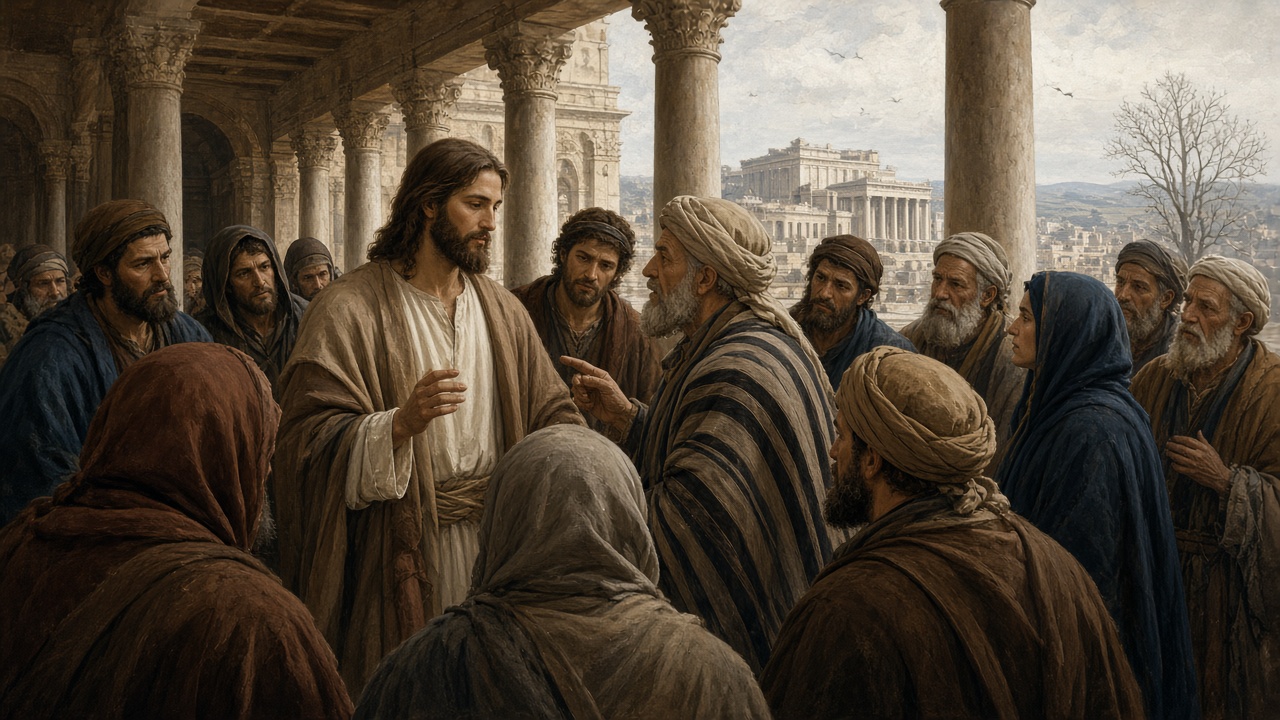
- During the Feast of Dedication in Jerusalem it was winter, and Jesus was walking in the temple courts in Solomon's Colonnade. The name Jerusalem, in a dual form, means "possession of peace" or "foundation of peace"; that form probably refers to the mountains of Zion and Moriah, or, as some suppose, to the upper and lower city. Solomon's Hebrew name, Shelomoh, means "peaceful."Sources: the Bible text itself · Jerusalem · Solomon
- A chronology of Gospel events dates the Good Shepherd teaching to AD 29, and dates a time of teaching and healing from Perea to Jerusalem to AD 30.Sources: The Good Shepherd Teaching · Teaching and Healing in Perea to Jerusalem
- Jesus then went back across the Jordan to the place where John had first been baptizing, and many people there believed in him. John was of priestly descent: his father, Zacharias, was a priest of the course of Abia, and his mother, Elisabeth, was of the daughters of Aaron. His birth, six months before that of Jesus, was foretold by an angel; those who came said that John never performed a sign, yet everything he had said about Jesus was true.Sources: the Bible text itself · John the Baptist
Notes written with AI assistance from open sources (Theographic Bible Metadata, CC BY-SA 4.0; Easton’s Bible Dictionary, public domain) and reviewed before publishing.
Places in this chapter
- Jerusalem · 31.777, 35.234 · verse 22
- Solomon’s Portico · Today: in Jerusalem · 31.777, 35.234 · verse 23
- Jordan · Today: Jordan River · 31.761, 35.558 · verse 40
Only places identified with high confidence are shown (90% or more according to the scholarly sources compiled by OpenBible). Period map: DARE (Digital Atlas of the Roman Empire), CC BY 4.0; modern map: © OpenStreetMap contributors; places: OpenBible.info (CC BY 4.0).
Credits and license for this translation
Tupã Je'ẽha
New Testament in Kaapor (BR:urb:Kaapor)
copyright © 2012 Wycliffe Bible Translators, Inc.
Language: Kaapor
Translation by: Wycliffe Bible Translators, Inc.
Copyright Information
© 2012, Wycliffe Bible Translators, Inc. All rights reserved.
This translation text is made available to you under the
terms of the Creative Commons License: Attribution-Noncommercial-No Derivative Works.
( http://creativecommons.org/licenses/by-nc-nd/3.0/ )
In addition, you have permission to port the text to different file formats, as long as you
do not change any of the text or punctuation of the Bible.
You may share, copy, distribute, transmit, and extract portions
or quotations from this work, provided that you include the above copyright
information:
You must give Attribution to the work.
You do not sell this work for a profit.
You do not make any derivative works that change any of the actual words or punctuation of the Scriptures.
Permissions beyond the scope of this license may be
available if you contact
us with your request.
The New Testament
in Kaapor
© 2012, Wycliffe Bible Translators, Inc. All rights reserved.
This translation is made available to you under the terms of the
Creative Commons Attribution-Noncommercial-No Derivatives license 4.0.
You may share and redistribute this Bible translation or extracts from it in any format, provided that:
You include the above copyright and source information.
You do not sell this work for a profit.
You do not change any of the words or punctuation of the Scriptures.
Pictures included with Scriptures and other documents on this site are licensed just for use with those Scriptures and documents.
For other uses, please contact the respective copyright owners.
2014-04-27
Source: http://ebible.org/urbNT/ · eBible.org