Hebrews 5
Tupã Je'ẽha · Tap a verse to see its cross-references.
1Sehar sawa'e ta ngi har pa'i keruhũ ke jande jajo'ok. A'e riki mukatuha aja saka. Tupã namõ mukatuha. Ma'e ke amõ ma'ema'e ta me'ẽ te'e, ame'ẽ ke henda ke pe pa'i keruhũ ma'ema'e. A'erehe Tupã rehe ipy'a ke amõ moĩ moĩ rahã, ma'e ke pa'i keruhũ riki me'ẽ me'ẽ Tupã pe. Ma'e ka'u te'eha ma'eha ke ipy'a ngi Tupã juhyk, ame'ẽ ke amõ putar rahã, arapuharan ke a'e werur, pa'i keruhũ pe. Pe, ame'ẽ ke pa'i keruhũ hapy. Aja jundéu awa ta ma'ema'eha ke. 2Pa'i keruhũ awa te'e a'e tĩ. A'erehe pitu te'e a'e tĩ. A'erehe amõ ta pe wewe katu pandu. Amõ ta ukwa ym ame'ẽ ta ke. Ka'u te'eha ma'ema'eha namõ ixo ame'ẽ ta ke tĩ. Ame'ẽ ta pe pa'i keruhũ wewe katu pandu. 3A'e pitu te'e tĩ. A'erehe ma'e ka'u te'eha ke a'e ma'ema'e tĩ. A'erehe ima'e ka'u te'eha ma'eha ke rehe arapuharan ke a'e hapy tĩ. Aja Tupã pe pandu: “Ihẽ py'a ke ejuhyk apo 'y” aja. Ngã ma'e ka'u te'eha ma'ema'eha ke rehe arapuharan ke a'e hapy tĩ.
4“Ihẽ riki pa'i keruhũ wan ta” aja ym sawa'e jeje jumu'am. Anĩ. Tupã putar, aja amõ mu'am: “Pa'i keruhũ wan ta nde” aja. Arã riki aja. Yman amõ pandu ipe: “Nde riki pa'i keruhũ apo 'y” aja.
5Kirisutu aja tĩ. “Ihẽ riki pa'i keruhũ wan ta” aja jeje jumu'am ym tĩ. Anĩ. Tupã riki pandu ipe. Aja amõ riki Tupã je'ẽha rehe mupinim.
“Ihẽ ra'yr nde. Nde pái ihẽ tĩ” aja ngã pe ihẽ apandu apo 'y.
Amõ mupinim we tĩ. Tupã mujekwa ame'ẽ ke mupinim.
“Pa'i keruhũ nde. Aja te'e ta nde erexo. Mekisende aja nde pa'i keruhũ tĩ” aja pandu.
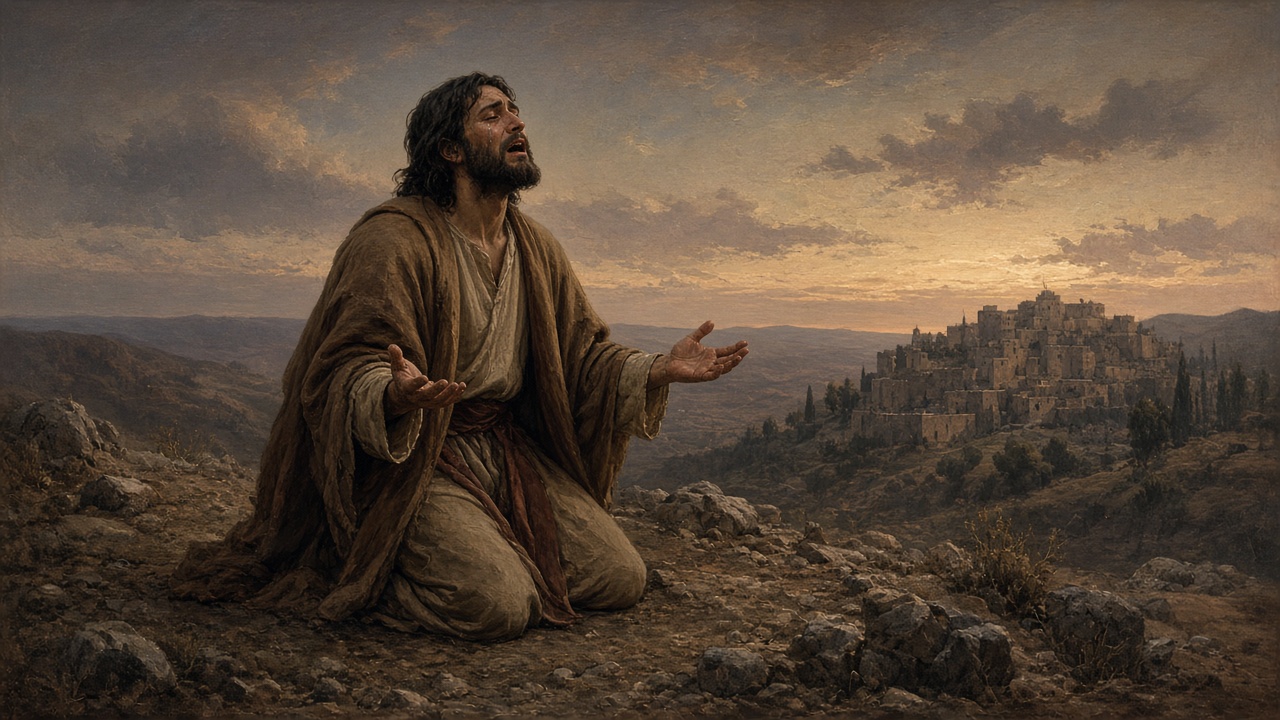
7Kome'ẽ ywy keruhũ pe Jesu ixo rahã, Tupã namõ a'e pandu pandu. (Sehar pa'i keruhũ ma'eha aja a'e tĩ.) “Mã! Ihẽ ke ngã jukwa ta. Nde ereputar rahã, emuhem ihẽ ke kỹ” aja pandu pandu. Hãtã a'e pandu ipe. Jixi'u tĩ. (Aja rahã, sehar pa'i keruhũ aja pitu te'e a'e tĩ aja mujekwa tĩ.) “Ihẽ jõ riki katu te me'ẽ ke” aja ym Ta'yr pandu. Amõ we tĩ. Ipái keruhũ rehe a'e ipy'a katu tĩ. A'erehe a'e pandu ame'ẽ ke rehe Tupã hendu katu. 8Tupã ra'yr ke a'e tipe. Anĩ. A'e ke amõ ta mupyrara hũ. Ame'ẽ ke Tupã putar, aja a'e ukwa katu. A'erehe ipy'ahu te'e hendu. Amõ ta mupyrara rahã, Tupã pe a'e pandu: “Tapijar te'e we nde rehe ahendu katu axo” aja. Aja hendu katuha ke a'e jumu'e. (Sehar pa'i keruhũ aja Tupã rehe hendu katu tĩ.) 9Pe, upa rahã, ehe har Tupã pandu: “Katu te ame'ẽ ke nde” aja. Pe, ywa pe mujywyr raho. A'erehe Ta'yr riki ngã ke muhã katu. Upa hendu katu ame'ẽ ta ke a'e muhã ta. Aja te'e ta inamõ a'eta ixo. 10Pe, Tupã pandu tĩ:
—Nde riki pa'i keruhũ. Mekisende aja nde riki pa'i keruhũ tĩ — aja Ta'yr pe.
Ta'yn ta aja ym ma'e ke pekwa pekwa pexo
11Kirisutu riki pa'i keruhũ ame'ẽ rehe har amõ we ihẽ apandu tar katu tipe. Anĩ. Pehẽ ãkã ianam rãi, a'erehe marã ka ym upa katu te amujekwaha pehẽ pe. 12Yman Jesu kotyhar ta ke aja pexo. Tupã je'ẽha ke amõ ta pe pemu'e ta me'ẽ te'e tĩ. Anĩ. Aja ym rĩ. Pehẽ pe amõ ta Tupã je'ẽha ke mu'e we rĩ. Pejurujar katu py rahã, pejumu'e. Ame'ẽ ke pejumu'e we rĩ. Ta'yn ta aja kamby te'e u'u ame'ẽja saka. (Aja rahã ta'yr mi Tupã je'ẽha ke pekwa.) Tiha ame'ẽ ta aja pexo rahã, so'o pupur ke pe'u ta tipe. So'o pupur ke pe'u, aja rahã, Tupã je'ẽha ke pekwa katu, aja pexo. 13Kamby te'e u'u ame'ẽ ke ta'yn riki. Pe, ta'yn rahã, ukwa ym ma'e ke. Ma'e riki katu ame'ẽ ke my? Ma'e riki katu ym ame'ẽ ke my? Ame'ẽ ke ukwa ym. 14So'o pupur ke u'u, ame'ẽ ke tiha ame'ẽ ke a'e. Yman ixo. A'erehe upa ukwa katu. Ma'e katu ame'ẽ ke ukwa katu. Pe, ame'ẽ ke ma'ema'e katu. Ma'e katu ym ame'ẽ ke ukwa katu tĩ. Pe, ame'ẽ ke ma'e ym tĩ.
Did you know?
A High Priest Called by God
- Hebrews 5 presents Aaron as the pattern of a high priest who does not take the honor upon himself but is called by God. Aaron, eldest son of Amram and Jochebed, was born in Egypt three years before his brother Moses. When the time drew near for Israel’s deliverance from Egypt, God sent him to meet his long-absent brother so that they might work together toward the Exodus.Sources: the Bible text itself · Aaron
- Melchizedek, whose name Easton's Bible Dictionary (1897) explains as “king of righteousness,” was king of Salem. All that the Old Testament records of him is in Genesis 14:18–20, and he is mentioned only once more, in Psalm 110:4. Hebrews 5 applies to Christ the words “You are a priest forever in the order of Melchizedek,” and the same dictionary says that Hebrews 7 sets out the significance of his story in detail and presents his priesthood as superior to Aaron’s, noting that Abraham paid him tithes and that Melchizedek blessed Abraham.Sources: the Bible text itself · Melchisedec
Notes written with AI assistance from open sources (Theographic Bible Metadata, CC BY-SA 4.0; Easton’s Bible Dictionary, public domain) and reviewed before publishing.
Credits and license for this translation
Tupã Je'ẽha
New Testament in Kaapor (BR:urb:Kaapor)
copyright © 2012 Wycliffe Bible Translators, Inc.
Language: Kaapor
Translation by: Wycliffe Bible Translators, Inc.
Copyright Information
© 2012, Wycliffe Bible Translators, Inc. All rights reserved.
This translation text is made available to you under the
terms of the Creative Commons License: Attribution-Noncommercial-No Derivative Works.
( http://creativecommons.org/licenses/by-nc-nd/3.0/ )
In addition, you have permission to port the text to different file formats, as long as you
do not change any of the text or punctuation of the Bible.
You may share, copy, distribute, transmit, and extract portions
or quotations from this work, provided that you include the above copyright
information:
You must give Attribution to the work.
You do not sell this work for a profit.
You do not make any derivative works that change any of the actual words or punctuation of the Scriptures.
Permissions beyond the scope of this license may be
available if you contact
us with your request.
The New Testament
in Kaapor
© 2012, Wycliffe Bible Translators, Inc. All rights reserved.
This translation is made available to you under the terms of the
Creative Commons Attribution-Noncommercial-No Derivatives license 4.0.
You may share and redistribute this Bible translation or extracts from it in any format, provided that:
You include the above copyright and source information.
You do not sell this work for a profit.
You do not change any of the words or punctuation of the Scriptures.
Pictures included with Scriptures and other documents on this site are licensed just for use with those Scriptures and documents.
For other uses, please contact the respective copyright owners.
2014-04-27
Source: http://ebible.org/urbNT/ · eBible.org