Hebrews 2
Tupã Je'ẽha · Tap a verse to see its cross-references.
Jande ke Tupã muhã katu
1Ta'yr katuha riki Tupã je'ẽha rahoha ta 'ar koty te we katuha. A'erehe jetehar te ke jahendu ame'ẽ ke rehe mã peja tapijar te'e we jajurujar katu. Aja rahã jaharái ym ta. 2Jande ramũi ta pe myrandu ke Tupã je'ẽha rahoha ta pandu pandu. Ame'ẽ riki: “Moise je'ẽha ke” aja jakwa katu. Ame'ẽ riki jetehar te ke aja Tupã mujekwa ngã pe. Ame'ẽ je'ẽha mujekwa aja a'eta ma'ema'e ym rahã, a'eta ke Tupã mupyrara. Ame'ẽ ke rehe hendu ym rahã, aja tĩ. Tupã mupyrara tĩ. 3Tupã je'ẽha rahoha ta pandu, ame'ẽ ke rehe awa hendu ym rahã, Tupã mupyrara. Aja rahã, ngã ke Ta'yr muhã katu ta, ame'ẽ myrandu rehe awa hendu ym rahã, marã ka ym Tupã mupyraraha ngi uhemiha. Moise je'ẽha rehe hendu ym, ame'ẽ ta 'ar koty te we mupyrara ta. (A'erehe Ta'yr pandu, ame'ẽ ke rehe i'ar koty te we hendu katu ta me'ẽ te'e.)
Ngã ke Tupã muhã katu ta, aja jandema'e sawa'e te riki pandu py. A'engi hendu ehe, ame'ẽ ta jande pe mujekwa tĩ. Jetehar te ke aja a'eta mujekwa jande pe. 4Tupã aja tĩ. Mujekwa a'e tĩ. Jetehar te ke aja hendu ehe, ame'ẽ ta mujekwa ixo rahã, Tupã mujekwa tĩ. Kuja. Marã ka ym amõ ma'eha, ame'ẽ ke Tupã ma'ema'e katu rahã, ngã pandu: “Mã! Katu te hũ!” aja. Aja pandu ame'ẽ ke jetehar te ke aja a'e mujekwa katu ngã pe tĩ. Amõ we tĩ. A'e putar aja I'ãma'e pyrãtãha ke a'e muwyr. Ma'e ke Tupã'ã te'e me'ẽ me'ẽ, ame'ẽ ke Kirisutu rehe jurujar katu ame'ẽ ta pe a'e muwyr. A'erehe Ta'yr rehe hendu, ame'ẽ ta pandu ame'ẽ ke riki jetehar te ke aja jakwa katu.
Jande ke muhã katu ame'ẽ rehe har
5Kome'ẽ ywy keruhũ pyahu ame'ẽ rehe har japandu. Ame'ẽ ke Tupã mujã ta. “Ame'ẽ pe har tama'e kapitã keruhũ ke nde” aja ym ima'e je'ẽha rahoha ta pe a'e pandu. 6Anĩ. Amõ pe a'e pandu. Pesarahã! Yman Tupã je'ẽha rehe amõ mupinim:
“Nde Tupã. Awa ke rehe nde ereharái ym.
Awa te'e tipe. Anĩ. Nde eresak katu ehe.
7A'e ke nema'e je'ẽha rahoha ta wyr koty te we katuha, aja nde eremu'am.
I'i atu ym iwyr koty te we katuha. A'e ke rehe nde eresak katu. A'erehe nde erepandu: ‘Nde katu’ aja.
Kapitã keruhũ aja: ‘Nde katu’ aja nde erepandu.
8Pe, nde erepandu tĩ: ‘Upa katu te ma'e ke ihĩ. Ame'ẽ tama'e kapitã keruhũ nde’ aja nde erepandu tĩ.” Aja Tupã je'ẽha rehe amõ mupinim.
Pesarahã! Ame'ẽ je'ẽha rehe Tupã mujekwa: “Upa katu te ma'e ke ixo. Ame'ẽ tama'e kapitã keruhũ nde” aja. Aja rahã, upa katu te riki. Pyta we ym ma'e ke. Pesarahã! Apo sehar sawa'e aja ym we rĩ. Upa katu te, ame'ẽ tama'e kapitã keruhũ ym we rĩ. 9Jesu anĩ. Ehe har jakwa. Ymaniwe awa te'e a'e ixo tĩ. (A'erehe Tupã je'ẽha rahoha ta wyr koty te we a'e katuha.) I'i atu ym awa te'e a'e ixo. Aja ixo rahã, Jesu manõ. Tupã usak katu ehe. A'erehe upa kome'ẽ ywy keruhũ pe har ta ma'e ka'u te'eha ma'ema'eha ke rehe a'e muhepy. A'e pyrara. Pe, manõ. A'erehe apo Tupã pandu ipe: “Nde riki katu te me'ẽ ke” aja. Apo katuha renda pe a'e ixo 'y. (A'erehe Tupã je'ẽha rahoha ta 'ar koty te we Jesu katuha apo tĩ, aja mujekwa katu.)
10Upa ma'e ke Tupã mujã. Pe, a'e panduha rupi upa ma'e ke ixo katu. Jesu ke amõ ta mupyrara rahã, Tupã pandu: “Mã peja” aja. A'erehe a'e pyrara ixo. Pe, pyraraha upa rahã, a'e pandu ipe: “Ne jõ riki katu te me'ẽ ke” aja. A'e pyrara, a'erehe heta ta'yr ta ke a'e raho. Katuha renda pe inamõ raho. Jesu riki hundutar oho py, ame'ẽja saka. Pe, Tupã muhã katu ame'ẽ ta haikwer rupi oho tĩ, ame'ẽja saka tĩ. (A'erehe Tupã je'ẽha rahoha ta 'ar koty te we Jesu katuha, aja mujekwa katu.)
11Ma'e ka'u te'eha ke ngã ma'ema'e. Ame'ẽ ke ngã py'a ngi Jesu juhyk. A'erehe Tupã riki ame'ẽ tama'e pái keruhũ. Jesu pái tĩ. Peteĩ riki jande pái keruhũ. A'erehe ipy'a juhyk ame'ẽ ta pe Jesu pandu: “Ihẽ mu ta” aja. Huxĩ ym ha namõ a'e pandu: “Ihẽ mu ta” aja. (Ame'ẽ ke amõ mujekwa.) Kuja. 12Tupã pe a'e pandu:
“Ma'e ke nde erema'ema'e. Ame'ẽ ke ihẽ mu ta pe ihẽ apandu ta.
A'eta jy'ar rahã, nde rehe har ihẽ apandu ta: ‘Katu te me'ẽ ke a'e’ aja.”
13A'e pandu tĩ:
“Tupã rehe ihẽ ajurujar katu ta” aja. (Aja rahã, imu ta aja a'e tĩ, aja a'e mujekwa katu.)
Amõ we tĩ:
“Se nde eremuhã katu, ame'ẽ ta namõ ihẽ axo. Nde ra'yr ta aja a'eta. Ihẽ pe a'eta ke nde ereme'ẽ, ame'ẽja saka” aja Tupã pe Ta'yr pandu. (Aja rahã, imu ta aja a'e tĩ, aja a'e mujekwa katu.)
14“Ta'yr ta” aja a'e pandu. Ame'ẽ ta riki awa ta te'e a'eta tĩ. Kome'ẽ ywy keruhũ pe har ta ke. Pe, Jesu uwyr rahã, ame'ẽ ta aja a'e tĩ. Awa te'e a'e tĩ. A'erehe a'e manõ rahã, Satanama'e pyrãtãha ke a'e muputu'u. Manõha ngi ngã ke Satana mukyje. (Ãjã ramũi a'e.) Ame'ẽ ke a'e mukanim tĩ. 15Manõha ngi awa kyje. Kome'ẽ ywy keruhũ pe ixo rahã, aja te'eha kyje. Ame'ẽ kyjeha ke Jesu mukanim. Kyjeha ngi poir, ame'ẽja saka.
16Pesarahã! Tupã je'ẽha rahoha ta py'a ke a'e muhury ym uwyr. Amõ ta py'a ke muhury uwyr. Kuja. Tupã je'ẽha rehe amõ mupinim: “Amarã rainõ ta py'a ke a'e muhury uwyr” aja. (Aja pandu rahã, Tupã kotyhar ta rehe har pandu, aja jakwa katu.) 17Ngã py'a ke a'e muhury katu uwyr, a'erehe imu ta aja a'e uwak ta me'ẽ te'e tĩ. Jande riki imu ta aja tĩ. Aja rahã, jande aja a'e tĩ. Awa te'e rahã, pa'i keruhũ aja a'e ixo tĩ. (Jesu riki pa'i keruhũ aja tĩ.) Tupãma'e ma'ema'eha ke a'e ma'ema'e katu. Pa'i keruhũ aja ixo rahã, awa ta rehe a'e pyrara usak. A'e pandu ame'ẽ ke a'e ma'ema'e katu tĩ. Ma'e ka'u te'eha ke ngã ma'ema'e, ame'ẽ ke rehe pa'i keruhũ muhepy. (Jesu riki pa'i keruhũ.) A'erehe ngã rehe Tupã ipy'a jywyr katu. 18Ma'e ka'u te'eha ke Jesu ma'e, ame'ẽ ke Satana putar tipe. (Anĩ. Ma'e ym te a'e.) Satana manga manga tipe. (Ãjã ramũi a'e.) A'erehe mangaha ke Jesu ukwa katu. A'erehe Tupã kotyhar ta ke ãjã ramũi manga manga rahã, ame'ẽ ta py'a ke Jesu mãtã katu. Ame'ẽ ke ukwa katu tĩ. A'e pyrara tĩ. A'erehe Tupã kotyhar ta pyrara ixo rahã, ame'ẽ ta py'a ke Jesu mãtã katu tĩ. Ame'ẽ ke ukwa katu tĩ.
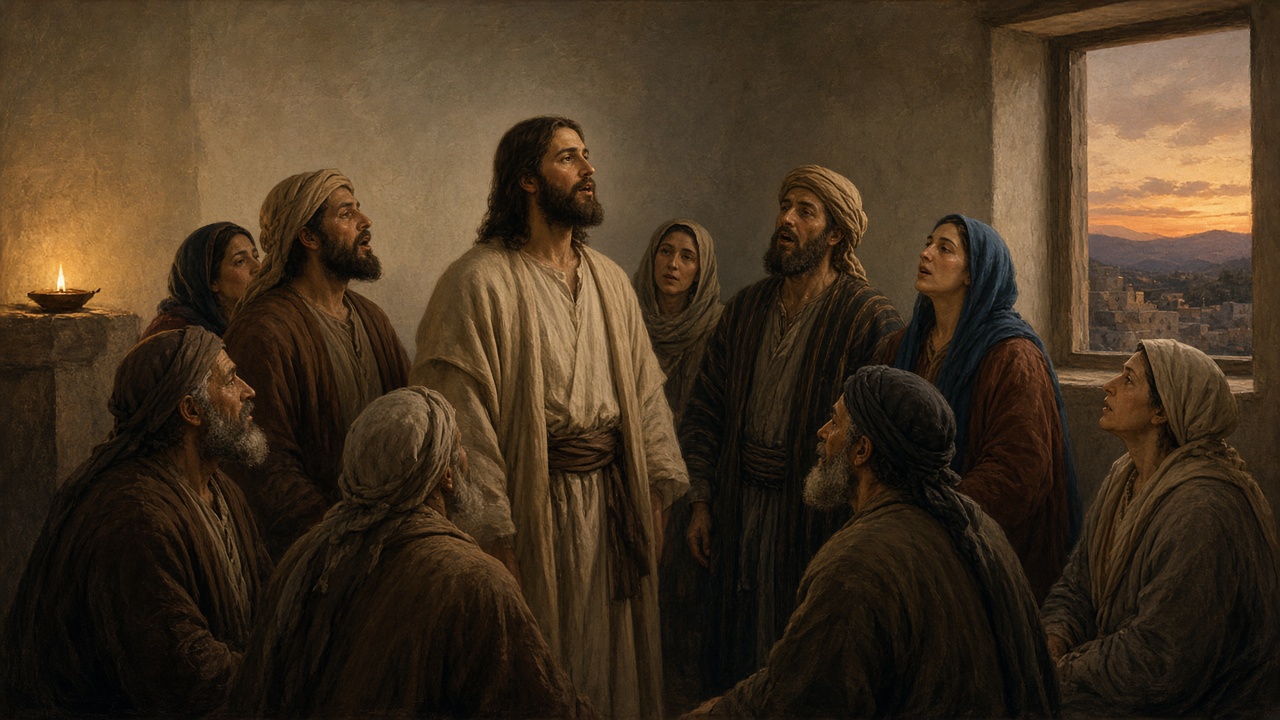
Did you know?
Sharing humanity, crowned through suffering
- Hebrews 2 recalls that the message spoken by angels was binding, and that every transgression and disobedience received its just punishment, then asks how anyone can escape who neglects so great a salvation. That salvation was first announced by the Lord, confirmed to us by those who heard him, and affirmed by God through signs, wonders, various miracles, and gifts of the Holy Spirit distributed according to his will.Sources: the Bible text itself
- The chapter quotes a testimony that man was made a little lower than the angels, crowned with glory and honor, with everything placed under his feet. When God subjected all things to him, he left nothing outside his control, yet at present we do not see everything subject to him. Jesus, made a little lower than the angels, is now crowned with glory and honor because he suffered death, so that by the grace of God he might taste death for everyone.Sources: the Bible text itself
- Hebrews 2 says Jesus helps not angels but the descendants of Abraham, and that he had to be made like his brothers in every way so that he might become a merciful and faithful high priest in service to God, to make atonement for the sins of the people. Abraham, son of Terah, is called father of a multitude and described as the heir of the promises.Sources: the Bible text itself · Abraham
Notes written with AI assistance from open sources (Theographic Bible Metadata, CC BY-SA 4.0; Easton’s Bible Dictionary, public domain) and reviewed before publishing.
Credits and license for this translation
Tupã Je'ẽha
New Testament in Kaapor (BR:urb:Kaapor)
copyright © 2012 Wycliffe Bible Translators, Inc.
Language: Kaapor
Translation by: Wycliffe Bible Translators, Inc.
Copyright Information
© 2012, Wycliffe Bible Translators, Inc. All rights reserved.
This translation text is made available to you under the
terms of the Creative Commons License: Attribution-Noncommercial-No Derivative Works.
( http://creativecommons.org/licenses/by-nc-nd/3.0/ )
In addition, you have permission to port the text to different file formats, as long as you
do not change any of the text or punctuation of the Bible.
You may share, copy, distribute, transmit, and extract portions
or quotations from this work, provided that you include the above copyright
information:
You must give Attribution to the work.
You do not sell this work for a profit.
You do not make any derivative works that change any of the actual words or punctuation of the Scriptures.
Permissions beyond the scope of this license may be
available if you contact
us with your request.
The New Testament
in Kaapor
© 2012, Wycliffe Bible Translators, Inc. All rights reserved.
This translation is made available to you under the terms of the
Creative Commons Attribution-Noncommercial-No Derivatives license 4.0.
You may share and redistribute this Bible translation or extracts from it in any format, provided that:
You include the above copyright and source information.
You do not sell this work for a profit.
You do not change any of the words or punctuation of the Scriptures.
Pictures included with Scriptures and other documents on this site are licensed just for use with those Scriptures and documents.
For other uses, please contact the respective copyright owners.
2014-04-27
Source: http://ebible.org/urbNT/ · eBible.org