Acts 27
Tupã Je'ẽha · Tap a verse to see its cross-references.
Hom ok ta koty Páu oho
1Pe, Hom ok ta pe Páu ke kapitã mondo ta aja a'e panduha. Hom ok ta Itar ywy rehe ihĩ. (Hom ok ta pe Sesa riki Páu rehe har ukwa ta. Sesa riki homa awa tama'e kapitã keruhũ.) Jarusu keruhũ pe mondo ta. Ko ihẽ aho inamõ tĩ. Ihẽ Ruk. Sonda tama'e kapitã pe Páu ke amõ raho. Kapitã rer Jur. Homa awa tama'e kapitã keruhũma'e miasu ke sonda ta. Ame'ẽ kapitã ke Jur. Amõ heta kyndaha pe oho ame'ẽ ta ke Jur raho tĩ. |src="map5modificado[1].tif" size="col" ref="Atre 27.1" 2Jande namõ Arita oho tĩ. Tesaron ok ta pe har a'e. Masendo ywy pe Tesaron ok ta ihĩ. Pe, jarusu keruhũ pe jande johu japor jaho. Ame'ẽ jarusu keruhũ riki Atami ok ta pe har ke. Asia ywy rymy'y rupi ame'ẽ jarusu keruhũ oho tate. Y rymy'y rupi heta ok ta ihĩ. Ame'ẽ rupi oho tate. 3Pe, jande jaho. Ame'ẽ ku'ẽ rahã, Sinõ ok ta pe jahyk jaho. Páu rehe Jur usak katu, a'erehe jarusu keruhũ ngi Páu uhem katu. Ehe katu ame'ẽ ta rehe a'e usak oho. Pe, Páu pe ame'ẽ ta ma'e ke me'ẽ katu. (Upa rahã, jarusu keruhũ pe Páu jywyr tĩ.) 4A'engi jarusu keruhũ pe jaho tĩ. Jarusu keruhũ rehe ywytu juwapi hũ uwyr, a'erehe ypa'ũ jywa katu kotyhar rupi jaha jaho. (Ame'ẽ rupi ywytu jupeju katu ym.) Ypa'ũ rer Xi. 5Y rupi jaha jaho. Siri ywy rake rupi jaho. Pansi ywy rake rupi jasa jaho tĩ. Pe, Mi ok ta pe jahyk jaho. Risi ywy pe Mi ok ta ihĩ. 6A'ep amõ jarusu keruhũ ke sonda tama'e kapitã mahem. Ame'ẽ jarusu keruhũ Arexandiri ok ta pe har ke. Itar ywy pe ame'ẽ oho ta. A'erehe ame'ẽ pe jande ke kapitã mondo. Pe, jande jaho tĩ.
7Heta wera rahã, wewe katu jande jaho jaxo. Pe, weweha rupi Sini ok ta rake jande jahyk jaho. Ywytu juwapi hũ ehe, a'erehe warahy jurukwã koty marã ka ym ohoha, iapyr kotyhar rupi. A'erehe amõ ypa'ũ rake rupi jande jaho. Ypa'ũ rer Kere. (Ame'ẽ rupi ywytu jupeju katu ym.) 8Samo ywy rake rupi jande jaho. Y rymy'y rupi wewe katu jande jaho. Pe, weweha rupi jarusurupa pe jahyk jaho. Jarusurupa rer: “Jarusurupa katu te.” Ame'ẽ ngi Raséi ok ta kotete ihĩ.
9A'ep heta te hũ jaker. Pe, ma'e weraha asa oho. Ymanihar aja ngã py'a ke Tupã juhyk, aja jundéu awa ta ukwa ukwa ixo. Arahã jundéu awa ta ma'e ke u'uha hijar. Ame'ẽ weraha asa oho. Apo y rupi oho rahã, katu ym. Mãte hũ te'e riki ywytu ke. A'erehe kuja Páu pandu:
10—Sa'e ta! Pehendu katurahã! Sengi jaho rahã, katu ym, aja ihẽ akwa. Jarusu keruhũ ke ywytu keruhũ mujaxer ta. Jarusu keruhũ pe ma'e raho ame'ẽ ke kanim ta tĩ. Jande ke aja ta tĩ. Jamanõ ta tĩ — aja Páu pandu.
11Anĩ. Páu je'ẽha rehe sonda tama'e kapitã hendu ym. Jarusu keruhũ jar je'ẽha rehe a'e hendu katu. Jarusu keruhũ rahoha ta je'ẽha rehe hendu katu tĩ. Ame'ẽ ta oho rahã, katu tiki, aja ukwaha. 12Aman ndy'ar rahã, ame'ẽ jarusurupa pe pyta rahã, katu ym. Mãte hũ te'e ywytu ke. A'erehe upa tate sawa'e ta pandu: “Jahorahã” aja. Seni ok ta pe uhyk rahã, katu tiki, aja ukwaha. Kere ypa'ũ rehe Seni ok ta ihĩ. Ame'ẽ riki jarusurupa katu te me'ẽ ke. Ywytu keruhũ jupeju ym ehe. A'ep aman ndy'ar rahã, pyta ta tipe.
Y ramũi pyter pe aman keruhũ uhyk uwyr
13Pe, warahy jurukwã koty ngi ywytu jupeju katu ym. Iapyr koty ngi jupeju katu ym. A'erehe oho rahã, katu tiki, aja sawa'e ta ukwaha. Pe, jarusu keruhũ mupytaha ke y ngi sawa'e ta jo'ok. Pe, jande jaho. Kere ypa'ũ rake rupi jande jasa jaho. Y rymy'y te rupi jaho. 14Jaho we rahã, jande rehe ywytu keruhũ uhyk. Mãte hũ te'e ywytu ke. Ame'ẽ pe sawa'e ta her moĩ: “Nonde” aja ipe. Ame'ẽ ngi sawa'e ta kyje te hũ. 15Kere ypa'ũ ngi jupeju uwyr. Jarusu keruhũ rehe junupã uwyr. Tumaha koty marã ka ym ohoha. A'erehe jarusu keruhũ ke jande jamuruwak. Ywytu keruhũ namõ jarusu keruhũ oho. 16Amõ ypa'ũ ra'yr rake rupi jande jasa jaho rahã, ywytu pyrãtã ym jupeju. Ypa'ũ ra'yr rer Káu. Arahã y ngi amõ jarusu ke jande jamuhem. Ame'ẽ rehe jande japaraky hũ. 17Jarusu ke hykýi raho ame'ẽ ke y ngi jande jamuhem. Ame'ẽ ke jarusu keruhũ 'ar pe mou katu. Pe, jarusu keruhũ ku'a rupi pukwar katu. Tupaham hajyk ame'ẽ pe pukwar katu. Rim ywy rymy'y rupi ywy ku'i heta ihĩ. Ame'ẽ rehe jarusu keruhũ jutukwa ta my. Aja ngã ukwaha, a'erehe kyje ingi. A'erehe pan keruhũ ke mujy. Pe, jarusu keruhũ ke ywytu keruhũ te'e raho. 18Ame'ẽ ku'ẽ rahã, mãte hũ te'e jupeju te hũ rĩ. Aman pihun tĩ. A'erehe ma'e ngã raho ame'ẽ ke y pe ngã ombor indo. (Aja jarusu keruhũ ke muwewi.) 19Ame'ẽ ku'ẽ rahã, jarusu keruhũ pe har ke y pe jande jambor indo. Jande po pe jambor. (Aja jarusu keruhũ ke muwewi tĩ.) 20Heta wera rahã, warahy rehe jande jasak ym. Jahy rata ta rehe jasak ym tĩ. Ywytu keruhũ jupeju we hũ. Aman ukyr hũ tĩ. A'erehe jande ke upa ta y jukwa ta nahã my, aja jakwaha.
21Heta ukwer rahã, ma'e ke ngã u'u ym. Pe, ngã pyter pe Páu pu'am. Pandu ngã pe:
—Sa'e ta! Kwehe we ihẽ je'ẽha rehe pehendu rahã, Kere ypa'ũ ngi jajur ym ta tipe. Upa ma'e ke kanim ym ta tipe tĩ. 22Apo pehẽ pe ihẽ apandu. Pehẽ py'a ke pemãtã. Manõ ym te ta awa apo. Jarusu keruhũ jõ kanim ta oho. 23Tupã kotyhar ke ihẽ. Ihẽ py'a ihẽ amoĩ moĩ katu ehe tĩ. Pytun rahã, ihẽ rehe Tupã je'ẽha rahoha uhyk uwyr. Tupã muwyr ame'ẽ ke ihẽ rehe uhyk uwyr. 24Pe, ihẽ pe a'e pandu: “Páu! Ekyje ym! Homa awa tama'e kapitã keruhũ ruwak koty nde erepu'am ta ereho. (‘Sesa’ aja her. Ame'ẽ ruwa koty nde erepu'am ta ereho.) Nde rehe Tupã usak katu, a'erehe upa jarusu keruhũ pe ne namõ oho ame'ẽ ta manõ ym ta” aja ihẽ pe pandu. 25Sa'e ta! A'erehe pehẽ py'a ke pemãtã! Tupã manga katu ame'ẽ ke ihẽ akwa katu. Ihẽ pe Tupã je'ẽha rahoha pandu, aja uhyk katu ta. 26Amõ ypa'ũ rehe jande ke ywytu keruhũ muhyk ta raho — aja Páu pandu.
27Pe, awa py tumeme jaker. Y ramũi rupi jande jaho rĩ. Y ramũi rer Menditeha. Jande ke ywytu keruhũ raho rĩ. Pytun pyter tate rahã, ywy rehe jahyk tate, aja jarusu keruhũ rahoha ta ukwa. 28A'erehe y pe typyha mangaha ke ame'ẽ ta ombor. Manga rahã, 36 met aja ukwa. Jande jaho we rahã, a'eta manga tĩ. Typa we oho ixo, aja ukwa. Kuja, 27 met aja mangaha. 29Ita rehe jarusu keruhũ jutukwa ta. Ame'ẽ ngi ngã kyje. A'erehe y pe tumeme jarusu keruhũ mupytaha ke a'eta mujy mondo. Jarusu keruhũ tangwa ngi mujy mondo. Pe, weraha ke ngã harõ ixo. Kyje ixo tĩ. 30Pe, jarusu ra'yr ke jarusu keruhũ rahoha ta mujy mondo. Kuja ame'ẽ ta te'e pandu:
—Jarusu keruhũ ãpũi rehe amõ mupytaha ke jande japukwar ta — aja te'e pandu.
A'eta uhem tar katu oho ingi. (A'eta jõ ma'e ypa'ũ pe oho tar katu. Jarusu keruhũ ke hijar tar katu oho.) A'erehe te'e pandu. 31Pe, sonda tama'e kapitã pe Páu pandu. Sonda ta pe pandu tĩ. Kuja pandu:
—Jarusu keruhũ pe peme'ẽ rahoha ta pyta ym rahã, marã ka ym jande johu jahemiha — aja Páu pandu.
32A'erehe jarusu ra'yr ham ke sonda ta mondok. Pe, jarusu ra'yr ke jeje te'e y raho.
33Wera tate rahã, Páu pandu:
—Pehẽ mi'u ke pe'u. Awa py tumeme jande jaker rahã, peharõ pexo. Arahã pehẽ mi'u ke pe'u ym te. 34A'erehe pehẽ pe ihẽ apandu. Pe'u apo. Aja rahã, y pe pejupetẽ peho rahã, pehẽ pyrãtã katu ta. Pemanõha ngi pekyje ym. Manõ ym ta awa apo 'y — aja Páu pandu.
35Upa pandu rahã, mbeju ke Páu pyhyk. Hetaha ta pyter pe Páu pu'am. Tupã pe a'e pandu:
—Ne jõ riki katu te me'ẽ ke. Jande pe jande mi'u ke nde eremuwyr katu — aja Tupã pe.
36Pe, mbeju ke a'e mopok. Pe, u'u u'am. Ame'ẽ ke rehe ngã usak rahã, upa katu te hury katu. Upa katu te u'u tĩ. 37Jarusu keruhũ pe heta ngã ixo. Kuja, 276 hetaha ta. 38Uhyk ngã u'u rahã, jarusu keruhũ ke a'eta muwewi tĩ. A'erehe y pe ahúi aja me'ẽ ke a'eta omombor indo. Jarusu keruhũ pe raho, ame'ẽ ke a'eta.
Jarusu keruhũ upen
39Wera rahã, ka'a my'y ke jarusu keruhũ rahoha ta ukwa ym. “Ma'e ywy my?” Ngã ukwa ym. Pe, y rymy'y xanduha ngã usak. A'ep ywy ku'i heta. Ame'ẽ pe jarusu keruhũ ke a'eta mujan ta mondo, aja ukwa. 40Uhyk ta nahã my? Manga ta. A'erehe jarusu keruhũ mupytaha ham ke mondok. Y pe hijar oho. Jarusu keruhũ mujereha ke jirar tĩ. Pe, pan keruhũ ke mupu'am. Jarusu keruhũ ãpũi koty ihĩ ame'ẽ ke mupu'am. Aja rahã, iãpũi koty ywytu mupeju ta raho. Pe, y rymy'y koty jande jaho. 41Pe, mokõi y rumaha ihĩ ame'ẽ rehe jahyk jaho. A'ep ywy ku'i rehe jarusu keruhũ jutukwa. Iãpũi ke mupyta katu. Tangwa anĩ. Tangwa ke rehe y kotok keruhũ nupã hũ. Mupen mupen ixo.
42Y rymy'y rehe kyndaha pe oho ame'ẽ ta jupetẽ uhyk rahã, ujan ta oho ingi, aja sonda ta ukwaha. A'erehe upa katu te jukwa ta, aja sondo ta pandu pandu a'eta jupe. 43Anĩ. Páu ke sonda tama'e kapitã jukwa tar ym. A'erehe sonda ta jukwa ta ame'ẽ ke a'e muputu'u a'eta ngi. Pe, kuja a'e pandu:
—Upa katu te pejupetẽ katu ame'ẽ ta y pe pepor py. Y rymy'y rehe pejupetẽ pehyk peho. 44A'engi pejupetẽha ke pekwa ym ame'ẽ ta peho. Myrape ke rehe pepyhyk pyhyk peho. Aja peho. Jarusu keruhũ upen ame'ẽ ke rehe pepyhyk tĩ. Aja peho tĩ — aja kapitã pandu.
Aja upa katu te y rymy'y rehe jande jahyk jaho. Manõ ym te awa. Y jukwa ym awa.
Did you know?
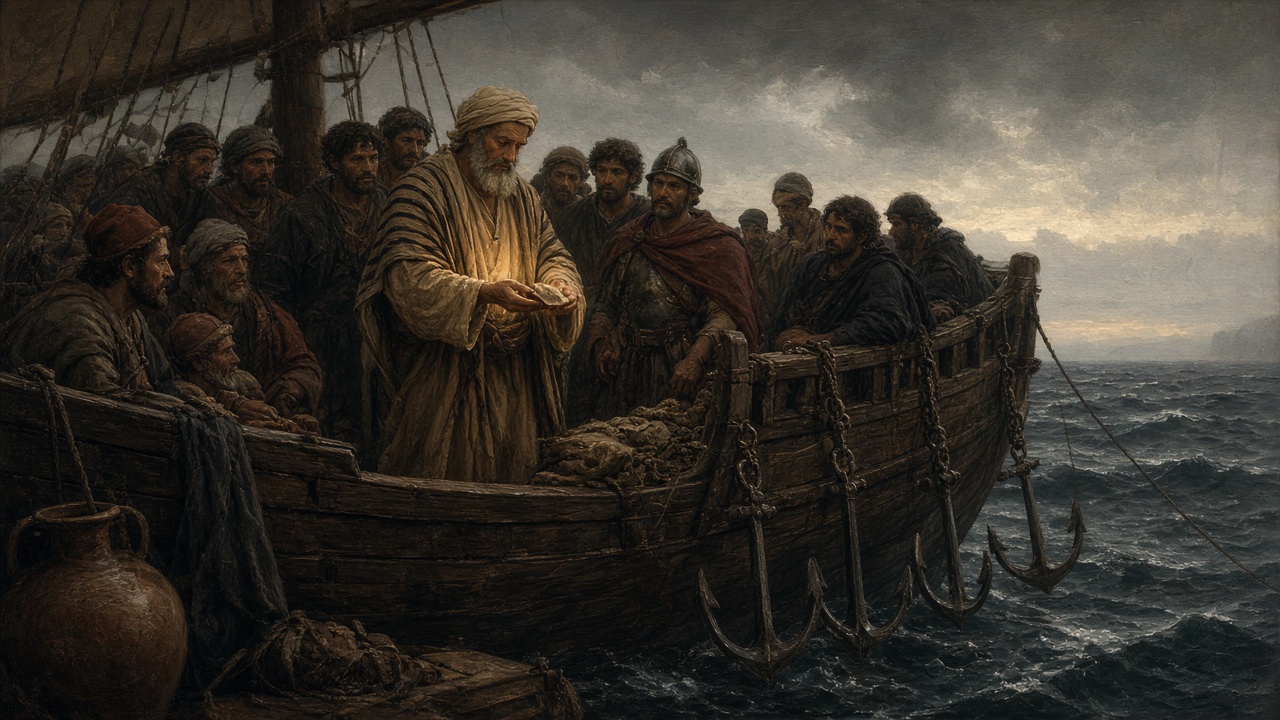
Storm and Shipwreck on the Way to Rome
- Paul and the other prisoners did not sail straight to Italy. At Caesarea they boarded a ship of Adramyttium, a city on the coast of Mysia in Asia Minor, bound for ports along the coast of Asia, a name Easton's Bible Dictionary takes in this verse as probably Asia Minor, and that ship carried them only as far as Myra in Lycia. There the centurion put them aboard an Alexandrian ship sailing for Italy; the dictionary notes that it was rare for a ship to sail from any port of Palestine direct to Italy.Sources: Adramyttium · Asia · the Bible text itself
- The prisoners were handed over to Julius, a centurion of the Imperial Regiment. Easton's Bible Dictionary identifies him as centurion of the Augustan cohort, or the emperor's body-guard, and describes his courteous regard for Paul. At Sidon, about twenty-five miles north of Tyre, he let Paul visit friends and receive care; later he blocked the soldiers' plan to kill the prisoners so that Paul's life would be spared.Sources: Julius · Sidon · the Bible text itself
- After Cnidus the ship worked along Crete, one of the largest islands in the Mediterranean, about 140 miles long and 35 broad, which Paul visited on this voyage to Rome. The account says the voyage had already become dangerous because it was after the Fast, and Fair Havens was unsuitable for wintering. One chronology dates the start of the journey to Rome to AD 56 and the shipwreck in the storm to AD 57.Sources: Crete · Journey to Rome begins · Paul is shipwrecked by a storm · the Bible text itself
Notes written with AI assistance from open sources (Theographic Bible Metadata, CC BY-SA 4.0; Easton’s Bible Dictionary, public domain) and reviewed before publishing.
Places in this chapter
- Italy · 41.892, 12.485 · verses 1, 6
- Adramyttium · Today: Oren · 39.501, 26.933 · verse 2
- Asia · 38.400, 28.300 · verse 2
- Thessalonica · Today: Thessaloniki · 40.638, 22.946 · verse 2
- Sidon · Today: Sandikli archaeological site in Sidon · 33.561, 35.372 · verse 3
- Cyprus · 35.000, 33.000 · verse 4
- Cilicia · 36.913, 34.892 · verse 5
- Lycia · 36.733, 29.900 · verse 5
- Myra · 36.259, 29.985 · verse 5
- Pamphylia · 37.000, 31.000 · verse 5
- Alexandria · 31.183, 29.896 · verse 6
- Cnidus · 36.686, 27.375 · verse 7
- Crete · 35.310, 24.893 · verses 7, 8, 12, 13, 14, 21
- Salmone · Today: Cape Sideros · 35.316, 26.312 · verse 7
- Fair Havens · Today: Kaloi Limenes · 34.930, 24.800 · verses 8, 12
- Lasea · Today: Lasaea · 34.941, 24.811 · verse 8
- Cauda · Today: Gavdos · 34.833, 24.083 · verse 16
- Syrtis · Today: Sidra · 31.500, 18.000 · verse 17
- Adriatic Sea · Today: Adriatic and Ionian Seas · 38.000, 19.000 · verse 27
Only places identified with high confidence are shown (90% or more according to the scholarly sources compiled by OpenBible). Period map: DARE (Digital Atlas of the Roman Empire), CC BY 4.0; modern map: © OpenStreetMap contributors; places: OpenBible.info (CC BY 4.0).
Credits and license for this translation
Tupã Je'ẽha
New Testament in Kaapor (BR:urb:Kaapor)
copyright © 2012 Wycliffe Bible Translators, Inc.
Language: Kaapor
Translation by: Wycliffe Bible Translators, Inc.
Copyright Information
© 2012, Wycliffe Bible Translators, Inc. All rights reserved.
This translation text is made available to you under the
terms of the Creative Commons License: Attribution-Noncommercial-No Derivative Works.
( http://creativecommons.org/licenses/by-nc-nd/3.0/ )
In addition, you have permission to port the text to different file formats, as long as you
do not change any of the text or punctuation of the Bible.
You may share, copy, distribute, transmit, and extract portions
or quotations from this work, provided that you include the above copyright
information:
You must give Attribution to the work.
You do not sell this work for a profit.
You do not make any derivative works that change any of the actual words or punctuation of the Scriptures.
Permissions beyond the scope of this license may be
available if you contact
us with your request.
The New Testament
in Kaapor
© 2012, Wycliffe Bible Translators, Inc. All rights reserved.
This translation is made available to you under the terms of the
Creative Commons Attribution-Noncommercial-No Derivatives license 4.0.
You may share and redistribute this Bible translation or extracts from it in any format, provided that:
You include the above copyright and source information.
You do not sell this work for a profit.
You do not change any of the words or punctuation of the Scriptures.
Pictures included with Scriptures and other documents on this site are licensed just for use with those Scriptures and documents.
For other uses, please contact the respective copyright owners.
2014-04-27
Source: http://ebible.org/urbNT/ · eBible.org