2 Corinthians 7
Tupã Je'ẽha · Tap a verse to see its cross-references.
1Yman upa aja pandu katuha ke Tupã moĩ katu jande pe. Aja rahã, jamu'e katu rahã, jakwa katu. A'erehe upa ma'e jaka'u te'eha jama'ema'eha ke mã peja jahijar katu. Ihẽ rehe katu me'ẽ ta! Apy'a katu pehẽ rehe! Apandu katu pehẽ pe! Mã peja ma'e jaxer ai ame'ẽ rehe har jande py'a pe jakwa jakwa ym jaxo! Mã peja katu jaxo. Mã peja Tupã rehe jande py'a jamoĩ moĩ katu.
Páu hury katu
2(Ihẽ mu ta! Japandu pehẽ pe. Jande rehe juru ai ame'ẽ ta rehe pehendu ym.) Amõ ta pe ma'e katu ym ame'ẽ ke jama'ema'e ym. Jamujaxer ym amõ ta ke. Amõ ta ke jamuka'u te'e ym tĩ. Aja japyhyk ym ma'e ke. A'erehe mã peja jande rehe pepy'a katu. 3Aja apandu rahã: “Ihẽ rehe pepy'a ym” aja ihẽ apandu ym. Apandu ramõ te: “Pehẽ rehe japy'a katu” aja riki. Aja rahã, Tupã putar rahã, pehẽ namõ aja te'e ta jaxo. Pe, pehẽ rekoha pe jamanõ ta my tĩ. Aja pehẽ rehe ihẽ apy'a katu aja amujekwa ta. 4Pehẽ rehe ihẽ ajurujar katu. Amõ ta pe: “Korin ok ta pe har ta katu ame'ẽ ta ke a'eta” aja jõ pehẽ rehe har ihẽ apandu pandu. Mãte ihẽ akwaha. Anĩ. Ihẽ py'a ihẽ amãtã katu te riki. Ihẽ rury katu te hũ tĩ.
5Masendo ywy pe jahyk rahã, tapijar te'e we jande ke amõ ta mupyrara. Amõ amõ rekoha rupi jaho rahã, aja tĩ. Jande ke mupyrara tĩ. Jande namõ amõ ta je'ẽ je'ẽ hũ tĩ. Pe, pehẽ pexoha rehe har jajumupyai tĩ. 6Pyai ame'ẽ ta ke Tupã muhury katu. A'erehe a'e riki jande ke muhury katu. Jande rehe Tit uhyk katu uwyr. A'erehe jande ke Tupã muhury katu. 7A'e uhyk uwyr rahã, jande ke a'e muhury katu. Amõ we tĩ. A'e ke pehẽ pemuhury katu tĩ, aja Tit pandu jande pe, a'erehe jande rury katu tĩ. Kuja jande pe a'e pandu tĩ:
—Páu! Nde rehe Korin ok ta pe har ta usak tar katu. Ne namõ ixo ame'ẽ ta rehe aja tĩ. Usak tar katu tĩ. Ame'ẽ sawa'e jaxer ixo, a'erehe ame'ẽ py'a ke a'ep pe har ta muruwak. Apo Tupã rehe ipy'a katu 'y. A'eta pandu tĩ: “Anĩ. Páu ta katu” aja a'eta pandu — aja Tit jande pe pandu.
A'erehe jande riki jande rury katu te hũ.
8Paper pinim pehẽ pe ihẽ amondo kwe. Ame'ẽ rehe pesak rahã, pepyai riki. “Mã! Ihẽ amondo ym rahã, katu ta tipe” aja ihẽ akwa ym axo. I'i pehẽ ke ihẽ amupyai, ame'ẽ ke ihẽ akwa rahã, ihẽ apyai ta tipe. 9Anĩ. Apo ihẽ rury katu riki. Pehẽ ke ihẽ amupyai. A'erehe anĩ. Pehẽ pepyai, a'erehe pehẽ py'a ke pemuruwak. Ma'e peka'u te'eha pema'eha ke pehijar. Tupã putar, aja pehẽ pepyai riki. Pexoha pemukatu, a'erehe pehẽ ke jamupyai te, aja ym. 10Tupã putar, aja amõ pyai rahã, ixoty ipy'a ke a'e muruwak. Pe, ma'e ka'u te'eha ma'eha ke hijar. Ame'ẽ ke Tupã muhã katu. Aja rahã: “Katu tiki” aja amõ ukwa. Pe, Tupã rehe ipy'a ym ame'ẽ ta jupyai a'eta juehe jõ rahã, Tupã koty ipy'a muruwak ym. Manõ rahã, Tupã namõ ixo ym te ta.
11Pehẽ pepyai, a'erehe ixoty pehẽ py'a ke Tupã muruwak. Mã peja ame'ẽ ke pekwa pekwa pexo! Pehẽ py'a ke a'e muruwak, a'erehe pahar ma'e katu ym ame'ẽ ke pemukatu. “Mã! Ma'e jaka'u te'eha ke jama'e. Ame'ẽ ke jamukatu ta” aja pepandu. Pe, pemukatu tĩ. “Mã! Ma'erehe ame'ẽ sawa'e ixoha jamukatu ym my?” aja pepandu. Pehẽ pejuparahy pehẽ juehe tĩ. Pehẽ ke Tupã mupyrara ta, ame'ẽ ngi pekyje tĩ. Jande rehe pepy'a katu, aja pemujekwa tĩ. Ma'e ka'u te'eha ke ma'e, a'e riki ipy'a ke Tupã koty muruwak tĩ, aja peputar katu tĩ. Ma'e ka'u te'eha ke ma'e, ame'ẽ ke pemahy tar katu. Upa aja pemujekwa. Aja rahã, pahar katu ym ame'ẽ ke pemukatu tar katu tĩ, aja pemujekwa katu jande pe tĩ.
12A'erehe ame'ẽ paper pinim ke ihẽ amondo rahã, ma'e ka'u te'eha ke ma'e, ame'ẽ pe ihẽ amondo. Ame'ẽ pe jõ ym. Anĩ. Amõ ke ame'ẽ sawa'e muhuxĩ. Ame'ẽ huxĩ ame'ẽ pe ihẽ amondo tĩ. Ame'ẽ pe jõ ym tĩ. Anĩ. Pehẽ pe ihẽ amondo tĩ. Aja rahã, jande rehe pehẽ pepy'a katu te, aja pejumujekwa pehẽ jupe tĩ. (Jande rehe pehendu katu, a'erehe jande rehe pepy'a katu, aja pejumujekwa katu pehẽ jupe tĩ.) Ame'ẽ ke pehẽ pe amujekwa tar katu, a'erehe ame'ẽ paper pinim ke ihẽ amondo. “Ame'ẽ katu” aja Tupã pandu tĩ, ame'ẽja saka tĩ.
13Jande rehe pehẽ pepy'a katu, a'erehe jande rury katu tĩ. Jande jõ riki jande rury katu my? Anĩ. Tit ke pemuhury tĩ. Ame'ẽ ke jakwa rahã, jande rury katu te riki tĩ. 14Pehẽ koty Tit oho tate rahã, ihẽ apandu ipe: “Korin ok ta pe har ta katu riki. Nde rehe haihu katu ta” aja. Pe, ihẽ apandu aja pema'ema'e. (A'erehe ihẽ rury katu axo.) Jetehar ke pehẽ rehe har japandu. Aja te'eha japandu. Tit pe japandu aja pehẽ pema'ema'e katu ipe. 15Tit pandu ame'ẽ ke rehe pehendu katu. Ame'ẽ ke a'e ukwa ukwa ixo. Pehẽ rok pe a'e ke pemupyta katu. Upa a'e pandu ame'ẽ ke pema'ema'e my, aja pekwa pekwa pexo. Upa ame'ẽ ke Tit ukwa ukwa ixo rahã, i'ar koty te we pehẽ rehe a'e ipy'a katu. 16Ihẽ apandu ame'ẽ ke pema'ema'e ta, aja ihẽ akwa katu. A'erehe ihẽ rury katu tĩ.
Did you know?
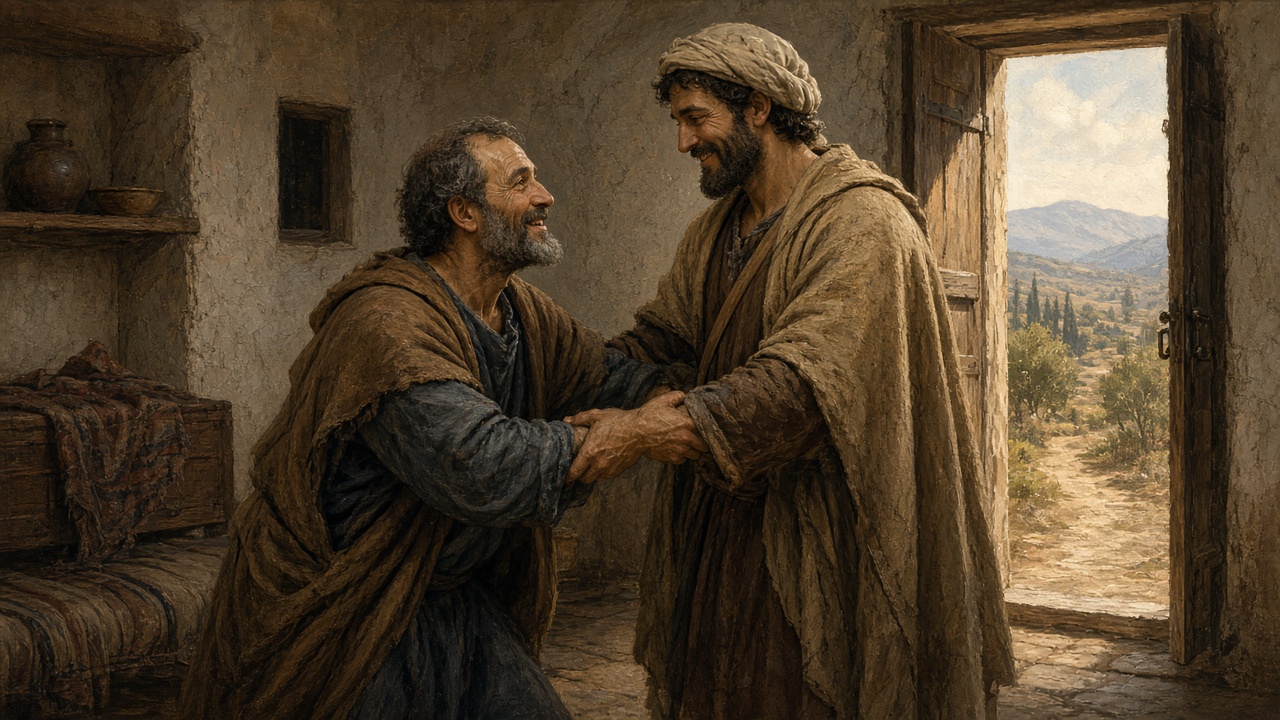
Comfort after a painful letter
- Macedonia, where Paul says he arrived with no rest in his body—conflicts outside and fears within—was a Roman province north of Greece. There, he writes, the God who comforts the downcast comforted him by the arrival of Titus.Sources: Macedonia · the Bible text itself
- Paul speaks of a letter that made them sorrowful, but only for a short time. He now rejoices not because they were sorrowful, but because that sorrow led them to repentance; he says they felt the sorrow God intended, were not harmed by him, and showed earnestness, zeal, and innocence in the matter.Sources: the Bible text itself
- A short account describes Titus as a companion of Paul, apparently a Gentile chiefly engaged in ministering to Gentiles. In this chapter Paul says Titus’s arrival comforted him, that Titus reported their longing, mourning, and zeal, and that they welcomed Titus with fear and trembling.Sources: Titus · the Bible text itself
Notes written with AI assistance from open sources (Theographic Bible Metadata, CC BY-SA 4.0; Easton’s Bible Dictionary, public domain) and reviewed before publishing.
Places in this chapter
- Macedonia · 41.600, 22.540 · verse 5
Only places identified with high confidence are shown (90% or more according to the scholarly sources compiled by OpenBible). Period map: DARE (Digital Atlas of the Roman Empire), CC BY 4.0; modern map: © OpenStreetMap contributors; places: OpenBible.info (CC BY 4.0).
Credits and license for this translation
Tupã Je'ẽha
New Testament in Kaapor (BR:urb:Kaapor)
copyright © 2012 Wycliffe Bible Translators, Inc.
Language: Kaapor
Translation by: Wycliffe Bible Translators, Inc.
Copyright Information
© 2012, Wycliffe Bible Translators, Inc. All rights reserved.
This translation text is made available to you under the
terms of the Creative Commons License: Attribution-Noncommercial-No Derivative Works.
( http://creativecommons.org/licenses/by-nc-nd/3.0/ )
In addition, you have permission to port the text to different file formats, as long as you
do not change any of the text or punctuation of the Bible.
You may share, copy, distribute, transmit, and extract portions
or quotations from this work, provided that you include the above copyright
information:
You must give Attribution to the work.
You do not sell this work for a profit.
You do not make any derivative works that change any of the actual words or punctuation of the Scriptures.
Permissions beyond the scope of this license may be
available if you contact
us with your request.
The New Testament
in Kaapor
© 2012, Wycliffe Bible Translators, Inc. All rights reserved.
This translation is made available to you under the terms of the
Creative Commons Attribution-Noncommercial-No Derivatives license 4.0.
You may share and redistribute this Bible translation or extracts from it in any format, provided that:
You include the above copyright and source information.
You do not sell this work for a profit.
You do not change any of the words or punctuation of the Scriptures.
Pictures included with Scriptures and other documents on this site are licensed just for use with those Scriptures and documents.
For other uses, please contact the respective copyright owners.
2014-04-27
Source: http://ebible.org/urbNT/ · eBible.org