2 Corinthians 3
Tupã Je'ẽha · Tap a verse to see its cross-references.
Tupã je'ẽha pyahu ame'ẽ ke
1(Ihẽ apandu ame'ẽ ke jetehar te ke, aja pekwa katu.) Ihẽ rehe har amõ we pehẽ pe apandu ym ta me'ẽ te'e. Pekwa katu, a'erehe apandu ym ta me'ẽ te'e. Paper rehe: “Páu katu ame'ẽ ke a'e” aja amõ mupinim. Aja ihẽ aputar my? Anĩ. Aputar ym. Amõ ta aja putar riki. Ehe har amõ ta ukwa ta: “Katu ame'ẽ ke a'e” aja. A'erehe paper rehe ehe har amõ mupinim. Ihẽ anĩ. Aputar ym. Pe, paper rehe ihẽ rehe har pemupinim, aja rahã amõ ta ihẽ rehe har ukwa ta. Aja aputar ym tĩ. Pesarahã! 2(Myrandu katu ke pehẽ pe japandu pandu rahã, Kirisutu rehe pejurujar katu. A'erehe pehẽ rehe amõ ta usak rahã, jande riki Kirisutu mondo ame'ẽ ta ke jande aja ukwa katu.) A'erehe pehẽ rehe usak rahã, pehẽ atu ihẽma'e paper pinim ame'ẽja saka. Manambema'e aja tĩ. Ima'e paper pinim ame'ẽja saka tĩ. Paper pinim rehe amõ usak rahã, upa ma'e ke ukwa katu. Ame'ẽja saka pehẽ rehe amõ ta usak rahã, jande riki Kirisutu mondo ame'ẽ ta ke jande, aja ukwa katu. A'e tỹ. Pehẽ rehe japy'a katu. A'erehe jande py'a rehe pexo, ame'ẽja saka. 3Pehẽ atu paper pinim, ame'ẽja saka tĩ. Kirisutu mupinim, ame'ẽja saka. Pehẽ koty jande ke Kirisutu mondo, a'erehe ehe har japandu pandu. Pejurujar katu ehe, a'erehe a'e riki mupinim, ame'ẽja saka. Kirisutu mupinim, ame'ẽja saka rahã, mupihũha namõ mupinim ym. Yman ita rehe je'ẽha ke Tupã mupinim, ame'ẽja saka ym tĩ. Anĩ. Awa py'a rehe mupinim, ame'ẽja saka. Aja rahã, awa py'a rehe I'ã ke a'e muwyr. (Ame'ẽ riki mupinĩha, ame'ẽja saka.) Ixuwe katu te hũ ame'ẽ ke Tupã. Tupã'ã ke Kirisutu muwyr.
4Myrandu katu japandu pandu, ame'ẽ riki jandema'e parakyha. Ame'ẽ rehe jande ke Kirisutu mondo, aja jakwa katu. A'erehe jandema'e parakyha rehe Tupã usak, aja rahã, katu aja jakwa katu. 5Jande atu jakwaha namõ myrandu katu ke japandu pandu my? Anĩ. Aja ym. Tupã riki jande pe ima'e pyrãtãha ke muwyr. 6A'e riki pyrãtãha ke muwyr, a'erehe ima'e je'ẽha pyahu ame'ẽ ke japandu pandu katu. Ame'ẽ je'ẽha pyahu kuja riki. Kirisutu rehe awa jurujar katu rahã, ipy'a rehe I'ã ke Tupã muwyr. Ame'ẽ je'ẽha pyahu ame'ẽ ke. Moise je'ẽha rehe hendu katu rahã, amõ koty ame'ẽ. Moise je'ẽha rehe jõ amõ hendu katu rahã, Tupã namõ ixo ym te ta. Amõ py'a rehe I'ã ihĩ rahã, Tupã namõ ixo katu ta. Aja rahã, uhã te hũ ta ixo.
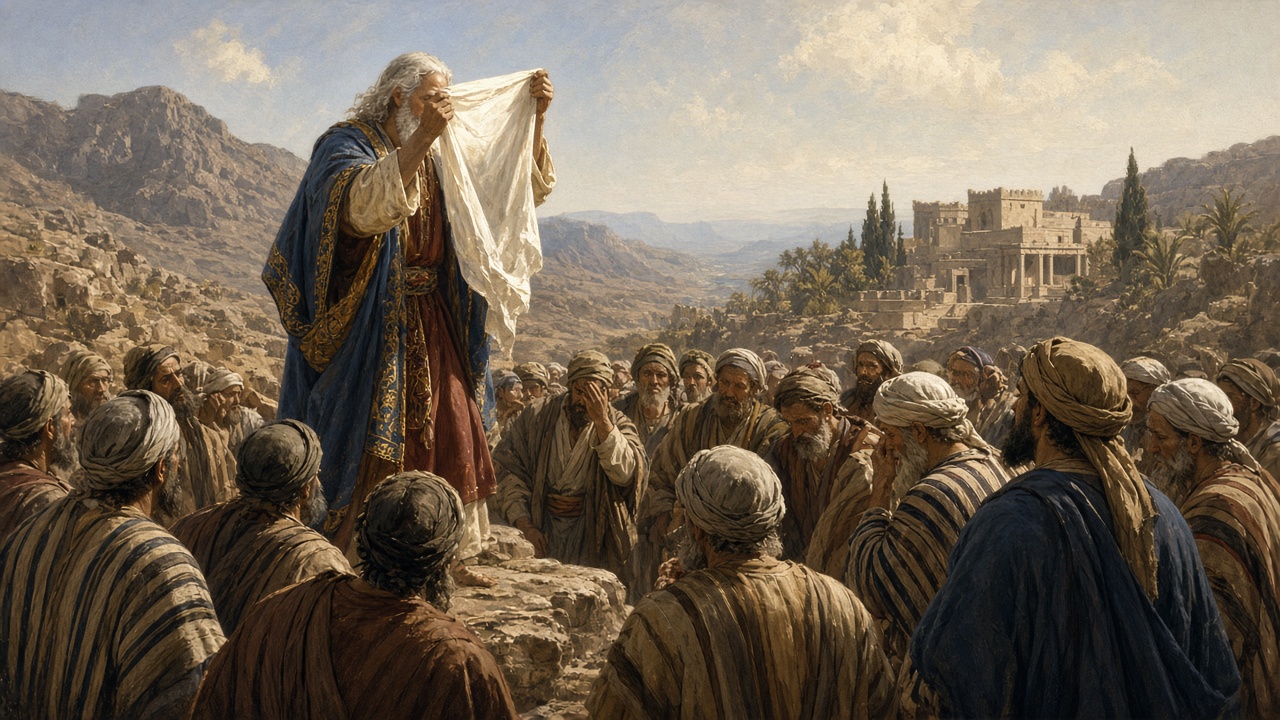
7Yman itape rehe je'ẽha ke Tupã moĩ. Ame'ẽ ke Moise pe Tupã me'ẽ rahã, a'ep hendy te hũ. Aja pyrãtãha ke mujesak. (Aja a'ep a'e ixo aja mujekwa ngã pe tĩ.) Pe, Moise ruwa hendy hũ tĩ. Ame'ẽ uwe wan ixo rahã, hendy we hũ rĩ. A'erehe marã ka ym huwa rehe jundéu awa ta usak usakiha. Ame'ẽ Moise je'ẽha ke amõ pandu pandu rahã, kuja ukwa: “Mã! Ma'e aka'u te'eha ke ihẽ ama'e. Tupã namõ axo ym ta” aja ukwa. Pe, ame'ẽ je'ẽha ke Moise pe Tupã me'ẽ rahã, a'ep hendy te hũ. Pyrãtãha ke mujesak tĩ. (Aja a'ep a'e ixo aja mujekwa ngã pe tĩ.) 8Aja rahã ame'ẽ je'ẽha 'ar koty te we Tupã'ã ma'eha. Amõ ke muhã katu rahã, pyrãtã te ha rupi Tupã'ã muhã katu. |src="CO00835B.TIF" size="col" copy="© 1978 David C. Cook Publishing Co." ref="Sikũn Korĩt 3.7-8" 9Ame'ẽ Moise je'ẽha rehe amõ hendu rahã, jupandu jupe: “Mã! Katu ym ihẽ. Ihẽ ke Tupã mupyrara ta” aja. Ame'ẽ Moise je'ẽha riki katu riki. Je'ẽha pyahu ame'ẽ ke i'ar koty te we katuha. Je'ẽha pyahu ame'ẽ ke rehe amõ hendu katu rahã, Tupã pandu: “Nde katu te. Ma'e nde ereka'u te'eha nde erema'eha nixói te nde pe” aja. A'erehe Moise je'ẽha 'ar koty te we je'ẽha pyahu katuha. 10Apo je'ẽha pyahu ame'ẽ namõ jaxo. Moise je'ẽha 'ar koty te we katu te ha. A'erehe ymanihar Moise je'ẽha katu ame'ẽ ke upa, aja japandu. 11Moise je'ẽha i'i ixo, ame'ẽja saka. Ame'ẽ riki katu rahã, upa ym te ame'ẽ ke i'ar koty te hũ katuha. Je'ẽha pyahu ame'ẽ ke upa ym te. A'erehe je'ẽha pyahu ame'ẽ ke i'ar koty te we katuha. (Uhã te hũ ha ke ame'ẽ me'ẽ. A'erehe i'ar koty te we katuha.)
Tupã je'ẽha ke jundéu awa ta ukwa ym
12Je'ẽha pyahu riki upa ym te ta, ame'ẽ ke jakwa katu. A'erehe kyje ym ha namõ Kirisutu rehe har japandu pandu. 13Moise aja jaxo ym tĩ. Tupã je'ẽha wewe ukwa, aja ym jamu'e. Pesarahã! Huwa ke Moise jupyk. Pan pe jupyk. Aja rahã, huwa hendyha uwe ame'ẽ ke jundéu awa ta usak ym. 14Moise ruwa ke pan jupyk. Aja jundéu awa ta py'a tĩ. Pan pe jupyk ame'ẽja saka apo tĩ. A'erehe yman Moise pe je'ẽha ke Tupã muwyr, ame'ẽ ke jundéu awa ta usak usak tipe rahã, iãkã mujanam rãi. (A'erehe ukwa ym.) Kirisutu kotyhar aja jõ amõ jumuruwak rahã, ame'ẽ pan kanim. (Aja rahã, upa ukwa katu.) 15Apo aja tĩ. Moise je'ẽha ke jundéu awa ta usak usak rahã, ipy'a ke pan jupyk, ame'ẽja saka ixo we rĩ. Usak ame'ẽ ke ukwa ym. 16Pe, jandema'e sawa'e te koty jumuruwak rahã, ixotyhar aja ixo. Aja rahã, ame'ẽ pan ke Tupã mukanim. Aja Tupã je'ẽha mujekwa. Jo'ok ame'ẽja saka. Aja rahã, je'ẽha ke ukwa katu. 17“Jandema'e sawa'e te” aja Tupã je'ẽha rehe panduha ihĩ. Ame'ẽ riki Tupã'ã ke. Pe, jandema'e sawa'e te'ã riki jande py'a rehe ihĩ rahã, jande ãkã ke a'e mupirer mi. (Aja rahã, Tupã rehe har jakwa katu te ta.) 18Jande ruwa ke pan pirer ame'ẽ ke jupyk ym jaxo. A'erehe upa jande rehe ngã usak rahã, katu ame'ẽ ke jande, aja ukwa. Jandema'e sawa'e te katuha aja jaxo tĩ, aja ukwa. Pe, jandema'e sawa'e te, a'e riki Tupã'ã ke. A'e riki jande ke muruwak ixo. Jandema'e sawa'e te katuha aja amõ we amõ we jande ke muruwak ixo. Pe, yman rahã, a'e aja jaxo ta tĩ. Arahã a'e aja nixói te ta ma'e jaka'u te'eha jama'eha ke jande pe.
Did you know?
A More Glorious Covenant
- The chapter asks whether letters of recommendation to or from the believers are needed, as some people require. It answers that the believers themselves are a letter from Christ, the result of this ministry, inscribed on the ministers' hearts and known and read by everyone.Sources: the Bible text itself
- The chapter contrasts ink and tablets of stone with the Spirit of the living God writing on human hearts. It calls the ministry engraved in letters on stone a ministry of death and condemnation, and describes a new covenant of the Spirit, for the letter kills but the Spirit gives life.Sources: the Bible text itself
- The Israelites could not gaze at Moses's face because of a glory that was fading, and Moses put a veil over his face so they would not look at the end of what was passing away. The chapter says that a veil still covers their hearts when Moses is read, and that it is taken away whenever anyone turns to the Lord.Sources: the Bible text itself
Notes written with AI assistance from open sources (Theographic Bible Metadata, CC BY-SA 4.0; Easton’s Bible Dictionary, public domain) and reviewed before publishing.
Credits and license for this translation
Tupã Je'ẽha
New Testament in Kaapor (BR:urb:Kaapor)
copyright © 2012 Wycliffe Bible Translators, Inc.
Language: Kaapor
Translation by: Wycliffe Bible Translators, Inc.
Copyright Information
© 2012, Wycliffe Bible Translators, Inc. All rights reserved.
This translation text is made available to you under the
terms of the Creative Commons License: Attribution-Noncommercial-No Derivative Works.
( http://creativecommons.org/licenses/by-nc-nd/3.0/ )
In addition, you have permission to port the text to different file formats, as long as you
do not change any of the text or punctuation of the Bible.
You may share, copy, distribute, transmit, and extract portions
or quotations from this work, provided that you include the above copyright
information:
You must give Attribution to the work.
You do not sell this work for a profit.
You do not make any derivative works that change any of the actual words or punctuation of the Scriptures.
Permissions beyond the scope of this license may be
available if you contact
us with your request.
The New Testament
in Kaapor
© 2012, Wycliffe Bible Translators, Inc. All rights reserved.
This translation is made available to you under the terms of the
Creative Commons Attribution-Noncommercial-No Derivatives license 4.0.
You may share and redistribute this Bible translation or extracts from it in any format, provided that:
You include the above copyright and source information.
You do not sell this work for a profit.
You do not change any of the words or punctuation of the Scriptures.
Pictures included with Scriptures and other documents on this site are licensed just for use with those Scriptures and documents.
For other uses, please contact the respective copyright owners.
2014-04-27
Source: http://ebible.org/urbNT/ · eBible.org