John 16
Godón Buk · Tap a verse to see its cross-references.
1“Ka yabü ini poko ugósüm nüzazilnüma, yabü amkoman banguna sab koke aupe. 2Yabü sab ⌊Zu pamkolpamab kwóbbazen müótüdü⌋ tótókgum piküp nirre. We tumum, ene tonarra tótókda, yabü büdülümpükü nidi okrrale, i sab igó gyagüpitótók korale wagó, i Godón tangamtindako. 3Pamkolpama sab inzan tonarr tómbapón kwarile, zitülkus i Ab akó kürübóka umul kokeako. 4A ka yabü kuri nüzazilnüma, igósüm ene ngürra sab nóma tame ibü ene elklaza tómbapónóm, yabü sab ngambangólóle ka yabü umul-umulan kuri ngintinünüma. Ka yabü koke nüzazilarre ini poko ngaensingül, ka kólba zaget ne ngarkwat bókyarró, zitülkus ka yenkü asi namülnürrü.
Godón Samuan Zaget
5“Da ka tótókóm kaindóla oyaka, kürü nótó zirrkapónórr. A yabükagab kürü darrüpa kokean kümtinürr igó, ‘Ma ia nubó tótókdóla?’ 6Ka yabü ini pokozan nüzazilnüma, da yabü moboküpdü ma kari gyaur kokea. 7Ka yabü amkoman poko byaldóla: yabiób morroalóm ka wata wamo; ka koke ne nóma wamo, sab Tangbamtin Oloma koke tame yabüka. A ka ne nóma wamo, ene ka sab oya zirrsapono yabüka. 8Wa sab nóma tame, wa ini tüpan pamkolpamab obzek talüngnórre tüpan gyagüpitótókdógab ama küsil gyagüpitótók aliónüm amkoman bóktan amzyatóm ene aüd klamabkwata: kolae tonarr, ⌊dümdüm tonarr⌋, akó Godón kotódó zamngól. 9Kolae tonarrankwata wa sab ibü nilórre: ibüka kolae tonarr asine, zitülkus i kürü amkoman koke angundako. 10Akó dümdüm tonarrankwata wa sab ibü nilórre: i umulako ka amkoman dümdüm ngyaben olomla. Wa ini poko sab nilórre, zitülkus ka Abdó tótókdóla, da e sab kürü karianbóka koke kósenane. 11Akó Godón kotódó zamngólankwata wa sab ibü nilórre: ini tüpan singüldü pam, satani, God oya kuri zaz yónürr, da wa tóba ngürr akyanda.
12“Kürü abün elklazako yabü büzazilüm, da e gaodó kokeakla ⌊küp blaman azebóm⌋. 13Da Godón Samua sab nóma tame, amkoman poko nótó bóktanda, wa amkoman bóktan blaman okaka izazine. Wa sab tóbanóm gyagüpitótókdógab koke bóktan yarile, a wa sab we poko bóktan yarile wa ne poko arrkrrue kürükagab. Wa yabü we poko nüzazilnórre, solodó sab ne elklaza tómbapónórre. 14Wa kürü ngi sab kwit emngyele, zitülkus wa kürü bóktan ipüde yabüka okaka azazinüm. 15Kürü Aban blaman ne klamko, kürünko; ka igósidi bóktandóla, sab tóba Samua yazeble, ka oya ne kla alióndóla yabü umul-umulan ngibtanóm.
Gyaur akó Bagürwóm
16“Tugupurr tonarr kakóm e sab kürü koke kósenane. Da akó tugupurr tonarr kakóm e sab kürü akó kósenane.”
17Ngibürr umulbain olmala tibiób bamtinónóp wagó, “Ini bóktanan küp laróga? Wa igó bóktanda wagó, ‘Karianbóka ini kakóm, e sab kürü koke kósenane. Da karianbóka ene kakóm, e sab kürü akó kósenane.’ Akó wa igó bóktóne wagó, ‘Zitülkus módóga, ka Abdó tótókdóla.’ 18I akó bóktónóp wagó, ‘Karianbóka’ bóktan opora iabóka apónda? Mi umul-kókakla wa laró poko bóktanda!”
19Yesu umul bainürr i oya imtinónópma, da ibüka we bóktanórr wagó, “E ia yabiób we poko bamtin korala, ka ne poko bóktóna: ‘Karianbóka ini kakóm, e sab kürü koke kósenane. Da akó karianbóka ene kakóm, e sab kürü akó kósenane.’?” 20Ka yabü amkoman poko byaldóla: e sab yón gyaur koralo, a ini tüpdü pamkolpama sab bagür korale; e sab gyaur koralo, a yabü yón gyaura sab bagürwómóm bümzazile. 21Kola olom asenóm nóma kaindo, wa azid aengdo, zitülkus oya ngarkwat kuri semrróne. Oloma nóma tómtómóle, oya ene azidbókama kuri bamrüke; wa errkya bagürwómdümo, zitülkus küsil oloma kuri tómtómóle ini tüpdü. 22Da ene inzana yabüka: e errkya gyaurdümakla, da ka sab yabü akó nósenónómo! Yabü moboküpdü sab kari bagürwóm koke yarile; darrü pama sab yabükagab kokean amanike, ene ne bagürwóm yarile!
23Sab ene ngürr nóma semrróne, e sab kürü darrü klamóm koke katoane. Ka yabü amkoman poko byaldóla: Aba sab yabü nülirre, e oya ne klamóm yatoane kürü ngidü. 24Ngaendógab kókóta errkya, e Ab kokean yatoarre darrü klamóm, kürü ngidü. Yatolam, da e sab ipüdane! Yabü bagürwóm sab igósidi metat ki yarilün.
Dudu Tüp Yesun Tangdóma
25“Ka yabüka alap-alap bóktan namülnürrü ene elklazabkwata. Ene tonarr kuri semrróne, ka sab myamem alap-alap koke bóktan namulo, a ka sab wata dümdüman ikik namulo Abankwata. 26Ene ngürrdü e sab oya kürü ngidü yatoane. Ka igó koke bóktandóla igó, Ab sab yabü ngidü kótó yato-o. 27E sab yaib yatoane, zitülkus Aban ⌊moboküpdü ubi⌋ yabükama. Oya moboküpdü ubi yabükama, zitülkus yabü moboküpdü ubi kürükama, akó e kürü amkoman kuri kangunane wagó, ka Abdógab tamórró. 28Ka Abdógab tamórró, da ini tüpdü tübangrirrü; errkya ka ini tüp amgatla akó Abdó alkomóldóla.”
29Da umulbain olmala oyaka bóktónóp wagó, “Ma errkyadan dümdüman bóktandóla. Ma errkyadan alap-alap koke bóktandóla. 30Ki errkyadan kuri umul bairre, ma blaman kla umulóla: marü darrü pama koke mümtine darrü poko: oya amtin bóktan poko ma singül kwata umul baindóla. We zitülkusdü, ki marü amkoman kuri mangurre, ma Godkagab tamórró.”
31Yesu ibüka bóktan yalkomólórr wagó, “Errkya e ia kürü tai amkoman kuri kangunane? 32Tübarrkrru, ene ngürr amrrandase, da kuri semrróne, e blamana sab barngeno yabiób darrpan-darrpan basirrdü. E sab kólbanan kimgütane. Da ka sab kólbe püóran koke namulo, zitülkus Ab kürüka asine. 33Ka yabü ini poko kuri nüzazilnüma, igósüm yabüka paud asi ki yarilün e kürüka arróbórrónzanakla. Ini tüpdü e sab azid aeng koralo. Da e sab karrkukus bórrangke: ka ini tüpan arüng kuri emkóla!”
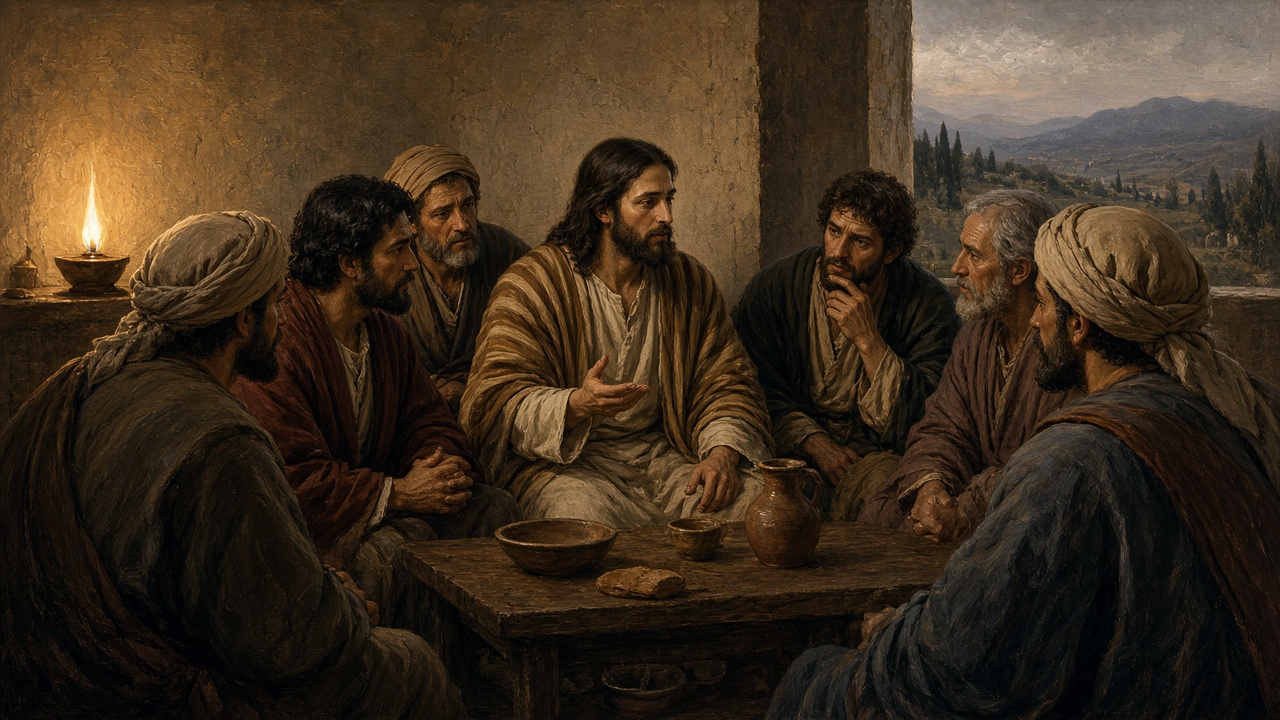
Did you know?
Departure, the Advocate, and joy after grief
- Event notes place this chapter in the Upper Room Discourse, a one-day episode within Holy Week, which those notes list as eight days.Sources: Upper Room Discourse · Holy Week
- Jesus tells the disciples they will be put out of the synagogues. He adds that a time is coming when anyone who kills them will think he is offering a service to God, because they have not known the Father or him.Sources: the Bible text itself
- He says it is for their benefit that he is going away, because unless he goes, the Advocate will not come. When the Spirit of truth comes, he will guide them into all truth, not speaking on his own but saying what he hears and declaring what is to come.Sources: the Bible text itself
Notes written with AI assistance from open sources (Theographic Bible Metadata, CC BY-SA 4.0; Easton’s Bible Dictionary, public domain) and reviewed before publishing.
Credits and license for this translation
Godón Buk
Portions of the Holy Bible in the Gizrra language of Western Province, Papua New Guinea
Buk Baibel long tokples Gizrra long Niugini
copyright © 2019 Wycliffe Bible Translators, Inc.
Language: Gizrra
Translation by: Wycliffe Bible Translators, Inc.
This translation is made available to you under the terms of the
Creative Commons Attribution-Noncommercial-No Derivatives license 4.0.
You may share and redistribute this Bible translation or extracts from it in any format, provided that:
You include the above copyright and source information.
You do not sell this work for a profit.
You do not change any of the words or punctuation of the Scriptures.
Pictures included with Scriptures and other documents on this site are licensed just for use with those Scriptures and documents.
For other uses, please contact the respective copyright owners.
2024-07-01
Source: http://png.bible/tof/ · eBible.org