Genesis 48
Godón Buk · Tap a verse to see its cross-references.
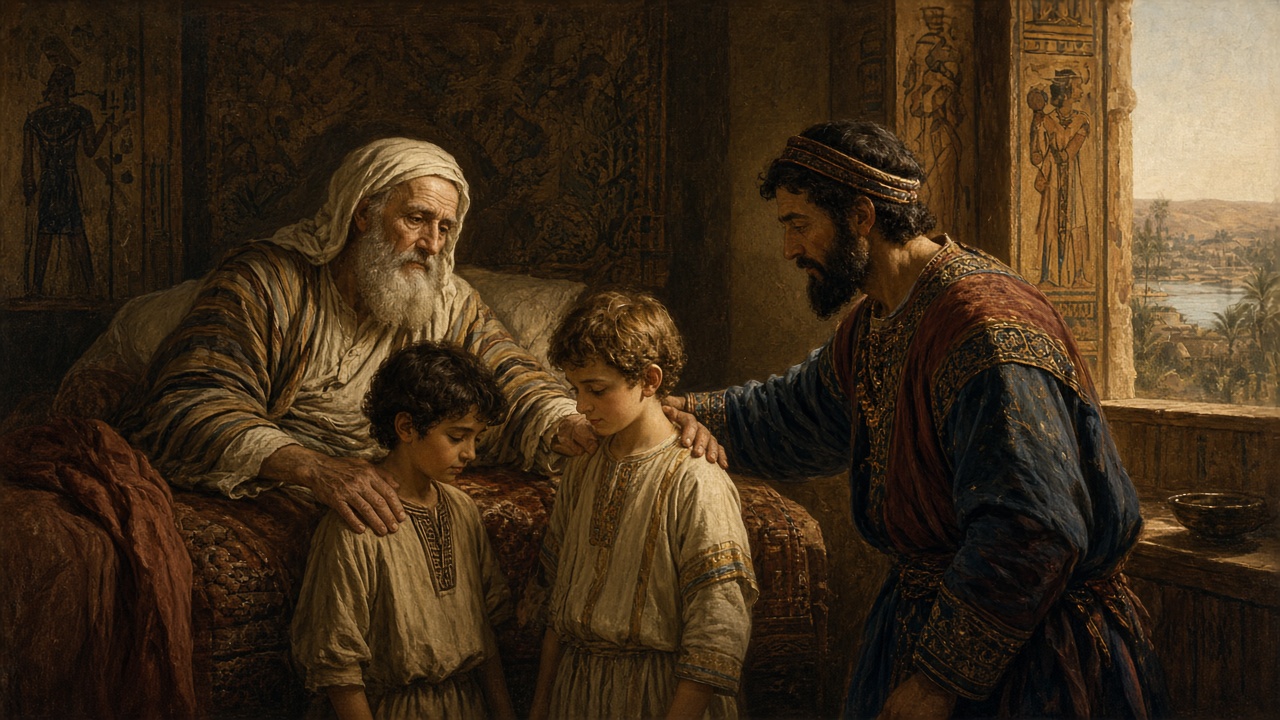
Zeikobón Dómdóm Bóktan Tóba Bobat Nisdü, Iprra-im akó Manase
1Ngibürr tonarr kakóm, Zosepón umulan ngitinóp wagó, “Turrkrru, marü ab azidase.” Da wa tóba siman olom nis we nüpadórr, Manase akó Iprra-im, da i we ogobórr Zeikobón angónóm. 2Zeikobón nóma izazilóp wagó, “Marü oloma Zosep kuri tame marü angónóm,” wa tóba dómdóm arüng ipadórr, da bupadórr, we mórranórr tóba ut bwóbdü.
3Zeikob bóktanórr Zosepka wagó, “Wirrian Arüng God tóba kürüka okaka tübyónürr Luzüm, Keinan tüpdü, ó kürü God ola bles kyónürr. 4Wa bóktanórr kürüka wagó, ‘Turrkrru, ka sab marü abün olmalbobatal mülino. Marü olmalbobatala sab blaman bwób ayonórre ini Keinan tüpdü; ka sab ini Keinan tüp marü olmalbobatal nókyenónómo metatómpükü.’
5“Zosep, marü ne nis siman olom nisamli, Iprra-im akó Manase, kürünamli, wamaka Rruben akó Simion, izanamli. I Izipt kantrridü tómtómórri, ka ma ene solkwat tamórró. 6Solkwat olmal marü moba korale; ibü tüp akó elklaza sab Iprra-im akó Manase, idi nüliónórre, zitülkus aban pabo idi apadódamli. 7Ka ini tonarr igósidi tónggapóna, marü aipan zitülkusdügab, Rreizel. Kürü bübdü wirri gyaur yarilürr, wa Keinan tüpdü nóma nurrótókórr, wirri kan babul Eprrat wirri basirrdügab, ka kwat-kwat nóma tolkomólnórró Mesopotamia bwóbdügab. Ka oya we ulungürrü ne kwata tamlórr Eprrat wirri basirrdü, kwat kabedó.” (Eprratón darrü ngi módóga: Betliem.)
8Zeikob Zosepón olom nis we nósenórr, ó we bóktanórr wagó, “Ini ia noa siman olom nisamli?”
9Zosep bóktan yalkomólórr tóba abdó wagó, “Ini kürü olom nisamli, God nibiób kókyanórr aini Iziptüm.” Zeikob bóktanórr wagó, “Ala tüdó, ka kubó ibü bles nino.” 10Ene tonarrdó, Zeikobón ilküpa tümün bairri, zitülkus wa myangan yarilürr. Oya amzyat nabe yarilürr. Da Zosep siman olom nis aban minggüpanandó nüdódürr, ó Zeikob ene siman olom nis nüpadórr, tóba minggüpanandó tüdódürr, we nüprükürr. 11Wa Zosepka bóktanórr wagó, “Kürü gyagüpitótók inzan yarilürr, kamaka ma büdüla da ka sab marü myamem kokean móseno. A módóga, ini tonarr ma God kürü wató ok kine marü asenóm akó marü olom nis.” 12Da Zosep tóba siman olom nis nüpadórr tóba aban ganggópdógab, wakósingül nülkamülürr, singül tüp we elkomólórr. 13Ene kakóm, Zosep Iprra-imün tóba tutul tange ipadórr, da Zeikobón banól kwata sidódürr. Akó wa Manasen ma tóba banól tange ipadórr, da Zeikobón tutul kwata sidódürr. 14Zeikobón tang nisa ma simbruatrri ó wa tóba tutul tang ipadórr, Iprra-imün singüldü emngyelórr, wa go zoret yarilürr. Wa tóba banól tang Manasen singüldü emngyelórr, wa go naret yarilürr. 15Zeikob Zosepón bles yónürr ó bóktanórr wagó,
“God ini olom nis ki bles tyó, kürü abalbobatala Eibrra-am akó Aesak ne Godón yagürnóp.
Wa kürü ⌊sip⌋ ngabkan pamzan ngakanda kürü ini ngyabende, kürü amtómól ngürrdügabi kókó ini ngürr.
16⌊Godón anerrua⌋ ini olom nis ki bles tyó, kürü nótó zid kyónürr blaman kolaedógab!
I sab kürü ngi ki idódlam, akó kürü abalbobatalab ngi, Eibrra-am akó Aesak.
Ibü sab abün olmalbobatala ki tóbabótólón ini tüpdü!”
17Zosep tóba ab nóma esenórr tóba tutul tang Iprra-imün singüldü angrirrün, oya ene ubi-koke poko yarilürr. Da wa tóba aban tang ipadórr, Manasen singüldü amngyelóm. 18Zosep tóba abdó bóktanórr wagó, “Ba, inzan koke! Manase wa ngaen oloma. Ma moba tutul tang oya singüldü ki emngyela.”
19Aba badólórr ó we bóktanórr wagó, “Ka umulóla, kürü olom, ka umulóla. Manase ta sab wirri baine akó oya ne olmalbobatal kwarile. Oya zoretan ma sab amkoman abün olmalbobatal kwarile, akó oya ne olmalbobatal kwarile, i ugórr abün kantrri tómbapórre.”
20Da ibü Zeikob we bles nyónürr ene ngürr ó we bóktanórr wagó,
“Isrrael pamkolpama sab yabü ngidü bles bain kwarile. I sab bóktanórre wagó,
‘Marü sab God igó ki mangó, wamaka Iprra-im akó Manase.’”
Ini tonarre, Zeikob Iprra-imün singül kwata ingrinürr Manasekagab.
21Da Zeikob we bóktanórr Zosepka wagó, “Turrkrru, ka büdül kari pokola. God sab marüka asi yarile akó marü sab malkomóle moba abalbobatalab tüpdü. 22Syekem morroal tüp poko, ka gazirr turriki akó bügür kyabe ne kla amiógrrü Amorr pamkolpamdógab, errkya marüne, a marü zonaretalab ma koke.”
Did you know?
Adoption and Blessing of Ephraim and Manasseh
- Jacob reckons Joseph’s two sons, born to him in Egypt, as his own, on a level with Reuben and Simeon, Leah’s sons. Children born to Joseph after them were to remain Joseph’s, and were to be called by their brothers’ names in the territory they inherited.Sources: the Bible text itself · Manasseh (son of Joseph) · Reuben · Simeon
- Manasseh was the elder son and Ephraim the younger, born in Egypt. The name Ephraim means double fruitfulness, because God had made him fruitful in the land of his affliction. Though Israel could hardly see for age, he crossed his hands, laid his right hand on Ephraim, and insisted that the younger brother would be greater.Sources: the Bible text itself · Ephraim · Manasseh (son of Joseph)
- Jacob recalls that God Almighty appeared to him at Luz in the land of Canaan and blessed him there. Luz was the ancient name of a royal Canaanite city near Bethel, where Jacob halted and received a prophetic vision. He also remembers Rachel, Joseph’s mother, who died to his sorrow on the way back from Paddan—a name found only in this verse, for Padan-aram—and whom he buried beside the road to Ephrath, that is, Bethlehem.Sources: the Bible text itself · Luz · Paddan · Rachel
Notes written with AI assistance from open sources (Theographic Bible Metadata, CC BY-SA 4.0; Easton’s Bible Dictionary, public domain) and reviewed before publishing.
Places in this chapter
- Canaan · 32.767, 35.333 · verses 3, 4, 7, 21
- Luz · Today: Beitin · 31.923, 35.241 · verse 3
- Egypt · 30.129, 31.308 · verses 5, 9
- Bethlehem · 31.704, 35.208 · verse 7
- Ephrath · Today: Bethlehem · 31.704, 35.208 · verse 7
Only places identified with high confidence are shown (90% or more according to the scholarly sources compiled by OpenBible). Period map: DARE (Digital Atlas of the Roman Empire), CC BY 4.0; modern map: © OpenStreetMap contributors; places: OpenBible.info (CC BY 4.0).
Credits and license for this translation
Godón Buk
Portions of the Holy Bible in the Gizrra language of Western Province, Papua New Guinea
Buk Baibel long tokples Gizrra long Niugini
copyright © 2019 Wycliffe Bible Translators, Inc.
Language: Gizrra
Translation by: Wycliffe Bible Translators, Inc.
This translation is made available to you under the terms of the
Creative Commons Attribution-Noncommercial-No Derivatives license 4.0.
You may share and redistribute this Bible translation or extracts from it in any format, provided that:
You include the above copyright and source information.
You do not sell this work for a profit.
You do not change any of the words or punctuation of the Scriptures.
Pictures included with Scriptures and other documents on this site are licensed just for use with those Scriptures and documents.
For other uses, please contact the respective copyright owners.
2024-07-01
Source: http://png.bible/tof/ · eBible.org