Genesis 44
Godón Buk · Tap a verse to see its cross-references.
Zosepón Kübül
1Zosep tóba müót ngakan pam yalórr wagó, “Ene pamab alópdó dokyanan alo kla irrbünam, ibü amarrum ngarkwat. Akó ibü mani tibiób alóp tumum kolatónamke. 2Kürü ⌊silba⌋ kübül kubó zoretan alóp tumum kolakyanamke oya manipükü, wa ne mani simarrurr ⌊wit⌋ küp bumiógüm.” Da wa tónggapónórr oya Zosep enezan yalórr. 3Irrbianande, zaget pama Zosepón zonaretal we zirrnapónóp tibiób ⌊donkipükü⌋. 4I ene wirri basirr nóma amgütóp, aibwób-koke, Zosep we bóktanórr tóba müót ngakan pamdó wagó, “Bupa, da ene pamab solkwat akya! Ma kubó ibü nóma nómrrónónómo, nümtinünümke ibü wagó, ‘E kürü morroal tonarr kolae tonarre iade yalkomólane? 5E silba kübül gómól-gómól iade ipüdane? Ini kürü wirri paman anón kübüla: wa ugósüm ngakanda, ugórr ngyaben amzyatóm. E wirri kolae kuri tónggapónane!’”
6Ene müót ngakan pama bupadórr, ibü we nómrrónóp, da wa dadan bóktan poko we arükürr ibüka. 7Da i bóktan we yalkomólóp wagó, “Kibü wirri pam, ma inzan iade bóktandóla ini poko? Ki, marü zaget pama, inzan kolaean tonarr kokean tónggapórre. 8Turrkrru, marü ia kuri ngambangóle, ki inzan tóbakorró marüka Keinan tüpdügab kibiób manipükü marüka akonóm, ne kla nósenóp kibiób alóp tumum? Ki ma gómól-gómól silba akó gold iade ki yazebrre marü wirri paman müótüdügab? 9Ma ne kubó kübül kibü darrüdü nóma eseno, wa kubó ki nurrótók! Sab ki ngibürr marü ⌊leba zaget⌋ pamóm bairre.”
10Wa bóktan yalkomólórr wagó, “Inzan ki yarilün mazan namüla wagó, kübül kubó noaka nóma eseno sab kürü leba zaget olom yarile. A e ngibürra sab ene ⌊kolaean darrem⌋ koke ipüdane.” 11Blamana büsai-büsai tibiób alóp we elókóp tüpdü, da we tapanukuóp. 12Müót ngakan pama amkünüm we bainürr; naretódógab bókyanórr kókó zoretódó Benzaminka. Ene kübül Benzaminün alópdó esenórr. 13Ene gyaurdügab, i tibiób mórrkenyórr nütürróp. Solkwat donkidü elklaza yamselóp, we bakonórr akó wirri basirrdü.
14Zuda tóba zonaretalpükü nóma tübarrbünürr Zosepón müótüdü, wa wata ola yarilürr. I wakósingül nümgünóp, singül tüp balókórr oya obzek kwata. 15Zosep bóktanórr ibüka wagó, “E ini kolae iade tónggapónane? E ia koke umul bainane igó, kazan pamla, gaodómla umul bainüm ene kla, pamkolpam gaodó kokeako ene kla umul bainüm?”
16Zuda bóktan yalkomólórr wagó, “Kibü wirri pam, ki marüka ia poko bóktórre? Ia ki laró tónggapórre kibiób morroal bainüm marü ilküpdü? God kibü kibiób kolae kuri tóserre. Turrkrru, ki blaman marü leba zaget pamakla; ki blaman akó kübül noa alópdó eserre.”
17Da Zosep bóktanórr wagó, “Inzan koke! Ka ene poko kokean tónggapono! Wata ne pam eserre kübülpükü, kürü leba zaget olom wató yarile. A e barrea kubó tai ogoblónke yabiób abdó.”
Zuda Zosepón Yatorr Benzaminün Alkomólóm
18Da Zuda tai oya minggüpanandó wamórr. We bóktanórr wagó, “Gyaurka, kürü wirri pamóe, ka marü zaget pama kya dümdüman bóktanón darrü poko, marü arrkrrum. Enana ma parrao ngarkwatódómla, ma kubó ngürsilgu kürüka, marü zaget pam. 19Ki ngaen-gógópan nóma togobórró, ma, kibü wirri pam nótókla, we tümtinóp wagó, ‘Ia yabü ab asise akó ia yabü darrü zonaret asise?’ 20Ki bóktan yalkomólóp marüka, kibü wirri pam, wagó, ‘Kibü ab myang asise akó solo kupo zoret ta asise, wa myangande noan ilngumilürr. Errkya oya naret büdüla. Dómdóm ma watóke solo aipdügab, ó oya aban ⌊moboküpdü ubi⌋ oyakamóma.’ 21Ma kibüka bóktarró, moba zaget pamdó, wagó, ‘Oya sab ala sidüdamke kürüka, ugósüm ka oya obzek eseno.’ 22Da wirri pam, ki bóktan marüka yalkomólóp wagó, ‘Ene omokura tóba ab kokean amgüte. A wa ne ab nóma amgüte, oya aba sab nurrótóke.’ 23Ma kibüka bóktarró wagó, ‘E myamem kürü obzek koke esenane, kókó e sab yabiób solo kupo zoretpükü togobo kürüka.’
24“Ki nóma bakorró kibiób abdó, marü zaget pam, da ki oya izazilóp ma kibü wirri pama ne poko tüzazilóp. 25Kibü aba bóktanórr wagó, ‘E bako, mibü ngibürr alo kla bumiógüm.’ 26Da ki bóktan yalkomólóp wagó, ‘Ki koke babino ola. Kibü solo kupo zoret ne asi nóma yarile kinkü, ki igósidi babino ola. Sab ki myamem koke eserre ene paman obzek, kókó kibü solo kupo zoret asi yarile kinkü.’ 27Da kürü aba Zeikob bóktanórr kibüka wagó, ‘E umulakla, kürü kola nis siman olom nis nulngumilürr kürükü. 28Darrüpa kürü kimgatórr, da ka bóktarró wagó, “Ka umulóla wa syórrpókal angórrónase.” Ka oya kokean kuri eserró, wa ne ngarkwat bamrükürr. 29E kubó akó ini ne nóma ipüdane kürükagab, darrü kolae klama aprrapórr tómbapóne oyaka. Ka myang kuri baina akó ene kolaedógabi, e sab kürü büdülbóka kena agósam.’”
30Zuda akó bóktanórr wagó, “Ka ne olom-koke nóma yalkomolo kólba abdó, marü zaget pam, wa kubó kibü nóma tóserre wagó, olommokur babula inkü, da wa kubó nurrótóke. Zitülkus módóga, oya ubi babula ngyabenóm, oya moboküpdü oloma koke ne nóma alkomóle. Wa myang kuri baine akó ene gyaurdügabi, ki, marü zaget pam, sab kibiób aban büdülbóka kena agósam. 32Ka kólba bumanikürrü kólba aban ngidü ini omokur alkomólóm kólba abdó. Ka bóktarró wagó, ‘Ka ne koke nóma salkomolo marüka, da ene müp sab kürüka ki yarilün metat.’ 33Da módóga, gyaurka, ka marü leba zaget olomóm ala namulo zagetóm marünkü, kürü wirri pam, omokuran pabodó. A omokura ki alkomól basirrdü tóba naretalpükü. 34Ka wa ia alkomolo kólba abdó, ene omokur babul ne nóma yarile kürüka? Ka kari gum kokela kólba aban gyauran büdül asenóm.”
Did you know?
The Hidden Cup and Judah's Plea
- Judah, Jacob's fourth son by Leah, speaks for the brothers and offers to remain as a slave in the boy's place so that Benjamin may return with his brothers. Easton's Bible Dictionary (1897) notes that Judah had earlier intervened to spare Joseph's life, and that he took the lead in the family's affairs, including in the appeal recorded in this chapter.Sources: Judah (patriarch) · the Bible text itself
- Benjamin was the younger of Jacob's two sons by Rachel; she died giving birth to him and called him Ben-oni, "son of my pain," before his father named him Benjamin. The brothers tell Joseph that the boy is the only son of his mother still living, and that their father believes the other was torn to pieces. They say this to Joseph himself—Rachel's elder son, loved by Jacob as the child of his old age—while still speaking to him as a lord equal to Pharaoh.Sources: Benjamin (patriarch) · Joseph (son of Jacob) · the Bible text itself
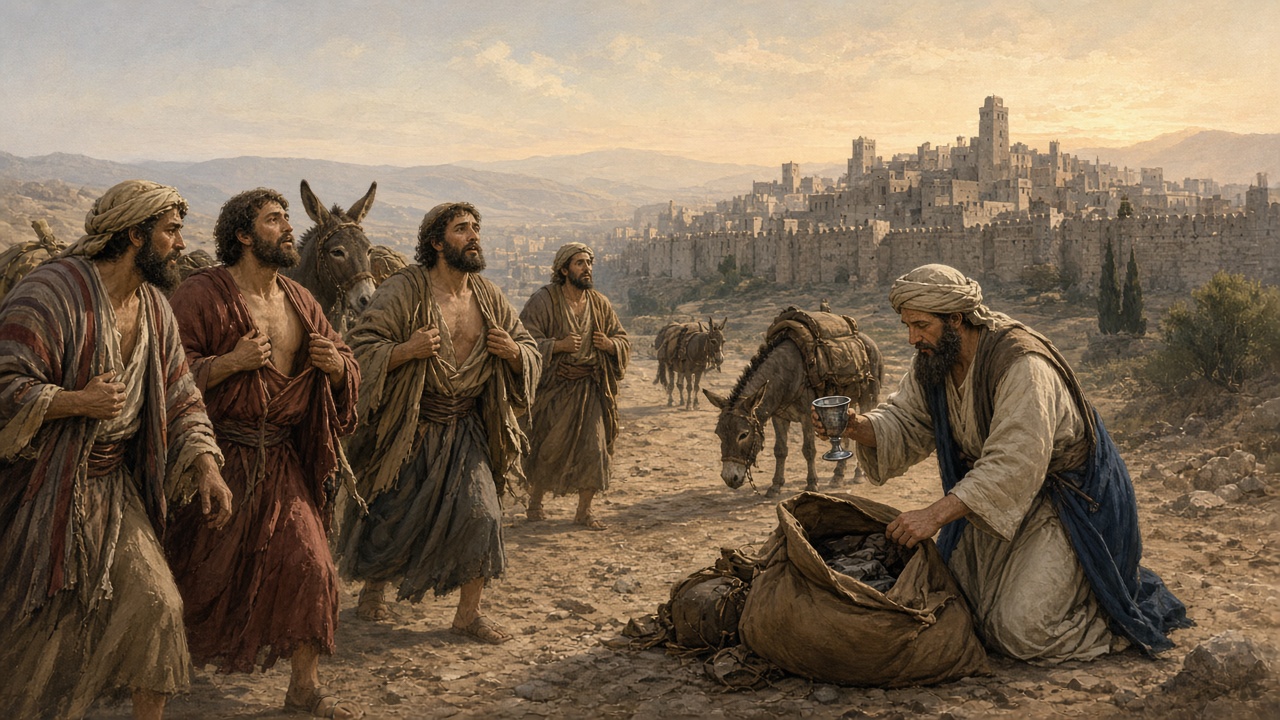
- On Joseph's orders, the steward hid Joseph's silver cup—the cup he drank from and used for divination—in Benjamin's sack, along with the silver paid for the grain. When it was found, the brothers tore their clothes and returned to the city. Joseph then asked whether they did not know that a man like him could divine the truth, although the narrative shows that he had arranged for the cup to be found.Sources: the Bible text itself
Notes written with AI assistance from open sources (Theographic Bible Metadata, CC BY-SA 4.0; Easton’s Bible Dictionary, public domain) and reviewed before publishing.
Places in this chapter
- Canaan · 32.767, 35.333 · verse 8
Only places identified with high confidence are shown (90% or more according to the scholarly sources compiled by OpenBible). Period map: DARE (Digital Atlas of the Roman Empire), CC BY 4.0; modern map: © OpenStreetMap contributors; places: OpenBible.info (CC BY 4.0).
Credits and license for this translation
Godón Buk
Portions of the Holy Bible in the Gizrra language of Western Province, Papua New Guinea
Buk Baibel long tokples Gizrra long Niugini
copyright © 2019 Wycliffe Bible Translators, Inc.
Language: Gizrra
Translation by: Wycliffe Bible Translators, Inc.
This translation is made available to you under the terms of the
Creative Commons Attribution-Noncommercial-No Derivatives license 4.0.
You may share and redistribute this Bible translation or extracts from it in any format, provided that:
You include the above copyright and source information.
You do not sell this work for a profit.
You do not change any of the words or punctuation of the Scriptures.
Pictures included with Scriptures and other documents on this site are licensed just for use with those Scriptures and documents.
For other uses, please contact the respective copyright owners.
2024-07-01
Source: http://png.bible/tof/ · eBible.org