Genesis 42
Godón Buk · Tap a verse to see its cross-references.
Zosepón Naretala Alo Bumiógüm Ogobórr Izipt
1Zeikob nóma umul bainürr wagó, ⌊wit⌋ küp Iziptüm asisko, wa tóba olmaldó we bóktanórr wagó, “E yabiób darrem-darrem iade ngabkandakla? E ia darrü kla koke tónggapónane? 2Tübarrkrru, ka kuri arrkrrua wagó, wit küp asisko Iziptüm. E ugó bazeb wit küp bumiógüm mibünkü, zitülkus mi sab alo büdül kena nurrbarinün.” 3Da Zosepón 10 naretala we ogobórr Izipt, wit küp bumiógüm. 4A Zeikob ma Zosepón zoret Benzaminün koke zirrapónórr inkü, zitülkus Zeikob gum yarilürr wagó, sab darrü pokoa kena tómbapón oyaka. 5Da Zeikobón olmala pam ngorodó babzilürr wit küp bumióg pokodó, zitülkus Keinan tüpdü ku yarilürr.
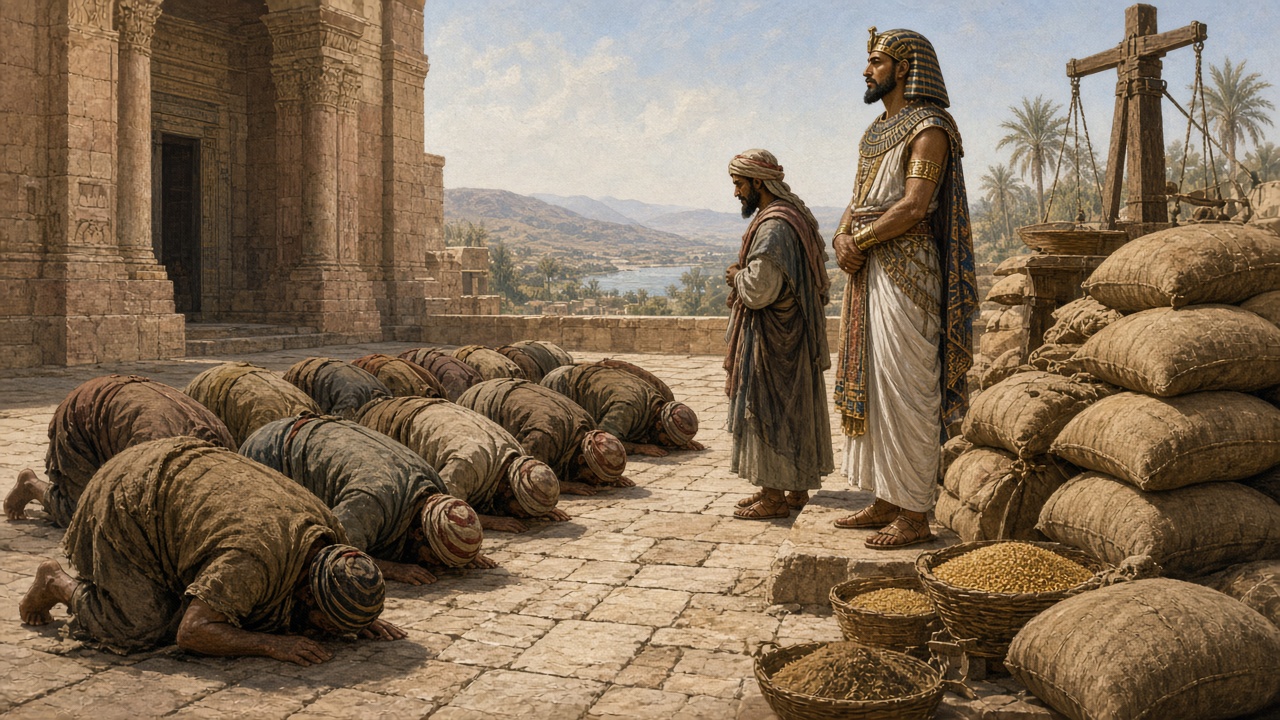
6Zosep gabena yarilürr Izipt kantrridü; bwób-bwób pamkolpama alo kla bumiógüm oyaka togoblórr. Da Zosepón naretala we togobórr, tibiób wakósingül nümgünóp, oya obzek kwata singül tüp balókórr. 7Zosep tóba naretal nóma nósenóp, ibü wa nómzyetóp. A wa igó bainürr, wamaka wa mogob pam yarilürr. Wa taren-taren wirri arüngi bóktanórr ibüka. Wa nümtinóp wagó, “E ia nubógab togoba?”
I bóktan we yalkomólóp wagó, “Ki Keinangabakla, alo kla bumiógüm togoba.”
8Zosep naretal nómzyetóp, a i ma oya koke emzyetóp. 9Oya nusbókama ngambangólórr, wa ne nus umtulürr ibükwata ó da we bóktanórr wagó, “E kómdam bain pamakla; e ugósüm togoba kibü kómdam bainüm wagó, kibü arüng-koke bwób poko negako kibü kantrridü!”
10I bóktan yalkomólóp wagó, “Koke, wirri pam, ki marü zaget pama kuri togoba wit küp bumiógüm. 11Ki zonaretalpükümakla, ki darrpan abrrónakla. Ki kómdam bain pam kokeakla, wirri pam, ki amkoman moboküp pamakla.”
12Zosep ibüka bóktan yalkomólórr wagó, “Koke, e wata ugósüm togoba kibü kómdam bainüm wagó, kibü arüng-koke bwób poko negako kibü kantrridü!”
13I bóktan yalkomólóp wagó, “Wirri pam, ki blaman 12 pam kwarilürr, darrpan abdógab Keinan tüpdü. Kibü darrü zoret büdüla, solo kupo zoret kibü abdómase.”
14Zosep bóktan yalkomólórr wagó, “Koke! E wata amkoman kómdam bain pamakla, ka enezan namüla! 15Ini pokoan küpa sab amkoman ki tómbapó: ka parraoan ngidü yabü ini wirri arüng bóktan akyandóla wagó, e sab kokean amgütane ini bwób, kókó yabü solo kupo zoreta sab tame kürüka. 16Darrü pam zirrapónam yabükagab oya apadóm; e barrea sab tümün müótüdü koralo, kókó sab amkoman bóktana tübzile e ne pokobóka apóndakla, igósüm ka yabü amkoman nangunünümo. Koke ne nóma, ka parraoan ngidü amkoman poko bóktandóla kagó, e wa amkoman kómdam bain pamakla!” 17Da wa ibü we irrbünürr tümün müótüdü, aüd ngürrüm.
18Aüd ngim ngürrdü, Zosep ibüka we bóktanórr wagó, “Ka Godón gum angón pamla, da ini bóktan mamoalamke, igósüm e arról kwarilo. 19Kürü amkoman angunüm wagó, e amkoman moboküp pamakla, yabü darrüpa sab tümün müótüdü ala yarile yabü ne irrbünóp. E barrea sab bakono wit küp amarrum, e ne kla bumigane yabiób olmalkolabkü, alo büdül nidipasko. 20Da e yabiób solo kupo zoret sab sidüdamke kürüka. Ene igósüm, ka bóktan sab amkoman yanguno ó ka sab yabü büdüldü koke irrbuno.” I blamana babinürr.
21Da we bóktónóp tibiób darrpan-darrpandó wagó, “Errkya mi ini azidómakla, mi ne tonarr tónggapónóp mibiób zoretódó. Mi mib ene wirri müp esenóp wa ne kolaedó yarilürr, wa tüób mibü tangbamtinüm arüngi nóma tatop, da mi koke barrkrrurr. Ene zitülkusdü, mi errkya ini müpdümakla.”
22Rruben bóktanórr wagó, “Ka yabü nilarre wagó, kolae tonarr tónggapón-gu ini olomdó. A e ma koke barrkrrurr. Errkya ene darrema kuri tolkomóle mibüka, oya óea neme tópkanórr.” 23Zosep umul bainürr i ne pokobóka apón kwarilürr. A i ma koke umul bainóp, zitülkus bóktan amzazil pam asi yarilürr oyaka bóktan okaka amzazilüm Izipt bóktane. 24Zosep ibü we nümgütóp da yónüm wamórr. Wa akó bóktanóm nóma bainürr, wa we tolkomólórr. Wa tóba darrü zaget pam yalórr Simionón apadóm, da ene zaget pama oya sye-i we amrókórr ibü obzek kwata.
Zosepón Naretala Simionón Amgütóp Iziptüm da we Bakonórr Keinan
25Zosep tóba zaget pam arüng bóktan nókyenóp tóba naretalab alóp murrbausüm wit küpi, akó ibü blamanab ⌊silba⌋ mani poko tibiób alópdó akonóm, ó ibü alo kla aliónüm kwat-kwat alom. Ene bóktan pokoa tómbapónórr. 26Oya naretala wit küp tibiób ⌊donkidü⌋ yamselóp, ó ene bwób we amgütóp. 27I nóla bamilóp ene irrüb utüm, darrüpa tóba alóp nóma tapakurr tóba donki ngóyónüm, wa tóba silba mani poko tumuman nósenóp. 28Wa tóba zonaretaldó górrganórr wagó, “Kürü silba mani pokoa kuri tolkomóle kólbaka! Yóni, kürü alópdóma!” Ibü moboküpa müp bainóp, ó gum tórrngónpükü tibiób darrpan-darrpan bamtinóp wagó, “God ia laró tonarr tónggapónóm kainda mibüka?”
29I tibiób ab nóma emrrónóp Zeikobón, Keinan tüpdü, i oya we izazilóp blaman ene ne pokoa tómbapónónóp ibüka wagó, 30“Izipt kantrrian gabena kibüka taren-taren bóktalórr, ó wa kibü inzan tangónóp, wamaka ki kómdam bain pamakla. 31A ki ma bóktan yalkomólóp oyaka wagó, ‘Ki kómdam bain pam kokeakla, ki wata amkoman moboküp pamakla. 32Ki blaman 12 simanal olmal kwarilnürrü, blaman darrpan abdógab. Darrü zoret büdüla, ó solo kupo zoret asise Keinanóm, kibü abdó.’
33“Ene pama, ene kantrri wirri pam nótóke, bóktan yalkomólórr wagó, ‘Ka sab igósüm umul baino wagó, e wata amkoman moboküp pamakla: Yabiób darrü ala amgütam kürüka; e barrea sab wit küp barrmuno yabiób olmalkolabkü, alo büdül nidipasko. 34E yabiób solo kupo zoret sab sidüdamke kürüka. Ene igósüm, ka sab umul baino wagó, amkoman e kómdam bain pam kokeakla, e amkoman moboküp pamakla. Ka sab yabü narezoret salkomolo yabióbka, ó e sab kibü bwóbdü kwarilo, ó e sab agóltagól kwarilo ini kantrridü.’”
35I tibiób blaman elklaza nóma yusóp tibiób alópdógab, módóga, i blamana tibiób silba mani küppükü paos nósenóp tibiób alópdó! I ene paos nóma nósenóp, i tib akó tibiób ab Zeikob kari gum tórrngón koke kwarilürr. 36Ibü aba ibüka bóktanórr wagó, “Yabü ubi ia ugósüma wagó, ka kólba blaman olmal nümrüknümo? Zosep kankü babula, Simion kankü babula, ó yabü ubi akó Benzaminün ódódóma. Blaman ini müp kótó bamseldóla!”
37Da Rruben abdó we bóktanórr wagó, “Ka sab ne Benzaminün koke nóma salkomolo marüka, ma sab kürü siman olom nis ugón nümkalke. Ma oya kürü tangdó ugó ingri, akó ka sab oya salkomolo marüka.”
38A Zeikob ma bóktan we yalkomólórr oyaka wagó, “Kürü oloma kokean wame mankü, zitülkus oya naret büdüla, ó wa wata dómdóm pammokur módóga arról Rreizelkagab. Darrü klama sab kena tómbapón oyaka, kwat-kwat. Ka myang kuri baina akó ene gyaurdügabi, e sab kürü büdülbóka kena agósam.”
Did you know?
The Brothers Come to Egypt for Grain
- Jacob heard that there was grain in Egypt, the land of the Nile, and sent ten of his sons from Canaan to buy some so the family would not die in the famine. The seven-year famine is dated to a beginning in 1707 BC, and the brothers' journey to Egypt to 1706 BC.Sources: the Bible text itself · Egypt · 7 years of famine · Joseph's brothers go to Egypt
- Joseph, ruler of the land and the one who sold grain to its people, recognized his brothers when they bowed before him, but they did not recognize him. An interpreter stood between them, so they did not realize that he understood what they said. He turned away and wept, then had Simeon, Jacob's second son by Leah, bound before their eyes and held as a hostage.Sources: the Bible text itself · Simeon
- Benjamin, the younger son of Jacob and Rachel, stayed behind with his father; Joseph was Rachel's elder son, and Jacob believed that brother was already dead. Jacob refused to let Benjamin go down to Egypt, saying that harm to him would bring his gray hair down to Sheol in sorrow. Reuben, the eldest son of Jacob and Leah, who had earlier saved Joseph when the other brothers would have put him to death, pledged his own life and the lives of his two sons if he failed to bring Benjamin back.Sources: the Bible text itself · Benjamin (patriarch) · Joseph (son of Jacob) · Reuben
Notes written with AI assistance from open sources (Theographic Bible Metadata, CC BY-SA 4.0; Easton’s Bible Dictionary, public domain) and reviewed before publishing.
Places in this chapter
Only places identified with high confidence are shown (90% or more according to the scholarly sources compiled by OpenBible). Period map: DARE (Digital Atlas of the Roman Empire), CC BY 4.0; modern map: © OpenStreetMap contributors; places: OpenBible.info (CC BY 4.0).
Credits and license for this translation
Godón Buk
Portions of the Holy Bible in the Gizrra language of Western Province, Papua New Guinea
Buk Baibel long tokples Gizrra long Niugini
copyright © 2019 Wycliffe Bible Translators, Inc.
Language: Gizrra
Translation by: Wycliffe Bible Translators, Inc.
This translation is made available to you under the terms of the
Creative Commons Attribution-Noncommercial-No Derivatives license 4.0.
You may share and redistribute this Bible translation or extracts from it in any format, provided that:
You include the above copyright and source information.
You do not sell this work for a profit.
You do not change any of the words or punctuation of the Scriptures.
Pictures included with Scriptures and other documents on this site are licensed just for use with those Scriptures and documents.
For other uses, please contact the respective copyright owners.
2024-07-01
Source: http://png.bible/tof/ · eBible.org