Genesis 23
Godón Buk · Tap a verse to see its cross-references.
Eibrra-am Tüp Poko Amiógürr Serran Büdül Angrinüm
1Serra 127 pail nóma warilürr, wa ugón nurrótókórr Kirriat Arrba wirri basirrdü (darrü ngi módóga: Ibrron), Keinan tüpdü. Eibrra-am palae müótüdü bangrinürr yón amtom akó yón gyaurüm tóba kol Serrakamóm.
3Da Eibrra-am tóba kolan büdüldügab bupadórr, da wa we bóktanórr Et pamkolpamdó wagó, 4“Ka mogoba bupso ngyabendóla yabü aodó. Yabü ia darrü tüp poko babula yabükagab amiógüm? Ka igósidi kubó kólba kol büdül gapókdó ola ungrino.”
5Et pamkolpama bóktan we yalkomólóp Eibrra-amka wagó, 6“Wirri pam, kibü turrkrrunünüm. Ma wirri arüng balngomól pamla kibü aodó. Ma moba kol büdül kibünüm morroalan ingülküpdü tónggapórrón gapókdó ungrino. Darrü oloma kubó koke badóle marü gapók akyanóm moba kol büdül angrinüm.”
7Da Eibrra-am bupadórr, wakósingül nülkamülürr, tóba singül we tüp elkomólórr Et pamkolpamab obzek kwata, ene tüp pamkolpam nidi kwarilürr. 8Bóktan we yalkomólórr wagó, “Yabü ne ubi asi nóma yarile kürü kolan büdül büb angrinüm yabünüm darrü gapókdó, da kürü bóktan tübarrkrru; e kubó kürü ngidü Eprronón imtinamke, Zoarrón siman olom. 9Ene igósüm, wa kubó sel sine Makpela bwóbdü oya nadü kugupi apórrón wirri ingülküpse, oya ngaon bwób ngarkwat negse. Wa kürü ene tüp poko ki kókya yabü ilküpdü, tóba dudu angrirrün darrem ngarkwatódó, kibü blamanab gapók bwóbüm yabü aodó.”
10Eprron ola asi yarilürr ene mórran pokodó tóba Et kolpampükü, ene wirri basirran barrbün mamtaedó. Wa bóktan yalkomólórr Eibrra-amka blaman pamkolpamab obzek kwata wagó, 11“Koke, kürü wirri pam, kürü kurrkrru. Ka marü ene tüp poko akyandóla, ó ka marü ene kugupi apórrón wirri ingülküppükü akyandóla ene tüp pokodó. Ka akyandóla kólba pamkolpamab obzek kwata. Gapókdó ungri moba kol büdül.”
12Eibrra-am akó wakósingül nülkamülürr, da singül tüp elkomólórr ene tüp pamkolpamab obzek kwata, 13ó bóktan we yalkomólórr Eprronka ibü blamanab arrkrrum wagó, “Gyaurka. Marü ubi ne nóma yarile, kürü kurrkrru. Kubó ka dudu darrem kla nókyenónómo ene tüp pokoankü. ⌊Sipa⌋ kürükagab, da ka kubó ola kólba kol büdül ungrino.”
14Eprron bóktan yalkomólórr Eibrra-amka wagó, 15“Kürü wirri pam, kürü kurrkrru; ene tüpan ngarkwat módóga, 400 ⌊silba⌋ mani poko. Mi gódamiamli; kürüka akó marüka ene wirri ngarkwat kokea. Ene marü mobakama. Ungri moba kol büdül gapókdó.” 16Eibrra-am abinürr Eprronón bóktandó. Wa 400 silba mani pokoab müp ngarkwat we ipadórr, Eprron ne ngarkwat ngilianórr Et pamab obzek kwata. Ene silba mani pokoab müp we ngarkwatódó yarilürr, bumióg bwóbdü ne ngarkwatódó ingrinóp.
17Da Eibrra-am Eprronón tüp poko ene inzan amiógürr Makpela bwóbdü, abüsa nólgabi banikda Mamrre bwóbdügab. Wa tüp, ene kugupi apórrón wirri ingülküp, akó blaman ne nugup zid kwarilürr yazebórr, tai kókó tüp poko ngarkwat ne yarilürr. 18Ene elklaza Eibrra-am ugón yazebórr Et kolpamab obzek kwata, nidi togobórr wirri basirran barrbün mamtaedó.
19Ene kakóm, Eibrra-am tóba kol Serran gapókdó we ungrinürr Makpela tüp pokodó, abüsa nólgabi banikda Mamrre bwóbdügab (ene wa Ibrron), Keinan tüpdü. 20Et pamkolpama ene tüp poko akó kugupi apórrón wirri ingülküp Eibrra-amón tangdó inzan ugón ingrinóp, tóba pamkolpamab gapók balüng bwóbüm.
Did you know?
Sarah’s death and the cave of Machpelah
- Sarah died at the age of 127 in Kiriath-arba, that is, Hebron, in the land of Canaan. Easton's Bible Dictionary (1897) notes that this is the only place in Scripture where a woman’s age is recorded, and that her death led Abraham to buy the cave of Machpelah as a family burial place.Sources: the Bible text itself · Sarah
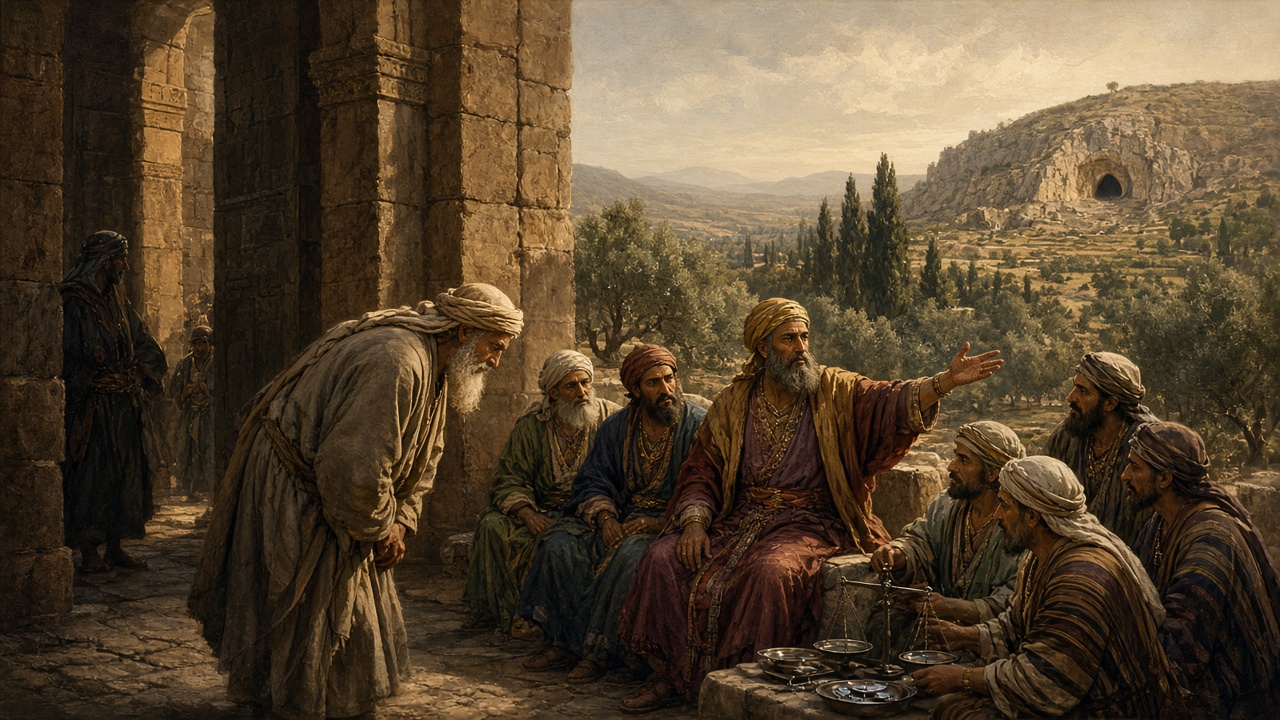
- Abraham told the sons of Heth—the Hittites, descended from Canaan through Heth and living near Hebron—that he was a foreigner among them and needed a burial site. At the city gate, before the Hittites gathered there, he bought the field and cave of Ephron son of Zohar for four hundred shekels of silver, weighed according to the merchants’ standard.Sources: the Bible text itself · Heth · Ephron
- The name Machpelah is explained as “portion” or “double cave.” The cave Abraham bought stood in Ephron’s field near Mamre, on a hillside east of Hebron, and the same place later received the bodies of Abraham and Sarah, Isaac and Rebekah, and Jacob and Leah.Sources: Machpelah · the Bible text itself
Notes written with AI assistance from open sources (Theographic Bible Metadata, CC BY-SA 4.0; Easton’s Bible Dictionary, public domain) and reviewed before publishing.
Places in this chapter
- Canaan · 32.767, 35.333 · verses 2, 19
- Hebron · Today: Tel Rumeida · 31.525, 35.102 · verses 2, 19
- Machpelah · Today: Cave of the Patriarchs · 31.525, 35.111 · verses 9, 17, 19
Only places identified with high confidence are shown (90% or more according to the scholarly sources compiled by OpenBible). Period map: DARE (Digital Atlas of the Roman Empire), CC BY 4.0; modern map: © OpenStreetMap contributors; places: OpenBible.info (CC BY 4.0).
Credits and license for this translation
Godón Buk
Portions of the Holy Bible in the Gizrra language of Western Province, Papua New Guinea
Buk Baibel long tokples Gizrra long Niugini
copyright © 2019 Wycliffe Bible Translators, Inc.
Language: Gizrra
Translation by: Wycliffe Bible Translators, Inc.
This translation is made available to you under the terms of the
Creative Commons Attribution-Noncommercial-No Derivatives license 4.0.
You may share and redistribute this Bible translation or extracts from it in any format, provided that:
You include the above copyright and source information.
You do not sell this work for a profit.
You do not change any of the words or punctuation of the Scriptures.
Pictures included with Scriptures and other documents on this site are licensed just for use with those Scriptures and documents.
For other uses, please contact the respective copyright owners.
2024-07-01
Source: http://png.bible/tof/ · eBible.org