2 Corinthians 7
Godón Buk · Tap a verse to see its cross-references.
1Moboküpdü gómdamal, zitülkus God mibü ini ⌊alkamül-koke bóktan⌋ tülinóp, mi wata ⌊kolkal⌋ kolpam bairre blaman kolae elklaza tómbapón-gum, mibü büb ó samu ne elklaza tóman-pükü aindako Godón ilküpdü. Akó mi ⌊dudu kómal⌋ ki ngyabenórre, Godón gum-gum ⌊ótókde⌋.
Polón Bagürwóm
2Yabiób ⌊moboküpdü ubi⌋ tómtyenam kibüka. Ki dümdüm-koke tonarr koke tómbapónóp yabü darrüdü, ki yabü darrü kolae koke inóp, akó ki yabü darrü koke ilklió ilinóp mani azebóm. 3Ka ini poko koke wialóma yabü bagóm, zitülkus ka kuri wialóma kagó, kibü wirri moboküpdü ubi yabükamóma. Ene igósidi, ki yabü kokean elókrre yabióban, ia ki arrólakla, ta ia ki nurrbarino. 4Ka amkoman karrkukusi angundóla wagó, e sab dümdüm kla tónggapónane, akó kürü zitülkus asiko yabükwata ikub bagürüm. God kürü barrkyanan arüng kókyanórr. Kibü blaman müp tonarrdó ka kari bagürwóm kokela.
5Ka kuri wialóma kagó, ki Masedonia prrobinsdü babzirrü. Ene kakóm, kibü ngón agón babul yarilürr. Zitülkus módóga, abün-abün müpa togoblórr kibüka. Darrü müp we kla yarilürr, pamkolpama kibüka bóka bamgün koralórr. Akó darrü müp we kla yarilürr kibü moboküpdü, ki yabükamóm gyakolae kwarilnürrü. 6A God ibü arüng bütanda, arüng-koke nidipako. Wa kibü arüng tütünóp Taetusün abzildügab. 7Akó wata oya abzildügab koke, a ta igó bóktandógab, e oya arüng ekyenarre. Wa kibü tüzazilóp, e kürükamóm nae aman koralnórró. Akó wa tüzazilóp yabü wirri gyaurankwata akó yabü wirri ubiankwata ia elklaza tómbapónóm kürüka. Ene igósidi, ka wirri bagürwóm namülnürrü ngaendógabi.
8Zitülkus módóga, enana kürü arüng bóktan oporpükü peba mórraga gyaur idódürr yabüka, ka gyaur kokela ka ne peba mórrag wialómórró. Ngaen-gógópan ka gyaur namülnürrü, zitülkus ka umul namülnürrü wagó, kürü peba mórraga sab gyaur ki sidód yabüka. Taetus kürü küzazile wagó, e gyaur kwarilnürrü, a wata tugupurr tonarróm. 9Enana ka ngaen-gógópan gyaur namülnürrü, errkya ka ma bagürwómdóla. Igó zitülkusdü koke, kürü peba mórraga yabüka gyaur idódürr, a igó zitülkusdü, yabü gyauranme e Godka byalüngarre yabiób kolae tonarrdógab. Zitülkus módóga, e gyaur kwarilnürrü Godón ubi ngarkwatódó, da e koke azid aeng kwarilnürrü kibüme. 10Godón ubi ngarkwatódó ne gyaure, ene gyaura pamkolpam balngomólda Godka byalüngüm tibiób kolae tonarrdógabi. I Godka nóma byalüngdako, God sab ibü igósidi zid nirre akó i gyaur koke kwarile. A ini tüpan pamkolpamab gyaur, ibü koke ne klama balngomólda Godka byalüngüm, ene gyaura ibü metat büdül kwatódó amarruda. 11Ngakónam ene Godón ubi ngarkwatódó ne gyaura laró alngón yarilürr yabüka: yabü wirri amkoman ubia tónggapónóm dümdüm laróga. Yabü wirri ubi yabiób bódlangóma, amtyanóm e ene kolae kla koke tónggapónarre. Yabü wirri ngürsila ene kolae tonarranme. E wirribóka barrkürrü kürü peba mórraganme. Yabü wirri ubi kürü asenóma. Yabü wirri ubi ia elklaza tómbapónóma kürünkü. Yabü wirri ubia, ene kolae nótó tónggapónórr oya ⌊kolaean darrem⌋ akyanóm. Blaman kwata e igó tómtyerre igó, e ene kolae kla koke tónggapónarre. 12Da enana ka yabüka ene arüng bóktan oporpükü peba mórrag wialómórró, ka koke wialómórró oyame, ene kolae nótó tónggapónórr. Akó ka ta koke wialómórró oyame, wa ene kolae noanka tónggapónórr. A ka wialómórró, igósüm e yabiób ki bómzetarre Godón obzek kwata, yabü ubi ne ene elklaza amkoman tómbapónóma, ki yabü ne elklaza tómbapónóm byaldakla. 13We zitülkusdü, ki arüng bütarrón kwarilnürrü.
Ki wata arüng bütarrón koke kwarilnürrü, a ki ta wirri bagürwómdü kwarilnürrü Taetusün bagürwómanme, zitülkus e blamana oya samu küsilzan inarre. 14Ka yabükwata ikub bagürnürrü Taetuska, akó e kürü büód koke kókyenarre. Zitülkus módóga, kizan ne poko bóktónóp yabüka, blaman amkoman kwarilürr, kibü ikub bagüra yabükwata Taetuska pupo tinóp wagó, ene ta amkomana. 15Errkyadan oya wirri moboküpdü ubia yabüka ngaendógabi, wazan gyagüpi amanda wagó, e blamana ia kibü bóktan arrkrru kwarilnürrü, e oyazan morroal ipüdarre gum angónde akó tórrngónde. 16Ka bagürwómdóla, zitülkus ka amkoman karrkukusi angundóla wagó, e sab dümdüm kla tómbapónane.
Did you know?
Comfort after a painful letter
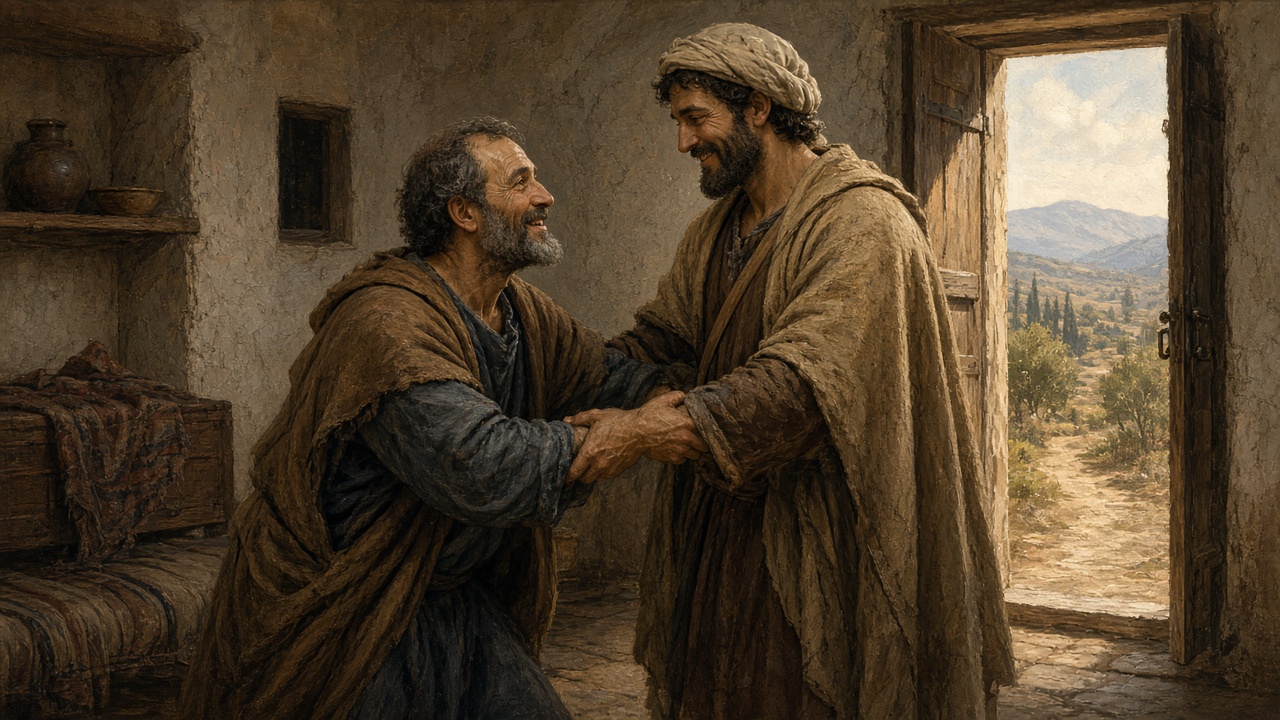
- Macedonia, where Paul says he arrived with no rest in his body—conflicts outside and fears within—was a Roman province north of Greece. There, he writes, the God who comforts the downcast comforted him by the arrival of Titus.Sources: Macedonia · the Bible text itself
- Paul speaks of a letter that made them sorrowful, but only for a short time. He now rejoices not because they were sorrowful, but because that sorrow led them to repentance; he says they felt the sorrow God intended, were not harmed by him, and showed earnestness, zeal, and innocence in the matter.Sources: the Bible text itself
- A short account describes Titus as a companion of Paul, apparently a Gentile chiefly engaged in ministering to Gentiles. In this chapter Paul says Titus’s arrival comforted him, that Titus reported their longing, mourning, and zeal, and that they welcomed Titus with fear and trembling.Sources: Titus · the Bible text itself
Notes written with AI assistance from open sources (Theographic Bible Metadata, CC BY-SA 4.0; Easton’s Bible Dictionary, public domain) and reviewed before publishing.
Places in this chapter
- Macedonia · 41.600, 22.540 · verse 5
Only places identified with high confidence are shown (90% or more according to the scholarly sources compiled by OpenBible). Period map: DARE (Digital Atlas of the Roman Empire), CC BY 4.0; modern map: © OpenStreetMap contributors; places: OpenBible.info (CC BY 4.0).
Credits and license for this translation
Godón Buk
Portions of the Holy Bible in the Gizrra language of Western Province, Papua New Guinea
Buk Baibel long tokples Gizrra long Niugini
copyright © 2019 Wycliffe Bible Translators, Inc.
Language: Gizrra
Translation by: Wycliffe Bible Translators, Inc.
This translation is made available to you under the terms of the
Creative Commons Attribution-Noncommercial-No Derivatives license 4.0.
You may share and redistribute this Bible translation or extracts from it in any format, provided that:
You include the above copyright and source information.
You do not sell this work for a profit.
You do not change any of the words or punctuation of the Scriptures.
Pictures included with Scriptures and other documents on this site are licensed just for use with those Scriptures and documents.
For other uses, please contact the respective copyright owners.
2024-07-01
Source: http://png.bible/tof/ · eBible.org