Zephaniah 1
PATHEN LEKHABU THENG · Tap a verse to see its cross-references.
About this book
About Zephaniah
- Easton's Bible Dictionary (1897) presents Zephaniah, whose name it explains as "Jehovah has concealed" or "Jehovah of darkness," as the son of Cushi and great-grandson of Hezekiah, and as the ninth of the minor prophets. It dates his prophecy to the reign of Josiah, king of Judah (641–610 B.C.), and says he was contemporary with Jeremiah, with whom he had much in common.Sources: Easton: Zephaniah · Zephaniah · Cushi
- Amon, Josiah's father, restored idolatry in Judah, and Easton reads Zephaniah 1:4 and 3:4, 11 as referring to that reign. The same dictionary links Zephaniah 1:4–6 with the worship of Baal and Zephaniah 1:5 with Malcham, described as the national idol of the Ammonites. Josiah, who came to the throne at eight, is presented as later acting against the idolatry that prevailed.Sources: Amon · Josiah · Baal · Malcham
- Easton's Bible Dictionary outlines the book as an introduction announcing judgment on the world and on Israel because of their transgressions (1:1–6), a description of the judgment (1:7–18), an exhortation to seek God while there is still time (2:1–3), judgment on other peoples (2:4–15), what it calls the hopeless misery of Jerusalem (3:1–7), and a promise of salvation (3:8–20).Sources: Easton: Zephaniah
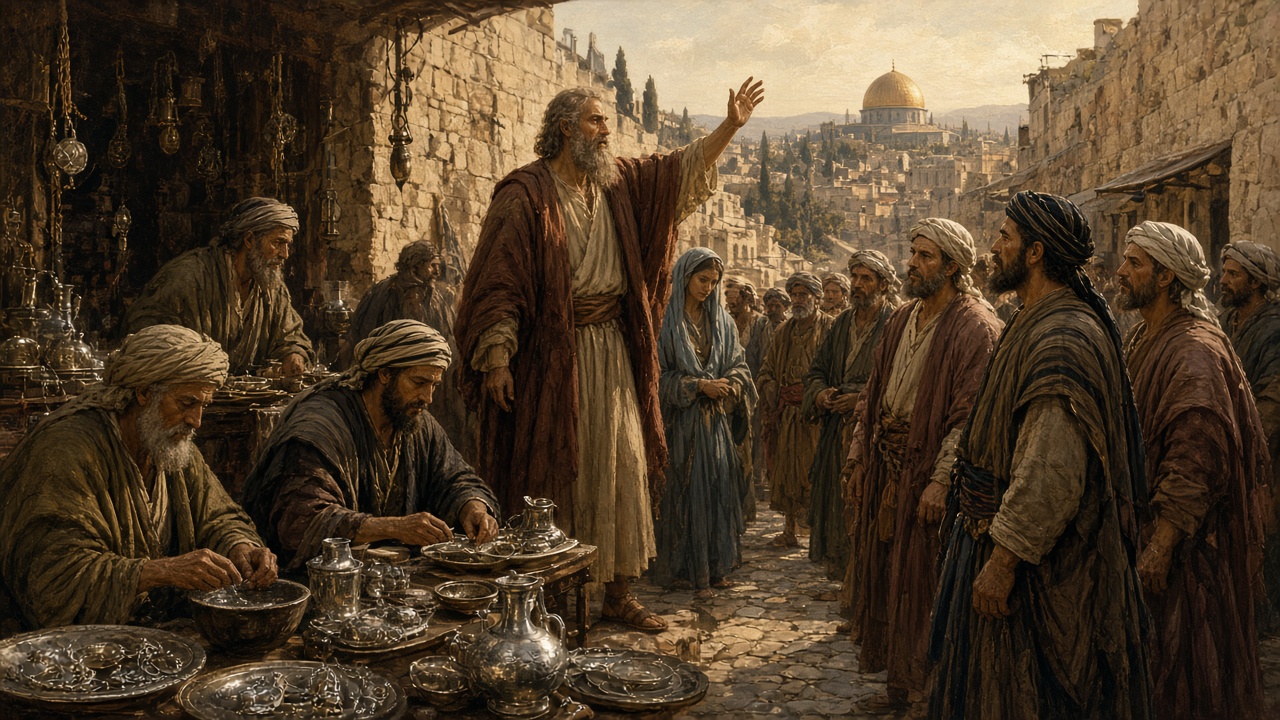
- Zephaniah 1:11 names the Mortar, a place in or near Jerusalem inhabited by silver merchants. It has been conjectured that this was the Phoenician quarter of the city, where traders of that nation lived.Sources: Mortar
Notes written with AI assistance from open sources (Theographic Bible Metadata, CC BY-SA 4.0; Easton’s Bible Dictionary, public domain) and reviewed before publishing.
Pakai Thutanna Le Lungsatna
1Amon chapa Josiah in Judah gam’a lengvai apohlaijin, Pakaijin hiche thu hi Zephaniah kitipa heng’a ahin sei tai. Zephaniah chu Cushi chapa, Cushi chu Gedaliah chapa, Gedaliah chu Amariah chapa, Amariah chu Hezekiah chapa ahi. 2“Keiman leiset chung’a thil ijakai katheh ngimhel ding ahi”, tin Pakaijin aseiye. 3“Keiman mihem leh gancha katheh ngim ding, chung’a leng vacha ho katheh ngim ding, Twikhanglen’a nga ho jong katheh ngim ding ahi. Migilou jouse abong abaija kalha-a, kaset tup ding, leiset chung’a mihimte kasuhgam ding ahi”, tin Pakaijin aseiye. 4“Keiman kakhut tah’a Judah gam le Jerusalem kasugep ding, chuleh Ba’al doi hou ho jouse, anunung pen geija ka suhgam ding ahi. Keiman milim doi houna thempu ho jouse jong, koiman ageldohkit tahlou ding’a, ka suhmang ding ahi.” 5Ajeh chu ama hon, inting vum’a nisa, lhathah chuleh ahsi ho ahouvun, abohkhup jiuvin ahi. Amaho Pakai nung juijin akiseijun, ahinlah amaho chu Molech Pathen hou joh ahiuve. 6Pakai nung ajui nauva kon’a nungjam kit ho, Pakai jong hol talouva chuleh dong talou ho chu, ka suhmang soh hel ding ahi.” tin Pakaijin aseiye. 7Hatchungnung Pakai angsung’a thipkhen in um'in, ajeh chu tijat umtah Pakai thutanna nikho chu anaitai. Pakaijin amite asutu in, kilhaina gantha ding jong agong’e, chuleh aman amiho jong athensotai. 8“Hiche thutanna nikho chuleh, keiman Judah pipuho leh leng chapa te ho talen kamatsah ding, chuleh milim doihouna a chon ho jouse jong, abon’a talen kapeh ding ahi” tin Pakaijin aseiye. 9Henge, milim doihouna kin’a gapang tapou abon’a gotna kapeh ding, chuleh apupa insung dim’a um’a, pumhat leh duha-a thilbol ho jouse, abon’uva talen kamat sah ding ahi.
10“Hiche nikho niteng chuleh”,
Pakaijin aseijin, “Nga kelkot a pat ka ogin kija ding chule khopi ningli jousea kithong soh ding ahi.”
11Keithela touho lunghem in kap’un, ajeh chu kivei mi ho le sumkol vei mi ho kisumang ding ahi. 12“Meisal kadet’a Jerusalem khopi thimlai jouse kakhol chil ding, chonset muthim noiya touva, Pakaijin thilse hihen thilpha hileh boldeh ponte, tia sei ho gotna kapeh ding ahi. 13Anei agou jouseu kichomdoh jou keiding;
A in jouseu ahom keuva kijam soh ding ahi.
In thah sa jonguleh, chen thei dehlou diu;
Lengpilei lhou jonglehu, lengpitwi adonlou diu ahi.
14“Tijat umtah Pakai nikho chu ahung naiye.
Genthei lilhon kana nikho,
Pasal thahat tah jeng jong kana nikho,
Hunglhung vah ding ahi.
15Hiche nikho, Pakai lungsat kibuhlhah nikho chu – Genthei leh hesoh nasat nikho,
Manthah leh ahomkeova um nikho,
Muthim leh lunkham lungjin nikho,
Muthim lhangkhal le meibol jin nikho,
16Gal lhangsapna le sumkon kimut nikho,
Khopi pal kinokhum leh gal nasatah a kisatna nikho hi ding ahi!
17Pakai dounaa na chonset jeh uva,
Mitcho banga kakimaile sah diu,
Na thisan’u leivui lah a kasunlhah ding,
Chuleh natahsau tol'a among dinga kijam ding ahi.
18Pakai lungsat kibuhlhah nikho tengleh na sanauva jong na dangkauva jong na kihuhhing jou lou diu ahi. Pakai lungsat chun leiset jeng jong avallhun jeng ding ahi.
Aman leiset chung mijouse asuhmanga asuhbeihel ding ahi.
Did you know?
The Day of the LORD and Judgment on Idolatry
- Zephaniah traces his lineage back four generations to Hezekiah, dating his prophetic ministry to the reign of King Josiah of Judah. Josiah came to power after his father, King Amon, had restored idolatry across Judah before being assassinated by his own servants.Sources: the Bible text itself · Josiah · Amon · Hizkiah
- The chapter denounces religious syncretism in Jerusalem, where people bowed on rooftops to the host of heaven and combined their devotion to the LORD with oaths to Baal and Malcham, the national idol of the Ammonites.Sources: the Bible text itself · Baal · Malcham
- The prophecy specifies landmarks in Jerusalem that would experience turmoil, including the Fish Gate and the Mortar (or Hollow), a district inhabited by merchants who weighed out silver.Sources: the Bible text itself · Fish Gate · Mortar
Notes written with AI assistance from open sources (Theographic Bible Metadata, CC BY-SA 4.0; Easton’s Bible Dictionary, public domain) and reviewed before publishing.
Places in this chapter
- Jerusalem · 31.777, 35.234 · verses 4, 12
- Fish Gate · Today: in Jerusalem · 31.777, 35.234 · verse 10
- Second Quarter · Today: in Jerusalem · 31.777, 35.234 · verse 10
- Canaan · 32.767, 35.333 · verse 11
- Mortar · Today: in Jerusalem · 31.777, 35.234 · verse 11
Only places identified with high confidence are shown (90% or more according to the scholarly sources compiled by OpenBible). Period map: DARE (Digital Atlas of the Roman Empire), CC BY 4.0; modern map: © OpenStreetMap contributors; places: OpenBible.info (CC BY 4.0).
Credits and license for this translation
PATHEN LEKHABU THENG
The Holy Bible in the Chongthu Dialect of India
Copyright © 2020 Chongthu Bible Translation Team
Language: Chongthu (Chin, Thado)
Dialect: Chongthu
This is a draft copy of a work in progress. It will be updated.
This translation is made available to you under the terms of the
Creative Commons Attribution Share-Alike license 4.0.
You have permission to share and redistribute this Bible translation in any format and to make reasonable revisions and adaptations of this translation, provided that:
You include the above copyright and source information.
If you make any changes to the text, you must indicate that you did so in a way that makes it clear that the original licensor is not necessarily endorsing your changes.
If you redistribute this text, you must distribute your contributions under the same license as the original.
Pictures included with Scriptures and other documents on this site are licensed just for use with those Scriptures and documents.
For other uses, please contact the respective copyright owners.
Note that in addition to the rules above, revising and adapting God's Word involves a great responsibility to be true to God's Word. See Revelation 22:18-19.
2026-10-02
Source: http://ebible.org/tczchongthu/ · eBible.org