Psalms 87
PATHEN LEKHABU THENG · Tap a verse to see its cross-references.
Pathen Khopi Loupi
Korah chilhah te labol
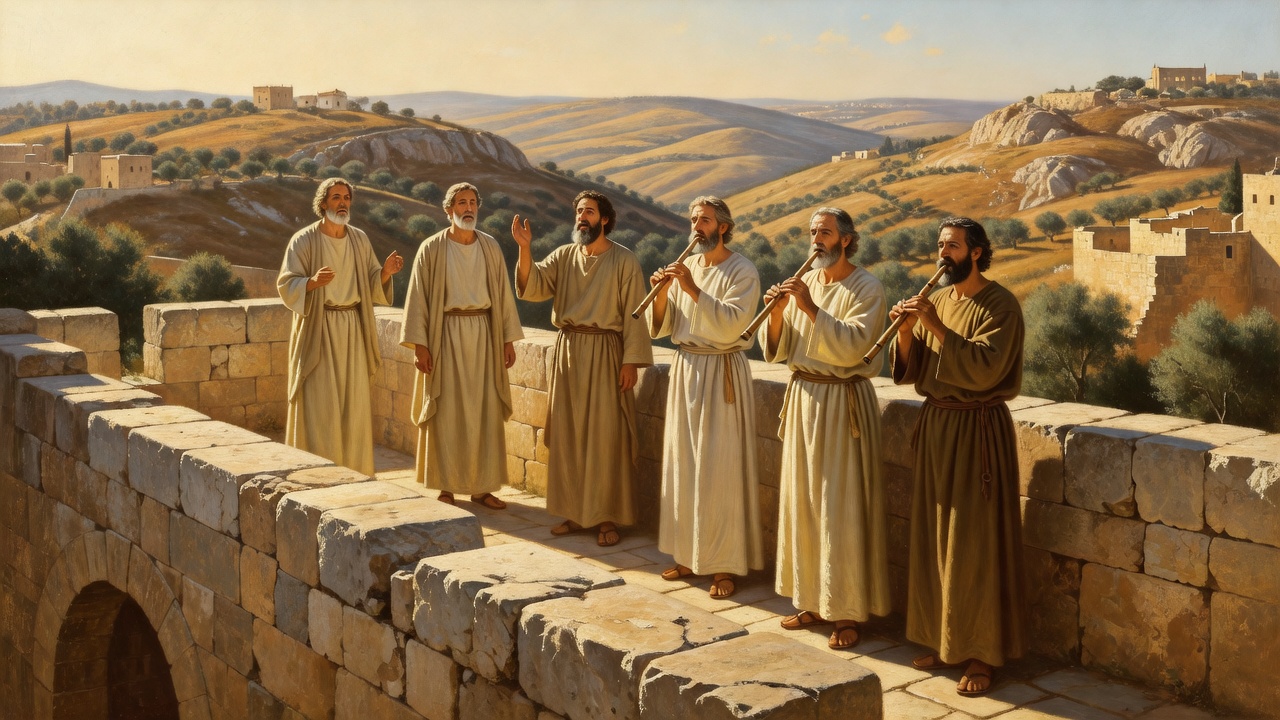
1Moltheng chunga chun Yahweh Pakai tundohsa khopi chu aum'e.
2Aman Jerusalem khopi hi Israel khopi dang ho sangin angailu joi.
3O Pathen khopi, nangma chung chang ahi itibang thuloupi tahtah kisei a hitam!
4Keima eiheho lah a hin, Egypt le Babylon chule Philistine leh Tyre chuleh gamla tah Ethiopia jong kasimtha e. Amaho hi Jerusalem khomite ahitauve.
5Jerusalem chung chang a hitia hi kisei ding ahi, “amijousen nammi hina a thaneina chu akipapi cheh uve”, chule hatchungnung ama tah in khopi chu phatthei aboh ding ahi.
6Yahweh Pakaijin chitin namtin hi ajihlut teng, aseiding, “amaho jouse hi Jerusalem khomite ahitauve” atiding ahi.
7Mipi ho chun theile amut'uva la asahdiu, “Kahinkho hung kipat nahi Jerusalem ahi” atidiu ahi.
Did you know?
Zion and the Nations
- In Psalm 87, foreign and historically rival regions—including Babylon, Philistia, Tyre, and Cush—are depicted as being registered as native citizens born in Zion, the city of God.Sources: the Bible text itself · Zion · Tyre · Babylon
- The name 'Rahab' in verse 4 is a poetic Hebrew term meaning insolence or pride, used in biblical poetry as a symbolic designation for Egypt.Sources: Rahab · the Bible text itself
- The psalm is attributed to the 'sons of Korah,' a Levitical group that provided musical leadership in Jerusalem centuries after their ancestor Korah led a rebellion in the wilderness.Sources: Korah (Levite) · the Bible text itself
Notes written with AI assistance from open sources (Theographic Bible Metadata, CC BY-SA 4.0; Easton’s Bible Dictionary, public domain) and reviewed before publishing.
Places in this chapter
- Zion · Today: Jerusalem · 31.777, 35.234 · verses 2, 5
- Babylon · 32.543, 44.422 · verse 4
- Cush · Today: Cush 1 · 16.935, 33.751 · verse 4
- Egypt · 30.129, 31.308 · verse 4
- Jerusalem · 31.777, 35.234 · verses 4, 6, 7
- Philistia · 31.664, 34.546 · verse 4
- Tyre · 33.271, 35.196 · verse 4
Only places identified with high confidence are shown (90% or more according to the scholarly sources compiled by OpenBible). Period map: DARE (Digital Atlas of the Roman Empire), CC BY 4.0; modern map: © OpenStreetMap contributors; places: OpenBible.info (CC BY 4.0).
Credits and license for this translation
PATHEN LEKHABU THENG
The Holy Bible in the Chongthu Dialect of India
Copyright © 2020 Chongthu Bible Translation Team
Language: Chongthu (Chin, Thado)
Dialect: Chongthu
This is a draft copy of a work in progress. It will be updated.
This translation is made available to you under the terms of the
Creative Commons Attribution Share-Alike license 4.0.
You have permission to share and redistribute this Bible translation in any format and to make reasonable revisions and adaptations of this translation, provided that:
You include the above copyright and source information.
If you make any changes to the text, you must indicate that you did so in a way that makes it clear that the original licensor is not necessarily endorsing your changes.
If you redistribute this text, you must distribute your contributions under the same license as the original.
Pictures included with Scriptures and other documents on this site are licensed just for use with those Scriptures and documents.
For other uses, please contact the respective copyright owners.
Note that in addition to the rules above, revising and adapting God's Word involves a great responsibility to be true to God's Word. See Revelation 22:18-19.
2026-10-02
Source: http://ebible.org/tczchongthu/ · eBible.org