Psalms 28
PATHEN LEKHABU THENG · Tap a verse to see its cross-references.
David Dinga Pathen Hi Panpi Le Hoidohna
David Labol
1O Yahweh Pakai kasongpi nakom'a kataove, Ngaipeh lou in neikoi hihbeh in. Ajeh chu nangin neithip sanleh keijong lhadah ing kating kathi ding ahitai.
2Hepina ngeh a neipanpi dia katao teng nei ngaipeh tei in, kakhut kahin domsang'in namun theng lam kahinsan e.
3Thilse bolnom jing a, akam uva thungei ngei seija alung sung uva thilse jeng gonle ho to nei sumang tha hihbeh in.
4ama hon achan ding dol u athilse bolu toh kitoh in got na pejengin! Athilse bolu dungjui chetnin lethuh jengin! Michunga athilse bol gu'utoh kitoh in amaho chungah chuhsah in.
5Yahweh Pakaijin ipi abolham ti ama hon anahsah pouve, Pathen khut sem ipi jeh a umham agel pouve, hijeh a chu aman abotel a tonsot gei a kitung doh lou diu ahitai.
6Yahweh Pakai chu thangvah in umhen! Ajeh chu khotona kangaicha a kataona chu eijah pehtai.
7Yahweh Pakai hi kahat na le kalum ahi. Kalungthim pumpin ama chu katah san e. Aman eikithopin kalungthim kipanan adim e. Thangvahna la'n keiman kasam phonge.
8Yahweh Pakaijin amite thahat apei, ama hi athaonu lengpa dinga ahoidohna kulpi ahi
9Namite huhhing in! Kelngoi chingpha bangin nagoulu Israel chu phatthei bohtan, chule tonsot in amaho hi nabanjetnin puitan.
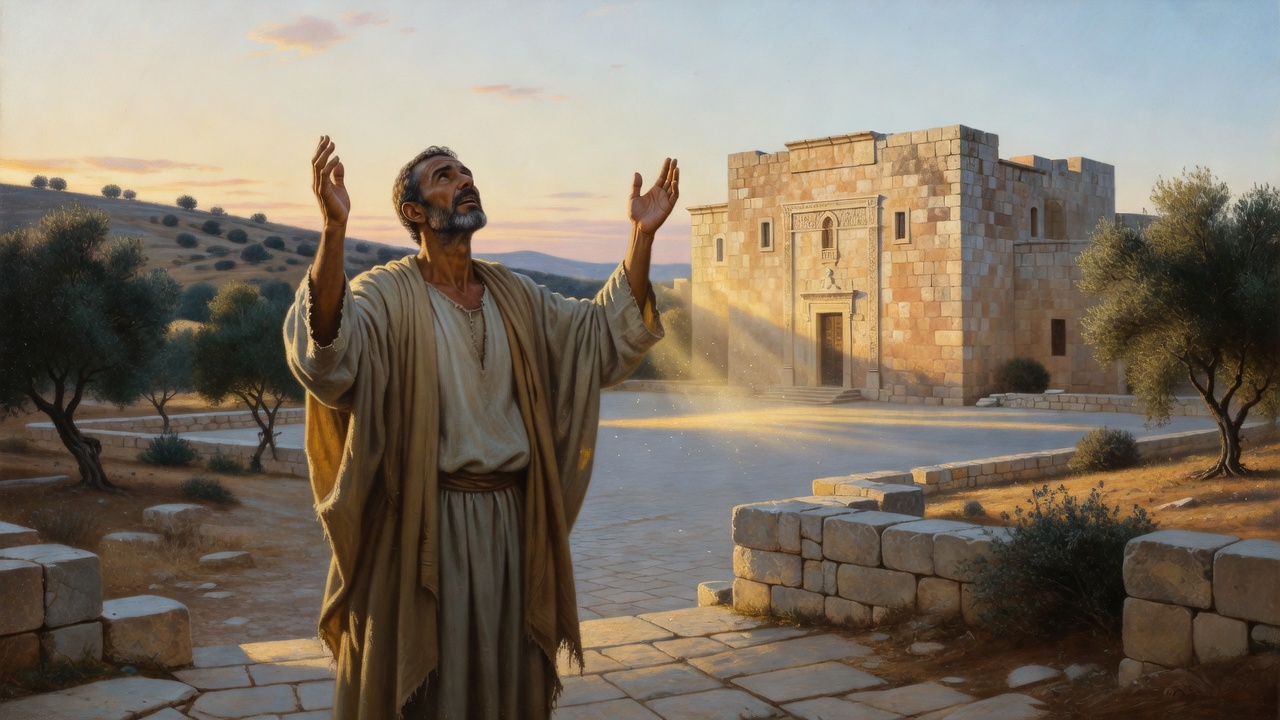
Did you know?
A Plea for Mercy and a Song of Trust
- Lifting up hands toward the sanctuary was a customary ancient posture of earnest prayer in Israel, visibly demonstrating supplication, humility, and full dependence on God.Sources: the Bible text itself
- The psalm transitions dramatically from a desperate plea for deliverance from death and judgment alongside the wicked to joyful thanksgiving, concluding with pastoral imagery where God is asked to shepherd and carry His people forever.Sources: the Bible text itself
Notes written with AI assistance from open sources (Theographic Bible Metadata, CC BY-SA 4.0; Easton’s Bible Dictionary, public domain) and reviewed before publishing.
Places in this chapter
- Most Holy Place · Today: on Mount Moriah · 31.778, 35.236 · verse 2
Only places identified with high confidence are shown (90% or more according to the scholarly sources compiled by OpenBible). Period map: DARE (Digital Atlas of the Roman Empire), CC BY 4.0; modern map: © OpenStreetMap contributors; places: OpenBible.info (CC BY 4.0).
Credits and license for this translation
PATHEN LEKHABU THENG
The Holy Bible in the Chongthu Dialect of India
Copyright © 2020 Chongthu Bible Translation Team
Language: Chongthu (Chin, Thado)
Dialect: Chongthu
This is a draft copy of a work in progress. It will be updated.
This translation is made available to you under the terms of the
Creative Commons Attribution Share-Alike license 4.0.
You have permission to share and redistribute this Bible translation in any format and to make reasonable revisions and adaptations of this translation, provided that:
You include the above copyright and source information.
If you make any changes to the text, you must indicate that you did so in a way that makes it clear that the original licensor is not necessarily endorsing your changes.
If you redistribute this text, you must distribute your contributions under the same license as the original.
Pictures included with Scriptures and other documents on this site are licensed just for use with those Scriptures and documents.
For other uses, please contact the respective copyright owners.
Note that in addition to the rules above, revising and adapting God's Word involves a great responsibility to be true to God's Word. See Revelation 22:18-19.
2026-10-02
Source: http://ebible.org/tczchongthu/ · eBible.org