Malachi 1
PATHEN LEKHABU THENG · Tap a verse to see its cross-references.
About this book
About Malachi
- Easton's Bible Dictionary (1897) presents Malachi, a name meaning "messenger" or "angel," as the last of the minor prophets and the writer of the last book of the Old Testament canon. Nothing is known of him beyond what is contained in his book of prophecies.Sources: Easton: Malachi · Malachi
- Some have supposed that the name is simply a title for a messenger of Jehovah, not a proper name. Easton's Bible Dictionary (1897) concludes, however, that there is reason to regard Malachi as the prophet's ordinary name.Sources: Easton: Malachi · Malachi
- Easton's Bible Dictionary (1897) dates the prophecies to about 420 B.C., after Nehemiah's second return from Persia, or possibly before that return. Because Ezra does not mention him and he does not mention the restoration of the temple, the dictionary infers that he prophesied after Haggai and Zechariah.Sources: Easton: Malachi
- Easton's Bible Dictionary (1897) treats Malachi as a contemporary of Nehemiah, comparing Malachi 2:8 with Nehemiah 13:15 and Malachi 2:10-16 with Nehemiah 13:23. It also notes that the temple services were still in existence, citing Malachi 1:10, 3:1 and 3:10.Sources: Easton: Malachi
Notes written with AI assistance from open sources (Theographic Bible Metadata, CC BY-SA 4.0; Easton’s Bible Dictionary, public domain) and reviewed before publishing.
Pathen Ngailut Israel te
1Pakaijin Malachi mangchan Israel te kom'a thu athot in ahi. 2Pakaijin hitin a sei’e, “Keiman nangho ka hingailu jing uve” ati. Ahinlah nang hon nei donbutnuvin “Iti nei ngailutnu ham” natiuve. Pakaijin Esau chu Jacob sopi hilou ham? Ahinlah keiman Jacob kangailun ahi. 3Esau chu ka thet in chuleh keiman a thinglhang gam chu ka suhchai peh helin, agoulona ding gam chu Sialte lhatna neldi gam kaso sahin ahi. 4Esau chilhah Edom in hiti hin hinsei jintin, keiho nei suchip deluvin ahi. Ahinlah keihon kaga phah nauva konna kahung kile kituva ka kisem phat kit diu ahi, atiuve. hatchungnung Pakai chun hiti hin aseije. “ama hon sapha jong leu keiman ka phetlhah peh diu ahi. Amaho chenna chu mipha lou gam kiti ding chuleh amite’u chu Pakai lunghan jing na mite” kiti ding ahiuve. 5Nanghon a kisuhmang na chu na mit tah uva namu tengule nangin, “Tahbeh in, Pakai loupina hi Israel te gamgi kalpeh a mihon jong amu uve” tin seijin nate.
Kilhaina boh
6Hatchungnung Pakai chun thempu ho kom'ah hitin aseije. “Chan apa ajabol le, soh in a pakai pa agin ding ahi. Keihi napau le na Pakai pau kahile hoi chi ham nei jabolnau, hoiche ham nei jen nau? Nanghon ka min hi nahsah louvin nabolun ahi! Ahinlah nang hon na seijun kei hon namin nahsah louva kakoi khah um natiu’ve. 7Nanghon ka maichama an thenglou na toh’un ahinlah nang hon iti danna nangma ka suhboh diu ham? natiuve. Nanghon Pakai maicham jana peh angaipoi natiu chu na suhbohu ahi. 8Nanghon ganhing mitcho pumgo thilto a nahin to uchu dih mong’a hinam? Chutengleh nang hon a elbai le a damlou ganhing nato uchu dih mong hinam? Nanghon hitobang ho chu nagam vaipo ho kipa thilpehin gape leu chun a kipah nadiuvem? tin hatchungnung Pakai chun a seijin ahi. 9Tun kipat un Pakaijin nakhotona diuvin tao’un , ahinla hitobang thilpeh chu maichama napeh jing le Pakai chun iti khotona na musah ding ham? tin hatchungnung pen Pakai chun aseije. 10Hiche Hou-In kot hi nangho lah a khat pen penin khah chahleu chun kati lheh jeng’e, chuti leh hiche thil thonlou hung kitodoh ho hi umlou ding ahi. Ajeh chu keima na chunguvah kalung lhaipoi chuleh na thiltou jong ka sanpeh lou diu ahi, tin van sepai te Pakaijin aseije. 11Ahinlah namdanga kon mipi ten jingkah nilhahin vanoi leiset pumpia hin gimnamtui leh atheng ho hi kamin loupina dingin a todoh jingun kamin hi aloupi sahun chitin namtin lah a hin kamin hi choisang'in aum'in ahi, tin hatchungnung pen Pakaijin aseijin ahi. 12Ahinlah nangho natohdan hin ka min na sumin seuvin ahi. Ajeh chu nang hon Pakai dokhang hi kisuhboh jongleh akhoh poi natiuvin thilthenglou pou na hintoh’un ahi. 13Nanghon, kon Pakai alunglhaisah jou ding ham natiuvin ka thupeh na taitomun ahi, tin hatchungnung pen Pakaijin aseije “Gel uvin adamlou a elbai chuleh a ki gu doh gancha pou na hin todoh jiuve, hichu ken iti ka sanpeh ding nahiuvem? tin Pakaijin aseije” 14Koi hijongleh Pakai kom’a toh dinga kitepna neija aki lomlou joh hintoh chan chu sapsetna chang ding ahi. Chutengleh chitin namtin lah a kamin hi mi gin le ja kahithei ding ahi, tin hatchungnung pen Pakai chun a seije.
Did you know?
Honoring God and Defective Offerings
- The name Malachi means messenger or angel. While some have suggested it was a title rather than a proper name, scholars and traditions widely treat it as the prophet's personal name, placing his ministry during the period of Nehemiah, after Haggai and Zechariah.Sources: Malachi
- The opening dispute recalls the twin brothers Jacob and Esau, the ancestors of Israel and Edom. The text contrasts God's covenant love for Israel with the judgment and desolation coming upon the mountainous region of Edom.Sources: Esau (Edom) · Jacob (Israel) · Edom · the Bible text itself
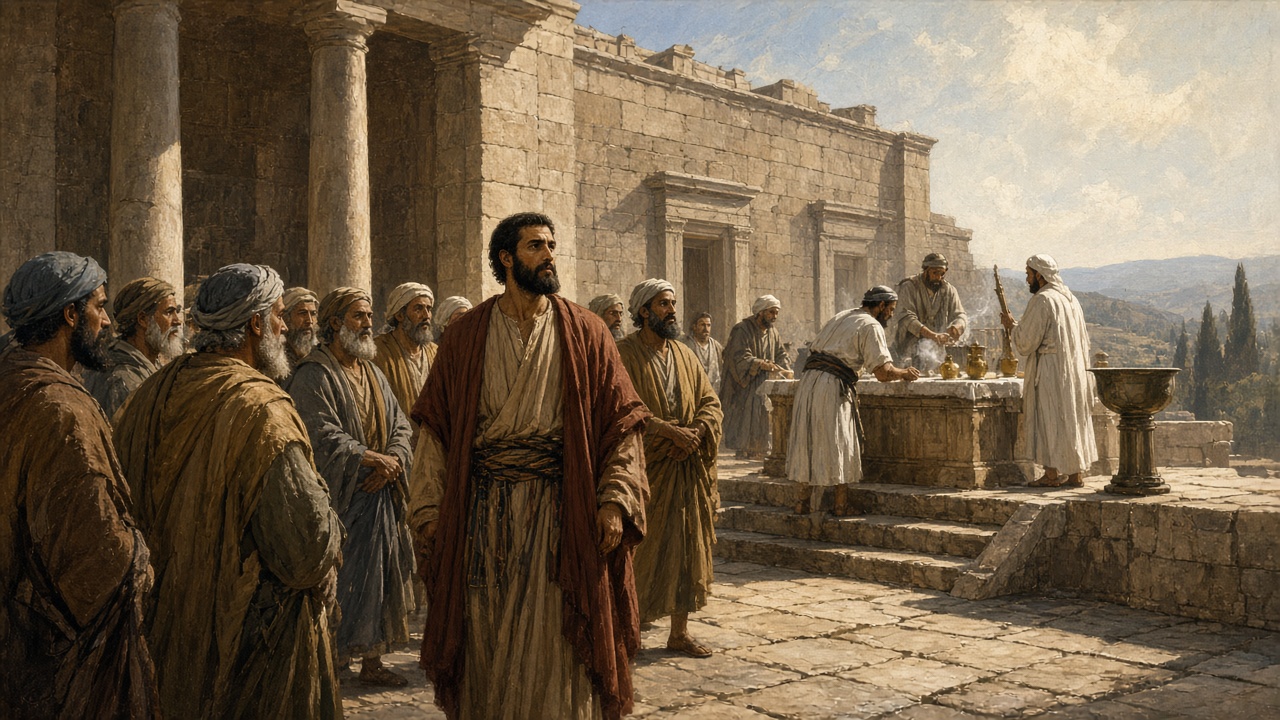
- The priests are rebuked for offering blind, lame, and diseased animals on the altar rather than unblemished livestock. Malachi exposes their disrespect by asking whether a civil governor would accept such inferior gifts.Sources: the Bible text itself
Notes written with AI assistance from open sources (Theographic Bible Metadata, CC BY-SA 4.0; Easton’s Bible Dictionary, public domain) and reviewed before publishing.
Places in this chapter
- Edom · 30.746, 35.604 · verse 4
Only places identified with high confidence are shown (90% or more according to the scholarly sources compiled by OpenBible). Period map: DARE (Digital Atlas of the Roman Empire), CC BY 4.0; modern map: © OpenStreetMap contributors; places: OpenBible.info (CC BY 4.0).
Credits and license for this translation
PATHEN LEKHABU THENG
The Holy Bible in the Chongthu Dialect of India
Copyright © 2020 Chongthu Bible Translation Team
Language: Chongthu (Chin, Thado)
Dialect: Chongthu
This is a draft copy of a work in progress. It will be updated.
This translation is made available to you under the terms of the
Creative Commons Attribution Share-Alike license 4.0.
You have permission to share and redistribute this Bible translation in any format and to make reasonable revisions and adaptations of this translation, provided that:
You include the above copyright and source information.
If you make any changes to the text, you must indicate that you did so in a way that makes it clear that the original licensor is not necessarily endorsing your changes.
If you redistribute this text, you must distribute your contributions under the same license as the original.
Pictures included with Scriptures and other documents on this site are licensed just for use with those Scriptures and documents.
For other uses, please contact the respective copyright owners.
Note that in addition to the rules above, revising and adapting God's Word involves a great responsibility to be true to God's Word. See Revelation 22:18-19.
2026-10-02
Source: http://ebible.org/tczchongthu/ · eBible.org