Joshua 1
PATHEN LEKHABU THENG · Tap a verse to see its cross-references.
About this book
About Joshua
- Easton's Bible Dictionary (1897) explains Joshua's name as "Jehovah is his help" or "Jehovah the Saviour." He was the son of Nun, of the tribe of Ephraim, born in Egypt, and Moses' successor as leader of Israel; the wars of conquest he carried on are recorded in the book that bears his name. That entry does not name the book's author or give a date for its writing.Sources: Easton: Joshua · Joshua
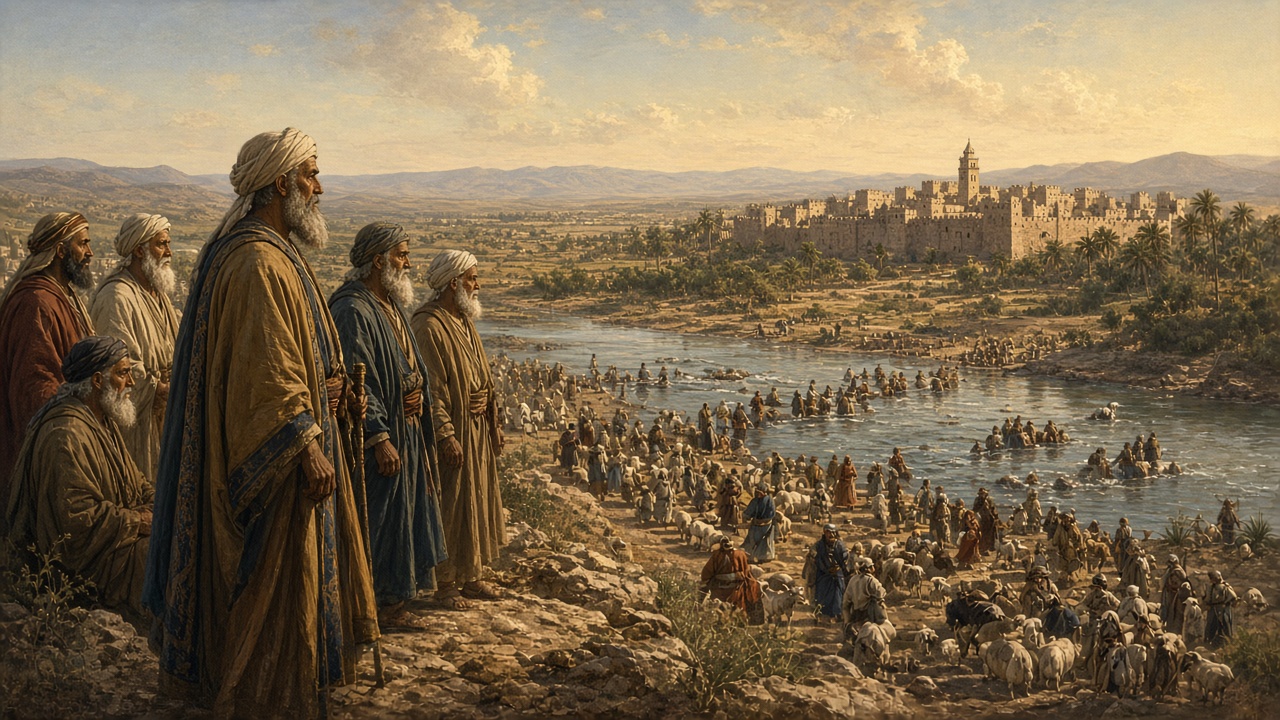
- When Joshua took command, the people were encamped at Shittim. They crossed the Jordan and camped at Gilgal, where, Easton says, he circumcised the people and kept the Passover. Jericho, a fortified city among palm trees about five miles west of the Jordan, is described as Canaan's strongest fortress and the key to western Palestine; Ai, east of Bethel, was the second Canaanite city taken, after an initial defeat.Sources: Easton: Joshua · Jericho · Ai
- Easton's Bible Dictionary (1897) says Joshua conquered six nations and thirty-one kings, then divided the land among the tribes, with Timnath-serah in Mount Ephraim assigned to himself. East of the Jordan, Gilead is described as a mountainous region held by the tribes of Gad and Reuben and the southern part of Manasseh.Sources: Easton: Joshua · Gilead
- Quoting Edersheim, the dictionary says Joshua's name was changed from Oshea, "help," to Jehoshua, "Jehovah is help," and notes that he is called Jesus in Acts 7:45 and Hebrews 4:8. It states that he died at the age of one hundred and ten, twenty-five years after crossing the Jordan, and was buried in his own city of Timnath-serah; of his father Nun, nothing more is recorded than that he was Joshua's father.Sources: Easton: Joshua · Joshua · Nun
- Before leading the conquest, Joshua commanded Israel's host against the Amalekites at Rephidim, served as Moses' minister, and was one of twelve sent to explore Canaan; only he and Caleb brought back an encouraging report. As Easton sketches the book, it runs from the crossing of the Jordan and the taking of Jericho through years of war to the division of the land and Joshua's last address.Sources: Easton: Joshua
Notes written with AI assistance from open sources (Theographic Bible Metadata, CC BY-SA 4.0; Easton’s Bible Dictionary, public domain) and reviewed before publishing.
Pathen'in Joshua Atilkhou
1Pakai lhacha Mose athi phat in, Nun chapa Mose lhacha a pang Joshua kom'a chun Pakaijin thu ahin seijin, 2“Ka lhacha Mose athitai. Hijeh chun nangma kipat inlang hiche Jordan hi galkaijin, nang le hiche mipi ho hin Keiman Israel chate kapehna gam hi jonlut tauvin. 3Mose kom'a kana teppehna bang-banga chu hoilai mun hijongleh na kengphang’un achot phahna muntin chu nangho kapeh ding nahiuve. 4Gamthip gam le Lebanon gam'a vadunglen chan gei, Eupharates vadung, Hit mite gam pumpi chuleh nisa lhumna lang twikhanglen chan gei nagam’u hi ding ahi. 5Na hinkho lhumkei uva na masang uva koimacha ding joulou ding, Mose kana dinpi banga nangho jong kadinpi jing diu, ka dalhah louhel diu chuleh kanungsun louhel ding nahiuve.
6Hat inlang hangin, hiche mite hi peh dinga apu apa teu kana teppeh gam chu agoulo diuva na hoppeh ding ahi. 7Hat inlang hang pou-pouvin, Ka lhacha Mose kana peh danthu jouse nanit jouna dingin, hichea kon hin jetlang hihen veilang hijongleh kiheimang hihbeh in, chutileh na chena channa na khantou thei ding ahi. 8Hiche danthubu hi nakam'a kon mangthah louhel ding, amavang asun ajanna nagel joh ding, akijih dungjuiya hi nachon jing diu ahi. Chitile bou na khantou ding chuleh na lolhin tei ding'u ahi. 9Keiman thupeh kahinpeh louva nabol ham? Hat inlang hangin, kicha hihbeh in, tijatna jong neihih in ajeh chu Pakai na Pathen'in na chena chan uva na lhonpi jing dingu ahi,” ati.
Joshua’n Israel te Atohdiu Aseipeh
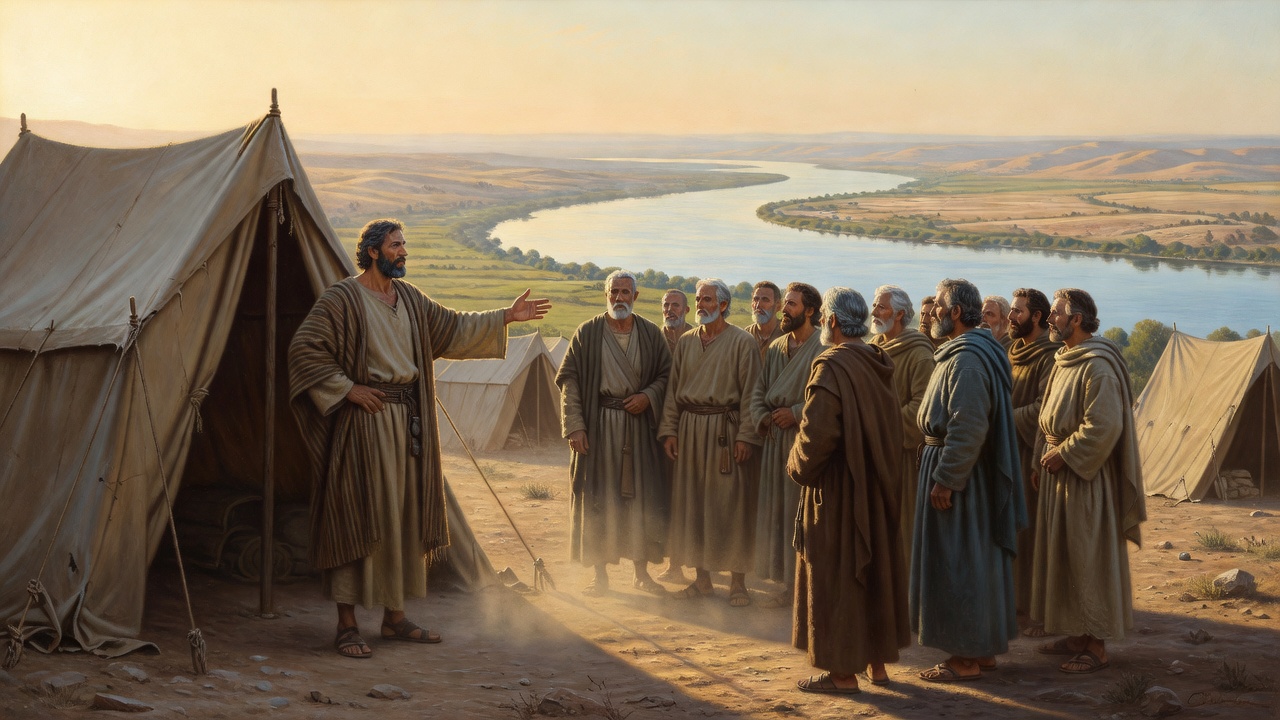
10Chujou chun, Joshua’n mipi lamkaiho chu thu apen hitin aseije, 11“Ponbuh sunga khun cheuvin lang mipi ho khu aneh diu akigot toh dingun gaseipeh un, ajeh chu nithum sunga hi Jordan luipi khu na galkai uva Pakai na Pathen'in napeh u gam khu galo tauvin.” 12Chuleh Reuben phung leh Gad phung chuleh Mannasseh phung akehkhat ho kom'a chun Joshua’n hitin aseije, 13“Pakai lhacha Mose’n nakom uva asei chu sumil hih un, 'Pakai na Pathen uvin na kicholdo sah tauvin, chuleh hiche gam hi napeh u ahitai.' 14Najiteu le na chateu, chuleh na gancha teu chu Mose’n napeh nau hiche Jordan solam gamkaiyah hin umsah un, ahinlah nalah uva gal-hat ho leh mihangsan chengse chun gal manchah akipat uva asopihou masanga hi gal lamkaija pang diu, 15Pakaijin nangho gam napeh bang uva amaho jong alodiu gam apeh kahseuva nakithopi diu ahi. Chujou tengleh nahung kileuva Pakai lhacha Mose’n napehnau Jordan solam nagam uva nachen diu ahi.
16Hiti chun ama hon Joshua chu adonbut un, “Ipi hileh nangin nei thupeh jouseu chu kabol diu, chuleh nei sol-sol nauva chu kache jeng diu ahi atiuve”. 17“Keihon Mose thu kana ngai bang- bang uva chu imalam jousea nangma thu jong kangai diu ahi. Pakai na Pathen chun Mose ana umpi bang bangin nang jong naumpi jinghen,” atiuve. 18“Koi hileh nangma thupeh jouse chu nit louva aum'a, nahin dou uva aum pou-pou leh thadoh jeng ding ahi. Hat inlang hangpou pouvin!”
Did you know?
Joshua Assumes Leadership
- Joshua, the son of Nun from the tribe of Ephraim, served as Moses' assistant and military commander before being commissioned to succeed him as leader of Israel. His name means "Jehovah is his help" or "Jehovah the Saviour."Sources: Joshua · the Bible text itself
- The territory outlined in God's commission to Joshua stretches from the southern wilderness and the Lebanon mountain range in the north to the Euphrates (called "the great river") in the east and the Mediterranean ("the Great Sea") to the west.Sources: the Bible text itself · Lebanon · Euphrates · Great Sea
- The tribes of Reuben, Gad, and the half-tribe of Manasseh had already received territory east of the Jordan River under Moses. However, their armed warriors were required to cross over ahead of the other tribes to assist them until the entire land was secured.Sources: the Bible text itself · Manasseh (son of Joseph)
Notes written with AI assistance from open sources (Theographic Bible Metadata, CC BY-SA 4.0; Easton’s Bible Dictionary, public domain) and reviewed before publishing.
Places in this chapter
- Jordan · Today: Jordan River · 31.761, 35.558 · verses 2, 11, 14, 15
- Euphrates · Today: Euphrates River · 31.004, 47.442 · verse 4
- Great Sea · Today: Mediterranean Sea · 31.805, 34.170 · verse 4
- Lebanon · 33.540, 35.584 · verse 4
- Negeb · 31.245, 34.841 · verse 4
- Syria · Today: Aram · 33.511, 36.306 · verse 4
Only places identified with high confidence are shown (90% or more according to the scholarly sources compiled by OpenBible). Period map: DARE (Digital Atlas of the Roman Empire), CC BY 4.0; modern map: © OpenStreetMap contributors; places: OpenBible.info (CC BY 4.0).
Credits and license for this translation
PATHEN LEKHABU THENG
The Holy Bible in the Chongthu Dialect of India
Copyright © 2020 Chongthu Bible Translation Team
Language: Chongthu (Chin, Thado)
Dialect: Chongthu
This is a draft copy of a work in progress. It will be updated.
This translation is made available to you under the terms of the
Creative Commons Attribution Share-Alike license 4.0.
You have permission to share and redistribute this Bible translation in any format and to make reasonable revisions and adaptations of this translation, provided that:
You include the above copyright and source information.
If you make any changes to the text, you must indicate that you did so in a way that makes it clear that the original licensor is not necessarily endorsing your changes.
If you redistribute this text, you must distribute your contributions under the same license as the original.
Pictures included with Scriptures and other documents on this site are licensed just for use with those Scriptures and documents.
For other uses, please contact the respective copyright owners.
Note that in addition to the rules above, revising and adapting God's Word involves a great responsibility to be true to God's Word. See Revelation 22:18-19.
2026-10-02
Source: http://ebible.org/tczchongthu/ · eBible.org