Job 30
PATHEN LEKHABU THENG · Tap a verse to see its cross-references.
Tulai Agentheina Job In Akapi
1Ahinlah tun vang apa teu kelngoi chinga pang kauicha ho toh lhaikhom dinga jong lhing joulou mihem, kasanga dong jo gollhang khangdong ho nuisat bep in kaum doh tai. 2Amaho khu keija dinga tamtah a pha ahiuvin, hiche ho chu von sesa lungset um ahiuve. 3Amaho chu akel thoh jeh uva gong ahiuvin, chuleh nel phai gam mihem chen louna leh gaso talou leiset muthim gam'a chu jam ah ahiuve. 4Hiti chun ama hon hamboh lah a kon'in gamlah a na eng ho chu akilo uvin chuleh muntheh phung jung ho chu akilah un anejiuve. 5Amaho chu mihem kiloikhom na a konna kidel mangah ahiuvin, chuleh gucha ahijeh uvin mihem ten amaho chu asamse jiuvin ahi. 6Hiti chun gom kokhuh thuhtah tah lah a timul thou pumin leiko lah leh songpi ho lah a chun ching uve. 7Amaho chu hamboh lah a sa loupitah a aum bangun a ao chehchuh jiuvin thahpi ho noija chun alhaikhom jiuve. 8Amaho chu kiloikhomna a kon kipaidoh mingol minbeiho ahiuve. 9Chuleh tun ama hon pao ngeilou louvin isah loutah in einuisat jiuvin eiphin phin jiuve. 10ama hon iman eisep pouvin chuleh kamaija chil set khumpeh ding tailouvin kakom'ah ahung pouve. 11Ijeh inem itile Pathen'in kathal khao eisattan peh in aman eisuhnem ahin, hijeh a chu thuneina umnaho jouse chu apaimang u ahi. 12Hiche akideldoh ho chun kamaichang tah a eidoudal un, kilhon changnam pet dingin eisol un chuleh kalampi ah thang eikampeh uve. 13ama hon kalamlhah jouse eikha peh un chule keiman eikithopi ding koimacha kaneilou ahet jeh uvin eisuhmang nathei diuvin abolthei jouseu abol'un ahi. 14Amaho muntinna kon'in kakom'ah ahungun keima kalhah suh pet in amaho kachungah akichom uve. 15Tun vang kicha tah in kahingin eikijabol najouse huilah a akithe mangin kanei leh kagou jouse meilhang kitol mang bangin amangthah soh tai. 16Chuleh tua hi kahinkho along mang ahitan, kanikho ho jong genthei hesoh nan eihen den tai. 17Jan teng kagu kachang ho natnan alodim jin hichun tang louhel in eichip eichip ji'e. 18Khuthat tah in Pathen'in ka sangkhol eilahpeh in ka sangkhol ngong ah eimanchah kheh in ahi. 19Aman bonlhoh lah a eisep lut in keima hi leivui leh vutvam sanga jong panna beijo kahi. 20Nahenga hung tao kahi O Pathen, ahinlah nangin nei donbut pon, namasang a ding kahin, ahin nangin vet dingin jong neigo poi. 21Keija dinga lungsetna beihel nahung hitai. Nathahat na chu kei engbol nan namange. 22Nangin chimpei lah a neisep lut in chuleh huipi kinong in nei sumange. 23Chuleh nangin mihing jouse lhunna kathina ding mun'a chu neisol ahi ti kahei. 24Tahbeh mongin genthei hahsatna a kithopi ngaicha ahung tao tengule koimacha hiche genthei thoh ho lang ngan kihei pouvinte. 25Hahsatna toh ho dinga kapji kahi lou ham? Vaicha genthei tedinga nasatah a ka genthei pi ji hilou ham? 26Hijeh chun thilpha kave jin ahinlah hiche sang chun thil phalou joh chu ahung jin ahi. 27Kalungthim agentheijin chuleh cholngahna kanei theipoi. Kagentheina nikho te hin eisu genthei lheh e. 28Nisavah umlouna muthim lah a kavah len mipi kigol toh chet lah a kadingin kithopi ngaichan kakap e. 29Hiche ho khel'in keima gam-ui sopipa simbupi toh kikoppan eiki ngaiton ahi. 30Kavun ho aduplha soh tan chule kagu kachang ho jouse khosih in kati apeh henhun e. 31Ka selangdah gin in jong lungkham la ahin sa in katheile gin jong kana ogin in aginge.
Did you know?
Humiliation, Physical Suffering, and Desert Outcasts
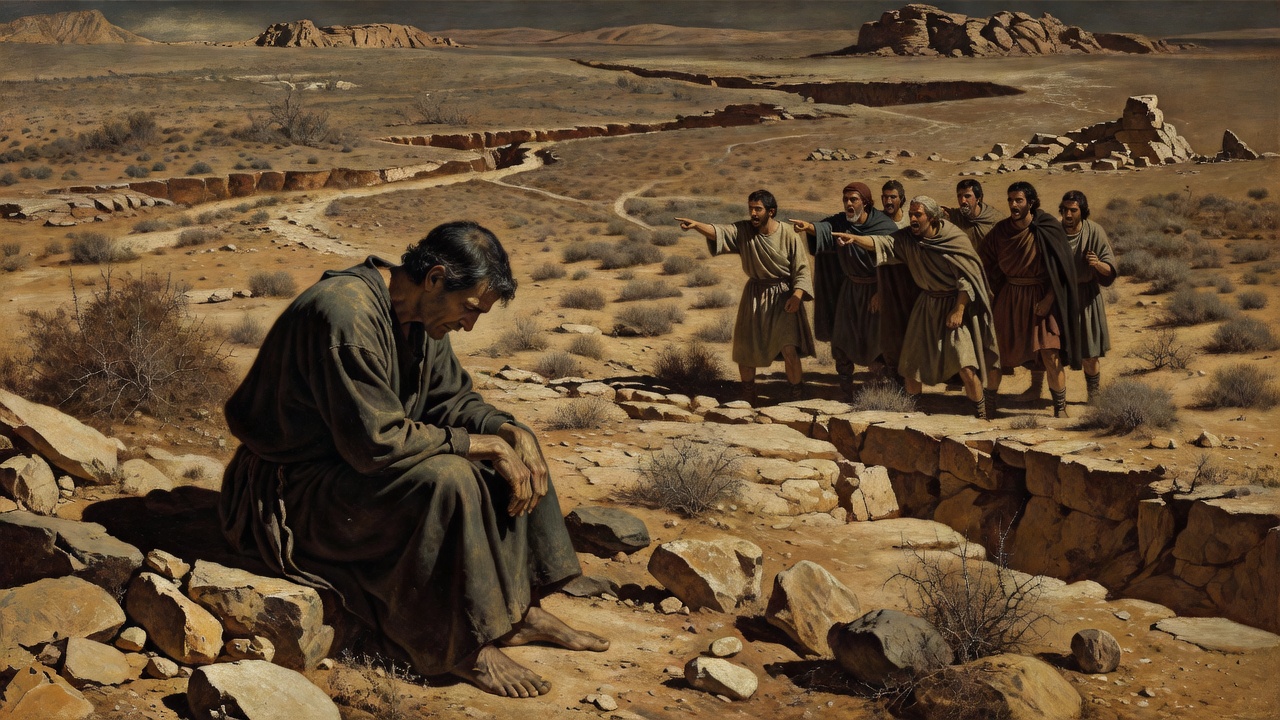
- In this chapter, Job contrasts his previous social standing with his current humiliation at the hands of impoverished outcasts. He describes these men as surviving on the margins of society, foraging for wild mallow and broom tree roots in desolate wadis and rock hollows.Sources: the Bible text itself
- Job uses vivid siege metaphors, picturing his attackers as an advancing army laying ramps and breaking through breaches against him, while he endures severe physical afflictions such as fever, gnawing pain, and blackened, peeling skin.Sources: the Bible text itself
- To convey the isolation and intensity of his grief, Job identifies with the mournful sounds of wilderness creatures, calling himself a companion to jackals and ostriches, while his musical instruments—the harp and flute—are turned entirely to weeping.Sources: the Bible text itself
Notes written with AI assistance from open sources (Theographic Bible Metadata, CC BY-SA 4.0; Easton’s Bible Dictionary, public domain) and reviewed before publishing.
Credits and license for this translation
PATHEN LEKHABU THENG
The Holy Bible in the Chongthu Dialect of India
Copyright © 2020 Chongthu Bible Translation Team
Language: Chongthu (Chin, Thado)
Dialect: Chongthu
This is a draft copy of a work in progress. It will be updated.
This translation is made available to you under the terms of the
Creative Commons Attribution Share-Alike license 4.0.
You have permission to share and redistribute this Bible translation in any format and to make reasonable revisions and adaptations of this translation, provided that:
You include the above copyright and source information.
If you make any changes to the text, you must indicate that you did so in a way that makes it clear that the original licensor is not necessarily endorsing your changes.
If you redistribute this text, you must distribute your contributions under the same license as the original.
Pictures included with Scriptures and other documents on this site are licensed just for use with those Scriptures and documents.
For other uses, please contact the respective copyright owners.
Note that in addition to the rules above, revising and adapting God's Word involves a great responsibility to be true to God's Word. See Revelation 22:18-19.
2026-10-02
Source: http://ebible.org/tczchongthu/ · eBible.org