Isaiah 62
PATHEN LEKHABU THENG · Tap a verse to see its cross-references.
Pakaijin Amite Akhotona
1Keiman Zion kangailut jeh a, keima thip beh’a ka’umlouhel ding , kalungin Jerusalen alungvil jing jeh a kathip beh louhel ding ahi. Keiman chonphatna chu kho hungvah doh tobanga ahung vahlhah masangsea, amanu(Jerusalem) dinga hi tang louva katao jing ding ahi. 2Chitin-namtinin nachonphatna mu’uvin tin, vannoi vaipipo ho jong chu na loupina avet ngam lou dingu ahi. Chule nangma hi Pakai kamsung tah in minthah napeh ding ahi. 3Pakaijin nangma khutnin natuh intin, mijousen amutheina dinga -Pathen khut a loupina lallukhuh na khuhpeh ding ahi. 4‘Dalhah Khopi’ahilouleh ‘Gamdaigam’ tia nakikou kit talouhel ding ahi. Minthah naput ding chu: “Pathen Lunglhaina Tah” chule “Pathen Mounu” kiti ding ahitai, ajeh iham itileh Pakai chu na chunga along lhaijin, chule a mounu tia naseipeh ding ahi. 5Vo Jerusalem, khangthah chun aji adeilhennu kom'a akipehlut tobanga chu- nachateu amaho mong mong nangma heng’a hung kipelut dingu ahi. Chutengleh, moulangin mounu chunga akipa thanop tobanga chu, Pakai chu na chunga hungkipah thanom ding ahi. 6Vo Jerusalem, Keiman khongah ho chu nakulpi banghoa kapan satsah in ahi; amaho hi sun le jana taojom jing ding ahiuve. 7Jerusalem chu leiset kithang-atpi thei ahunghi kahsen, Pakaijin anatoh abulhit molso kahsen, Pakai chu kicholdo sah hih hel’uvin. 8Pakai chu Athahatna Jerusalem henga hung kihah sella: “Keiman nangho melmate khut a avel'a kapehdoh kit tah louhel ding nahiuve, ati. Gamdang mi na gamga hou le na lengpitwi hou lamang dinga gal nabol khum ding uva hungkon kit talouhel ding ahiuve. 9Louva tohga na kimu dingu, nang hon hichu naneh’uva Pathen na vahchoi dingu ahi.Hou’In mai lama nangma hotah in naheh lhah’u lengpi-twi chu nadon dingu ahitai. 10Kelkot pam lama gapotdoh’uvin! Kamite ahungkile kitna ding uvin lamlhongpi gongtoh’uvin! Lamlen chu sunam’uvin, songpi ho loidoh un, chitin-namtin nin ahinvet ding uvin ponlap khai sangun. 11Pakaijin hiche thu hi gamtin'a asoldohtai: Israel nam mite seipeh’uvin, Veuvin, na Huhhingpu chu ahunge. Ven, tohman kichoi tothon Ama ahunge. 12Amaho chu, “Athenga Mite”le “Thisanna Pakaijin Achohdohsa Mite”kiti ding ahiuve. Chule Jerusalem hi “Dei umtah Mun” le “Khopi Kinungsun kit talou ding” kiti ding ahitai.
Did you know?
The Restoration and Renaming of Jerusalem
- In this chapter, Jerusalem and Zion are promised new symbolic names that reflect a dramatic change in status. Rather than being known as Forsaken or Desolate, the city and its land are given names such as Hephzibah (meaning delight is in her) and Beulah (signifying a married land), portraying restoration through the imagery of a joyous wedding feast.Sources: the Bible text itself · Jerusalem · Zion
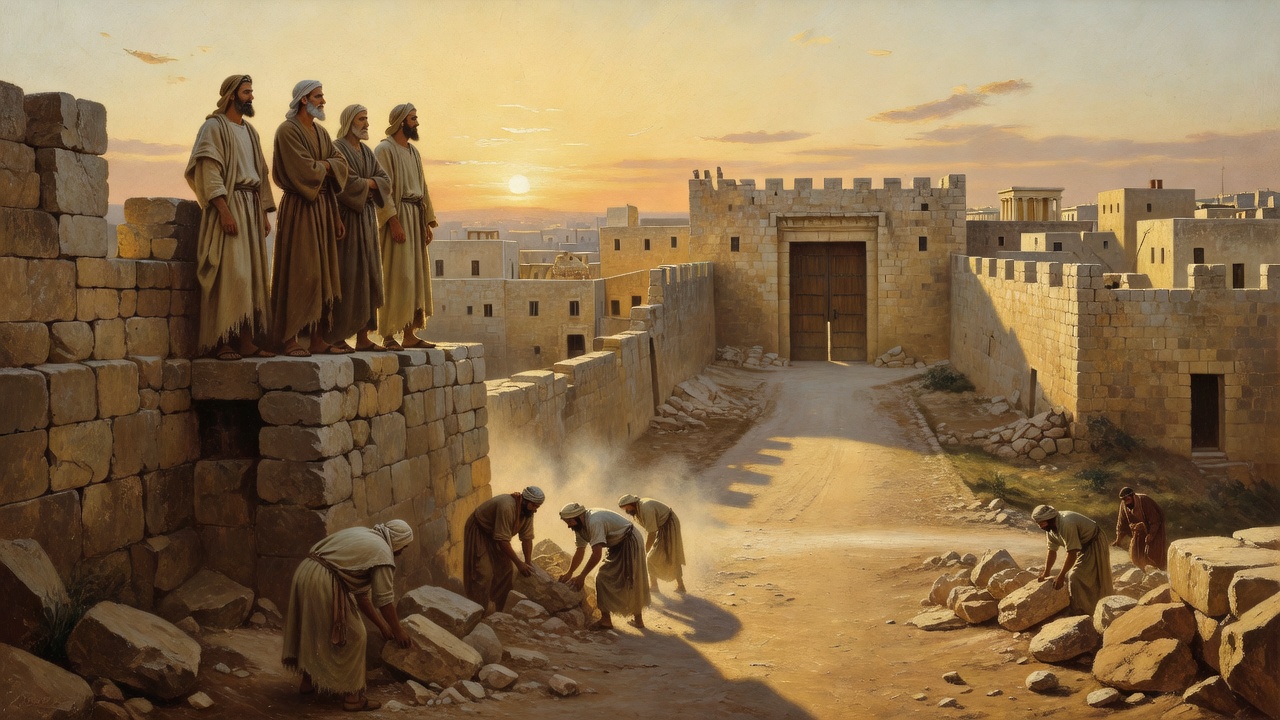
- The poem depicts continuous watchmen stationed atop the stone walls of Jerusalem who keep unceasing vigil day and night. Their role goes beyond standard military sentry duty, as they are instructed to persistently remind the LORD to establish the mountain city and make it the praise of the earth.Sources: the Bible text itself · Jerusalem
- The command to go through the city gates, clear stones, and build up a raised highway uses the ancient imagery of preparing a royal processional route to welcome returning people and signal salvation to surrounding nations.Sources: the Bible text itself
Notes written with AI assistance from open sources (Theographic Bible Metadata, CC BY-SA 4.0; Easton’s Bible Dictionary, public domain) and reviewed before publishing.
Places in this chapter
- Jerusalem · 31.777, 35.234 · verses 1, 5, 6, 7, 8, 12
- Zion · Today: Jerusalem · 31.777, 35.234 · verses 1, 11
Only places identified with high confidence are shown (90% or more according to the scholarly sources compiled by OpenBible). Period map: DARE (Digital Atlas of the Roman Empire), CC BY 4.0; modern map: © OpenStreetMap contributors; places: OpenBible.info (CC BY 4.0).
Credits and license for this translation
PATHEN LEKHABU THENG
The Holy Bible in the Chongthu Dialect of India
Copyright © 2020 Chongthu Bible Translation Team
Language: Chongthu (Chin, Thado)
Dialect: Chongthu
This is a draft copy of a work in progress. It will be updated.
This translation is made available to you under the terms of the
Creative Commons Attribution Share-Alike license 4.0.
You have permission to share and redistribute this Bible translation in any format and to make reasonable revisions and adaptations of this translation, provided that:
You include the above copyright and source information.
If you make any changes to the text, you must indicate that you did so in a way that makes it clear that the original licensor is not necessarily endorsing your changes.
If you redistribute this text, you must distribute your contributions under the same license as the original.
Pictures included with Scriptures and other documents on this site are licensed just for use with those Scriptures and documents.
For other uses, please contact the respective copyright owners.
Note that in addition to the rules above, revising and adapting God's Word involves a great responsibility to be true to God's Word. See Revelation 22:18-19.
2026-10-02
Source: http://ebible.org/tczchongthu/ · eBible.org