Isaiah 5
PATHEN LEKHABU THENG · Tap a verse to see its cross-references.
Pakai Lengpilei Kilachoina
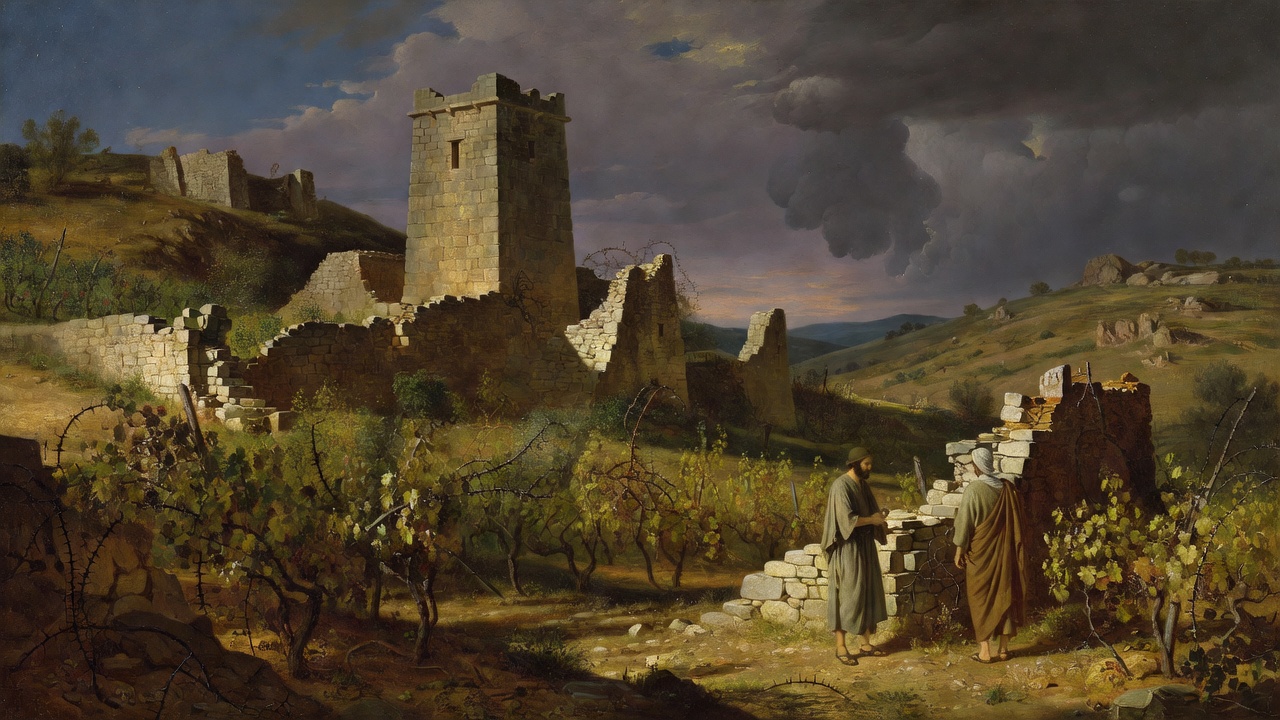
1Tun keiman kagoldeiya dingin alengpilei lachoinan zaila oiyinge: Kagoldeiyin lhang hoitah chungah lengpilei aneiye. 2Alei alhouvin, songho aladoh-in chuleh lengpithei achi hoipenho chu atwin ahi. Alailunga chun insang atungin, anaiya songpi ho panga chun lengpitwi hehna jong atunge. Chuin ama’n lengpithei lhum lophat angah-in, hinlah lengpithei hung gaho chu akha’n ahi. 3Tun nangho Jerusalem le Judah mite, keima le kalengpithei chungah ngaidan hin peuvin. 4Kalengpileiya dinga kanabollou ipi kabolbe ding umem? Lengpithei lhum jinjen kagaldot jing laiya, ipi dinga kalengpileiyin atheiga khachehchuh ahin so hintem? 5Tua hi kalengpilei hi ipi kalo ding ham naseipeh-unge: Keiman atho phelhangting subei tange. Apal volhusohkeiyingting, ganchaho lhalutninge. 6Gammanglah banga alengpi guijamho kivekollou le kimalngimlouva chuleh hampa kehho kilhoungimlou, ling le khao lah kasosah ding ahi. Meilhangho jeng jong thu kapeh-a gotwi kachapkhumsahlou ding ahi. 7Israel nampi hi van galsat te Pakai dinga alengpilei ahi. Judah mite hi alunglhaina honlei ahiuve. Ama’n ahonsoh chu ahididoltah a kithutandihna gaso akineppi vang'in, kisuhgimna gaso joh amutai. Chondihna gaso akineppin, hinla kinah-kibaona awgin ajajotai.
Judah Themmona chunga Thutanna
8Itobanga lungjin-um ding hitam inmun aban ban’a kichohbea, loumun aban ban’a kichohbea achainakeiya mijouse notdoh-a aumjouva achangseh-a chengho dinga chu. 9Keiman kajatai van galsat te Pakai kitepna: “In tampi nusea um ding, in hoitahho asung ahomkeova um ding. 10Lengpilei ching somin lengpitwi bel dim gup jeng jong asodoh joulou ding, amuchi lo dim som helin aga lo dim khatbou asosah ding ahi.” 11Itobanga lungnachim umlou ding hitam jingpitah a thouduha donding ju holla chuleh jansot geiya lengpitwi donkhamphella tousot nomho dinga chu. 12ama hon lengpitwi ninglhingtah in akikoiyun nguigin ginngei — semjang, selangdah, khong le theile — tho’n nunnop amangun, Pakai chu ageldoh tapouvin, athilbol ho jeng jong ahephatapouve. 13Hitia chu Keima eihetphahlou jeh uva kamite chu gamla tah a sohchanga um ding ahiuve. Alen-alal le jabolla umho chu gilkella thidiu, milhamho chu dangchah-a thidiu ahi. 14Lhankhuh jengin jong aduchan, alol-hom thamhelholin ado’n ahi. Alen le neo chuleh jukhamho chu avallhumsohhel ding ahi. 15Mihem kisubei ding, chuleh miite chu kisunem ding; mikiletsahho jeng jong dahdoh ngamlouva kijumso diu ahi. 16Hinlah Van galsat te Pakai chu ahina bangtah a kichoisang ding, Pathen athenna chu adihna bangtah a kiphongdoh ding ahi. 17Chu nikho teng chuleh kelngoite hamhing engsel lah a lhauvin tin, kelngoi thaotahho le kelchaho khogem lah a lhadiu ahi. 18Iti’n ada tadiuvem bongin nunglama kang (kangtalai) akai banga jou le nalla kihol khaoguiya achonsetna hinkikai ding ho tah chu! 19ama hon Pathen jeng jong ataitomuvin, “Kinon lang ihamkhat bolin! Kinoin, naboltheina chu neimusah-un. Nathilgon chu kamunomuve,” atiuvin ahi. 20Ase chu apha ahi, apha chu ase; athim chu avah ahi’n, avah chu athim ahi; akha chu alhum ahi’n, alhum chu akha ahi; tia seiho suhchimit tei dinga lha ahi tauve. 21Iti’n ada tadiuvem ama mitmua ching kisa-a, ama kigella lungthimthemtah kisaho chu. 22Iti’n ada tadiuvem lengpitwi don’a hat kisalheh jenga, adontam chan’a bolthei kisaho chu. 23Amaho chun miphalouho selkhunan sumguh alauvin, monaneilouho gotna apejiuvin ahi. 24Hijeha chu, meikongin louchul lah a changkung akahvama, hamgo meilhum sunga akileogep jeng banga amaho chu ajung geiya monlhauva apah-u chullha ding ahiuve. Ijeh-inem iti leh ama hon Van galsat te Pakai danthupehho nahsahmon akoiyun; Israel dinga Athengpa thuseiho ahotbolun ahi. 25Hijeha chu Pakai lunghanna chun amite chu ahalvama, akhuttum adopma amaho chu aden ding ahi. Chuteng molsangho kilingsoh-intin, mithilongho chu lamlhong dungah nenthangho bangin chaplha jenginte. Ahijengvanga Pakai lunghanna chu dailhadehlou lai ding ahi. Akhuttum kijesa-a umnalai ding ahi! 26Aman gamla tah a namtin vaipi henga melchihna asolding, leiset kolkimvella chengho jah dinga khutkoi amut ding ahi. Chuteng miten Jerusalem lam ahindel diu ahi. 27Amaho chu chollou diu chule kipallhulou diu ahi. Kicholdo dinga lamkaha khongailou diu ahi. Akonggah-u jong lhagenglou ding, kengchot khao jong tanlou ding ahi. 28Athalchang muh-u hemjetnintin, athallu jong galkap-ding-sadema kikamsaa um ding ahi. Asakolteu kengtoa meisi pahhelintin, asakol kangtalaiyu akang jong chimpei banga kipei ding ahi. 29Keipi bahkai ahatpenho banga kithong lenglunga ngih diu ahi. Ngih duldul puma amatdihou chu abokhumuva akilhohphei diu, chuteng ahuhdoh ding koima umlou ding ahi. 30Chuche suhchimit nikho lechun asuhlemhou chunga twipi kinong git kithong jeju banga ngih diu ahi. Koiham khattou chun agamlhang chu gah galdot leh muthim le lungjinna mu’ntin; khovah jeng jong meilhanghon alethim jeng ding ahi.
Did you know?
The Song of the Vineyard and the Six Woes
- The opening song in Isaiah 5 describes the elaborate labor of ancient Judean viticulture: clearing rocky hillsides of stones, building a protective stone watchtower, digging out a winepress in the bedrock, and planting prime vines surrounded by a protective hedge and wall. The poem turns into a legal parable where the vineyard represents the house of Israel and the people of Judah, from whom justice was expected instead of bloodshed.Sources: the Bible text itself
- The chapter delivers a series of six prophetic laments or woes, condemning specific social and moral abuses in Judah. These include wealthy landowners consolidating real estate by adding house to house and field to field, judges taking bribes to acquit the guilty while denying justice to the innocent, and leaders indulging in lavish feasting while ignoring divine instruction.Sources: the Bible text itself
- Isaiah's prophetic ministry in Jerusalem addressed the people of Judah over an extended period beginning in the mid-eighth century BC. The chapter concludes with a warning that the Lord would signal distant, disciplined foreign armies equipped with chariots, bows, and swift horses to execute judgment on the land.Sources: Jerusalem · Prophecies of Isaiah · the Bible text itself
Notes written with AI assistance from open sources (Theographic Bible Metadata, CC BY-SA 4.0; Easton’s Bible Dictionary, public domain) and reviewed before publishing.
Places in this chapter
Only places identified with high confidence are shown (90% or more according to the scholarly sources compiled by OpenBible). Period map: DARE (Digital Atlas of the Roman Empire), CC BY 4.0; modern map: © OpenStreetMap contributors; places: OpenBible.info (CC BY 4.0).
Credits and license for this translation
PATHEN LEKHABU THENG
The Holy Bible in the Chongthu Dialect of India
Copyright © 2020 Chongthu Bible Translation Team
Language: Chongthu (Chin, Thado)
Dialect: Chongthu
This is a draft copy of a work in progress. It will be updated.
This translation is made available to you under the terms of the
Creative Commons Attribution Share-Alike license 4.0.
You have permission to share and redistribute this Bible translation in any format and to make reasonable revisions and adaptations of this translation, provided that:
You include the above copyright and source information.
If you make any changes to the text, you must indicate that you did so in a way that makes it clear that the original licensor is not necessarily endorsing your changes.
If you redistribute this text, you must distribute your contributions under the same license as the original.
Pictures included with Scriptures and other documents on this site are licensed just for use with those Scriptures and documents.
For other uses, please contact the respective copyright owners.
Note that in addition to the rules above, revising and adapting God's Word involves a great responsibility to be true to God's Word. See Revelation 22:18-19.
2026-10-02
Source: http://ebible.org/tczchongthu/ · eBible.org