Hebrews 3
PATHEN LEKHABU THENG · Tap a verse to see its cross-references.
Mose sangin Jesu alenjoi
1Chule hiti chun kasopi deitahte, Pathen a nahitah jeh ule van'a dinga kikouho toh chan neikhoma nahitah jeh uvin, ka phondoh u hiche Jesu keihon Pathen thupo le Thempu Chungnunga kaneiyu hi phate chan gel'un. 2Ajeh iham itileh Mose chu Pathen insung pumpia akingansena a tahsan umtah ahi bang chun, Ama jong alhengdohpa Pathen a dinga tahsan umtah ahi. 3Hinlah, insapa chu a insah sanga vahchoina achan dinga kilomtah ahi banga Jesu chu Mose sanga gamchenga loupina chang dinga lomtah ahi. 4Ajeh iham itileh inkhat cheh hi asapa uma ahin, hinla ijakai hinsadohpa chu Pathen ahi. 5Mose chu soh khat hina a Pathen in'a tahsan umtah hiya ahi. Ama natoh hi khonunga Pathen'in ahin phondoh ding vetsahna hiya ahi. 6Hinlah Christa chu Chapa hina a Pathen insung pumpia kingansea ahi. Chule eiho Pathen insung hina a ilungngam nau le Christa a ikinep nauva chu ikison jom dingu ahi.
Pathen mite dinga choldona munkhat
7Hijeh chun Lhagao Thengin aseiye, “Tunia nang hon a aw najah uva ahileh, 8Israel ten keima gamthip a eipatep uva, chua dou lungchang aken uva abol bangu chun nalungu tahsah hih un. 9Chupet chun napu napa teuvin kum somli jen thil kidang kanabol ho anamu jeng vangun, eipatep un chule ka thohhatna eiveuvin. 10Hiti chun keima amaho chunga kana lunghang in, chule kaseijin, ‘Alungthimu keiya kon'in akiheimang jingun ahi. Keiman kasei thua anung nom pouve.’ 11Hijeh a chu ka lunghanna a kahahsel amaho keima choldona a lutlouhel ding ahiuve, kati ahi.” 12Chuti ahileh sopi deitahte, Pathen hingjing a konna kiheimangna aso louna dingin chingtheiyun, lungthim gitlouna le tahsanlelna neihih un. 13Tuni akiti thei petcha hin nangho khat le khat kihilchah uvin, hiti chun bolleu chun nangho lah a koima chonset a lhalut le Pathen dounaa lungtah naumlou dingu ahitai. 14Ajeh chu eiho achaina geiya Pathen songa ithoh uva itahsan masah pet uva banga idindet uva ahileh, Christa toh anei jousea chu chan neikhoma ihi dingu ahitai. 15Akisei chu geldoh un, “Tunikhoa a aw najah uva ahileh, Israel ten abol bangu chun nang hon nalungu tahsah cheh hih un.” 16Chule koi hiuvem amaho a aw ajah jeng vang uva Pathen douna a kimangcha ho chu? Mose’n Egypt a konna ahin puidoh ho chu hilou ham? 17Chule koiham kum somli jen Pathen lung hansah ho chu? Amaho chu chonset bol mipite, atahsau long damsa gamthip a kijamden ho chu hilou ham? 18Chule Pathen'in kihahselna aneipet a ka cholngahna a lut louhel dingu ahi atia chu koiho kom'a thu aseiyem? Asei ngailou miho kom'a hilou ham? 19Hiti chun ama hon atahsan lou jeh uvin acholngahna ah alut tapouve ti imu tauve.
Did you know?
Greater Glory Than Moses
- Hebrews asks its readers to fix their attention on Jesus, the apostle and high priest they confess. He was faithful to the one who appointed him, just as Moses was faithful in all God's house, but Jesus is counted worthy of greater glory than Moses, as the builder of a house has greater honor than the house. Moses was faithful as a servant; Christ is faithful as the Son over God's house.Sources: the Bible text itself
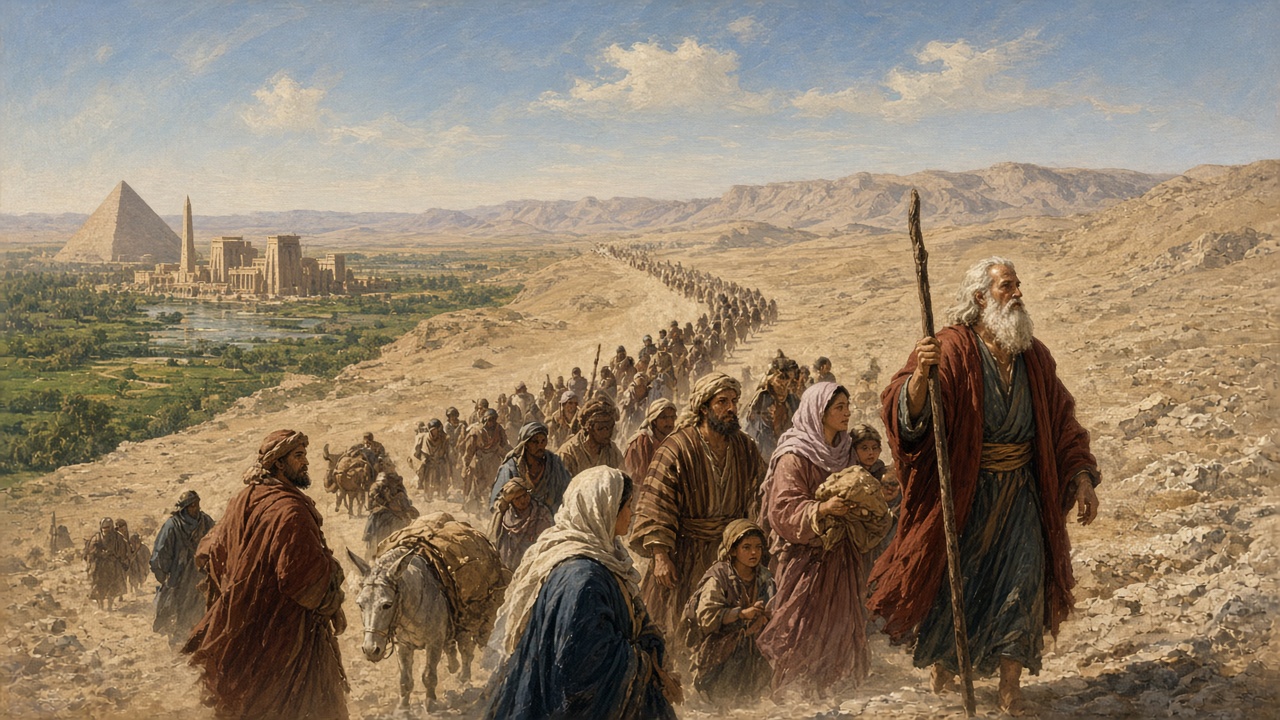
- The warning looks back to the people Moses led out of Egypt. For forty years in the wilderness they tested God, who was angry with that generation and swore they would never enter his rest; their bodies fell in the wilderness. The chapter says that unbelief kept them from entering.Sources: the Bible text itself
- Egypt, the land they left with Moses, is the land of the Nile and the pyramids. Easton's Bible Dictionary (1897) explains the name Moses as Drawn, or links it with the Egyptian word mesu, meaning son.Sources: the Bible text itself · Egypt · Moses
Notes written with AI assistance from open sources (Theographic Bible Metadata, CC BY-SA 4.0; Easton’s Bible Dictionary, public domain) and reviewed before publishing.
Places in this chapter
- Egypt · 30.129, 31.308 · verse 16
Only places identified with high confidence are shown (90% or more according to the scholarly sources compiled by OpenBible). Period map: DARE (Digital Atlas of the Roman Empire), CC BY 4.0; modern map: © OpenStreetMap contributors; places: OpenBible.info (CC BY 4.0).
Credits and license for this translation
PATHEN LEKHABU THENG
The Holy Bible in the Chongthu Dialect of India
Copyright © 2020 Chongthu Bible Translation Team
Language: Chongthu (Chin, Thado)
Dialect: Chongthu
This is a draft copy of a work in progress. It will be updated.
This translation is made available to you under the terms of the
Creative Commons Attribution Share-Alike license 4.0.
You have permission to share and redistribute this Bible translation in any format and to make reasonable revisions and adaptations of this translation, provided that:
You include the above copyright and source information.
If you make any changes to the text, you must indicate that you did so in a way that makes it clear that the original licensor is not necessarily endorsing your changes.
If you redistribute this text, you must distribute your contributions under the same license as the original.
Pictures included with Scriptures and other documents on this site are licensed just for use with those Scriptures and documents.
For other uses, please contact the respective copyright owners.
Note that in addition to the rules above, revising and adapting God's Word involves a great responsibility to be true to God's Word. See Revelation 22:18-19.
2026-10-02
Source: http://ebible.org/tczchongthu/ · eBible.org