Ecclesiastes 7
PATHEN LEKHABU THENG · Tap a verse to see its cross-references.
Mihem’a Suhdam Theilou Phatlou Naho
1Minphatna kimu hi gimnamtuipen sang'in jong amanlu joi. Chule napen nikho sang'in jong nathi nikho phajoa ahi. 2Thina kin’a kimanchah hi golnop bolna mun’a gache sangin aphajoi. Ahimongin, mitin kithi ding ahijeh in, mihingin hiche hi alunga agel ding doltah ahi. 3Lungkham hi muilhah sangin aphajoi, ajeh chu lungkhamna hin i-chunga kisuhthengna ahin sodohji ahi. 4Miching khat chun thina chung chang hi aha gel’in ahi, hinlah mingol vang chun phatpha mu ding bou ageljin ahi. 5Mi ngol khat in apachat hisang'in, miching khat oimo chan apha joi. 6Mi ngol nuijatna chu lingphung meiyin akah gin kija tobang ahin, imacha kah louvin aki chai jitai. 7Miching chu aki-engbol teng angol lojin, chule guhthim thilpeh hin lungthim asuhmo bepji ahi. 8Achaina hi apatna sang'in apha jon chule kiletsah sang'in, thohhat aphachom joi. 9Lunghan kitim them in, ajeh chu lunghan hin angoltoh kibang bep naso ding ahi. 10“Achesa nikho phaho chu ngaicha gunset hih in, hichu mi chinga ahi poi.” 11Sum nanei tengleh chihna hi phachom cheh ahi. Hinkhoa kho-sahna dinga ania phachom tah ahi. 12Chihna le sum hin ipi hijongleh nanei sah jeng thei ahinai. Hinlah chihna kiti bouhin na hinkho ahuhhing jou ding ahije. 13Pathen thilbol ho chu janom jengin, ajeh chu aman ahe konsa chu koiyin asuh-jang jou ding ham? 14Ning lhinga naum laisen kipah’in, hinlah hahsat nan nahin phah teng jongleh, ania Pathen’a hungkon ahiti tahsan in. Hiche lei hinkhoa hin ima hiti mong ding ahiti, akisei theipoi kiti hi geldoh jingin. 15Keiman hinlona ajeh umlou tobangbep leiset hinkhoa hin, khangdong phatah tah ho athia chule migilou ho hinkho asot’uhi kamu doh in ahi. 16Hijeh chun mohphat behset hih in, ahilouva ahileh chingval behset hih in! Idia nangmatah kisumang ding nahi ham? 17Chutima chun gilou behset jong bol hih in. Ngol hihbeh in! Ipi dinga naphat lhin masanga thi ding nahim? 18Hiche kihil naho hi lunggut in gel in, ajeh chu koi hitaleh Pathen ging mi chun; hitobang che valna hi ania hintoh ponte. 19Khopi sunga lamkai mi som sangin, miching khat chu gamchengin ahat joi. 20Leiset chunga hin mihem khatcha aphajeng bol chonse kha louhel aumpoi. 21Mi thusei jouse het ding go hih in, nasoh jengin jong na gaosap get in nate. 22Ajeh chu nangma tah jengin jong midang na gaosap ji chu na henai. 23Keiman kajo channa chihna in kalunggel le kachonna eilamkai jing na dingin ka ngai ton ahi. Keima tah in kaseijin, “Keima chingthei dingin ka kigel lha tai.” Hinlah ka chuti theijou hihbeh in ahi. 24Chihna hi gamla tah’a aum jingin chule holdoh jong ahah sai. 25Keiman muntin'a chun, chihna le hetkhenna chu iti hung umhija ham tin ajeh kahol in ahi. Keima tah in kholchilna neija kon'in gitlouna hi ngol jeh ahin, chule ngol kiti hi lung chavai kiseina ahije, tiphot chenna kanei ahitai. 26Keiman kavet chil’a ahileh, duha-thuhtah numei chu thi theina thangkol sanga khohse joa ahi chu ka kholdoh ahitai. Ami hebol jong kipalna thangkol bep ahi, chule akhut nemtah jong chu kihenna thihkol ahi bouve. Pathen lunglhaina’a umho chu amanua kon’a hoidoh ding, hinlah chonse ho chu amanu thanga ga-oh ding ahiuve. 27Thuhilpa chun, “Hiche hi keiman hoima lamjouse ahitheina ding kavet toh lea konna achaina kasem chu hiche hi ahi. 28Keiman kavel hol hol jeng vang'in, ka hol lona pentah chu kamu joupoi. Mi sangkhat lah a khatbou gunchena nei pasal khat ahijouvin, hinlah numei khat jong akimu joupoi. 29Chule keiman hiche hi kamui: Pathen’in miho hi gun chena neija asem ahin, hinlah ama hon achang cheh-uva aphalou akilam doh-u ahi bouve.
Did you know?
Wisdom, Mortality, and the Limits of Understanding
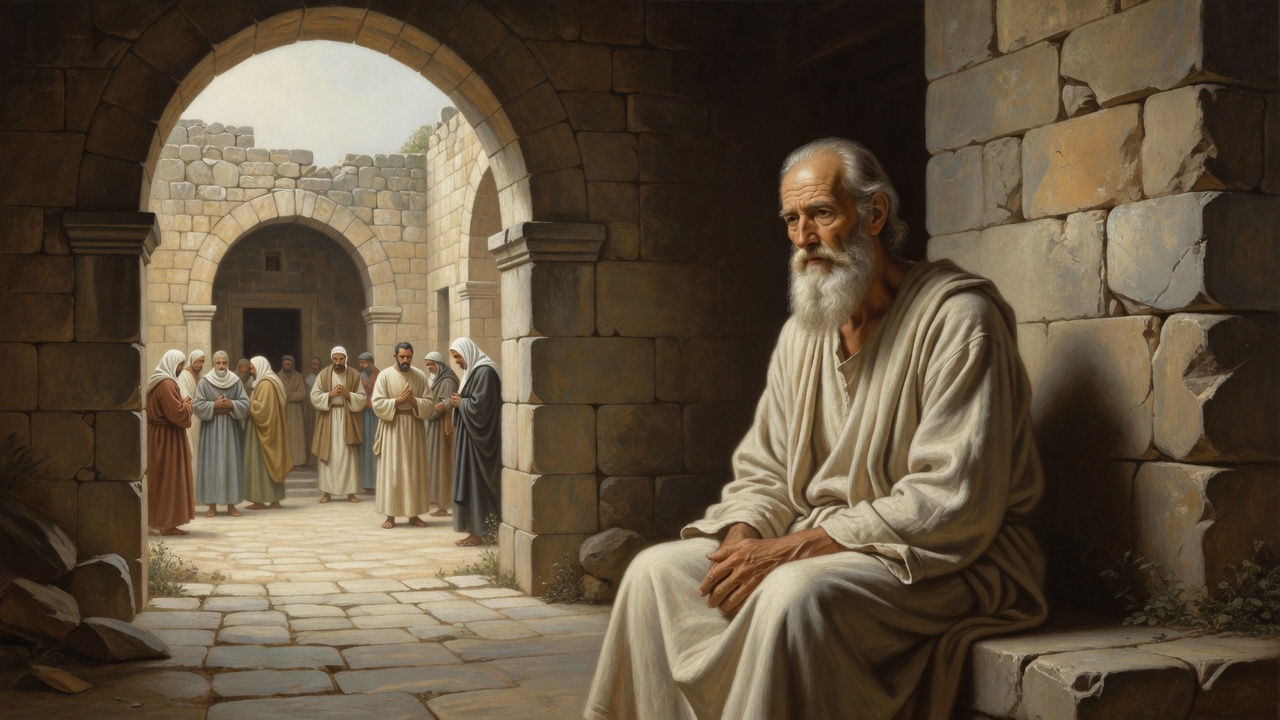
- Ecclesiastes 7 begins with a series of comparative proverbs arguing that moments of solemn reflection, such as visiting a house of mourning or facing sorrow, provide greater insight into life than superficial laughter and feast houses.Sources: the Bible text itself
- The Teacher reflects on the reality of human experience, noting that God has appointed both prosperous and adverse days so that humans cannot foresee their future, and that righteous people sometimes perish while the wicked live long.Sources: the Bible text itself
- The chapter highlights the universal limitation of human goodness, observing that there is no one on earth who does good and never sins, and concluding that while God created humanity upright, people pursue many complex schemes.Sources: the Bible text itself
Notes written with AI assistance from open sources (Theographic Bible Metadata, CC BY-SA 4.0; Easton’s Bible Dictionary, public domain) and reviewed before publishing.
Credits and license for this translation
PATHEN LEKHABU THENG
The Holy Bible in the Chongthu Dialect of India
Copyright © 2020 Chongthu Bible Translation Team
Language: Chongthu (Chin, Thado)
Dialect: Chongthu
This is a draft copy of a work in progress. It will be updated.
This translation is made available to you under the terms of the
Creative Commons Attribution Share-Alike license 4.0.
You have permission to share and redistribute this Bible translation in any format and to make reasonable revisions and adaptations of this translation, provided that:
You include the above copyright and source information.
If you make any changes to the text, you must indicate that you did so in a way that makes it clear that the original licensor is not necessarily endorsing your changes.
If you redistribute this text, you must distribute your contributions under the same license as the original.
Pictures included with Scriptures and other documents on this site are licensed just for use with those Scriptures and documents.
For other uses, please contact the respective copyright owners.
Note that in addition to the rules above, revising and adapting God's Word involves a great responsibility to be true to God's Word. See Revelation 22:18-19.
2026-10-02
Source: http://ebible.org/tczchongthu/ · eBible.org