Amos 5
PATHEN LEKHABU THENG · Tap a verse to see its cross-references.
Lungheina Dia Kouna
1Vo Israel mite, na chung uva thi-op la kasah khum’u hi ngai cheh tem’un! 2Nungah tobang Israel chu akiseplhu tai, avel’a dingdoh kitlou dingin tollhanga akijam den tai. 3Hatchungnung Pakaijin hitin aseiye, “Galsat mi sangkhat avaikon teng, mi jakhat bou hung kile jia, mi jakhat avaikon teng, mi somkhat bou hingdoh’a hung kile ji ahiuve’’ ati. 4Tun, Pakaijin Israel mite jah a hitin aseiye,’ “Nahin na diuvin, kaheng'a hung kilekit tauvin, 5Bethel kho’a doi-pathen houdin amaicham phunga cheda uvin, Gilgal leh Beersheba mun’a jong doi houdin lut dauvin. Ajeh chu, Gilgal khomite jong sohchanga kikaimang diu, chuleh Bethel khomite jing imalou soh uva mangthah diu ahi,’’ati. 6Nahin na diuvin Pakai kom’a hung kilekit uvin, achuti louleh, Pakai chu Israel chunga meikou kisunkhum banga hung deujah ding, na boncha uva nakah vam diu, Bethel kho’a na-doi-pathen uvin jong hichu aphelmit thei louding ahi. 7Nanghon thudih chu na heikon un, hesoh gentheite din changkha kine nabah sah’un, Nanghon athudih laitah chu kidah um nasosah’un, tolsenan nanei tauve. 8Pakaijin ahsi ho asemin, ahsi lah a Bombel leh Ngambom lungthu jong asem e. Aman muthim lhangkhal jong jingkah khovah asosah in, sunlai nisa jong jan muthim asosah theiye. Aman twikhanglen’a twipi ho achopdoh in, leiset chunga aphilhah sah e. Ama chu amin Pakai kiti ahi. 9Aman athahat apan in, ahat leh apaote asumang in, akulpi jouseu jong asuhchim peh tai. 10Nanghon thu adih’a tanpa nahot bol’un, thutah seidoh ho jong nadal bol uvin na kidah thouve. 11Nanghon vaicha gentheite chotphan nanei jun, dihlou tah in kai don nopnan nanei jun, achang jouseu nalahpeh jiuve. Hijeh chun, nang hon song-in hoitah tah nakisah vangun, asunga nachen louhel diu ahi. Chuleh lengpilei na deitah’a nabol uva tamtah naphu vang un, hiche ho’a kon’a chu nang hon lengpitwi nadon louhel diu ahi bouve. 12Ajeh chu, keiman nasuhkhel u ijat hija, na chonset nau ichan geija nasa ham, ti kahesohkeije. Nangho hi nehguh kilah a, midih bolgenthei ja pang nahiuve, chuleh thutanna mun’a vaicha tahlelte dihna selmang’a pang nahiuve. 13Hijeh chun, hitobang phat phatlou laitah’a, akam kihup’a umthim beh chu, milung chingho ahiuve. 14Apha chu ipi ham, hol uvin lang, thilse chu jamsan’un, chutileh nang hon na sei jiu banga, Pakai van Pathen chun na umpi jing thei diu ahi. 15Thilse hotbol unlang, apha chu ngailuvin; chuleh thutanna munho chu thudih lenna hisah’un, chutileh Pakai van Pathen chun, amite ahingdoh amoh chengse chunga alungsetna akoi ding ahi. 16Hijeh chun Pakai van Pathen chun hitin aseije, khosung leh vengning koilah jousea thi-op ho ka leh mao o-gin dimlha ding, chuleh akap gunset dinga ka-je them ho jong akondiu, ahi. 17Lengpilei lai jousea mi kap thum jeju ding, ajeh chu Keiman amaho talen kamatsah’a kasuhgam hel soh ding ahi, tin Pakaijin aseiye. 18Ohe, ada nahiuve! Pakai nikho chu hunglhung taleh tiho. Nanghon Pakai nikho chu ipi tobang ham nahepouve Hiche nikho chun khovah ahinpohlut louhel ding, muthim lhangkhal ahin lhut ding ahi bouve. 19Hiche nikho chuleh nangho, Pasal khattou sakei bahkai kicha-a ajamleh vompin ana lamtin’a, vompia kon’a ajamdoh kit’a a-insung alhun’a, a-inbanga akingaileh akhut gul’in ahinchuh tobang nahi diu ahi. 20Chutia chu, Pakai nikho chu muthim leh lungjin nikho hi ding, lung navah bei leh kipana beikei nikho hi ding ahi. 21Keiman kut nabol jouseu kahon kadei poi, khoppi theng nabol’u jong ka kipah dehpoi. Ajeh chu abon’a atah hilou na bolthu ngen’u ahi bouve. 22Nanghon pumgo thilto nadeitah’uva nabol’u jong kamit a ka vetpih louhel ding nahiuve. 23O thong jejua vahchoila nasah’u jong thip doh un, selangdah tampi ngaitah’a nasai ju jong ka ngainom poi. 24Chusang'in, thudih chu twilong hattah bangin nei musah un, chuleh kanglou twidung bangin chondihna chu lonsah’un. 25Vo, Israel mite, gamthip noija kum somli sunga chu, kilhaina gantha chuleh thilto chom chom ho chu kaheng'a nahinchoi jingu hinam? 26Ahipoi, nang hon na-doi-pathen’u na lengpau Sakkuth leh ahsi pathen na kisem thu-u bou chu najen’un nahou-ve. 27Hijeh a chu keiman nangho hi Damascus kalpeh’a sohchanga ka kaimang diu nahi tin, Pakaijin aseijin, ama min chu Pakai van Pathen ahi.
Did you know?
A Call to Justice and Lamentation
- Amos urged the northern kingdom of Israel not to seek ancient pilgrimage sites such as Bethel, Gilgal, or Beersheba, warning that these sanctuaries would not save them from destruction. Bethel and Gilgal were prominent historical worship centers, while Beersheba lay far to the south, but the prophet insisted that ritual devotion at these locations was worthless without moral obedience.Sources: the Bible text itself · Bethel (of Palestine) · Gilgal · Beersheba
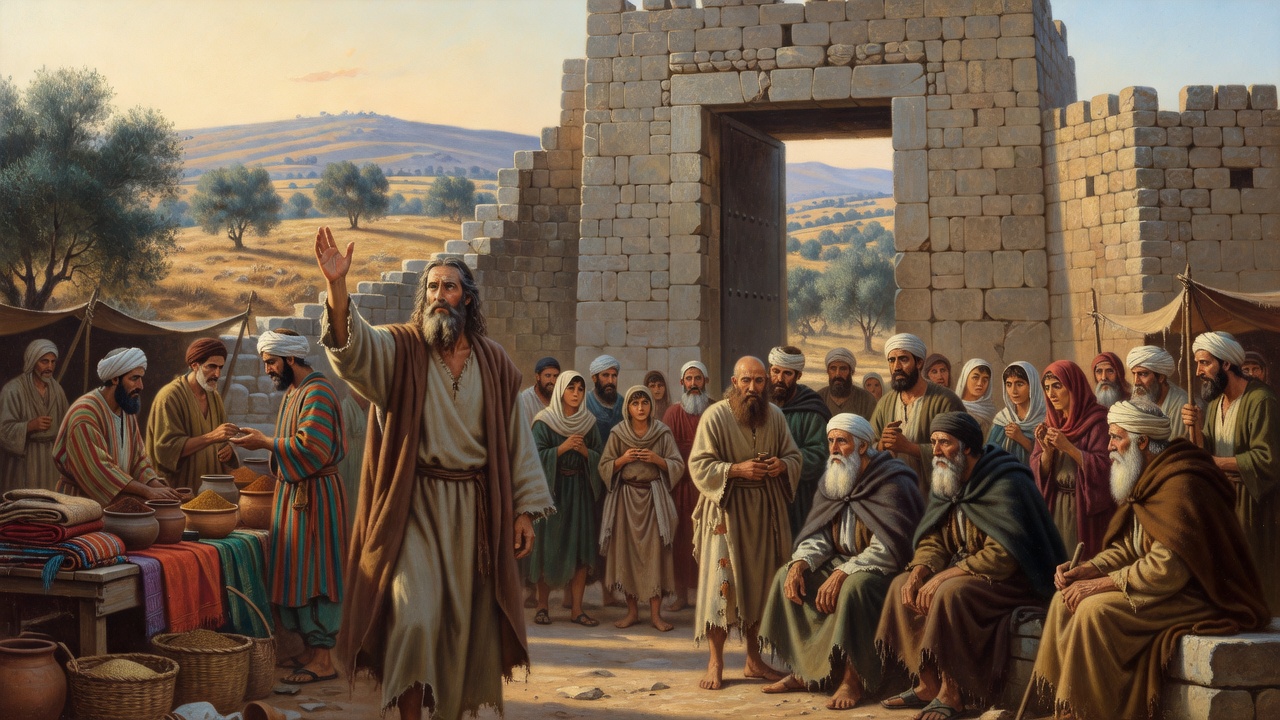
- In ancient Israelite cities, the gate served as the primary civic and judicial center where legal disputes were heard and elders administered justice. Amos condemned the ruling elite for accepting bribes, silencing honest witnesses, and trampling the rights of the poor in these legal assemblies.Sources: the Bible text itself
- The warning that Israel would be exiled beyond Damascus pointed to a coming defeat and deportation far northeast of the ancient Syrian capital. Damascus was a major political and commercial power located north of Jerusalem, marking a key geographical boundary for northern campaigns.Sources: the Bible text itself · Damascus
Notes written with AI assistance from open sources (Theographic Bible Metadata, CC BY-SA 4.0; Easton’s Bible Dictionary, public domain) and reviewed before publishing.
Places in this chapter
- Damascus · 33.511, 36.306 · verse 27
Only places identified with high confidence are shown (90% or more according to the scholarly sources compiled by OpenBible). Period map: DARE (Digital Atlas of the Roman Empire), CC BY 4.0; modern map: © OpenStreetMap contributors; places: OpenBible.info (CC BY 4.0).
Credits and license for this translation
PATHEN LEKHABU THENG
The Holy Bible in the Chongthu Dialect of India
Copyright © 2020 Chongthu Bible Translation Team
Language: Chongthu (Chin, Thado)
Dialect: Chongthu
This is a draft copy of a work in progress. It will be updated.
This translation is made available to you under the terms of the
Creative Commons Attribution Share-Alike license 4.0.
You have permission to share and redistribute this Bible translation in any format and to make reasonable revisions and adaptations of this translation, provided that:
You include the above copyright and source information.
If you make any changes to the text, you must indicate that you did so in a way that makes it clear that the original licensor is not necessarily endorsing your changes.
If you redistribute this text, you must distribute your contributions under the same license as the original.
Pictures included with Scriptures and other documents on this site are licensed just for use with those Scriptures and documents.
For other uses, please contact the respective copyright owners.
Note that in addition to the rules above, revising and adapting God's Word involves a great responsibility to be true to God's Word. See Revelation 22:18-19.
2026-10-02
Source: http://ebible.org/tczchongthu/ · eBible.org