Zechariah 12
Bibiri Kuyie Nnɑ́ɑǹtì Pɑ́tíri · Tap a verse to see its cross-references.
Ibotí yóó wɛ̃nnɛ́mɛ̀ kɛ́do Sedisɑdɛmmu
1Ntɛ Kuyie nnɑ̀kɛ́ tì Isidɑyɛɛribɛ,
Kuyie nkùù pitɛ́ tiwɛtì
kɛ fìí nkɛtenkɛ̀ kó yɛsɑ̃ǹkɛ̀,
kɛ ɑ̃nnɛ́ onìtì di wɛ̃nnì,
kuù bɛ́i nkɛ tú:
2Mí nKuyie m bo dɔɔ̀ Sedisɑdɛmmu fɛbòòfɛ̀ kóò píɛ m miɛkɛ kó mɛnɑɑ̀, nyɛbotɛ̀ yɛ̀ɛ̀ ò fitɛ́, kɛ̀ yɛ̀ɛ yɑ̃̀ kɛ́muɔ́ nkɛ̀ yɛ ììkɛ̀ɛ fitɛ́. Dɛɛ̀ múnkɛ yóó tuɔkɛní Sudɑɑ kɔbɛ bɛ dootitɔbɛ̀ bo bɛ̀ do dìì mɔ̀nnì kɛ́pi Sedisɑdɛmmu. 3Dɛ yiè m bo dɔú nSedisɑdɛmmu yɛbotɛ̀ ììkɛ̀ kòo ndo nkutɑ̃́ɑ̃́rí bɛ̀ɛ̀ bo ndɔ́ kóò còtɛ bɛ̀ bo kɔutɛ bɛmɑ́ɑ̀, yɛbotɛ̀ yɛmɔu bo wɛ̃nnɛ́ kóò do. 4Dɛ yiè m bo duɔ́ nkɛ̀ sisɛ̃ĩ́ĩ́ wɑ́ɑ́tɛ́, kɛ̀ kufɔ̃wɑɑ́ nhɑutɛ́ si dèèbɛ̀, m bo yɛ̃ĩkùnnɛ ibotí tɛì kó sisɛ̃ĩ́, n nɔ̀nfɛ̀ mɛ mbɑ́ɑ́ ṹṹ nSudɑɑ kɔbɛ ĩ́nkɛ̀. 5Dɛ mɔ̀nnì Sudɑɑ botí kó bɛkótíbɛ̀ bo nnɑ́ɑ́ mbɛ yɛ̀mmɛ̀ miɛkɛ kɛ tú: Sedisɑdɛmmu kɔbɛ kó muwɛ̃rímú bonní bɛ Yiɛ̀ nKuyie Mpɑkɛdɑɑ borɛ̀ ndɛ. 6Dɛ mɔ̀nnì m bo duɔ́ nkɛ̀ Sudɑɑ kpɑ̀ɑ̀tìbɛ̀ kuɔ yɛhɛkɛ̀ yɛ̀ɛ̀ bɛ̀ fitɛ́ kubɑkù cɑ̃̀nku nɛ̀ kuyoú yɛ kɔbɛ, muhɑ̃ɑ̃́ nhɔ̃ɔ̃ cɔ́útɛ́ mɛ̀ɛ̀ botí timútì nɛ̀ idɛí. Kɛ̀ Sedisɑdɛmmu nkpɑɑ́ bo o kɑrì kɛ̀ bɛnìtìbɛ̀ ò ɑ̃.
7Mí nKuyie n yóó ketɛ́ kɛ́dɛɛtɛ́ Sudɑɑ kó yɛfɛ kɔbɛ mbɛ, kɛ̀ dɛ̀ɛ yie nkɛ̀ Dɑfiti kɔbɛ nɛ̀ bɛ̀ɛ̀ bo Sedisɑdɛmmu kɛ̀ bɛ yɛ̀mmɛ̀ bɑ́ ndò mbɛ̀ bɛ̀ pɛ̃ɛ̃tɛ́. 8Dɛ yiè mí nKuyie n yó nkɑ̃nkɛ́mu Sedisɑdɛmmu kɔbɛ, dɛ yiè wèè tu ocĩ̀rì bɛ miɛkɛ weè yó ndònnɛ̀ Dɑfiti do dòmmɛ̀ kɛ̀ bɛ̀ nwúó nho yɑɑ̀bí kɛ̀ dɛ̀ dò nKuyie, nkɛ dò nKuyie ntɔ̃nnì.
Bɛ̀ yóó kɔmmúmɛ̀ bɛ̀ kũ̀ṹ wè kɛ o dùùtɛ o kpɛ́í
9Dɛ yiè m bo ítɛ́ kɛ́cómmú kɛ́kuɔ ibotí ìì bo kɔtɛní kɛ́ndɔ́ kɛ́do Sedisɑdɛmmu mudoò. 10Dɛ yiè m bo ɑ̃nnɛ́ Dɑfiti kɔbɛ nɛ̀ Sedisɑdɛmmu kɔbɛ mɛyɛ̀mmɛ̀ bɛ̀ bo n kuɔ́nnɛ̀ mɛ̀ kɛ́ m bɑntɛ́ kɛ́wɛ̃ɛ̃tɛní m bíɛ́kɛ̀. Dɛ mɔ̀nnì kɛ́kɔmmú bɛ̀ kũ̀ṹ wè kɛ dùùtɛ o kpɛ́í, wèè birɛ bo dɛmɑ́ɑ̀ dɛ̀ ɔ̃ɔ̃ kú kòò nkuɔ̀mmɛ̀, Mpo ɔ̃ɔ̃ kú kɛ̀ bɛ̀ nkuɔ̀mmɛ̀. 11Dɛ yiè yɛkúdɑbùò mbo dɑ́tínnɛ́ Sedisɑdɛmmu dibɔɔ̀ Adɑtidimɔɔ ɔ̃ɔ̃ kú kɛ̀ bɛ̀ nkuɔ̀mmɛ̀ Mɛkidoo biriku miɛkɛ. 12Dihɛì miɛkɛ bɛ̀ bo nkuɔ̀ bɛ nɑɑ̀mùntì bɛ nɑɑ̀mùntì, kɛ̀ Dɑfiti kó tɛcĩ́ɛ̃̀tɛ̀ kɔbɛ ncɑ̃̀ɑ̃́ nkɛ̀ bɛ pobɛ̀ cɑ̃̀ɑ̃́ nkɛ̀ Nɑtɑ̃ɑ̃ kó tɛcĩ́ɛ̃̀tɛ̀ kɔbɛ ncɑ̃̀ɑ̃́ nkɛ̀ bɛ pobɛ̀ cɑ̃̀ɑ̃́. 13Kɛ̀ Defii kó tɛcĩ́ɛ̃̀tɛ̀ kɔbɛ ncɑ̃̀ɑ̃́ nkɛ̀ bɛ pobɛ̀ cɑ̃̀ɑ̃́ kɛ̀ Simɛii cĩ́ɛ̃̀tɛ̀ kɔbɛ ncɑ̃̀ɑ̃́ nkɛ̀ bɛ pobɛ̀ cɑ̃̀ɑ̃́. 14Tinɑɑ̀mùntì sɔnti tìì kpɑɑ́ kɛ̀ tì cɑ̃̀ɑ̃́ ncɑ̃̀ɑ̃́ nkɛ̀ ti pobɛ̀ cɑ̃̀ɑ̃́.
Did you know?
Deliverance and Mourning in Jerusalem
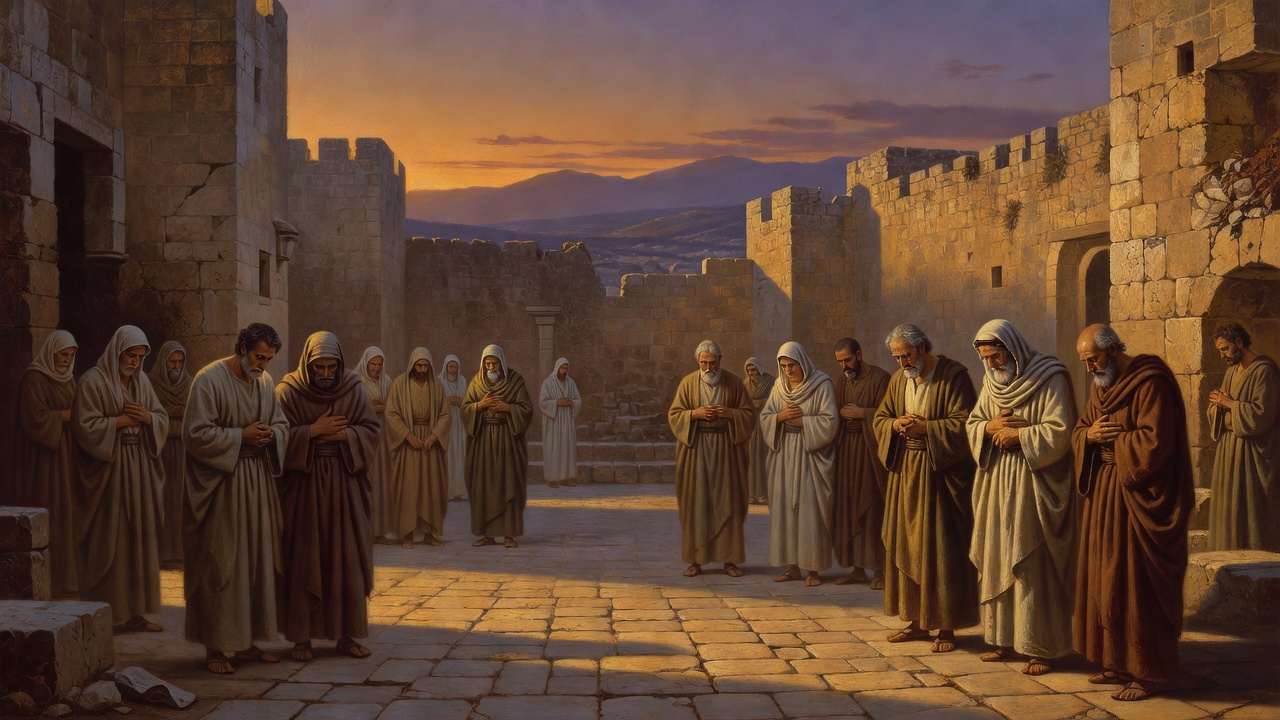
- The reference to mourning at Hadad-rimmon in the plain of Megiddo recalls the national grief over King Josiah, who was mortally wounded near that location. Megiddo's broad valley was a strategic corridor and a frequent battlefield in ancient times.Sources: Hadad-rimmon · Megiddo · the Bible text itself
- The prophecy lists specific families in separate mourning, including the royal lineages of David and his son Nathan, as well as the priestly house of Levi. This emphasizes that profound grief and personal contemplation would encompass all strata of society, from leaders to individual households.Sources: David · Nathan · Levi (patriarch) · the Bible text itself
- Jerusalem is described through vivid imagery, such as a heavy, immovable stone that injures anyone attempting to lift it, and a cup that intoxicates attacking armies. These metaphors underscore divine defense of the city against invading nations.Sources: Jerusalem · the Bible text itself
Notes written with AI assistance from open sources (Theographic Bible Metadata, CC BY-SA 4.0; Easton’s Bible Dictionary, public domain) and reviewed before publishing.
Places in this chapter
- Jerusalem · 31.777, 35.234 · verses 2, 3, 5, 6, 7, 8, 9, 10, 11
- Megiddo · Today: Tel Megiddo · 32.585, 35.184 · verse 11
Only places identified with high confidence are shown (90% or more according to the scholarly sources compiled by OpenBible). Period map: DARE (Digital Atlas of the Roman Empire), CC BY 4.0; modern map: © OpenStreetMap contributors; places: OpenBible.info (CC BY 4.0).
Credits and license for this translation
Bibiri Kuyie Nnɑ́ɑǹtì Pɑ́tíri
The Holy Bible in the Ditammari language of Benin
copyright © 2001 SIM International
Language: Ditammari
Translation by: SIM
This translation text is made available to you under the
terms of the Creative Commons License: Attribution-Noncommercial-No Derivative Works.
( http://creativecommons.org/licenses/by-nc-nd/3.0/ )
In addition, you have permission to port the text to different file formats, as long as you
do not change any of the text or punctuation of the Bible.
You may share, copy, distribute, transmit, and extract portions
or quotations from this work, provided that you include the above copyright
information:
You must give Attribution to the work.
You do not sell this work for a profit.
You do not make any derivative works that change any of the actual words or punctuation of the Scriptures.
Permissions beyond the scope of this license may be
available if you contact
us with your request.
This translation is made available to you under the terms of the
Creative Commons Attribution-No Derivatives license 4.0.
You may share and redistribute this Bible translation or extracts from it in any format, provided that:
You include the above copyright and source information.
You do not make any derivative works that change any of the actual words or punctuation of the Scriptures.
Pictures included with Scriptures and other documents on this site are licensed just for use with those Scriptures and documents.
For other uses, please contact the respective copyright owners.
2022-05-31
Source: http://ebible.org/tbzsim/ · eBible.org