Jeremiah 38
Bibiri Kuyie Nnɑ́ɑǹtì Pɑ́tíri · Tap a verse to see its cross-references.
Bɛ̀ cṹũnkomɛ̀ Sedemii tɛbintɛ miɛkɛ
1Mɛm̀mɛ kɛ̀ Mɑtɑ̃ɑ̃ birɛ Sefɑtiɑ nɛ̀ Pɑsuu birɛ Kedɑdiɑ nɛ̀ Sedemiɑ birɛ Yukɑɑri nɛ̀ Mɑdikiɑ birɛ Pɑsuu kɛ̀ bɛ̀ɛ keè n nɑ̀ɑ́ ntì bɛnìtìbɛ̀ bɛmɔu tìì tu: 2Ti Yiɛ̀ nKuyie nkuù tu wèè bo nkpɑɑ́ dihɛì diì mmiɛkɛ mudoò bo ò kònnɛ̀ yoo dikònnì kɛ̀ dɛ̀ mɛ nyí tú mɛmmɛ mutenkṹṹ. Kɛ̀ wèè mɛ nyɛ̀ kɛ duɔ́ nhomɑ́ɑ̀ Bɑbidɔnni ɛì kɔbɛ ò bo cootɛ́ kɛ́nfòù.
3Ti Yiɛ̀ nKuyie mbɛ́immu kɛ tú Bɑbidɔnni ɛì kó bɛhɑ̃ɑ̃pɔ̀mbɛ̀ bo do di nhɛì kɛ́ dì fìètɛ.
4Kòo kpɑ̀ɑ̀tì tũ̀mbɛ̀ɛ ò nɑ̀kɛ́ kɛ dɔ̀: Onìtì yie ndò nkɛ́kuɔmu, ò yɑ̃́rìkùnko bɛhɑ̃ɑ̃pɔ̀mbɛ̀ kɔ̃̀ntì nti bɛ̀ɛ̀ kpɑɑ́ dihɛì diì mmiɛkɛ nɛ̀ bɛnìtìbɛ̀ bɛmɔu ò í wɑnti bɛnìtìbɛ̀ kó mɛsɑ̀ɑ̀, ò bɛ̀ dɔ́nɛ̀ mɛyɛi mmɛ.
5Kòo kpɑ̀ɑ̀tì Sedesiɑsi bɛ̀ tɛ̃̀ńnɛ́ kɛ dɔ̀: Dɔɔ̀nɛ̀ we di dɔ́mɛ̀ n yí yóó nɑ kɛ di bɑɑ.
6Kɛ̀ bɛ̀ m pĩ́ nkɛ́pítínnɛ́ iwɛ̃ĩ kɛ́cṹũnko okpɑ̀ɑ̀tì birɛ Mɑkidiɑ kó tɛbintɛ tɛ̀ɛ̀ do bo tɛkpɑ̀ɑ̀tìcĩ́ɛ̃̀tɛ̀ dɑ̀nkù. Mɛniɛ ndo í ɑ̃ tɛ miɛkɛ, tisɑ̃̀ũ̀tì do nti kɛ̀ n fṹṹkóo ti miɛkɛ.
7Kɛ sɔ̃́ nhEtiopii kou mɔù wèè do tú tɛkpɑ̀ɑ̀tìcĩ́ɛ̃̀tɛ̀ kóo kótì kòo yètìrì tu Ebɛɛdi-Mɛdɛki, kòo keè bɛ̀ n tɑnnɛ́mɛ̀ tɛbintɛ miɛkɛ kòo kpɑ̀ɑ̀tì nkɑri Bɛnsɑmɛɛ ɛì kó dibòrì kɛ bekù. 8Kɛ̀ Ebɛɛdi-Mɛdɛkii yɛ̀nní tɛkpɑ̀ɑ̀tìcĩ́ɛ̃̀tɛ̀ miɛkɛ kɛ́nɑ́kɛ́ okpɑ̀ɑ̀tì kɛ dɔ̀: 9Áú n yiɛ̀! Fɔ̃́ nhokpɑ̀ɑ̀tì, bɛ nnìtìbɛ̀ cɑ̀ɑ̀rɛ̀mu bɛ̀ pĩ ndɛ̀ Sedemii kɛ tɑnnɛ́ tɛbintɛ miɛkɛ kɛ̀ dikònnì yóó dɛ̀ nhò kùɔ kɛ yɛ̃́ pɛ̃́ɛ̃̀ í kpɑɑ́mɛ̀ dihɛì miɛkɛ.
10Kòo kpɑ̀ɑ̀tìi duɔ́ ndinùù Ebɛɛdi-Mɛdɛki Etiopii ɛì kou kɛ dɔ̀: Túótɛ́ bɛnìtìbɛ̀ bɛtɑ̃ɑ̃ti kɛ̀ bɛ̀ dɑ nɛinɛ̀ kɛ̀ dí kɔtɛ kɛ́dennɛní Sedemii tɛbintɛ kòò mu nyí ku.
11Kɛ̀ Ebɛɛdi-Mɛdɛkii túótɛ́ dɛ kó bɛnìtìbɛ̀ kɛ̀ bɛ̀ɛ kɔtɛ kɛ́tɑ okpɑ̀ɑ̀tì cĩ́ɛ̃̀tɛ̀, tɛkpɑ̀ɑ̀tìcĩ́ɛ̃̀tɛ̀ kó tikpɑ̀tì ɑ̃ kùù dieku kó kudieku dɛfũ̀ɔ̃̀ kɔku, kɛ́túótɛ́ tiyɑɑ̀cítì tìì kòtɛ́ kɛ kɛ̃rí, kɛ́ tì pìtínnɛ́ kuhɔ̃ũ kɛ́ n duɔ́nko tɛbintɛ miɛkɛ, 12kɛ́ n nɑ̀kɛ́ kɛ dɔ̀: Túótɛ́ tiyɑɑ̀cítì kɛ́ceé nhɑ pɛ̃̀tɛ́mpĩ́ɛ̃̀kù kɛ́pĩ́nnɛ́ iwɛ̃ĩ ti ĩ́nkɛ̀. 13Kɛ̀ m mɛ ndɔɔ̀ kɛ̀ bɛ̀ɛ yṹɔ̃́ nkuhɔ̃ũ kɛ́ n dennɛní tɛbintɛ miɛkɛ. Mɛm̀mɛ mí nSedemii kɛ̀ nní mbo bɛ̀ɛ̀ bɑ̀ɑ̀ tikpetíntì bɛ kó kudɑ̀nkù.
Okpɑ̀ɑ̀tì wɛ̃̀tɛ kɛ yumɛ̀ Sedemii kòo beé
14Kòo kpɑ̀ɑ̀tì Sedesiɑ tɔ̃ nkɛ̀ bɛ̀ n yúní kɛ̀ ti kɔtɛ Kuyie ncĩ́ɛ̃̀tɛ̀ dibòrì tɑ̃ɑ̃́nnì kòo kpɑ̀ɑ̀tìi n nɑ́kɛ́ kɛ dɔ̀: N do dɔ́ kɛ́ dɑ bekɛ tìmɑtì nti, kɛ̀ n tì ndɑ bekɛ́ ɑ bɑ́ n sɔnnɛ tìmɑtì.
15Kɛ̀ n dɔ̀: Kɛ̀ n tì ndɑ nɑ̀kɛ́ ɑ yó n kuɔmu kɛ̀ m mɛ ndɑ duɔ́ nyitié ɑ í yó n kéntɛ́.
16Kɛ̀ Sedesiɑ n yú tidɛ́ borɛ̀ kɛ́ n nɑ́kɛ́ kɛ dɔ̀: Kuyie mbomu kuù ti duɔ̀ mmufòmmu, m bɛ́immu kɛ tú n yí yóó dɑ kuɔ, m mɛ nyí yóó dɑ pĩ́ nkɛ́duɔ́ mbɛ̀ɛ̀ dɑ dɔ́nɛ̀ mukṹṹ.
17Dɛ mɔ̀nnì kɛ̀ n nɑ́kɛ́ Sedesiɑ kɛ dɔ̀: Ti Yiɛ̀ nKuyie Mpɑkɛdɑɑ kunku tínti Isidɑyɛɛribɛ ti tũ nkù tu kɑ̀ɑ yɛ̀ kɛ kɔ̀tɛ kɛ duɔ́ nhɑmɑ́ɑ̀ Bɑbidɔnni kóo kpɑ̀ɑ̀tì ɑ̃ɑ̃pɔ̀mbɛ̀ iwɛ̃ĩ yɛmbɛ̀, ɑ yó nfòùmu fɔ̃́ nnɛ̀ ɑ cĩ́ɛ̃̀tɛ̀ kɔbɛ, bɛ̀ bɑ́ɑ́ cɔ́u ndihɛì. 18Kɑ̀ɑ mɛ nyí yɛ̀ kɛ duɔ́ nhɑmɑ́ɑ̀ Bɑbidɔnni kóo kpɑ̀ɑ̀tì ɑ̃ɑ̃pɔ̀mbɛ̀ iwɛ̃ĩ yɛmbɛ̀, bɛ̀ yóó domu dihɛì diì nkɛ́ dì cɔ́u mmuhɑ̃ɑ̃́, ɑ mɔ́mmuɔ nhɑ bɑ́ɑ́ nɑ kɛ́yentɛ́. 19Kòo kpɑ̀ɑ̀tì Sedesiɑ n nɑ́kɛ́ kɛ dɔ̀: N yĩɛ̃̀kù Sudɑɑ kó kuwuɔ nkɔbɛ bɛ̀ɛ̀ duɔ́ mbɛ̀ mbɛ bɛmɑ́ɑ̀ Bɑbidɔnni kɔbɛ, n kɔ̃m̀bùɔ̀tì duò bɛ̀ bo m pĩ́mmɛ̀ mmɛ kɛ́ bɛ̀ duɔ́ nkɛ̀ bɛ̀ n fɛ̃́ũ.
20Kɛ̀ nh ò tɛ̃̀ńnɛ́ kɛ dɔ̀: Bɛ̀ í yóó dɑ pĩ́ nkɛ bɛ̀ duɔ́. Kéntɛ́ ti Yiɛ̀ nKuyie nkpɛti n dɑ nɑ́ɑ́ ntì. Mɛyɛi mmɑmɛ̀ í yóó dɑ tuɔkɛní ɑ yó nfòùmu. 21Kɑ̀ɑ mɛ nyetɛ ɑ bo yɛ̀mɛ̀ kɛ́ bɛ̀ duɔ́ nhɑmɑ́ɑ̀, ntɛ ti Yiɛ̀ nKuyie nni nduɔ́ ntì tiì yóó dɑ tuɔkɛní: 22Bɛnitipòbɛ̀ bɛmɔu bɛ̀ɛ̀ kpɑɑ́ ɑ kpɑ̀ɑ̀tìcĩ́ɛ̃̀tɛ̀ miɛkɛ Sudɑɑ ɛì, bɛ̀ yóó bɛ̀ duɔ́mmu Bɑbidɔnni kó bɛhɑ̃ɑ̃pɔ̀mbɛ̀ iwɛ̃ĩ yɛmbɛ̀, dɛ kó bɛnitipòbɛ̀ yó nnɑ́ɑ́mmu ɑ kpɛ́í nkɛ tú:
O nɑtitɔbɛ̀ ò ciitɛ́mu kɛ nɑ,
o fũ̀ṹkú disɑ̃̀ũ̀ ndi kɛ̀ bɛ̀ cokɛ́.
23A pobɛ̀ nɛ̀ ɑ bí bɛ̀ bo bɛ̀ duɔ́ mBɑbidɔnni kɔbɛ, ɑ mɔ́mmuɔ Bɑbidɔnni kóo kpɑ̀ɑ̀tì bo dɑ pĩ́ nkɛ́cɔ́u ndihɛì.
24Kɛ̀ Sedesiɑ n nɑ́kɛ́ kɛ dɔ̀: A bɑ́ɑ́ yie nkòò mɔùu keè ti nɑ̀kɛ́ tì, kɛ̀ bɛ̀ tì kèè ɑ kumu. 25Sikpɑ̀ɑ̀tìbìí nɛ̀ bɛ̀ɛ̀ bɑkɛ́ dihɛì kɛ̀ bɛ̀ kèè ɑ kɔ̀tɛnímɛ̀ m borɛ̀ kɛ̀ ti nɑ̀kɛ́, kɛ̀ bɛ̀ tu ɑ́ bɛ̀ nɑ̀kɛ́ ti nɑ̀kɛ́ tì kɛ bɑ́ɑ́ bɛ̀ sɔ̀nnɛ tìmɑtì kɛ̀ mɛɛ̀ dɔkɛ bɛ̀ bo dɑ kuɔ. 26Á bɛ̀ nɑ̀kɛ́ kɛ tú ɑ kɔ̀tɛní kɛ bo m bɑ́mmúmu kɛ̀ m bɑ́ɑ́ dɑ tɛ̃́nnɛ́ Sonnɑtɑ̃ɑ̃ cĩ́ɛ̃̀tɛ̀ ɑ yɑ̀ɑ̀ bo kú.
27Sikpɑ̀ɑ̀tìbìí nɛ̀ bɛ̀ɛ̀ bɑkɛ́ dihɛì kɛ̀ bɛ̀ɛ kɔtɛní m borɛ̀ kɛ́ m bekɛ ti nɑ̀kɛ́ tì, kɛ̀ m bɛ̀ tɛ̃̀ńnɛ́ okpɑ̀ɑ̀tì n nɑ̀kɛ́ tì, kɛ̀ bɛ̀ dɔ̀ yúóó kɛ́ítɛ́, kɛ yɛ̃́ bɛ̀ í kèèmɛ̀ ti nɑ̀kɛ́ tì. 28Mí nSedemii kɛ̀ nní mbo bɛ̀ɛ̀ bɑ̀ɑ tɛkpɑ̀ɑ̀tìcĩ́ɛ̃̀tɛ̀ bɛ kó kudɑ̀nkù kɛ̀ bɛ̀ yɑ̀ɑ pɔntɛnɛ̀ Sedisɑdɛmmu.
Ntɛ dɛ̀ wũɔ̃kɛ́mɛ̀ kɛ̀ bɛ̀ yɑ̀ɑ̀ pɔ̀ntɛnɛ̀ Sedisɑdɛmmu.
Did you know?
The Cistern and Zedekiah's Secret Counsel
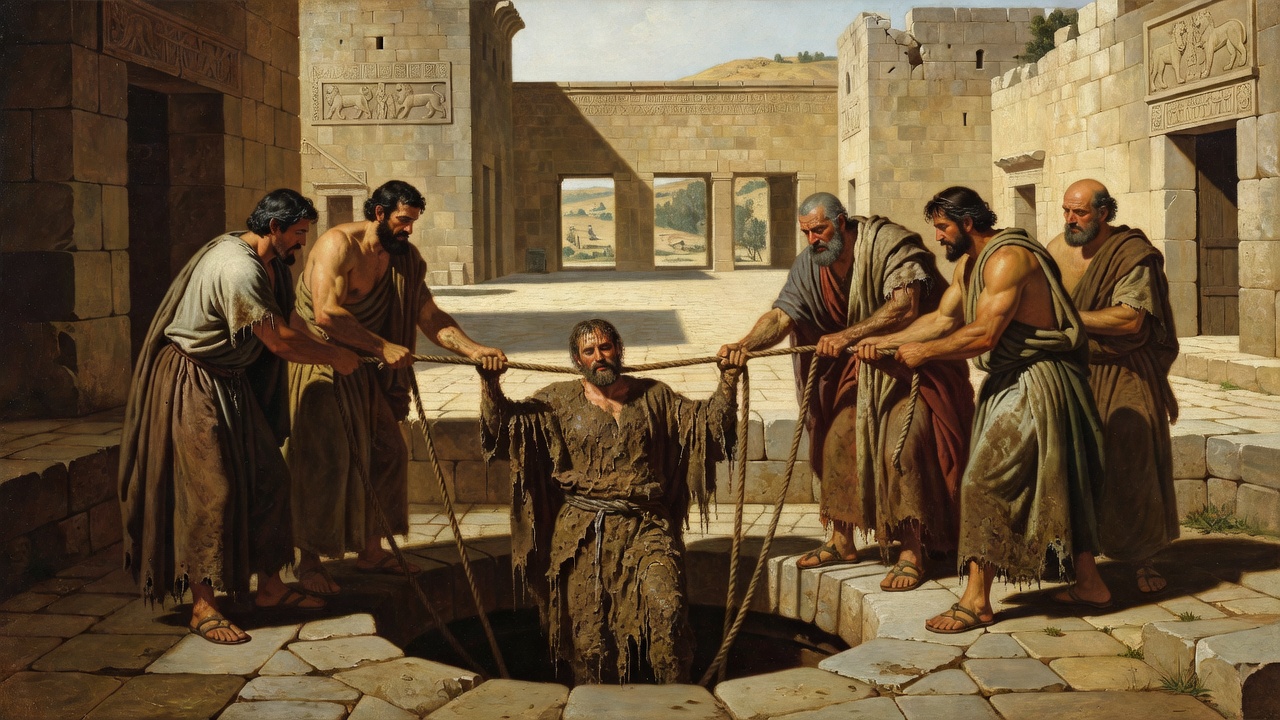
- When Jeremiah urged the defenders of Jerusalem to surrender to the Babylonians rather than perish from sword, famine, and plague, Judean officials accused him of treason and lowered him into a muddy cistern in the court of the guard. An Ethiopian palace official named Ebed-melech intervened with King Zedekiah, securing permission and men to pull the prophet out using ropes padded with worn rags.Sources: the Bible text itself · Ebed-melech · Shephatiah
- King Zedekiah met secretly with Jeremiah at the temple entrance, admitting his fear of both his own aggressive officials and the Judeans who had already defected to the Babylonians. Jeremiah reiterated that surrendering to the Babylonian commanders would preserve the king's life, protect his family, and save Jerusalem from being burned.Sources: the Bible text itself · Zedekiah · Jeremiah
Notes written with AI assistance from open sources (Theographic Bible Metadata, CC BY-SA 4.0; Easton’s Bible Dictionary, public domain) and reviewed before publishing.
Places in this chapter
- Chaldea · 30.962, 46.104 · verses 2, 18, 19, 23
- Jerusalem · 31.777, 35.234 · verses 2, 3, 28
- Babylon · 32.543, 44.422 · verses 3, 17, 18, 22, 23
- Benjamin Gate · Today: in Jerusalem · 31.777, 35.234 · verse 7
Only places identified with high confidence are shown (90% or more according to the scholarly sources compiled by OpenBible). Period map: DARE (Digital Atlas of the Roman Empire), CC BY 4.0; modern map: © OpenStreetMap contributors; places: OpenBible.info (CC BY 4.0).
Credits and license for this translation
Bibiri Kuyie Nnɑ́ɑǹtì Pɑ́tíri
The Holy Bible in the Ditammari language of Benin
copyright © 2001 SIM International
Language: Ditammari
Translation by: SIM
This translation text is made available to you under the
terms of the Creative Commons License: Attribution-Noncommercial-No Derivative Works.
( http://creativecommons.org/licenses/by-nc-nd/3.0/ )
In addition, you have permission to port the text to different file formats, as long as you
do not change any of the text or punctuation of the Bible.
You may share, copy, distribute, transmit, and extract portions
or quotations from this work, provided that you include the above copyright
information:
You must give Attribution to the work.
You do not sell this work for a profit.
You do not make any derivative works that change any of the actual words or punctuation of the Scriptures.
Permissions beyond the scope of this license may be
available if you contact
us with your request.
This translation is made available to you under the terms of the
Creative Commons Attribution-No Derivatives license 4.0.
You may share and redistribute this Bible translation or extracts from it in any format, provided that:
You include the above copyright and source information.
You do not make any derivative works that change any of the actual words or punctuation of the Scriptures.
Pictures included with Scriptures and other documents on this site are licensed just for use with those Scriptures and documents.
For other uses, please contact the respective copyright owners.
2022-05-31
Source: http://ebible.org/tbzsim/ · eBible.org