Isaiah 60
Bibiri Kuyie Nnɑ́ɑǹtì Pɑ́tíri · Tap a verse to see its cross-references.
Sedisɑdɛmmu ɛì yóó wɛ̃tɛ kɛ́mɑɑ́mɛ̀ kɛ̀ ti Yiɛ̀ nKuyie nkpetì mbo di miɛkɛ
1Sedisɑdɛmmu ɛì, ítɛ́ kɛ́cómmú kɛ́miɛtɛ́,
dɛ̀ tùɔ̀kɛmu ɑ bo míítɛ́ dɛ̀ ɑ wenniku,
Kuyie nkó tikpetì bomu ɑ ĩ́nkɛ̀.
2Dibiìnnì diì dɑ̀tínnɛ́ kutenkù dɛ̀ urikɛmu bɛnìtìbɛ̀,
kɛ̀ ti Yiɛ̀ nKuyie nnɛ́ dɑ mìítɛ́ ku kó kuwenniku,
kɛ dɑ bɛnkɛ ku kó tikpetì bomɛ̀ ɑ ĩ́nkɛ̀.
3Yɛbotɛ̀ bo ntũ nhɑ kó kuwenniku,
kɛ̀ bɛkpɑ̀ɑ̀tìbɛ̀ wùó nhɑ wennɛ́cɑ̀nnì kó mɛnɑ́ɑ̀ kɛ́ ndɑ tũ.
4Sedisɑdɛmmu wénní ɑ ɛì fitímɛ̀, ɑ bí ìtɛ́nímu tipíìtì timɔu,
kɛ tìí nkɛ kũntiní ɑ borɛ̀.
A dɑpɑ̀mbɛ̀ ìtɛ́nímu dɛdɛ́tirɛ̀,
kɛ̀ bɛ̀ uukuní ɑ sɑpɑ̀mbɛ̀ kɛ kpɛ̃nnìnkoní ɑ borɛ̀.
5A yóó dɛ̀ yɑ̀ kɛ̀ diwɛ̀ì diì dɑ pĩ́ nkɛ̀ kuyɛǹnɑɑtí dɑ kuɔ,
kɛ yɛ̃́ tikpɑ̀tì tìì bo dɑ̀mɛ́ɛ̀rì tì kɔ̀rinímɛ̀ ɑ borɛ̀
kutenkù kó tikpɑ̀tì yó ndɔkuní kɛ cuuti ɑ borɛ̀ ndɛ,
6Kɛ̀ bɛnìtìbɛ̀ nyiitinɛ̀ní yòyóbɛ̀ titɔ̃ntì titɔ̃ntì,
Mɑndiyɑ̃ɑ̃ kó kutempɛ̃ nkɔbɛ nɛ̀ Ɛfɑ kɔku kɔbɛ nɛ̀ Sɑbɑɑ kó kutempɛ̃ nkumɔu kɔbɛ
kɛ̀ bɛ̀ nkɔrìní kɛ tɔuní mɛsɔɔ nnɛ̀ tihúúntì
kɛ pĩɛ̃kù kɛ sɑ̃ntí ti Yiɛ̀ nKuyie.
7Kedɑɑ ɛì kó iwũɔ̃ imɔu yóó tíímmu ɑ borɛ̀.
A yóó tiekɛmu Nɛbɑyɔti ɛì kó yɛpedɑkɛ̀ kɛ̀ di n yɛ̀ nni nfeu,
mí nKuyie n wũɔ̃tɔ̀nnì ĩ́nkɛ̀ dipɑ̃nnì ndi dìì kó kufɔ̃ɔ̃ku n nɑɑti.
Dɛ mɔ̀nnì kɛ̀ n cĩ́ɛ̃̀tɛ̀ n kpetì bo tɛ̀ yètìrì ndɛu.
8Ɔ̃̀mbɛ mbɛ bɛ̀ɛ̀ pùtì kɛ do nyɛwɛtɛ̀?
Ɔ̃̀mbɛ mbɛ kɛ putìní yɛkpɛtìnɔ́nkperɛ ɔ̃ mputìmɛ̀ kɛ kũnti yɛ weńnì?
9Yɛhɛkɛ̀ dɛ́tiyɛ̀ kɔbɛ buɔ́ mí nwe,
Tɑdisisi ɛì kóo bɑ̀tóòbɛ̀ bɛɛ̀ yó ntú bɛketibɛ̀ kɛ́kpɛ̃nnɛ́ní,
ɑ bí nɛ̀ timɑ́tì pɛ́ítì mɛsɔɔ bɛ̀ bo dɛ́úkunnɛmɛ̀
mí ndi Yiɛ̀ nKuyie n yètìrì,
mí nwèè dò mpɑ́íí, kɛ di te díndi Isidɑyɛɛribɛ kɛ di dɛ́úkùnko.
10Bɛpɔ̀ɔ̀bɛ̀ bɛɛ̀ yóó mɑɑ́ fɔ̃́ nSedisɑdɛmmu ɛì kó iduotí,
kɛ̀ bɛ kó bɛkpɑ̀ɑ̀tìbɛ̀ mpĩ nhɑ tɔ̃mmú.
Mí ndi Yiɛ̀ nKuyie mmíì bɛ́i.
M miɛkɛ kɛɛ̀ do di yɛ̀ kɛ̀ n di potɛ́,
nɛ̀ n sɑ̀ mɛ̀ɛ̀ kpɛ́í n yóó di kuɔ́mmu mmɛsémmɛ̀.
11A ɛì kó yɛbòrɛ̀ yó nfeíomu sɑ̃́ɑ̃̀ kuyie nnɛ̀ kɛyènkɛ̀,
bɑ́ yɛ̀ bɑ́ɑ́ kpetínnɛ́ kɛ̀ dɛ̀ɛ yie nkɛ̀ yɛbotɛ̀ ntɔuní yɛ kpɑ̀tì ɑ miɛkɛ
kɛ̀ yɛ kpɑ̀ɑ̀tìbɛ̀ nkɔrìní ɑ ɛì.
12Yɛbotɛ̀ nɛ̀ yɛkpɑ̀ɑ̀tìyɔ yɛ̀ɛ̀ bo yetɛ yɛ̀ bo mpĩ́mmɛ̀ ɑ tɔ̃mmú yɛ̀ í yó nkpɑɑ́ bɛ̀ bo yɛ̀ kùɔ pɑ́íí.
13Dɛ mɔ̀nnì Dimɑɑ tùúkú kó tikpɑ̀tì timɔu,
idɛí bɛ̀ tu ì sìpɛ́rɛ́sì nɛ̀ bɛ̀ tu ì pinni nɛ̀ bɛ̀ tu ì bisi,
kɛ̀ dɛ̀ɛ kɔtɛní kɛ́ntú n cĩ́ɛ̃̀tɛ̀ kó tisɑ̃tì,
kɛ̀ n dɛ́úkùnnɛ n cĩ́ɛ̃̀tɛ̀ m bo tɛ̀ yètìrì.
14A dootitɔbɛ̀ bɛ̀ɛ̀ do dɑ fɛ̃́ũnko
bɛ bí kɔrinímu kɛ bo sĩ́nnɛ́ ɑ ììkɛ̀.
Bɛ̀ɛ̀ do dɑ senku bɛmɔu bɛ̀ yóó dɑ bɔ́útɛ́mu,
bɛ̀ bo ndɑ yu kɛ tú ti Yiɛ̀ nKuyie nkó dihɛì Siyɔ̃ɔ̃,
Kuyie nkùù dò pɑ́íí kɛ te Isidɑyɛɛribɛ ku ɛì.
15Bɛ̀ do dɑ dootóomu kɛ́ ndɑ níí,
bɑ́ òmɔù í mpɛ̃nkù ɑ borɛ̀.
N nɛ́ yóó duɔ́ nkɛ̀ bɛ̀ ndɑ pɔtìnɛ̀mu sɑ̃́ɑ̃̀,
bɛnìtìbɛ̀ yɛ̀mmɛ̀ bo ndɑ nɑɑtinɛ̀ nɛ̀ bɛ yɑɑ̀bío sɑ̃́ɑ̃̀.
16Dɛ mɔ̀nnì fɔ̃́ɔ̃̀ yóó di yɛbotɛ̀ mɔ̀kɛ dɛ̀
kɛ́sũɔ̃tɛ bɛkpɑ̀ɑ̀tìbɛ̀,
kɛ́bɑntɛ́ kɛ dò mmí nhɑ Yiɛ̀ nKuyie míì tu ɑ dɛɛtíwè
kɛ́bɑntɛ́ kɛ dò mmí nKuyie Sɑkɔbu do tũ nkù
n kpeńnìmu kɛ̀ míì dɑ dontɛ́.
17Dɛ mɔ̀nnì kɛ̀ bɛ̀ ndɑ tɔuo disɔɔwũɔ̃̀ kó difɔ̃̀tìrì mɛsɔɔ
timɑ́tì kó difɔ̃̀tìrì timɑ́tì pɛ́ítì,
idɛí kó difɔ̃̀tìrì disɔɔwũɔ̃̀,
yɛtɑ̃́rɛ̀ kó difɔ̃̀tìrì timɑ́tì.
18A ɛì miɛkɛ òmɔù tɛ̃́nkɛ bɑ́ nfɛ̃́ũnko otɔù,
òmɔù tɛ̃́nkɛ bɑ́ɑ́ pɔntɛ otɔù kòo ɛì nɑɑ́ ntidobontì kɛ́dɔúnko,
ɑ tenkɛ̀ kɛmɔu duɔ́mɛ̀.
A ɛì kó iduotí yètìrì bo ntú mɛdɛɛtímɛ̀,
kɛ̀ di bòrɛ̀ kpɛyɛ ntú mí nKuyie nkó disɑ̃nni.
19Diyiè kó mɛnɑ́ɑ̀ mmɛɛ̀ tɛ̃́nkɛ í yó ndɑ mí nkuyie mmɔ̀nnì,
otɑ̃̀nkù weè mɛ nyí yóó ndɑ duɔ̀ nkuwenniku kɛyènkɛ̀.
Ti Yiɛ̀ nKuyie nkuù yó ntú ɑ kó mɛnɑ́ɑ̀ sɑ̃́ɑ̃̀ kɛ́ntú ɑ kó tisɑ̃tì.
20Yɛkúdɑbùò ntɛ̃́nkɛ bɑ́ nkpɑɑ́ ɑ ɛì miɛkɛ.
Mí nhɑ Yiɛ̀ nKuyie míì yó ntú ɑ kó mɛnɑ́ɑ̀ nsɑ̃́ɑ̃̀,
mɛ̀ í yóó deè diyiè dèumɛ̀ yoo otɑ̃̀nkù kɔ̃mmɛ̀.
21Kɛ̀ bɛnitisɑ̀ɑ̀bɛ̀ bɛɛ̀ mɑ́ɑ̀ ḿbo ɑ ɛì kɛ̀ bɛɛ̀ ndi bɑkɛ́ sɑ̃́ɑ̃̀,
dihɛì n dɔ̀ɔ̀ dì.
Bɛ̀ bo nkótírí titieti n fìíkú tì dɛboorɛ ti kɔ̃mɛ
kɛ́ndɛ́úkùnko n yètìrì.
22A nìtìbɛ̀ miɛkɛ wèè kó kunɑɑ̀mùnkù kɛ̃ńnì
kuù yó mbo sikɔu sikɔu
wèè kó kuwuɔ nyí tú kùmɑkù kɛ̀ kù ntú kuwuɔ nkperíkù,
mí ndi Yiɛ̀ nKuyie n yóó dɛ̀ dɔ̀ɔ̀mu mɛcɑ̃ɑ̃ ndɛ mɔ̀nnì bo tuɔkɛ dìì mɔ̀nnì.
Did you know?
The Glorious Restoration of Zion
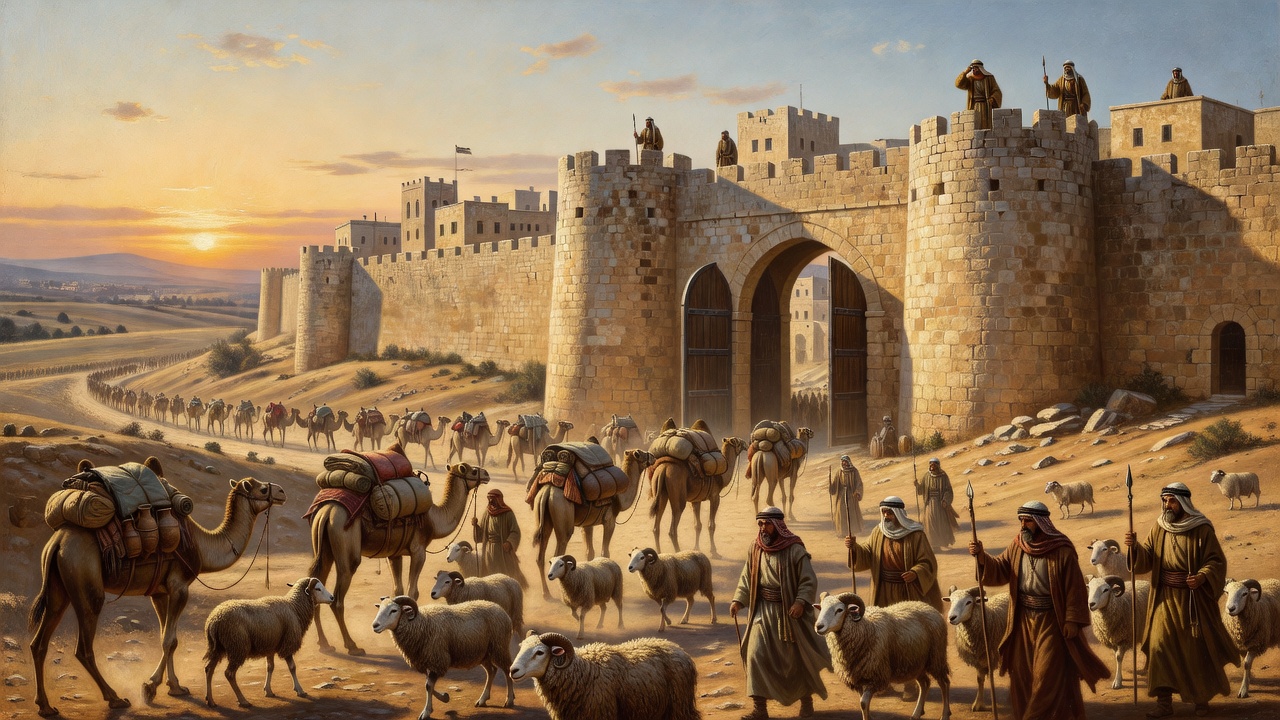
- Sheba was a kingdom in southern Arabia renowned for its ancient trade in gold and spices, while Midian was a nomadic Arabian tribe long engaged in desert commerce. Isaiah 60 envisions these distant peoples arriving on vast camel caravans, bearing gold and frankincense to praise the Lord.Sources: Sheba · Midian · the Bible text itself
- Kedar and Nebaioth trace back in biblical genealogies to the sons of Ishmael, with Kedar designating pastoral nomadic tribes of northwestern Arabia known for their large flocks and black tents. In this prophetic vision, their sheep and rams are brought to Jerusalem to be accepted as offerings upon the altar.Sources: Kedar · Nebajoth · Kedar · the Bible text itself
Notes written with AI assistance from open sources (Theographic Bible Metadata, CC BY-SA 4.0; Easton’s Bible Dictionary, public domain) and reviewed before publishing.
Places in this chapter
- Jerusalem · 31.777, 35.234 · verses 1, 14
- Ephah · Today: Midian · 28.495, 35.012 · verse 6
- Midian · 28.495, 35.012 · verse 6
- Sheba · 15.348, 44.206 · verse 6
- Kedar · 29.811, 39.868 · verse 7
- Lebanon · 33.540, 35.584 · verse 13
- Zion · Today: Jerusalem · 31.777, 35.234 · verse 14
Only places identified with high confidence are shown (90% or more according to the scholarly sources compiled by OpenBible). Period map: DARE (Digital Atlas of the Roman Empire), CC BY 4.0; modern map: © OpenStreetMap contributors; places: OpenBible.info (CC BY 4.0).
Credits and license for this translation
Bibiri Kuyie Nnɑ́ɑǹtì Pɑ́tíri
The Holy Bible in the Ditammari language of Benin
copyright © 2001 SIM International
Language: Ditammari
Translation by: SIM
This translation text is made available to you under the
terms of the Creative Commons License: Attribution-Noncommercial-No Derivative Works.
( http://creativecommons.org/licenses/by-nc-nd/3.0/ )
In addition, you have permission to port the text to different file formats, as long as you
do not change any of the text or punctuation of the Bible.
You may share, copy, distribute, transmit, and extract portions
or quotations from this work, provided that you include the above copyright
information:
You must give Attribution to the work.
You do not sell this work for a profit.
You do not make any derivative works that change any of the actual words or punctuation of the Scriptures.
Permissions beyond the scope of this license may be
available if you contact
us with your request.
This translation is made available to you under the terms of the
Creative Commons Attribution-No Derivatives license 4.0.
You may share and redistribute this Bible translation or extracts from it in any format, provided that:
You include the above copyright and source information.
You do not make any derivative works that change any of the actual words or punctuation of the Scriptures.
Pictures included with Scriptures and other documents on this site are licensed just for use with those Scriptures and documents.
For other uses, please contact the respective copyright owners.
2022-05-31
Source: http://ebible.org/tbzsim/ · eBible.org