2 Samuel 8
Bibiri Kuyie Nnɑ́ɑǹtì Pɑ́tíri · Tap a verse to see its cross-references.
Dɑfiti nɑmɛ̀ ibotí tɛì
1Kɛ̀ Dɑfitii nɑ Fidisitɛ̃ɛ̃bɛ kɛ̀ bɛ̀ɛ ò bɔ̀útɛ́, kɛ tɛ̃́nkɛ í mmɔkɛ muwɛ̃rímú mɑmù dɛ kó kutempɛ̃ mmiɛkɛ. 2Kɛ múnkɛɛ nɑ Moɑbiibɛ, kɛ́ mbɛ̀ tɑ̃ũnko kɛtenkɛ̀, kɛ níí bennɛ́ kuhɔ̃ũ mɛ̀dɛ́mɛ̀ kɛ́kuɔ kɛ́bennɛ́ mɛ̀mɑ́ɑ̀ kɛ́fĩ́ĩ, nkɛ̀ Moɑbiibɛɛ nɑɑ́ nDɑfiti kó bɛtɔ̃mbɛ̀ kɛ́ nhò yietì dɑ̀mpóò. 3Kòo yíɛ́ kɛ́nɑ Adɑdesɛɛ Deɔbu birɛ Tisobɑ kpɑ̀ɑ̀tì kɛ sɔ̃́ nhò dɔ́ kɛ́cɔutɛ́ Efɑdɑti kó kutempɛ̃. 4Kɛ̀ Dɑfitii pĩ́ mbɛsɑ̃ndèèbɛ̀ tɛkɔupíítɛ̀ nɛ̀ sikɔusìyiekɛ̀ (1700) kɛ́pĩ́ mbɛhɑ̃ɑ̃pɔ̀mbɛ̀ sikɔupípísìdɛ́ (20000) kɛ́kékɛ́ sikpɑ̀rìsɛ̃ĩ́ sìì dɛ̀rì sinɑɑsɛ̃ĩ́ si duɔti, kɛ́súɔ́ nhòmɑ́ɑ̀ sikpɑ̀rìsɛ̃ĩ́ nɛ̀ dɛ kó sinɑɑsɛ̃ĩ́ tɛkɔ̀ùtɛ̀ (100). 5Kɛ̀ Sidii kɔbɛ bɛ̀ɛ̀ bo Dɑmɑɑsi kɛ̀ bɛ̀ɛ ítɛ́ní kɛ́tee nhAdɑdesɛɛ Tisobɑ kóo kpɑ̀ɑ̀tì kɔbɛ, kɛ̀ Dɑfitii kuɔ Sidii kɔbɛ sikɔupípísìdɛ́ nɛ̀ sikɔupísìdɛ́ (22000), 6kɛ́tiekɛ Sidii kó kɛtenkɛ̀ kɛ́kɑnnɛ kùmɑ̀ndɑ́ɑ̀bɛ̀ Dɑmɑɑsi ɛì kɛ̀ Sidii kɔbɛ nhò yietì dɑ̀mpóò. Kɛ̀ ti Yiɛ̀ nKuyie nhò duɔ́ mmuwɛ̃rímú kòo nnɔ nho dootitɔbɛ̀ ò kɔ̀rì kɛ̀ɛ̀ bíɛ́kɛ̀ mudoò. 7Kɛ̀ Dɑfitii fietɛ Adɑdesɛɛ ɑ̃ɑ̃pɔ̀mbɛ̀ sɔɔdɔpììtì kɛ́kònnɛ̀ Sedisɑdɛmmu, 8kɛ́túótɛ́ disɔɔwũɔ̃̀ mɛdiɛ̀ ndìì do bo Betɑɑ nɛ̀ Bedotɑi Adɑdesɛɛ kó yɛhɛkɛ̀ miɛkɛ.
9Kɛ̀ Amɑti ɛì kóo kpɑ̀ɑ̀tì Touu keè Dɑfiti nɑmɛ̀ Adɑdesɛɛ ɑ̃ɑ̃pɔ̀mbɛ̀ 10kɛ́tɔ̃nní o birɛ Yodɑmmu kòò bo dɔu nDɑfiti kóò sɑ̃ntɛ ò kɔ̀tɛmɛ̀ mudoò kɛ nɑ Adɑdesɛɛ. Tou dootitɔù múnkɛ do tú weè Adɑdesɛɛ. Kɛ̀ Yodɑmmu nkérí kɛ tɔ disɔɔwũɔ̃̀ nɛ̀ mɛsɔɔ nnɛ̀ timɑ́tì pɛ́ítì bɛ̀ dɔ̀ɔ̀rinɛ̀ tì idíítí dɛ kó tinɛntì kɛ́duɔ́ nDɑfiti. 11Kòo dɛ̀ duɔ́ nti Yiɛ̀ nKuyie nhò do duɔ́ mmɛ̀ɛ̀ botí dɛketirɛ̀ ò do nɑ Sidii kɔbɛ nɛ̀ Mɔɑbiibɛ nɛ̀ Amɔniibɛ nɛ̀ Fidisitɛ̃ɛ̃bɛ kɛ́hɛí dɛ̀, kɛ nɛ́ yíɛ́nɛ̀ ò do nɑ Adɑdesɛɛ kɛ́ɛí dɛ̀. 13Mɛm̀mɛ Dɑfiti yètìrì dɛukɛmɛ̀.
Ò nɑ dìì mɔ̀nnì Sidii kɔbɛ kɛ́konní kɛ́nɑmu Edomiibɛ kubiriku bɛ̀ tu kù Kukɔ́kɛ́biriku ku miɛkɛ kɔbɛ kɛ́kuɔ bɛnìtìbɛ̀ tɛkɔupípíítɛ̀ nɛ̀ sikɔupísìni (18000), 14kɛ́tiekɛ Edɔmmu kɛ́kɑnnɛ kùmɑ̀ndɑ́ɑ̀bɛ̀ kɛ̀ ti Yiɛ̀ nKuyie nhò duɔ́ mmuwɛ̃rímú, kòò kɔ̀tɛ kùù píkù weè nɑ.
Dɑfiti kó bɛtɔ̃mbɛ̀
15Kɛ̀ Dɑfiti mbɑkɛ́ Isidɑyɛɛribɛ bɛmɔu, kɛ́mbekùnɛ̀ bɛnìtìbɛ̀ bɛmɔu kɛ̀ dɛ̀ wenni. 16Kɛ̀ Soɑbu Seduyɑ birɛ mbɑkɛ́ bɛhɑ̃ɑ̃pɔ̀mbɛ̀ kɛ̀ Aidudi birɛ Yosɑfɑti ntú wèè tɔ dihɛì kó yɛpɑ́tɛ. 17Kɛ̀ Aitubu birɛ Sɑdɔki nɛ̀ Abiɑtɑɑ birɛ Aimmɛdɛki kɛ̀ bɛ̀ ntú ikuɔ́ nìùbɛ̀. Kɛ̀ Seduyɑɑ tu opɑ́tíwɑ̃ɑ̃̀tì. 18Kɛ̀ Yoyɑdɑ birɛ Bennɑyɑ mbɑkɛ́ Kedetiibɛ nɛ̀ Pedesiibɛ bɛ̀ɛ̀ bɑ̀ɑ tɛkpɑ̀ɑ̀tìcĩ́ɛ̃̀tɛ̀. Kɛ̀ Dɑfiti bí nhò tũ̀nko.
Did you know?
David's Conquests and Administration
- The phrase Metheg-ammah in 2 Samuel 8:1 literally means "the bridle of the mother city," a figurative expression for conquering a regional capital, which the parallel passage in 1 Chronicles 18:1 identifies as Gath.Sources: Metheg-ammah · the Bible text itself
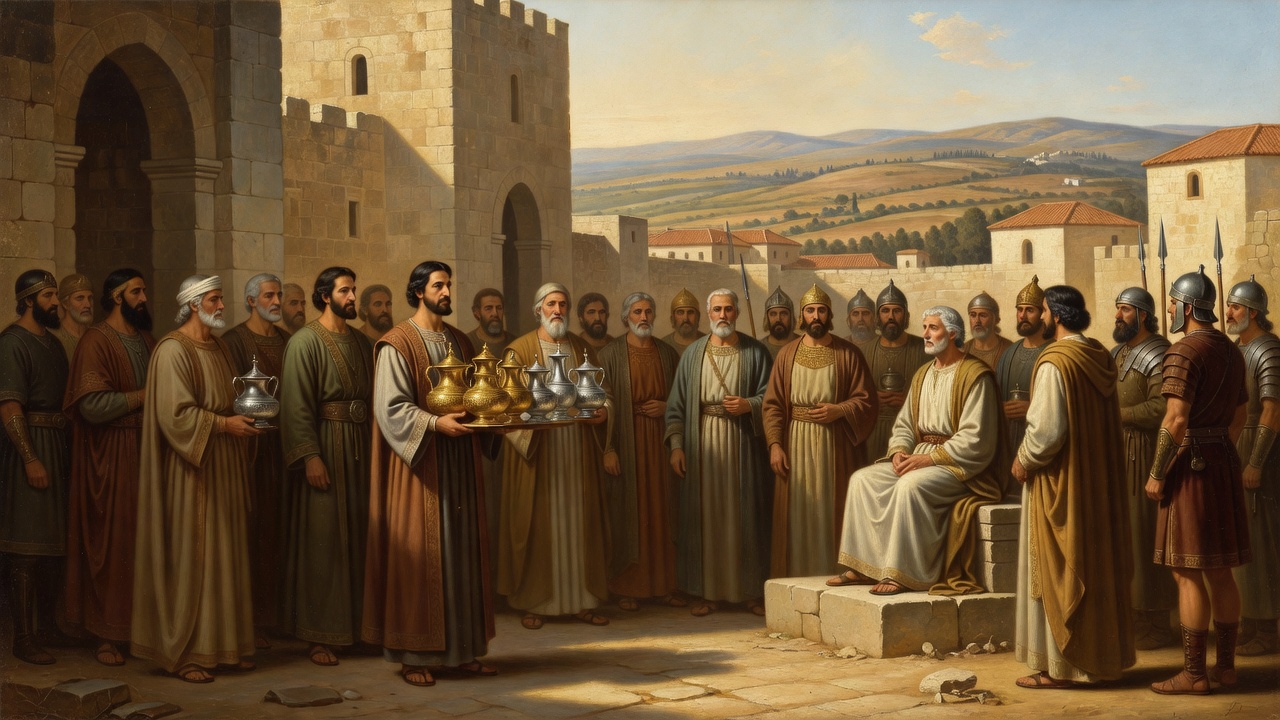
- Hadadezer of Zobah ruled an Aramean kingdom that reached toward the Euphrates River. David's victory over him secured northern territories around Damascus and prompted King Toi of Hamath, a rival of Hadadezer, to send his son Joram with gifts of gold, silver, and bronze.Sources: Zobah · Toi · Joram · the Bible text itself
- The chapter outlines David's organized central government, naming Joab as army commander, Jehoshaphat as recorder, Zadok and Ahimelech as priests, Seraiah as scribe, and Benaiah over the Cherethites and Pelethites.Sources: Joab · the Bible text itself
Notes written with AI assistance from open sources (Theographic Bible Metadata, CC BY-SA 4.0; Easton’s Bible Dictionary, public domain) and reviewed before publishing.
Places in this chapter
- Moab · Today: Moab 1 · 31.181, 35.701 · verses 2, 12
- Euphrates · Today: Euphrates River · 31.004, 47.442 · verse 3
- Zobah · 33.935, 36.151 · verses 3, 5, 12
- Damascus · 33.511, 36.306 · verses 5, 6
- Syria · Today: Aram · 33.511, 36.306 · verse 5
- Aram · 33.511, 36.306 · verse 6
- Jerusalem · 31.777, 35.234 · verse 7
- Hamath · Today: Hama · 35.136, 36.750 · verse 9
- Amalek · 30.648, 34.422 · verse 12
- Ammon · 31.955, 35.934 · verse 12
- Edom · 30.746, 35.604 · verses 12, 13, 14
- Philistia · 31.664, 34.546 · verse 12
Only places identified with high confidence are shown (90% or more according to the scholarly sources compiled by OpenBible). Period map: DARE (Digital Atlas of the Roman Empire), CC BY 4.0; modern map: © OpenStreetMap contributors; places: OpenBible.info (CC BY 4.0).
Credits and license for this translation
Bibiri Kuyie Nnɑ́ɑǹtì Pɑ́tíri
The Holy Bible in the Ditammari language of Benin
copyright © 2001 SIM International
Language: Ditammari
Translation by: SIM
This translation text is made available to you under the
terms of the Creative Commons License: Attribution-Noncommercial-No Derivative Works.
( http://creativecommons.org/licenses/by-nc-nd/3.0/ )
In addition, you have permission to port the text to different file formats, as long as you
do not change any of the text or punctuation of the Bible.
You may share, copy, distribute, transmit, and extract portions
or quotations from this work, provided that you include the above copyright
information:
You must give Attribution to the work.
You do not sell this work for a profit.
You do not make any derivative works that change any of the actual words or punctuation of the Scriptures.
Permissions beyond the scope of this license may be
available if you contact
us with your request.
This translation is made available to you under the terms of the
Creative Commons Attribution-No Derivatives license 4.0.
You may share and redistribute this Bible translation or extracts from it in any format, provided that:
You include the above copyright and source information.
You do not make any derivative works that change any of the actual words or punctuation of the Scriptures.
Pictures included with Scriptures and other documents on this site are licensed just for use with those Scriptures and documents.
For other uses, please contact the respective copyright owners.
2022-05-31
Source: http://ebible.org/tbzsim/ · eBible.org