Numbers 19
Versión Biblia Libre · Tap a verse to see its cross-references.
La vaca alazana
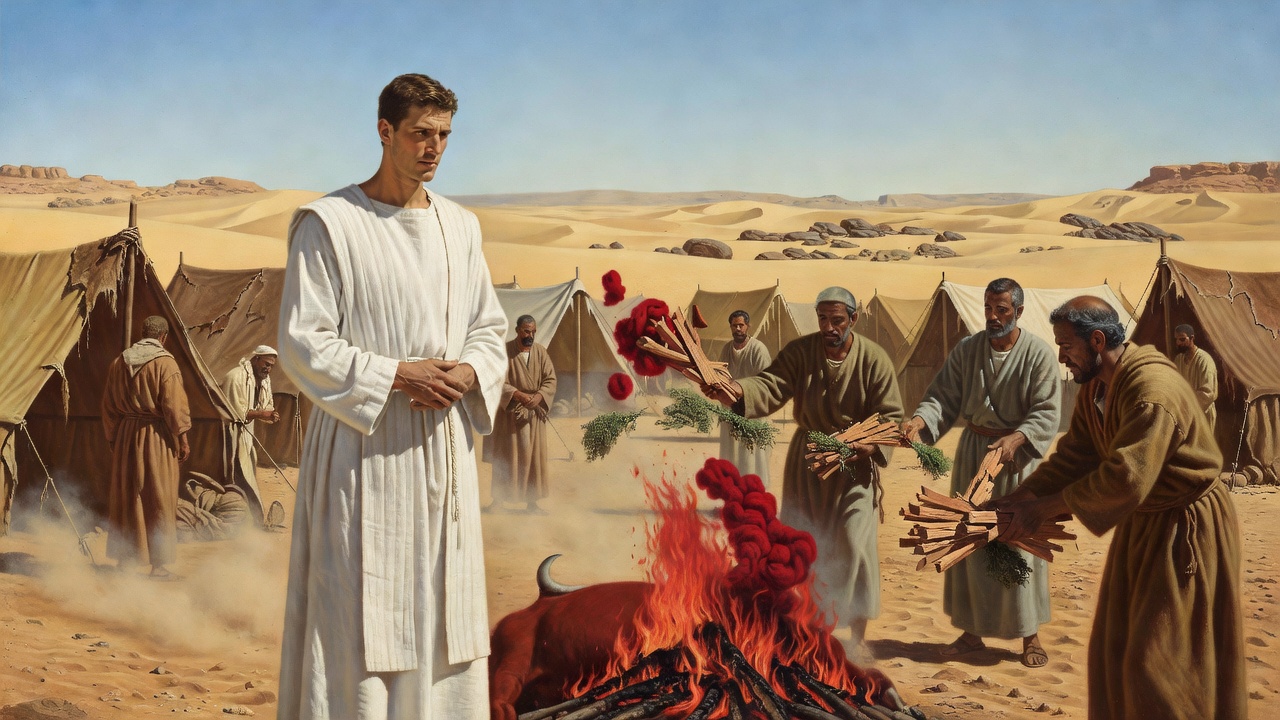
1El Señor le dijo a Moisés y Aarón: 2“Esta es una norma que el Señor ha ordenado, diciendo, Dile a los israelitas que te traigan una vaca roja sin defectos, que nunca haya sido uncida. 3Entrégasela al sacerdote Eleazar, y él la llevará fuera del campamento y la mandará a masacrar. 4El sacerdote Eleazar pondrá un poco de su sangre en su dedo y la rociará siete veces hacia la entrada del Tabernáculo de Reunión. 5Luego la vaca debe ser quemada mientras él observa. Todo debe ser quemado: su piel, carne y sangre, así como sus excrementos. 6El sacerdote arrojará madera de cedro, hisopo e hilo carmesí sobre la vaca en llamas.
7“Entonces el sacerdote lavará sus ropas y su cuerpo en agua, y después podrá entrar en el campamento, pero permanecerá impuro hasta la noche. 8La persona que quemó la vaca también lavará sus ropas y su cuerpo en agua, y él también permanecerá impuro hasta la noche.
9“El que esté limpio recogerá las cenizas de la vaca y las guardará en un lugar limpio fuera del campamento. Las guardarán los israelitas para preparar el agua de purificación que sirve para purificar del pecado. 10El hombre que recogió las cenizas de la vaca lavará también sus ropas, y permanecerá impuro hasta la noche. Esta es una regla permanente para los israelitas y para el extranjero que vive con ellos.
Purificación de los inmundos
11“Si tocas un cadáver serás impuro durante siete días. 12Debes purificarte con el agua de la purificación al tercer día y al séptimo día, y entonces estarás limpio. Pero si no te purificas en el tercer y séptimo día, no estarás limpio. 13Si tocas un cadáver y no te purificas, harás impuro el Tabernáculo del Señor y deberás ser expulsado de Israel. Sigues siendo impuro porque no se te ha rociado con el agua de la purificación y tu impureza permanece.
14“La siguiente norma se aplica cuando una persona muere en una tienda. Todo el que entre en la tienda y todo el que ya esté en ella será impuro durante siete días. 15Cualquier recipiente abierto que no tenga una tapa cerrada es impuro. 16Si estás al aire libre y tocas a alguien que ha muerto por la espada o que ha muerto de forma natural, o si tocas un hueso humano o una tumba, entonces serás impuro durante siete días.
17“Este es el proceso para la purificación si eres impuro. Toma algunas de las cenizas del holocausto para la purificación y ponlas en un frasco con agua fresca. 18El hombre que esté limpio tomará un hisopo y lo mojará en el agua. Luego rociará la tienda y todo lo que haya dentro de ella, y a todos los que estuvieran allí. También deberá rociarlo a usted si ha tocado un hueso, o una tumba, o alguien que ha muerto o ha sido asesinado.
19“El hombre que está limpio debe rociarte tanto al tercer día como al séptimo día. Después de que te purifiques al séptimo día, debes lavar tu ropa y a ti mismo en agua, y esa noche estarás limpio. 20Pero si no te purificas, serás expulsado de los israelitas, porque has hecho impuro el Tabernáculo del Señor. El agua de la purificación no ha sido rociada sobre ti, y sigues siendo impuro. 21Esta es una regla permanente para todos. El hombre que rocía el agua de purificación debe lavar su ropa, y cualquiera que toque el agua de purificación será impuro hasta la noche. 22Todo lo que toque la persona impura será impuro, y cualquiera que lo toque será impuro hasta la noche”.
Did you know?
The Red Heifer and Purification from Death
- Unlike typical sacrifices offered at the tabernacle altar, the unblemished red heifer that had never worn a yoke was taken outside the camp. There it was slaughtered in the presence of the priest Eleazar and burned whole along with cedar wood, hyssop, and scarlet wool.Sources: the Bible text itself · Eleazar
- The ashes of the heifer were stored outside the camp to prepare the water of purification. Paradoxically, while this mixture purified individuals who were defiled by death, everyone who handled the burning heifer, gathered its ashes, or sprinkled the water became temporarily unclean until evening.Sources: the Bible text itself
- Contact with a corpse, a human bone, a grave, or merely being inside a tent where someone died caused seven days of ceremonial uncleanness. To be restored, the person had to be sprinkled with the purification water on the third and seventh days and wash their clothes and body.Sources: the Bible text itself
Notes written with AI assistance from open sources (Theographic Bible Metadata, CC BY-SA 4.0; Easton’s Bible Dictionary, public domain) and reviewed before publishing.
Credits and license for this translation
Versión Biblia Libre
The Holy Bible in Spanish, Free Bible Version
Versión Biblia Libre, Nuevo Testamento
copyright © 2018-2020 Jonathan Gallagher y Shelly Barrios de Avila
Language: Español (Spanish)
Translation by: Jonathan Gallagher y Shelly Barrios de Avila
Contributor: Gustavo Sanabria y Rebekah Põldaas
This translation is made available to you under the terms of the
Creative Commons Attribution Share-Alike license 4.0.
You have permission to share and redistribute this Bible translation in any format and to make reasonable revisions and adaptations of this translation, provided that:
You include the above copyright and source information.
If you make any changes to the text, you must indicate that you did so in a way that makes it clear that the original licensor is not necessarily endorsing your changes.
If you redistribute this text, you must distribute your contributions under the same license as the original.
Pictures included with Scriptures and other documents on this site are licensed just for use with those Scriptures and documents.
For other uses, please contact the respective copyright owners.
Note that in addition to the rules above, revising and adapting God's Word involves a great responsibility to be true to God's Word. See Revelation 22:18-19.
2026-10-02
Section headings adapted from the Berean Standard Bible (public domain); they are not part of this translation’s text.
Source: http://ebible.org/spavbl/ · eBible.org