Numbers 1
Versión Biblia Libre · Tap a verse to see its cross-references.
About this book
About Numbers
- Numbers is the fourth book of the Pentateuch. In Hebrew it is called be-midbar, “in the wilderness”; the Greek Septuagint called it Numbers, the name still usual, because it records a census in the wilderness of Sinai and a later census on the plain of Moab.Sources: Easton: Numbers, Book of
- Easton's Bible Dictionary (1897) presents Numbers, like the other books of the Pentateuch, as written by Moses. The history it contains runs from the second month of the second year after the Exodus to the beginning of the eleventh month of the fortieth year, about thirty-eight years and ten months.Sources: Easton: Numbers, Book of
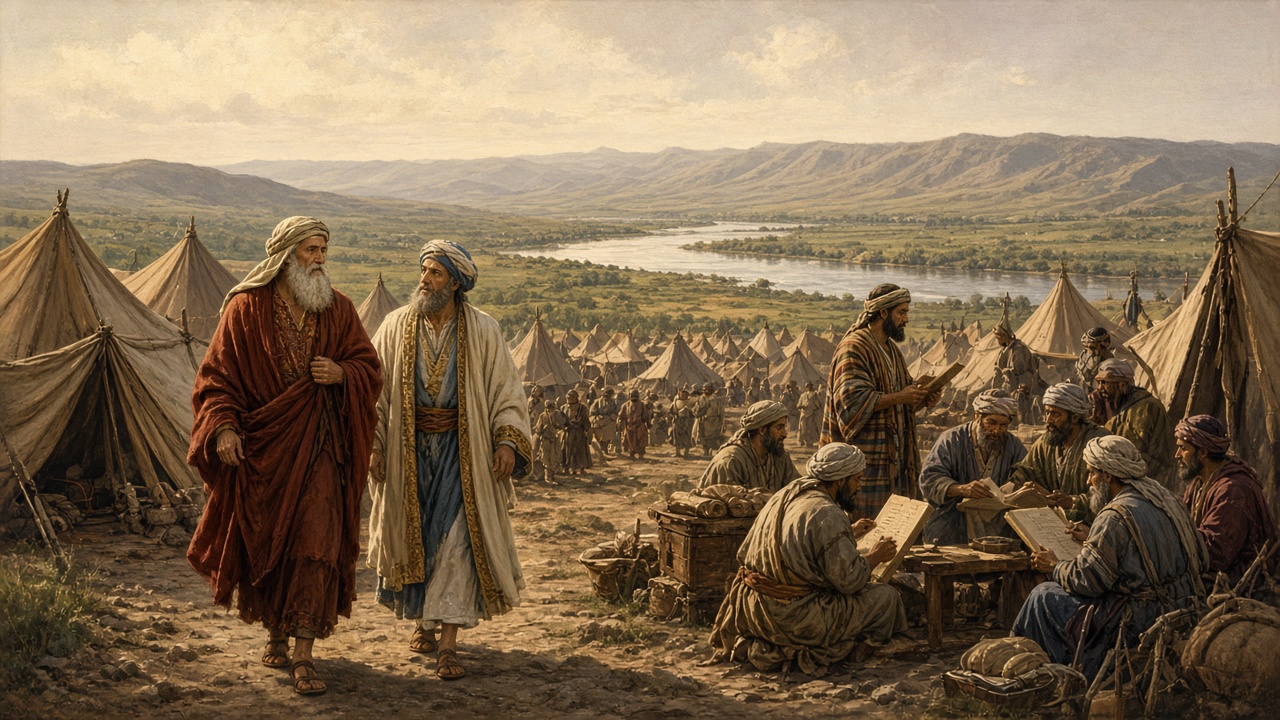
- The narrative begins at Sinai, the mountain district Israel reached in the third month after the Exodus and where they camped for about a year, and follows their route and encampments through the wilderness. It ends on the plains of Moab, east of the Jordan and the Dead Sea, opposite Jericho, their last camp before entering Canaan, the country west of the Jordan. Easton describes those years as a time of wandering in which that generation died in the wilderness, and notes that the people were fewer then than when they left Egypt.Sources: Easton: Numbers, Book of · Sinai · Moab · Canaan
- Easton divides the book into three parts: the census at Sinai and preparations to resume the march, including the Nazirite vow (1–10:10); the journey from Sinai to Moab, the sending of the spies and the report they brought back, and the people’s murmurings, eight times, at the hardships of the way (10:11–21:20); and the events on the plain of Moab before the crossing of the Jordan (21:21–36).Sources: Easton: Numbers, Book of
- While Israel was camped on the plains of Moab, Balak, son of Zippor and king of Moab, fearing them, sent to Pethor in Mesopotamia for Balaam, son of Beor, to curse them; the narrative says Balaam was unable to do so. Numbers 21:14 also cites “the book of the wars of the Lord,” a work that Easton says is uncertain, perhaps a lost writing of Israel or an Amorite record of the victories of their king Sihon.Sources: Easton: Numbers, Book of · Balaam · Balak
Notes written with AI assistance from open sources (Theographic Bible Metadata, CC BY-SA 4.0; Easton’s Bible Dictionary, public domain) and reviewed before publishing.
El primer censo de Israel
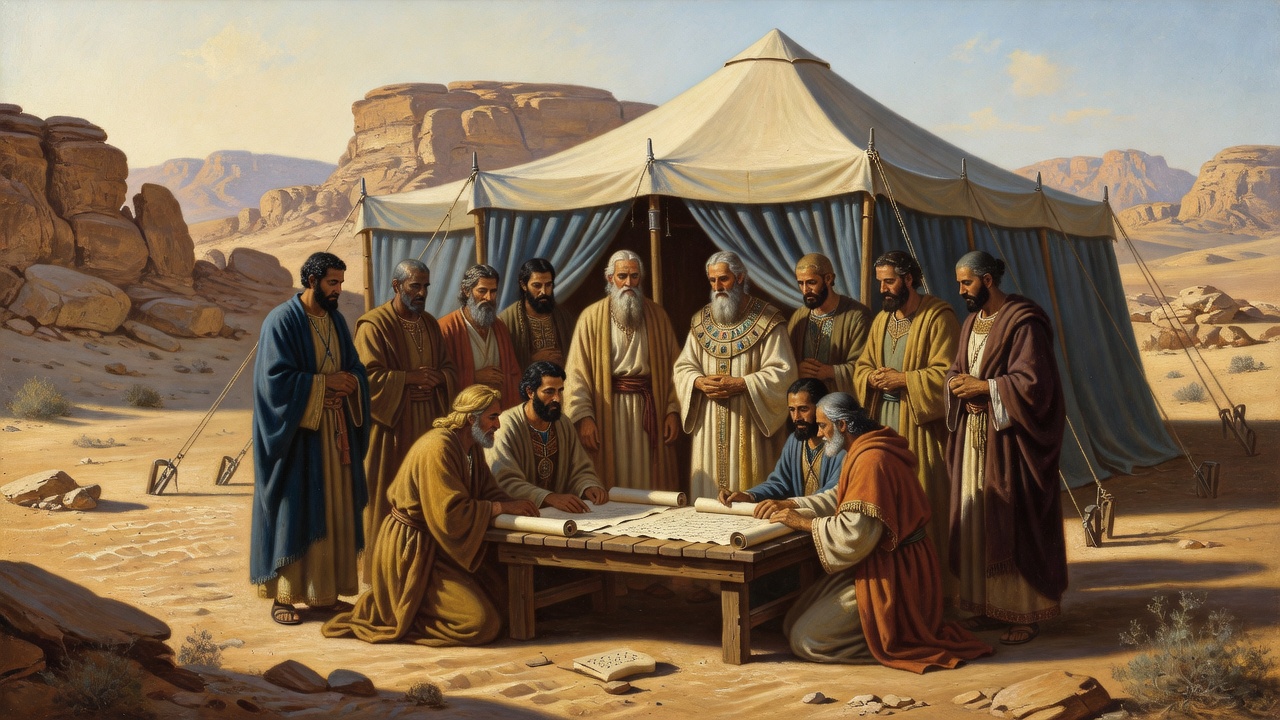
1El Señor le habló a Moisés en el Tabernáculo de Reunión mientras estaban en el desierto del Sinaí. Esto fue el primer día del segundo mes, dos años después de que los israelitas salieran de Egipto. Le dijo: 2“Censen a todos los israelitas según su tribu y su familia. Cuenten a cada hombre y mantengan un registro del nombre de cada uno. 3Tú y Aarón deberán registrar a todos los mayores de veinte años que sean aptos para prestar el servicio militar según sus divisiones en el ejército israelita. 4Para ayudarlos habrá estar con ustedes un representante de cada tribu, que es el jefe de cada familia:
Los jefes de las tribus
5“Estos son los nombres de los hombres que trabajarán con ustedes: De la tribu de Rubén, Elisur, hijo de Sedeur; 6de la tribu de Simeón, Selumiel, hijo de Zurisadai; 7de la tribu de Judá, Naasón, hijo de Aminadab; 8de la tribu de Isacar, Nataanel, hijo de Zuar; 9de la tribu de Zabulón, Eliab, hijo de Helón; 10de los hijos de José: de la tribu de Efraín, Elisama, hijo de Amihud; y de la tribu de Manasés, Gamaliel, hijo de Pedasur; 11de la tribu de Benjamín, Abidán, hijo de Gedeoni; 12de la tribu de Dan, Ajiezer, hijo de Amisadai; 13de la tribu de Aser, Pagiel, hijo de Ocrán; 14de la tribu de Gad, Eliasaf, hijo de Deuel; 15y de la tribu de Neftalí, Ahira, hijo de Enán”.
16Estos fueron los hombres elegidos de la comunidad israelita. Eran los jefes de las tribus de sus padres; los jefes de las familias de Israel.
El número de cada tribu
17Moisés y Aarón convocaron a estos hombres que habían sido seleccionados por nombre. 18Hicieron que todos los israelitas se reunieran el primer día del segundo mes, y registraron la genealogía del pueblo según su tribu y familia, y contaron los nombres de todos los que tenían veinte años o más, 19como el Señor le había dicho a Moisés que hiciera. Moisés llevó a cabo este censo en el desierto del Sinaí.
20Los descendientes de Rubén, (que era el hijo primogénito de Israel), hombres de veinte años o más, fueron registrados por nombre según los registros genealógicos de su tribu y familias. Y todos los hombres registrados que estaban aptos para servir en el ejército 21n la tribu de Rubén sumaron 46.500.
22Los descendientes de Simeón, hombres de veinte años o más, fueron registrados por nombre según los registros genealógicos de su tribu y sus familias. Todos hombres registrados que estaban aptos para servir en el ejército, 23de la tribu de Simeón, sumaron 59.300.
24Los descendientes de Gad, hombres de veinte años o más, fueron registrados por nombre según los registros genealógicos de su tribu y sus familias. Todos los hombres registrados que estaban aptos para servir en el ejército, 25de la tribu de Gad, sumaron 45.650.
26Los descendientes de Judá, hombres de veinte años o más, fueron registrados por nombre según los registros genealógicos de su tribu y sus familias. Todos los hombres inscritos, que estaban aptos para servir en el ejército, 27de la tribu de Judá, sumaron 74.600.
28Los descendientes de Isacar, hombres de veinte años o más, fueron registrados por nombre según los registros genealógicos de su tribu y sus familias. Todos los hombres inscritos que eran aptos para servir en el ejército, 29de la tribu de Isacar, sumaron 54.400.
30Los descendientes de Zabulón, hombres de veinte años o más, fueron registrados por nombre según los registros genealógicos de su tribu y sus familias. Todos los hombres inscritos que estaban aptos para servir en el ejército, 31de la tribu de Zabulón, sumaron 57.400.
32Los descendientes de José: los descendientes de Efraín, hombres de veinte años o más, fueron registrados por nombre según los registros genealógicos de su tribu y sus familias. Todos los hombres registrados que estaban aptos para servir en el ejército 33de la tribu de Efraín, sumaron 40.500.
34Y los descendientes de Manasés, hombres de veinte años o más, fueron registrados por nombre según los registros genealógicos de su tribu y sus familias. Todos los hombres registrados que estaban aptos para servir en el ejército 35de la tribu de Manasés, sumaron 32.200.
36Los descendientes de Benjamín, hombres de veinte años o más, fueron registrados por nombre según los registros genealógicos de su tribu y sus familias. Todos los hombres registrados que estaban aptos para servir en el ejército, 37de la tribu de Benjamín, totalizaban 35.400.
38Los descendientes de Dan, hombres de veinte años o más, fueron registrados por nombre según los registros genealógicos de su tribu y sus familias. Todos los hombres registrados que estaban aptos para servir en el ejército, 39de la tribu de Dan, sumaron 62.700.
40Los descendientes de Aser, hombres de veinte años o más, fueron registrados por nombre según los registros genealógicos de su tribu y sus familias. Todos los hombres inscritos que estaban aptos para servir en el ejército, 41de la tribu de Aser, sumaron 41.500.
42Los descendientes de Neftalí, hombres de veinte años o más, fueron registrados por nombre según los registros genealógicos de su tribu y sus familias. Todos los hombres inscritos que estaban aptos para servir en el ejército, 43de la tribu de Neftalí, sumaron 53.400.
44Estos fueron los totales de los hombres contados y registrados por Moisés y Aarón, con la ayuda de los doce líderes de Israel, que representaban cada uno a su familia. 45De esta manera, todos los hombres israelitas de veinte años o más que pudieron servir en el ejército de Israel fueron registrados según sus familias. 46La suma total de los registrados fue de 603.550.
La exención de los levitas
47Sin embargo, los levitas no estaban registrados con los demás según su tribu y sus familias. 48Esto se debió a que el Señor le había dicho a Moisés: 49“No registres la tribu de Leví, ni los cuentes en el censo con los otros israelitas. 50Pon a los levitas a cargo del Tabernáculo y del Testimonio, así como de todo su mobiliario y de todo lo que hay en él. Ellos serán los responsables de llevar el Tabernáculo y todos sus artículos. Deben cuidarlo, y hacer su campamento alrededor de él. 51Cuando llegue el momento de trasladar el Tabernáculo, los levitas lo bajarán, y cuando llegue el momento de acampar, los levitas lo levantarán. Cualquier forastero que se acerque al Tabernáculo debe ser condenado a muerte. 52Los israelitas acamparán por tribus, cada uno estará en su propio campamento, bajo su propia bandera. 53Pero los levitas deben levantar su campamento alrededor del Tabernáculo del Testimonio para evitar que alguien me haga enojar con los israelitas. Los levitas son responsables de cuidar el Tabernáculo del Testimonio”.
54Los israelitas hicieron todo lo que el Señor les ordenó a través de Moisés.
Did you know?
The Census in the Wilderness of Sinai
- The census was ordered in the Wilderness of Sinai on the first day of the second month in the second year after the Israelites departed Egypt. It counted every male aged twenty or older who was able to serve in the army, arriving at a total of 603,550 fighting men.Sources: the Bible text itself · Sinai
- Moses and Aaron conducted the registration alongside twelve appointed tribal leaders. Joseph was represented as two distinct tribal divisions named after his sons, Ephraim and Manasseh.Sources: the Bible text itself · Ephraim · Manasseh (son of Joseph)
- The tribe of Levi was entirely exempted from the military count. Instead, the Levites were assigned exclusively to care for, transport, assemble, and guard the tabernacle of the Testimony and its furnishings.Sources: the Bible text itself
Notes written with AI assistance from open sources (Theographic Bible Metadata, CC BY-SA 4.0; Easton’s Bible Dictionary, public domain) and reviewed before publishing.
Places in this chapter
- Egypt · 30.129, 31.308 · verse 1
- Wilderness of Sinai · Today: about 50 km around Jebel Musa · 28.540, 33.973 · verses 1, 19
Only places identified with high confidence are shown (90% or more according to the scholarly sources compiled by OpenBible). Period map: DARE (Digital Atlas of the Roman Empire), CC BY 4.0; modern map: © OpenStreetMap contributors; places: OpenBible.info (CC BY 4.0).
Credits and license for this translation
Versión Biblia Libre
The Holy Bible in Spanish, Free Bible Version
Versión Biblia Libre, Nuevo Testamento
copyright © 2018-2020 Jonathan Gallagher y Shelly Barrios de Avila
Language: Español (Spanish)
Translation by: Jonathan Gallagher y Shelly Barrios de Avila
Contributor: Gustavo Sanabria y Rebekah Põldaas
This translation is made available to you under the terms of the
Creative Commons Attribution Share-Alike license 4.0.
You have permission to share and redistribute this Bible translation in any format and to make reasonable revisions and adaptations of this translation, provided that:
You include the above copyright and source information.
If you make any changes to the text, you must indicate that you did so in a way that makes it clear that the original licensor is not necessarily endorsing your changes.
If you redistribute this text, you must distribute your contributions under the same license as the original.
Pictures included with Scriptures and other documents on this site are licensed just for use with those Scriptures and documents.
For other uses, please contact the respective copyright owners.
Note that in addition to the rules above, revising and adapting God's Word involves a great responsibility to be true to God's Word. See Revelation 22:18-19.
2026-10-02
Section headings adapted from the Berean Standard Bible (public domain); they are not part of this translation’s text.
Source: http://ebible.org/spavbl/ · eBible.org