Job 18
Versión Biblia Libre · Tap a verse to see its cross-references.
Bildad: Dios castiga al malvado
1Entonces Bildad, el suhita, tomó la palabra y dijo: 2“¿Hasta cuándo seguirás hablando, buscando las palabras adecuadas que decir? ¡Habla con sentido común si quieres que te respondamos! 3¿Crees que somos animales tontos? ¿Te parecemos estúpidos? 4Te destrozas con tu ira. ¿Crees que la tierra tiene que ser abandonada, o que las montañas deben moverse sólo por ti?
5“Es cierto que la vida de los malvados terminará como una lámpara que se apaga: su llama no brillará más. 6La luz de su casa se apaga, la lámpara que cuelga arriba se apaga. 7En lugar de dar pasos firmes, tropiezan, y sus propios planes los hacen caer. 8Sus propios pies los hacen tropezar y quedan atrapados en una red; mientras caminan caen en un pozo. 9Una trampa los agarra por el talón; un lazo los rodea. 10Un lazo se esconde en el suelo para ellos; una cuerda se extiende a través del camino para hacerlos tropezar. 11El terror asusta a los malvados, los persigue por todas partes, les muerde los talones. 12El hambre les quita las fuerzas; el desastre los espera cuando caen. 13La enfermedad devora su piel; la enfermedad mortal consume sus miembros. 14Son arrancados de los hogares en los que confiaban y llevados al rey de los terrores. 15La gente que no conoce vivirá en sus casas; el azufre se esparcirá donde solían vivir. 16Se marchitan, las raíces abajo y las ramas arriba; 17el recuerdo de ellos se desvanece de la tierra; nadie recuerda ya sus nombres. 18Son arrojados de la luz a las tinieblas, expulsados del mundo. 19No tienen hijos ni descendientes en su pueblo, ni supervivientes donde solían vivir. 20La gente de occidente está horrorizada por lo que les sucede. La gente del oriente está conmocionada. 21Esto es lo que ocurre con las casas de los malvados, con los lugares de los que rechazan a Dios”.
Did you know?
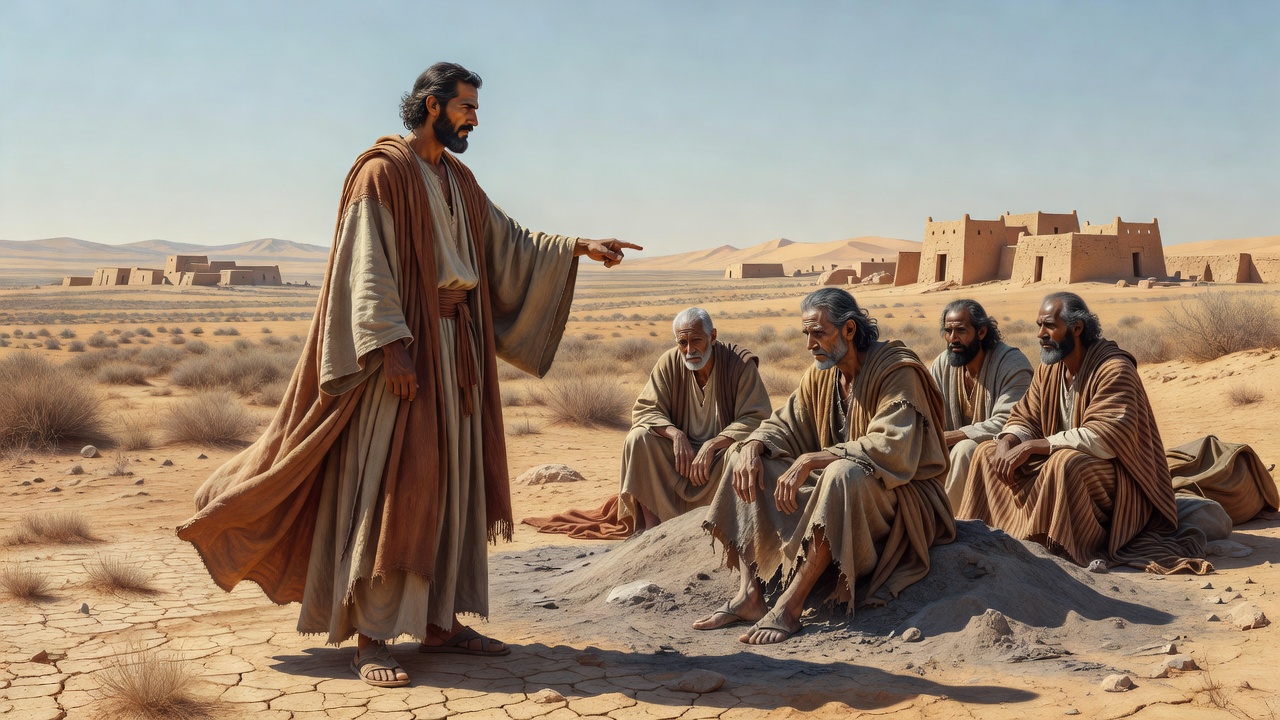
Bildad's Second Speech on the Fate of the Wicked
- Bildad is identified as a Shuhite, a designation traditionally linked to Shuah, a region in Arabia associated with the descendants of Abraham and Keturah. In this second speech to Job, Bildad maintains a stern and severe tone as he rebukes Job and insists on the certain doom of the ungodly.Sources: Bildad · the Bible text itself
- To describe the destruction awaiting the wicked, Bildad draws heavily on ancient hunting imagery. He depicts their downfall through metaphors of hidden nooses, concealed ground snares, and sweeping nets that trap the wanderer.Sources: the Bible text itself
Notes written with AI assistance from open sources (Theographic Bible Metadata, CC BY-SA 4.0; Easton’s Bible Dictionary, public domain) and reviewed before publishing.
Credits and license for this translation
Versión Biblia Libre
The Holy Bible in Spanish, Free Bible Version
Versión Biblia Libre, Nuevo Testamento
copyright © 2018-2020 Jonathan Gallagher y Shelly Barrios de Avila
Language: Español (Spanish)
Translation by: Jonathan Gallagher y Shelly Barrios de Avila
Contributor: Gustavo Sanabria y Rebekah Põldaas
This translation is made available to you under the terms of the
Creative Commons Attribution Share-Alike license 4.0.
You have permission to share and redistribute this Bible translation in any format and to make reasonable revisions and adaptations of this translation, provided that:
You include the above copyright and source information.
If you make any changes to the text, you must indicate that you did so in a way that makes it clear that the original licensor is not necessarily endorsing your changes.
If you redistribute this text, you must distribute your contributions under the same license as the original.
Pictures included with Scriptures and other documents on this site are licensed just for use with those Scriptures and documents.
For other uses, please contact the respective copyright owners.
Note that in addition to the rules above, revising and adapting God's Word involves a great responsibility to be true to God's Word. See Revelation 22:18-19.
2026-10-02
Section headings adapted from the Berean Standard Bible (public domain); they are not part of this translation’s text.
Source: http://ebible.org/spavbl/ · eBible.org