Deuteronomy 20
Versión Biblia Libre · Tap a verse to see its cross-references.
Leyes sobre la guerra
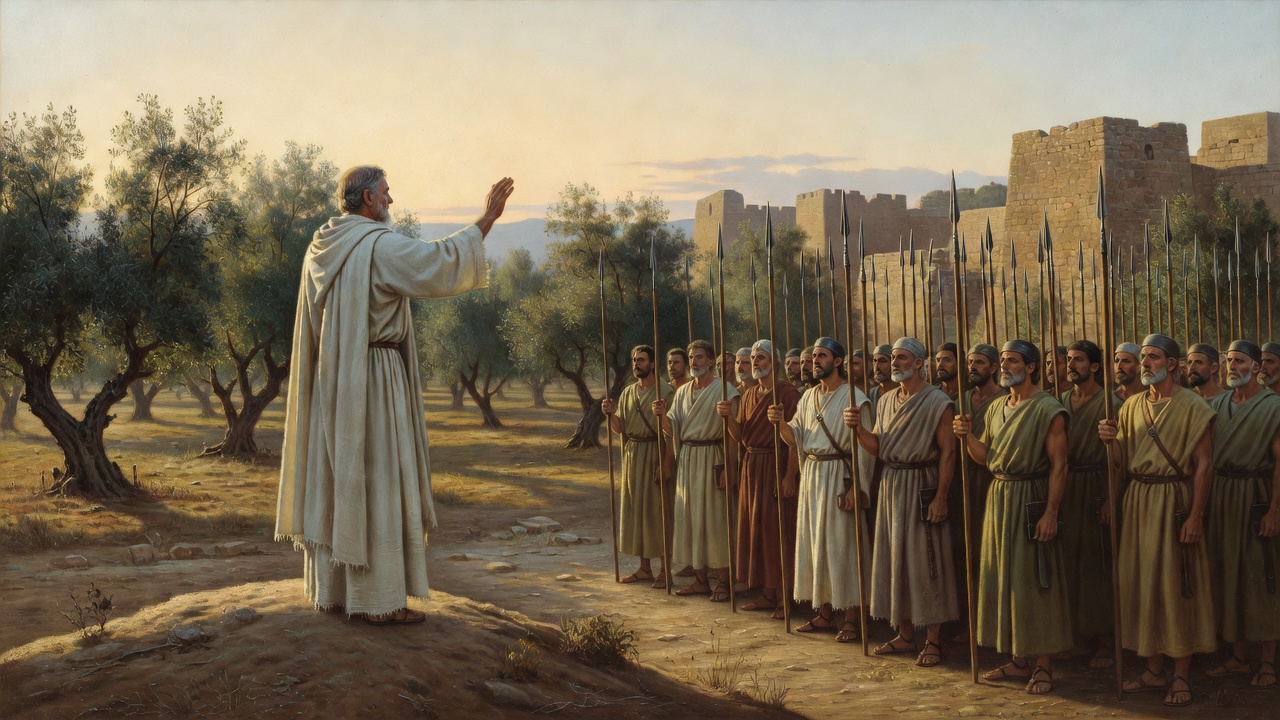
1Cuando vayas a la guerra contra tus enemigos y veas caballos, carros, y un ejército más grande que el tuyo, no les tengas miedo, porque el Señor tu Dios que te sacó de Egipto está contigo. 2Antes de ir a la batalla, el sacerdote vendrá y hablará con el ejército. 3Les dirá: “¡Escuchen, hombres de Israel! Hoy van a luchar contra sus enemigos. No se pongan nerviosos ni tengan miedo; no se dejen llevar por el pánico ni tengan temor de ellos. 4Porque el Señor su Dios va con ustedes y luchará por ustedes contra sus enemigos, y les dará la victoria”.
5Los oficiales también hablarán al ejército y les dirán: “¿Hay alguien aquí que haya construido una casa nueva y no la haya dedicado al Señor? Puede irse a casa, de lo contrario podría morir en la batalla y otro hombre la dedicará. 6¿Hay algún hombre aquí que haya plantado un viñedo y aún no haya disfrutado de su fruto? Puede irse a casa, de lo contrario podría morir en la batalla y otro hombre disfrutará de su fruto. 7¿Hay algún hombre aquí que esté comprometido con una mujer y no se haya casado con ella? Puede irse a casa, de lo contrario podría morir en la batalla y otro hombre se casará con ella”.
8Los oficiales también deben decir al ejército: “¿Hay algún hombre aquí que tenga miedo o esté nervioso? Puede irse a casa, así no afectará a sus compañeros ni los hará tener miedo como él mismo”.
9Cuando los oficiales terminen de hablar con el ejército, se les pondrá a cargo como dirigentes de la batalla.
10Cuando se llega a un pueblo, listo para atacarlo, primero se debe hacer una oferta de paz a las personas que viven allí. 11Si aceptan tu oferta de paz y te abren las puertas, todos los habitantes se convertirán en tus trabajadores esclavos.
12Sin embargo, si se niegan a hacer la paz con ustedes y deciden luchar contra ustedes, entonces asedien la ciudad. 13Una vez que el Señor tu Dios te lo haya entregado, mata a todo varón con la espada. 14Pero puedes tomar como botín a las mujeres, los niños, el ganado y todo lo demás que haya de la ciudad. Puedes tomar y usar todas las posesiones de tus enemigos que el Señor tu Dios te dé. 15De esta manera te ocuparás de todos los pueblos que estén lejos de ti y no pertenezcan a las naciones vecinas.
16Sin embargo, cuando se trate de los pueblos de las naciones cuya tierra el Señor tu Dios te da para que la ocupes, no dejes nada vivo que respire. 17Sepáralas para su completa destrucción: hititas, amorreos, cananeos, ferezeos, heveos y jebuseos, como te ha ordenado el Señor tu Dios. 18Esto es para evitar que te enseñen todas las cosas ofensivas que hacen al adorar a sus dioses, y al hacerlo te hagan pecar contra el Señor tu Dios.
19Ahora bien, cuando sities una ciudad y ésta dure mucho tiempo mientras luchas por capturarla, no destruyas los árboles frutales que hay en ella. Puedes comer sus frutos. No los corten. ¿Acaso los árboles del huerto son seres humanos que también deberías atacar? 20Sin embargo, puedes destruir los árboles que sabes que no son frutales. Puedes usarlos para construir un equipamiento de guerra para atacar el pueblo que está luchando contra ti hasta que caiga.
Did you know?
Laws Concerning Warfare
- Before entering combat, Israelite officers announced specific exemptions from military duty, releasing men who had built a house not yet dedicated, planted a vineyard not yet harvested, become engaged to be married, or felt afraid.Sources: the Bible text itself
- The law established different warfare policies for distant cities compared to cities within the Promised Land; distant cities were first offered terms of peace, whereas the inhabitants of nearby nations were marked for complete destruction to avoid idolatry.Sources: the Bible text itself
- During long sieges, Israelite forces were forbidden from cutting down fruit-bearing trees to construct siege works, limiting their timber harvesting only to trees known not to produce food.Sources: the Bible text itself
Notes written with AI assistance from open sources (Theographic Bible Metadata, CC BY-SA 4.0; Easton’s Bible Dictionary, public domain) and reviewed before publishing.
Places in this chapter
- Egypt · 30.129, 31.308 · verse 1
Only places identified with high confidence are shown (90% or more according to the scholarly sources compiled by OpenBible). Period map: DARE (Digital Atlas of the Roman Empire), CC BY 4.0; modern map: © OpenStreetMap contributors; places: OpenBible.info (CC BY 4.0).
Credits and license for this translation
Versión Biblia Libre
The Holy Bible in Spanish, Free Bible Version
Versión Biblia Libre, Nuevo Testamento
copyright © 2018-2020 Jonathan Gallagher y Shelly Barrios de Avila
Language: Español (Spanish)
Translation by: Jonathan Gallagher y Shelly Barrios de Avila
Contributor: Gustavo Sanabria y Rebekah Põldaas
This translation is made available to you under the terms of the
Creative Commons Attribution Share-Alike license 4.0.
You have permission to share and redistribute this Bible translation in any format and to make reasonable revisions and adaptations of this translation, provided that:
You include the above copyright and source information.
If you make any changes to the text, you must indicate that you did so in a way that makes it clear that the original licensor is not necessarily endorsing your changes.
If you redistribute this text, you must distribute your contributions under the same license as the original.
Pictures included with Scriptures and other documents on this site are licensed just for use with those Scriptures and documents.
For other uses, please contact the respective copyright owners.
Note that in addition to the rules above, revising and adapting God's Word involves a great responsibility to be true to God's Word. See Revelation 22:18-19.
2026-10-02
Section headings adapted from the Berean Standard Bible (public domain); they are not part of this translation’s text.
Source: http://ebible.org/spavbl/ · eBible.org