Deuteronomy 14
Versión Biblia Libre · Tap a verse to see its cross-references.
Animales puros e impuros
1Ustedes son los hijos del Señor su Dios. No se mutilen ni se afeiten la frente como hacen los paganos cuando lloran a los muertos, 2porque ustedes son un pueblo santo que pertenece al Señor su Dios. El Señor los eligió como su pueblo especial entre todas las naciones de la tierra.
3No deberán comer nada repulsivo. 4Estos son los animales que podrás comer: ganado vacuno, ovejas, cabras, 5ciervos, gacelas, cabras salvajes, antílopes y ovejas de monte. 6Puedes comer cualquier animal que tenga la pezuña dividida y que también mastique el bolo alimenticio. 7Pero no puedes comer de aquellos que, o bien mastican el bolo alimenticio, o tienen la pezuña dividida. Esto incluye: camellos, conejos y damanes de las rocas. Aunque mastiquen el bolo alimenticio, no tienen la pezuña dividida. Debes tratarlos como inmundos. 8Lo mismo se aplica al cerdo. Aunque tenga una pezuña dividida, no mastica el bolo alimenticio. Así que debes tratarlo como inmundo. No debes comer su carne ni tocar su cuerpo muerto.
9Cuando se trata de criaturas que viven en el agua, se permite comer cualquier cosa que tenga aletas y escamas. 10Pero no debes comer nada que no tenga aletas y escamas. Debes tratarlos como inmundos. 11Está permitido comer cualquier ave limpia. 12Pero no debes comer lo siguiente: águila, buitre leonado, quebranta huesos, 13ratonero, milanos, cualquier clase de halcón, 14cualquier miembro de la familia de los cuervos, 15cárabo, búho chico, gaviotas, cualquier clase de halcón, 16búho pequeño, búho real, lechuza, 17búho del desierto, buitre egipcio, búho pescador, 18cigüeñas, cualquier clase de garza, abubilla o murciélago. 19Todos los insectos que vuelan son inmundos para ustedes; no deben comerlos. 20Pero podrán comer cualquier animal limpio que tenga alas. 21No deben comer ningún animal que muera. Puedes dárselo a un extranjero en tu ciudad, y ellos pueden comérselo, o puedes venderlo a un extranjero. Tú, sin embargo, eres un pueblo santo que pertenece al Señor tu Dios. No cocines una cabra joven en la leche de su madre.
La ley del diezmo
22Asegúrense de pagar un diezmo de cada cosecha que se produzca cada año en sus campos. 23Debes comer una décima parte de tu grano, vino nuevo y aceite de oliva, y los primogénitos de tus rebaños y manadas, en presencia del Señor tu Dios en el lugar que elija, para que aprendas a respetar siempre al Señor tu Dios. 24Sin embargo, si está demasiado lejos para llevar todo el diezmo con el que el Señor tu Dios te ha bendecido, porque el lugar donde el Señor tu Dios eligió está demasiado lejos, 25entonces puedes cambiarlo por dinero, llevar el dinero contigo e ir al lugar que el Señor tu Dios elegirá. 26Luego puedes gastar el dinero en lo que quieras: ganado, ovejas, vino, bebida alcohólica o cualquier otra cosa que desees. Entonces podrás tener un banquete allí en presencia del Señor tu Dios y celebrar con tu familia.
27No te olvides de cuidar a los levitas de tu pueblo, porque no tienen ninguna participación en la asignación de tierras. 28Al final de cada tercer año, recoge una décima parte de todos tus productos de ese año y guárdalos en tu pueblo. 29De esta manera los levitas (que no tienen ninguna participación en la asignación de tierras), los extranjeros, los huérfanos y las viudas de tu pueblo recibirán lo que necesitan. El Señor tu Dios te bendecirá en todo lo que hagas.
Did you know?
Dietary Regulations and Tithe Provisions
- The dietary laws in Deuteronomy 14 distinguish clean from unclean land animals based on two physical criteria: having completely divided hooves and chewing the cud. Aquatic creatures were considered clean for consumption only if they possessed both fins and scales.Sources: the Bible text itself
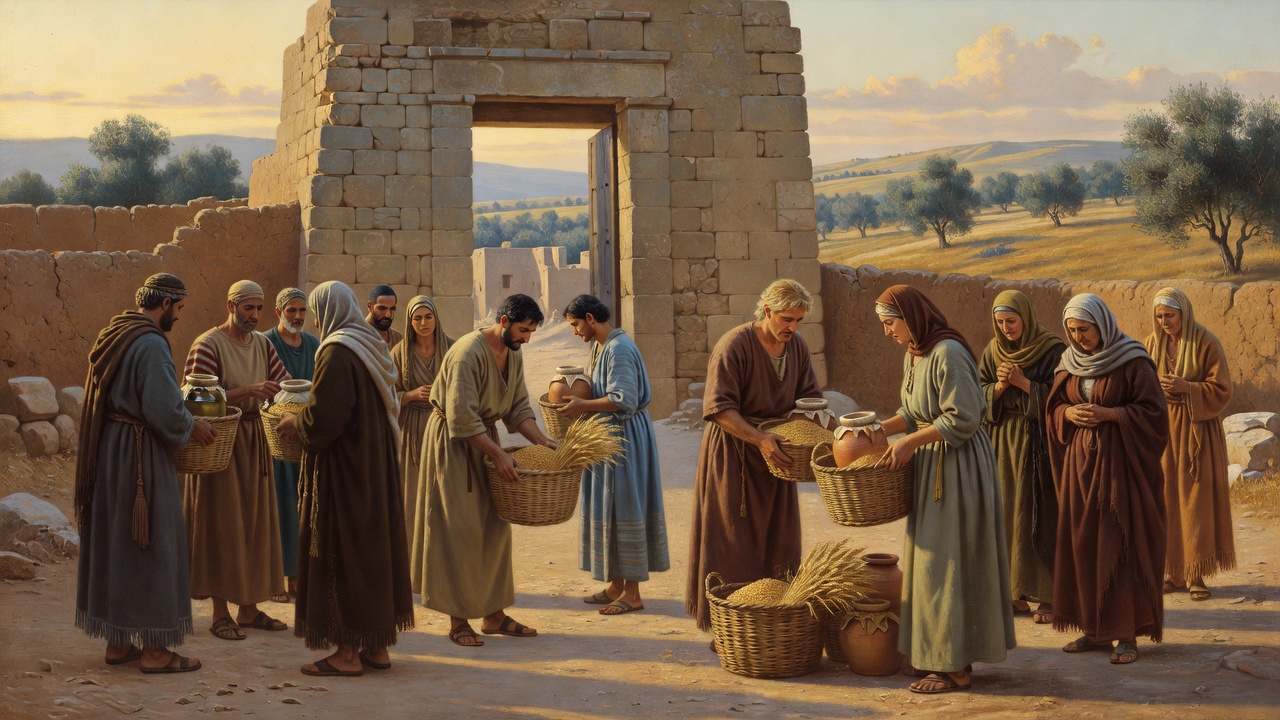
- To accommodate families who lived far from the designated sanctuary, the law allowed agricultural tithes to be converted into silver for travel. Upon arriving at the central sanctuary, worshippers could use the money to purchase festive food and drink to celebrate with their households.Sources: the Bible text itself
- Every third year, the annual tithe was gathered and stored within local towns rather than taken to the central sanctuary. This food was set aside to support community members without land inheritances, specifically Levites, resident foreigners, orphans, and widows.Sources: the Bible text itself
Notes written with AI assistance from open sources (Theographic Bible Metadata, CC BY-SA 4.0; Easton’s Bible Dictionary, public domain) and reviewed before publishing.
Credits and license for this translation
Versión Biblia Libre
The Holy Bible in Spanish, Free Bible Version
Versión Biblia Libre, Nuevo Testamento
copyright © 2018-2020 Jonathan Gallagher y Shelly Barrios de Avila
Language: Español (Spanish)
Translation by: Jonathan Gallagher y Shelly Barrios de Avila
Contributor: Gustavo Sanabria y Rebekah Põldaas
This translation is made available to you under the terms of the
Creative Commons Attribution Share-Alike license 4.0.
You have permission to share and redistribute this Bible translation in any format and to make reasonable revisions and adaptations of this translation, provided that:
You include the above copyright and source information.
If you make any changes to the text, you must indicate that you did so in a way that makes it clear that the original licensor is not necessarily endorsing your changes.
If you redistribute this text, you must distribute your contributions under the same license as the original.
Pictures included with Scriptures and other documents on this site are licensed just for use with those Scriptures and documents.
For other uses, please contact the respective copyright owners.
Note that in addition to the rules above, revising and adapting God's Word involves a great responsibility to be true to God's Word. See Revelation 22:18-19.
2026-10-02
Section headings adapted from the Berean Standard Bible (public domain); they are not part of this translation’s text.
Source: http://ebible.org/spavbl/ · eBible.org