Ruth 1
Biblica® Open Nueva Biblia Viva 2008 · Tap a verse to see its cross-references.
About this book
About Ruth
- The events are set in the days of the judges. A great famine led Elimelech, a man of the tribe of Judah and a kinsman of Boaz, to leave Bethlehem with his wife Naomi and their sons Mahlon and Chilion and settle in Moab, east of the Jordan and the Dead Sea. There Elimelech and both sons died.Sources: Elimelech · Moab · Mahlon · Chilion
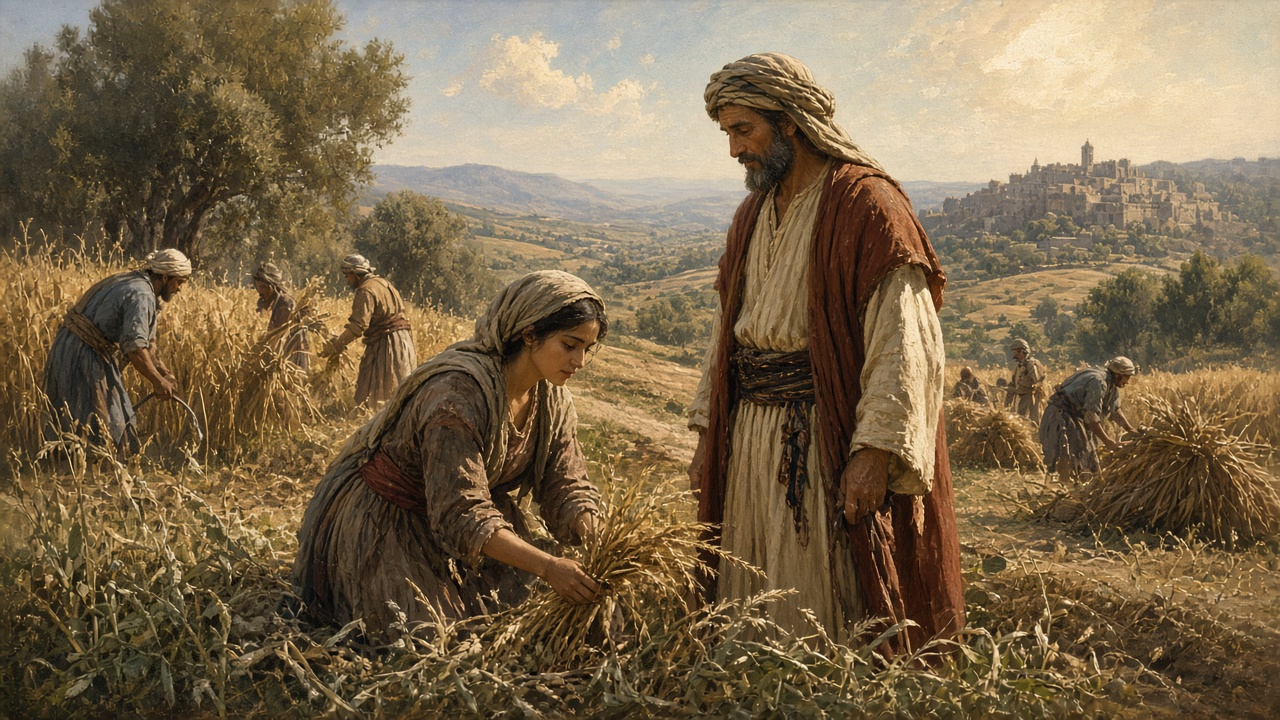
- Naomi then returned to Bethlehem with Ruth, a Moabite and the widow of Mahlon, who refused to leave her. Orpah, Chilion's widow, accompanied Naomi part of the way and then returned to Moab. In the valley east of the town, Ruth gleaned in the fields and was eventually married to Boaz, a wealthy relative.Sources: Easton: Ruth · Orpah · Bethlehem · Boaz
- Easton's Bible Dictionary (1897) says the story of the gleaner Ruth illustrates friendly relations between Boaz and his reapers, the land system, the way property was transferred, and the working of the Mosaic law for the relief of ruined families. By the levirate law, Boaz, a kinsman of Mahlon, took on the duty of marrying Ruth.Sources: Easton: Ruth · Boaz
- Ruth became the mother of Obed, the grandfather of David. The genealogy in Ruth 4:18-22 traces that line, and Matthew 1:5 includes Ruth, a Gentile, among the ancestors of Jesus. Easton also compares her with Tamar and Rahab, who likewise became ancestors of David.Sources: Easton: Ruth · Obed · Ruth
- Bethlehem, in the hill country of Judah, was originally called Ephrath; Ruth 1:2 calls it Bethlehem-Judah and its people Ephrathites. Easton's Bible Dictionary (1897) explains Ruth as meaning a friend, and Naomi as bitter or sad, a symbolic name she gave herself because of her misfortunes.Sources: Bethlehem · Ephrathah · Ruth · Naomi
Notes written with AI assistance from open sources (Theographic Bible Metadata, CC BY-SA 4.0; Easton’s Bible Dictionary, public domain) and reviewed before publishing.
Noemí y Rut
1Cuando los jueces gobernaban en Israel, un hombre llamado Elimélec, de Belén de Judá, se fue a causa del hambre que azotaba al país y se estableció en la tierra de Moab. 2Con él se fueron su esposa Noemí, y sus dos hijos Majlón y Quilión. Todos ellos efrateos.
3Estando en Moab murió Elimélec, y Noemí quedó con sus dos hijos. 4Los dos jóvenes, Quilión y Majlón, se casaron con Orfa y Rut respectivamente, que eran moabitas, y residieron allí unos diez años. Algún tiempo después ambos hombres murieron, y Noemí quedó sola, sin esposo y sin hijos. 6Decidió regresar a Israel con sus dos nueras, porque había oído decir que el Señor había nuevamente bendecido a su pueblo con muy buenas cosechas.
8Pero después de comenzado el viaje de regreso, Noemí dijo a sus dos nueras:
―¿Por qué no regresan mejor a casa de sus padres? Quizás Dios las recompense por la fidelidad que han mostrado a sus maridos y a mí. 9Tal vez él las bendiga y les conceda que tengan otro matrimonio feliz.
Y las besó. Pero ellas se pusieron a llorar.
10―No —dijeron—. Queremos ir contigo y vivir en tu pueblo.
11Pero Noemí replicó:
―Es mejor que regresen a su pueblo. Yo no voy a tener más hijos que puedan casarse con ustedes. 12No, hijas mías, regresen a casa de sus padres, porque yo soy demasiado vieja para tener marido. Y aun si ello fuera posible, y yo pudiera concebir esta noche y dar a luz hijos, 13¿esperarían ustedes a que ellos crecieran? No, por supuesto que no, queridas hijas mías. ¡No saben cuánto siento que el Señor me haya castigado de esta manera y que esto les cause dolor!
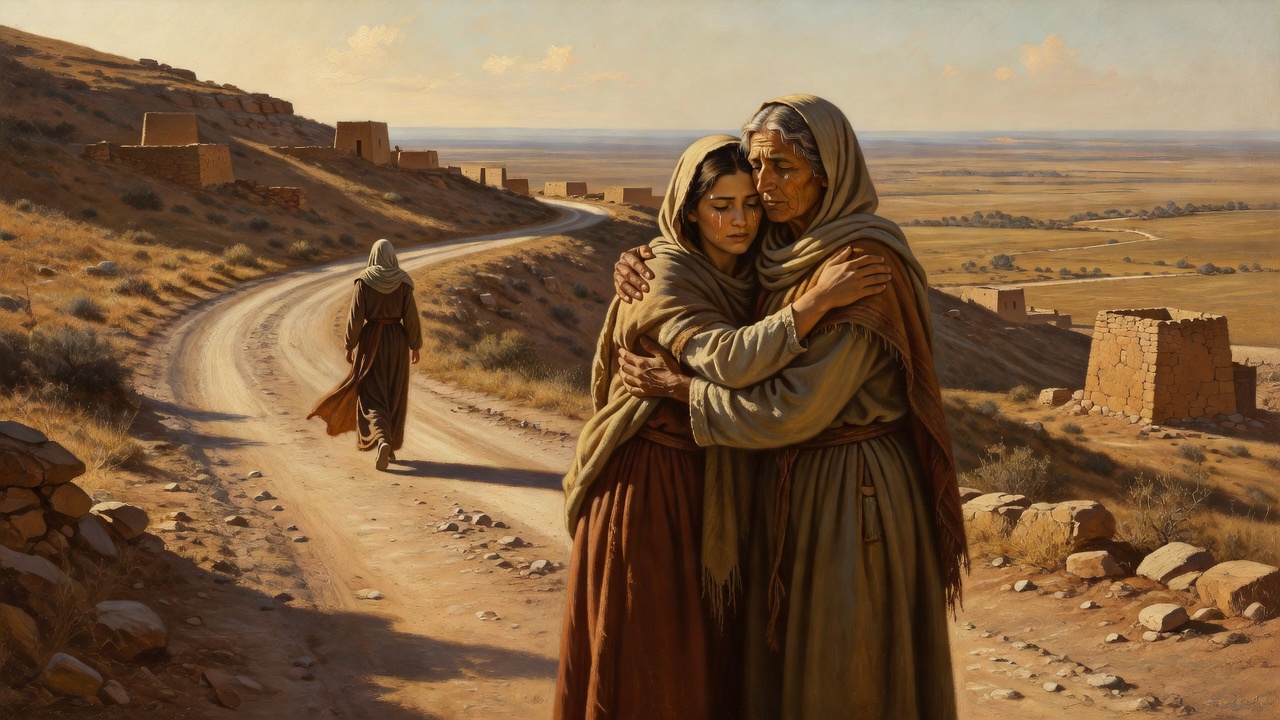
14Nuevamente se pusieron a llorar, y Orfa besó a su suegra para despedirse, y regresó a su pueblo natal. Sin embargo, Rut siguió junto a Noemí.
15―Mira —le dijo Noemí—, tu concuña ha regresado a su pueblo y a sus dioses. Tú deberías hacer lo mismo.
16Pero Rut replicó:
―No me pidas que te deje y me aparte de ti; adondequiera que tú vayas iré yo, y viviré donde tú vivas; tu pueblo será mi pueblo, y tu Dios será mi Dios. 17Quiero morir donde tú mueras, y ser sepultada allí. Y que Dios me castigue si no cumplo mi promesa. Nada nos separará, ¡ni siquiera la muerte!
18Cuando Noemí se dio cuenta de que Rut estaba decidida y que no podría persuadirla en sentido contrario, ya no intentó convencerla.
19Al llegar ambas a Belén, el pueblo se conmovió.
―¿Es realmente Noemí? —preguntaban las mujeres.
20Pero ella contestaba:
―No me llamen Noemí. Llámenme Mara (Noemí significa “dulce”; Mara significa “amarga”), porque el Todopoderoso me ha dado gran amargura. 21Salí de aquí llena, y el Señor me ha devuelto vacía. ¿Por qué habría de llamarme Noemí cuando el Señor me ha vuelto la espalda y me ha enviado tal calamidad?
22El regreso de ellas de Moab y su llegada a Belén coincidió con el tiempo de la cosecha de la cebada.
Did you know?
Naomi and Ruth Return to Bethlehem
- In the days when the judges ruled, famine forced Elimelech and his family from Bethlehem in the hill country of Judah to migrate to the land of Moab, east of the Dead Sea. After the deaths of Elimelech and her two sons, Naomi decided to return to Bethlehem when she heard that food was once again available in Judah.Sources: the Bible text itself · Bethlehem · Moab · Elimelech
- While Orpah returned to her people and gods in Moab, Ruth clung to her mother-in-law and pledged loyalty to Naomi and her God. Ruth, a Moabite woman, traveled to Bethlehem and would later become an ancestor of King David.Sources: the Bible text itself · Ruth · Orpah
- Upon arriving in Bethlehem at the beginning of the barley harvest, Naomi asked the women of the city to call her Mara, meaning bitter, because she felt the Almighty had dealt bitterly with her. She had departed full with a husband and two sons, but returned empty after their deaths.Sources: the Bible text itself · Naomi
Notes written with AI assistance from open sources (Theographic Bible Metadata, CC BY-SA 4.0; Easton’s Bible Dictionary, public domain) and reviewed before publishing.
Places in this chapter
- Bethlehem · 31.704, 35.208 · verses 1, 2, 19, 22
- Moab · Today: Moab 1 · 31.181, 35.701 · verses 1, 2, 4, 6, 22
Only places identified with high confidence are shown (90% or more according to the scholarly sources compiled by OpenBible). Period map: DARE (Digital Atlas of the Roman Empire), CC BY 4.0; modern map: © OpenStreetMap contributors; places: OpenBible.info (CC BY 4.0).
Credits and license for this translation
Biblica® Open Nueva Biblia Viva 2008
The Holy Bible in Spanish: Biblica® Open Nueva Biblia Viva 2008 (Bible)
copyright © 2008 Biblica, Inc.
Language: Español
Contributor: Biblica, Inc.
Biblica® Open Nueva Biblia Viva™
Copyright © 2006, 2008 by Biblica, Inc.
“Biblica” es una marca registrada en la oficina de Patentes y Marcas de los Estados Unidos por Biblica, Inc. Usado con permiso.
“Biblica” is a trademark registered in the United States Patent and Trademark Office by Biblica, Inc. Used with permission.
Creative Commons license
This work is made available under the Creative Commons Attribution-ShareAlike 4.0 International License (CC BY-SA). To view a copy of this license, visit https://creativecommons.org/licenses/by-sa/4.0 or send a letter to Creative Commons, PO Box 1866, Mountain View, CA 94042, USA.
You have permission to copy and distribute this Work, as long as you do not change it and you keep the title as it is. Changing or translating this Work will create a derivative work. When you publish this derivative work, you must list what changes you have made where people can see them, such as on a website. You must also show where the original Work is from: “The original Work by its copyright holders is available for free at www.biblica.com and open.bible .”
Notice of copyright must appear on the title or copyright page of the work as follows:
Biblica® Open Nueva Biblia Viva™
Copyright © 2006, 2008 by Biblica, Inc.
“Biblica” es una marca registrada en la oficina de Patentes y Marcas de los Estados Unidos por Biblica, Inc. Usado con permiso.
“Biblica” is a trademark registered in the United States Patent and Trademark Office by Biblica, Inc. Used with permission.
You must also make your derivative work available under the same license (CC BY-SA).
If you would like to notify Biblica, Inc. regarding your translation of this work, please contact us at https://open.bible/#feedback .
This translation is made available to you under the terms of the
Creative Commons Attribution Share-Alike license 4.0.
You have permission to share and redistribute this Bible translation in any format and to make reasonable revisions and adaptations of this translation, provided that:
You include the above copyright and source information.
If you make any changes to the text, you must indicate that you did so in a way that makes it clear that the original licensor is not necessarily endorsing your changes.
If you redistribute this text, you must distribute your contributions under the same license as the original.
Pictures included with Scriptures and other documents on this site are licensed just for use with those Scriptures and documents.
For other uses, please contact the respective copyright owners.
Note that in addition to the rules above, revising and adapting God's Word involves a great responsibility to be true to God's Word. See Revelation 22:18-19.
2025-05-21
Source: http://ebible.org/spaonbv/ · eBible.org