Romans 9
Biblica® Open Nueva Biblia Viva 2008 · Tap a verse to see its cross-references.
La elección soberana de Dios
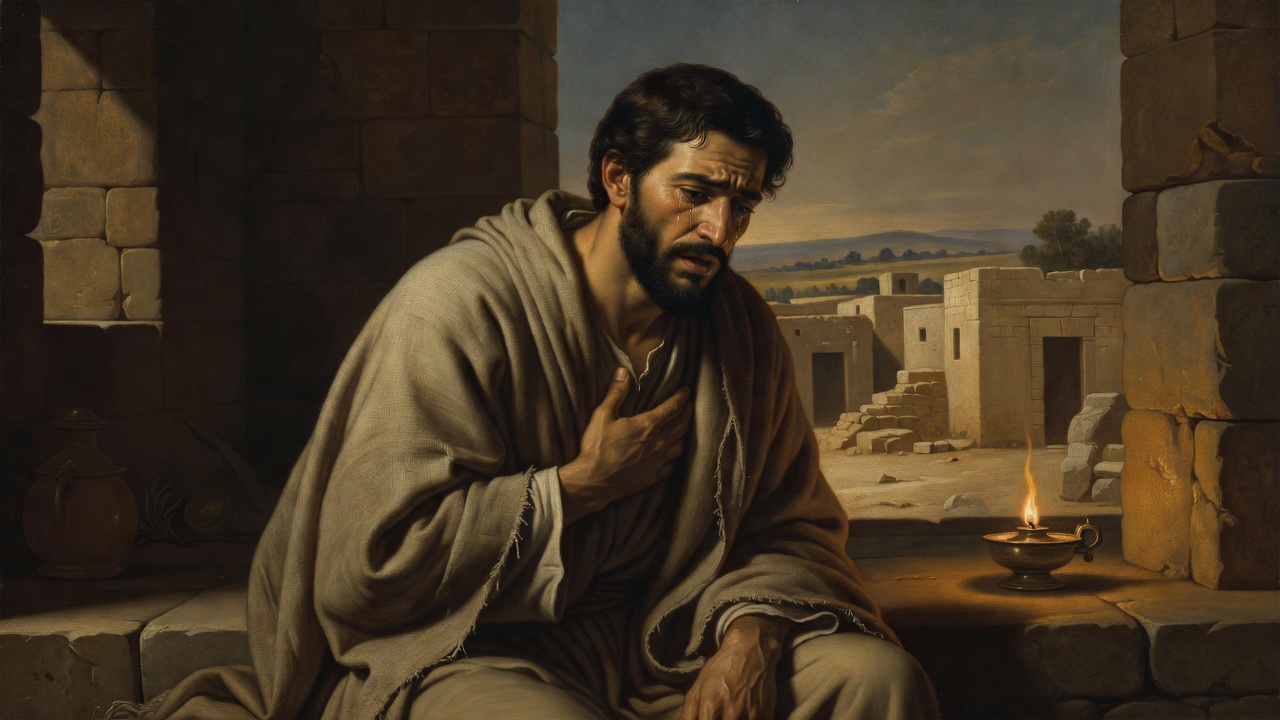
1Les digo la verdad en Cristo; no miento. Mi conciencia, guiada por el Espíritu Santo, me confirma que esto es verdad. 2Me duele el corazón y siento día y noche un gran dolor. 3Estaría dispuesto a condenarme eternamente lejos de Cristo, si con ello mis hermanos, los de mi propia raza, se salvaran.
4El pueblo de Israel fue adoptado como hijo de Dios. El Señor le mostró su gloria divina; le dio los pactos, la ley, el culto y las promesas. 5Los israelitas son descendientes de los patriarcas, y de ellos, según la naturaleza humana, nació Cristo, que es Dios sobre todas las cosas. ¡Bendito sea para siempre! Amén.
6Entonces, ¿perdieron valor las promesas de Dios? No.
Lo que pasa es que no todos los que descienden de Israel son el verdadero pueblo de Israel. 7El simple hecho de descender de Abraham no los hace verdaderos hijos de Abraham. Por eso las Escrituras dicen que las promesas se aplican sólo a un hijo de Abraham: Isaac.
8Esto quiere decir que no todos los hijos de Abraham son hijos de Dios. Solo se les considera verdaderos hijos, a los que lo son en cumplimiento de la promesa de Dios. 9Porque lo que el Señor prometió fue esto: «El año que viene volveré y Sara tendrá un hijo».
10Lo mismo sucedió con los hijos de Rebeca, que tuvieron un mismo padre, Isaac nuestro antepasado. 11Cuando ella estaba a punto de dar a luz mellizos, y antes de que estos hicieran algo bueno o malo, Dios le dijo: «Esaú, el mayor, servirá a Jacob, el menor». Como dicen las Escrituras: «Amé a Jacob y aborrecí a Esaú». Así confirmó Dios su propósito de elegir a quien él quiere llamar, sin tomar en cuenta lo que la persona haya hecho.
14Ante todo esto, ¿qué podemos decir? ¿Es Dios injusto? ¡Claro que no! 15Es un hecho que Dios le dijo a Moisés:
«Tendré misericordia de quien yo quiera, y de quien yo quiera me apiadaré».
16Por eso, las bendiciones de Dios no las obtienen quienes las quieran, ni quienes se esfuercen por obtenerlas. Dependen de que Dios tenga misericordia de ellos, 17porque la Escritura le dice esto al faraón: «Te hice rey precisamente para mostrar en ti mi poder, y para que mi nombre sea proclamado en el mundo entero».
18Como ven, Dios se apiada de quien él quiere, y endurece a quien él quiere endurecer.
19Entonces, me dirás: «¿Por qué nos condena Dios si nadie puede oponerse a lo que él quiere hacer?». 20Y yo respondo: «¿Quién eres tú para pedirle cuentas a Dios? ¿Podrá un objeto decirle a quien lo hizo: “¿Por qué me has hecho así?”». 21El que hace vasos de barro, ¿no tiene acaso el derecho de hacer con el mismo barro una vasija para usos especiales y otra que sirva para uso común?
22¿Acaso no tiene Dios el mismo derecho de desatar su ira y su poder contra los que merecían su castigo y estaban preparados para destrucción, con los cuales ya había sido muy paciente? 23Él también tiene derecho de llamar a personas como nosotros, judíos o gentiles, y demostrar así su gran amor y poder para salvarnos. Desde un principio tuvo compasión de nosotros y nos preparó para su gloria.
25¿Recuerdan lo que dice la profecía de Oseas?
«Llamaré pueblo mío al que no era mi pueblo, y a un pueblo que yo no amaba le mostraré mi amor».
26Y añade que los paganos, a los cuales había dicho: «No eres mi pueblo», serían llamados «hijos del Dios viviente».
27El profeta Isaías dijo esto tocante a los israelitas:
«Aunque sean tan numerosos como la arena del mar, sólo un pequeño grupo se salvará, 28porque el Señor ejecutará su sentencia sobre la tierra plenamente y sin tardar».
29Y añade en otro lugar:
«Si no fuera porque el Señor Todopoderoso nos dejó descendientes, ahora mismo seríamos como las ciudades de Sodoma y Gomorra».
Incredulidad de Israel
30En conclusión, ¿qué más podemos decir? Pues que a los gentiles que no buscaban que Dios los aceptara, Dios los hizo justos porque creyeron en él. 31Pero Israel, que con tanto ardor trató de guardar la ley para quedar bien con Dios, nunca lo logró. 32¿Y por qué no? Porque los israelitas trataron de salvarse haciendo buenas obras, como si eso fuera posible, y no confiando en Dios. Por eso, dieron contra la gran «piedra de tropiezo».
33Así está escrito:
«He puesto en Sion una piedra y muchos tropezarán con ella.
Mas los que crean en ella jamás se arrepentirán de haberlo hecho».
Did you know?
Israel and the Children of the Promise
- These verses argue that God's word has not failed: not all who are descended from Israel are Israel, and not all of Abraham's descendants are his children. Isaac was Abraham's only son by Sarah, and the promise quoted here follows that line: offspring would be reckoned through Isaac, and at the appointed time Sarah would have a son. The name Sarah, meaning princess, was given when it was announced that she would be the mother of the promised child.Sources: the Bible text itself · Isaac · Sarah
- The argument then turns to Rebecca's twins, conceived by one man, Isaac. Esau, the first-born, was also called Edom, "red," from the red lentil pottage for which he sold his birthright; Jacob, the younger, bears a name meaning one who follows on another's heels, or supplanter. Before the twins were born or had done anything good or bad, Rebecca was told that the older would serve the younger, and it is written, "Jacob I loved, but Esau I hated."Sources: the Bible text itself · Esau (Edom) · Jacob (Israel)
- Isaiah, the son of Amoz, is quoted about a remnant: though the Israelites were like the sand of the sea, only the remnant would be saved, and without descendants left by the Lord of Hosts they would have become like Sodom and resembled Gomorrah. Sodom, a city in the vale of Siddim, was destroyed by fire from heaven, a destruction this chapter recalls, and no trace of it or of the other cities of the plain has been found. The chapter ends with a stumbling stone laid in Zion, the south-eastern hill of Jerusalem, which David took from the Jebusites, where he built a citadel and a palace, and which became the city of David.Sources: the Bible text itself · Isaiah · Sodom · Zion
Notes written with AI assistance from open sources (Theographic Bible Metadata, CC BY-SA 4.0; Easton’s Bible Dictionary, public domain) and reviewed before publishing.
Places in this chapter
- Zion · Today: Jerusalem · 31.777, 35.234 · verse 33
Only places identified with high confidence are shown (90% or more according to the scholarly sources compiled by OpenBible). Period map: DARE (Digital Atlas of the Roman Empire), CC BY 4.0; modern map: © OpenStreetMap contributors; places: OpenBible.info (CC BY 4.0).
Credits and license for this translation
Biblica® Open Nueva Biblia Viva 2008
The Holy Bible in Spanish: Biblica® Open Nueva Biblia Viva 2008 (Bible)
copyright © 2008 Biblica, Inc.
Language: Español
Contributor: Biblica, Inc.
Biblica® Open Nueva Biblia Viva™
Copyright © 2006, 2008 by Biblica, Inc.
“Biblica” es una marca registrada en la oficina de Patentes y Marcas de los Estados Unidos por Biblica, Inc. Usado con permiso.
“Biblica” is a trademark registered in the United States Patent and Trademark Office by Biblica, Inc. Used with permission.
Creative Commons license
This work is made available under the Creative Commons Attribution-ShareAlike 4.0 International License (CC BY-SA). To view a copy of this license, visit https://creativecommons.org/licenses/by-sa/4.0 or send a letter to Creative Commons, PO Box 1866, Mountain View, CA 94042, USA.
You have permission to copy and distribute this Work, as long as you do not change it and you keep the title as it is. Changing or translating this Work will create a derivative work. When you publish this derivative work, you must list what changes you have made where people can see them, such as on a website. You must also show where the original Work is from: “The original Work by its copyright holders is available for free at www.biblica.com and open.bible .”
Notice of copyright must appear on the title or copyright page of the work as follows:
Biblica® Open Nueva Biblia Viva™
Copyright © 2006, 2008 by Biblica, Inc.
“Biblica” es una marca registrada en la oficina de Patentes y Marcas de los Estados Unidos por Biblica, Inc. Usado con permiso.
“Biblica” is a trademark registered in the United States Patent and Trademark Office by Biblica, Inc. Used with permission.
You must also make your derivative work available under the same license (CC BY-SA).
If you would like to notify Biblica, Inc. regarding your translation of this work, please contact us at https://open.bible/#feedback .
This translation is made available to you under the terms of the
Creative Commons Attribution Share-Alike license 4.0.
You have permission to share and redistribute this Bible translation in any format and to make reasonable revisions and adaptations of this translation, provided that:
You include the above copyright and source information.
If you make any changes to the text, you must indicate that you did so in a way that makes it clear that the original licensor is not necessarily endorsing your changes.
If you redistribute this text, you must distribute your contributions under the same license as the original.
Pictures included with Scriptures and other documents on this site are licensed just for use with those Scriptures and documents.
For other uses, please contact the respective copyright owners.
Note that in addition to the rules above, revising and adapting God's Word involves a great responsibility to be true to God's Word. See Revelation 22:18-19.
2025-05-21
Source: http://ebible.org/spaonbv/ · eBible.org