Psalms 1
Biblica® Open Nueva Biblia Viva 2008 · Tap a verse to see its cross-references.
About this book
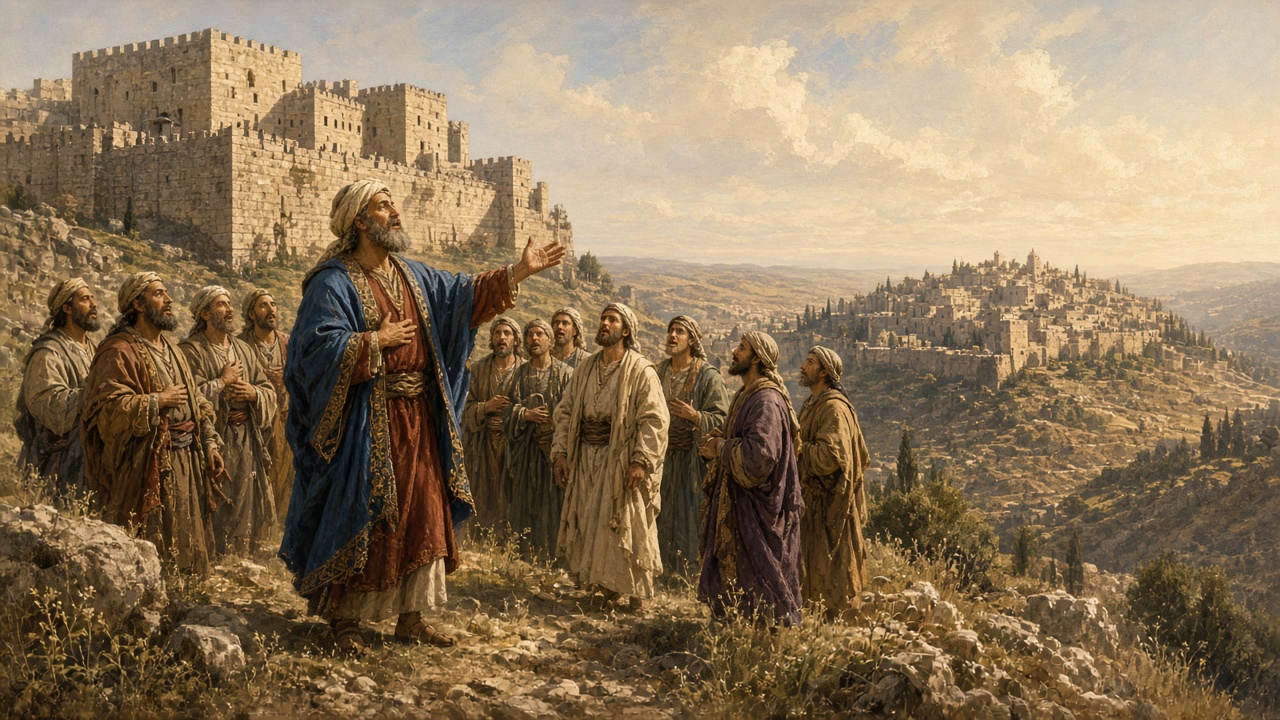
About Psalms
- Easton's Bible Dictionary (1897) presents the Psalms as the work of various authors, owed especially to David and his contemporaries, while poets of later generations added further songs. Easton remarks that, for this reason, the collection more completely reflects every phase of human emotion and circumstance than it otherwise could. The titles ascribe 73 psalms to David; Easton also notes that Peter and John (Acts 4:25) attribute the anonymous Psalm 2 to him, and that about two-thirds of the collection have been ascribed to David.Sources: Easton: Psalms
- Easton's Bible Dictionary (1897) holds that no psalm can be proved later than the time of Ezra and Nehemiah, so the collection spans about a thousand years. It records the presumption that the five smaller collections were made at times of high religious life: the first near the close of David's life, the second in the days of Solomon, the third by the singers of Jehoshaphat, the fourth by the men of Hezekiah, and the fifth in the days of Ezra.Sources: Easton: Psalms
- Like the Pentateuch, the Psalter is divided into five books, each closing with a doxology or benediction: Psalms 1-41, 42-72, 73-89, 90-106, and the remaining 44. Easton reports many ascriptions to David, to Solomon in Psalms 72 and 127, to Moses in Psalm 90, to Heman the Ezrahite in Psalm 88, and to Ethan the Ezrahite in Psalm 89, while many other psalms are anonymous.Sources: Easton: Psalms
- Some titles connect psalms with singers of worship. Psalms 50 and 73-83 are addressed to Asaph, a Levite and one of the leaders of David's choir, skilled in music and called a seer; the Asaph entry says the sons of Asaph were his descendants or, more probably, a class of poets or singers who recognized him as their master. The sons of Korah, a leading part of the Kohathite singers, were entrusted with arranging and singing Psalms 42, 44-49, 84, 85, 87, and 88, and Psalms 39, 62, and 77 are addressed to Jeduthun, to be sung after his manner or in his choir.Sources: Easton: Psalms · Asaph (Levite)
- Psalm 136 is generally called the great hallel, though the Talmud also includes Psalms 120-135. Psalms 113-118 form the hallel recited at the three great feasts, at the new moon, and on the eight days of the feast of dedication. Easton counts 116 direct quotations from the Psalter in the New Testament, and notes that in Luke 24:44 the word psalms means the Hagiographa, the holy writings, one of the sections into which the Jews divided the Old Testament.Sources: Easton: Psalms
Notes written with AI assistance from open sources (Theographic Bible Metadata, CC BY-SA 4.0; Easton’s Bible Dictionary, public domain) and reviewed before publishing.
Los dos caminos
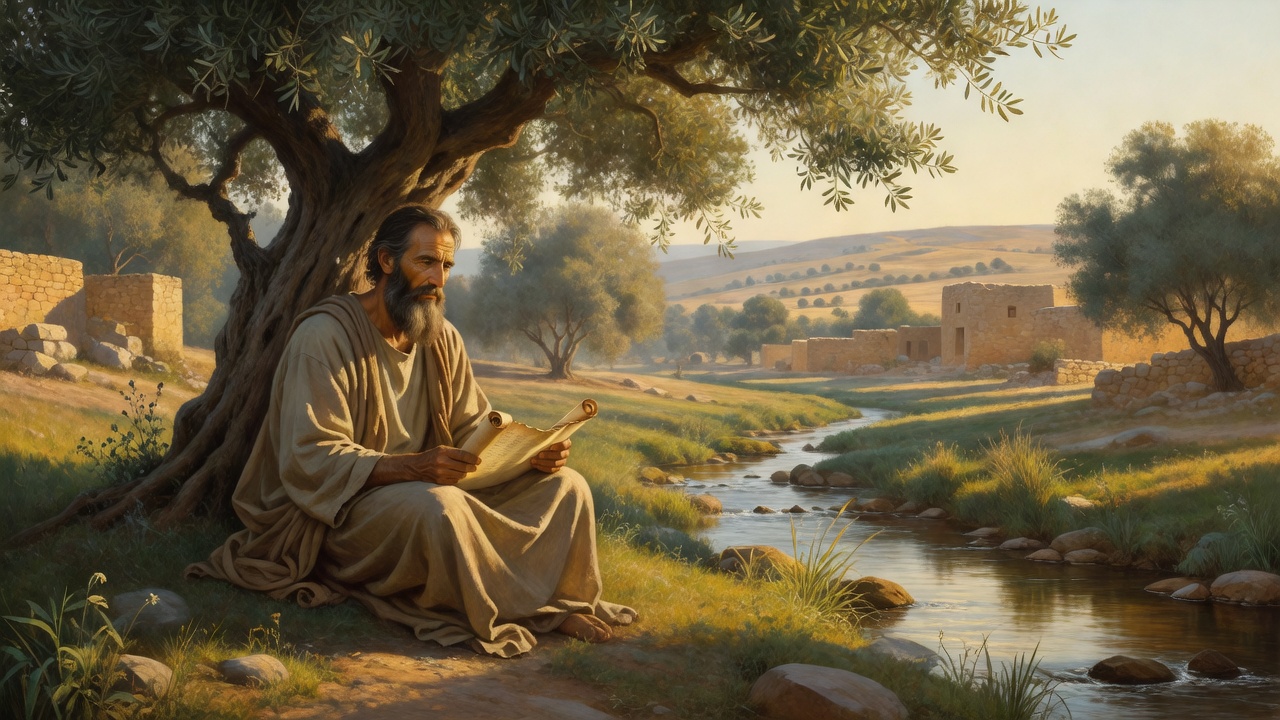
1Dichosos todos aquellos que no siguen el consejo de los malvados, ni se detienen en la senda de los pecadores, ni cultivan la amistad de los blasfemos, 2sino que se deleitan en la ley del Señor, la meditan día y noche. 3Son como árboles junto a las riberas de un río, que no dejan de dar delicioso fruto cada estación. Sus hojas nunca se marchitan y todo lo que hacen prospera.
4¡Qué distinto el caso de los malvados! Son como la paja que el viento arrastra. 5Por eso, los malvados no se sostendrán en el juicio, ni serán contados entre los buenos.
6Porque el Señor protege los pasos de los justos; pero los pasos de los impíos conducen a la perdición.
Did you know?
The Two Paths
- Psalm 1 contrasts two ways of living through vivid agricultural imagery: the righteous person is compared to a fruitful tree nourished beside streams of water, while the wicked are likened to light chaff easily blown away by the wind.Sources: the Bible text itself
- The opening verses describe a clear progression away from evil—refusing to walk in the counsel of the wicked, stand in the path of sinners, or sit among mockers—and turning instead to constant meditation on the Law of the LORD.Sources: the Bible text itself
Notes written with AI assistance from open sources (Theographic Bible Metadata, CC BY-SA 4.0; Easton’s Bible Dictionary, public domain) and reviewed before publishing.
Credits and license for this translation
Biblica® Open Nueva Biblia Viva 2008
The Holy Bible in Spanish: Biblica® Open Nueva Biblia Viva 2008 (Bible)
copyright © 2008 Biblica, Inc.
Language: Español
Contributor: Biblica, Inc.
Biblica® Open Nueva Biblia Viva™
Copyright © 2006, 2008 by Biblica, Inc.
“Biblica” es una marca registrada en la oficina de Patentes y Marcas de los Estados Unidos por Biblica, Inc. Usado con permiso.
“Biblica” is a trademark registered in the United States Patent and Trademark Office by Biblica, Inc. Used with permission.
Creative Commons license
This work is made available under the Creative Commons Attribution-ShareAlike 4.0 International License (CC BY-SA). To view a copy of this license, visit https://creativecommons.org/licenses/by-sa/4.0 or send a letter to Creative Commons, PO Box 1866, Mountain View, CA 94042, USA.
You have permission to copy and distribute this Work, as long as you do not change it and you keep the title as it is. Changing or translating this Work will create a derivative work. When you publish this derivative work, you must list what changes you have made where people can see them, such as on a website. You must also show where the original Work is from: “The original Work by its copyright holders is available for free at www.biblica.com and open.bible .”
Notice of copyright must appear on the title or copyright page of the work as follows:
Biblica® Open Nueva Biblia Viva™
Copyright © 2006, 2008 by Biblica, Inc.
“Biblica” es una marca registrada en la oficina de Patentes y Marcas de los Estados Unidos por Biblica, Inc. Usado con permiso.
“Biblica” is a trademark registered in the United States Patent and Trademark Office by Biblica, Inc. Used with permission.
You must also make your derivative work available under the same license (CC BY-SA).
If you would like to notify Biblica, Inc. regarding your translation of this work, please contact us at https://open.bible/#feedback .
This translation is made available to you under the terms of the
Creative Commons Attribution Share-Alike license 4.0.
You have permission to share and redistribute this Bible translation in any format and to make reasonable revisions and adaptations of this translation, provided that:
You include the above copyright and source information.
If you make any changes to the text, you must indicate that you did so in a way that makes it clear that the original licensor is not necessarily endorsing your changes.
If you redistribute this text, you must distribute your contributions under the same license as the original.
Pictures included with Scriptures and other documents on this site are licensed just for use with those Scriptures and documents.
For other uses, please contact the respective copyright owners.
Note that in addition to the rules above, revising and adapting God's Word involves a great responsibility to be true to God's Word. See Revelation 22:18-19.
2025-05-21
Section headings adapted from the Berean Standard Bible (public domain); they are not part of this translation’s text.
Source: http://ebible.org/spaonbv/ · eBible.org