Matthew 22
Biblica® Open Nueva Biblia Viva 2008 · Tap a verse to see its cross-references.
Parábola del banquete de bodas
1Jesús les relató otras parábolas que describían el reino de los cielos:
2«El reino de los cielos puede ilustrarse con el cuento de un rey que preparó un gran banquete en celebración de la boda de su hijo. 3Envió muchísimas invitaciones, y cuando el banquete estuvo listo, mandó un mensajero a notificar a los convidados que ya podían ir. ¡Pero nadie fue! 4Envió a otros siervos a decirles que fueran pronto, que no se demoraran, que ya los asados estaban listos. 5Algunos de los invitados se rieron de los mensajeros y se fueron a sus labranzas o negocios; 6y los otros tomaron a los mensajeros y, tras golpearlos y afrentarlos, los mataron. 7El rey, enojado, ordenó al ejército que acabara con aquellos asesinos y quemara la ciudad. 8Entonces dijo: “El banquete está listo, pero los que estaban invitados han mostrado que no eran dignos de la invitación. 9Por eso, vayan ahora por las esquinas e inviten a todo el mundo”.
10»Los siervos obedecieron y trajeron a cuantos hallaron, lo mismo malos que buenos. Las mesas se llenaron de invitados. 11Pero cuando el rey fue a ver a los convidados, vio que uno no traía puesto el vestido de boda que había comprado para los invitados. 12“Amigo mío”, le dijo, “¿cómo entraste sin el vestido de boda?”. Como no le respondió, 13el rey ordenó: “Átenlo de pies y manos y échenlo en las tinieblas de afuera. ¡Allí será el llorar y el crujir de dientes! 14Porque muchos son los llamados, pero pocos los escogidos”».
El pago del impuesto al César
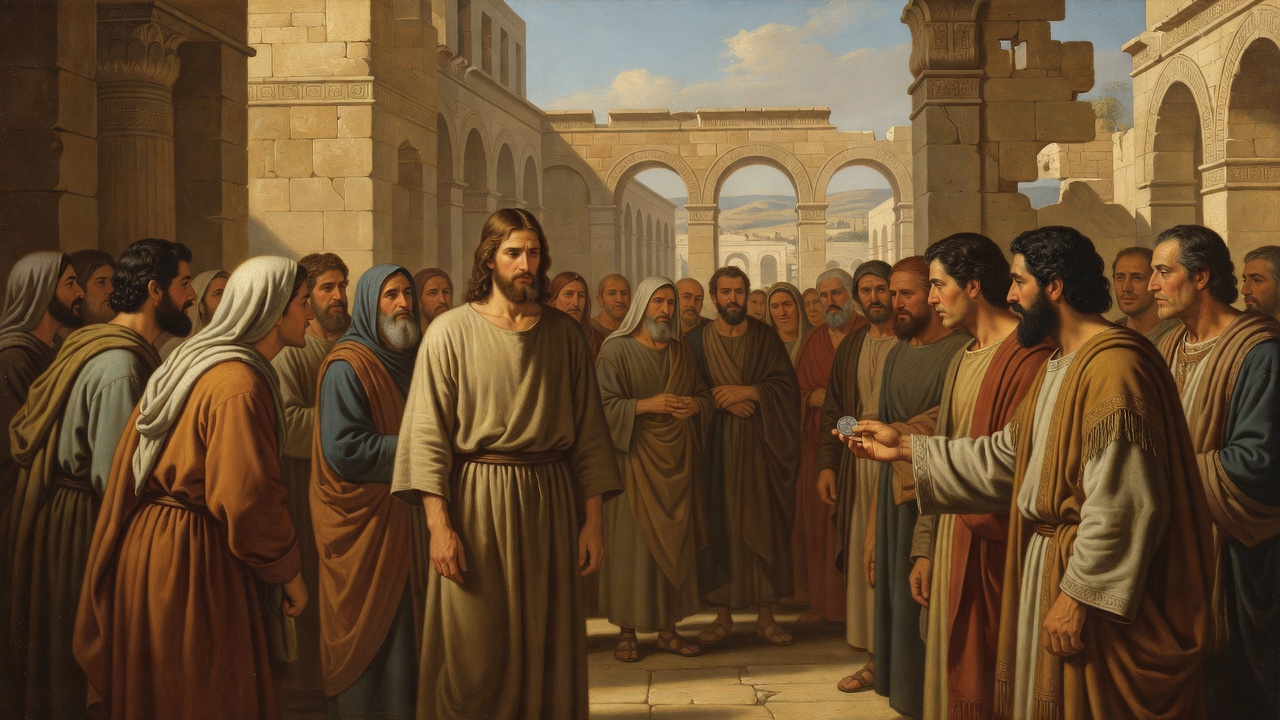
15Los fariseos se reunieron para tramar la manera de enredar a Jesús en sus propias palabras y hacerle decir algo que lo comprometiera. 16Decidieron enviar a algunos de sus hombres, juntamente con algunos herodianos, a formularle algunas preguntas.
―Señor —le dijeron—, sabemos que amas la verdad y que la enseñas sin miedo a las consecuencias. 17Dinos, ¿debe uno pagar impuestos al gobierno romano?
18Jesús, que sabía lo que se traían entre manos, les dijo:
―¡Hipócritas! ¿A quién se creen que están tratando de engañar con preguntas como esas? Enséñenme una moneda.
Y ellos le mostraron una moneda romana de plata.
20―¿De quién dice ahí que es esa imagen? —les preguntó.
21―Del César —respondieron.
―Pues denle al César lo que es del César y a Dios lo que es de Dios.
22Sorprendidos y avergonzados, se fueron.
El matrimonio en la resurrección
23Aquel mismo día, algunos de los saduceos (que eran los que no creían en la resurrección de los muertos), le preguntaron:
24―Señor, Moisés dijo que si un hombre muere sin tener hijos, uno de sus hermanos debe casarse con la viuda para que ella tenga hijos que reciban la herencia familiar del muerto. 25Pues bien, hubo una vez una familia de siete hermanos. El primero de estos se casó y murió sin tener hijos, por lo cual la viuda se casó con el segundo hermano. Aquel hermano también murió sin tener hijos, y la esposa se casó con el siguiente hermano. El caso se fue repitiendo de manera tal que aquella señora fue esposa de los siete hermanos. 27Pero a la mujer le llegó también la hora de morir. Dinos, ¿de cuál de los hermanos será esposa cuando resuciten? ¡En vida lo fue de los siete!
29―Pues ustedes se equivocan por ignorar las Escrituras y el poder de Dios —les dijo Jesús—. 30En la resurrección no habrá matrimonios, porque todos serán como los ángeles del cielo. 31Y en cuanto a la resurrección de los muertos, ¿no se han fijado que las Escrituras dicen: 32“Yo soy el Dios de Abraham, de Isaac y de Jacob”? Dios no es Dios de muertos, sino de vivos.
33El gentío se quedó boquiabierto ante aquella respuesta.
El mandamiento más importante
34Los fariseos no se dejaron amedrentar por la derrota de los saduceos 35y se les ocurrió una nueva idea. Uno de ellos, abogado, preguntó a Jesús:
36―Señor, ¿cuál es el mandamiento más importante de la ley de Moisés?
37Jesús respondió:
―“Amarás al Señor tu Dios con todo tu corazón, con toda tu alma y con toda tu mente”. 38Este es el primero y el más importante de los mandamientos. 39El segundo es similar: “Amarás a tu prójimo con el mismo amor con que te amas a ti mismo”. 40Los demás mandamientos y demandas de los profetas se resumen en estos dos mandamientos que he mencionado. El que los cumpla estará cumpliendo todos los demás.
¿De quién es hijo el Cristo?
41Aprovechando la ocasión de estar rodeado de fariseos, Jesús les preguntó:
42―¿Qué opinan ustedes del Mesías? ¿De quién es hijo?
―De David —le respondieron.
43―Entonces, ¿por qué David, inspirado por el Espíritu Santo, lo llama “Señor”? Porque fue David quien afirmó:
44»“Dijo el Señor a mi Señor: Siéntate a mi derecha hasta que haya puesto a tus enemigos bajo tus pies”.
45»¿Creen ustedes que David habría llamado “Señor” a su hijo?»
46―No —le respondieron—. Y desde entonces nadie se atrevió a preguntarle nada.
Did you know?
A Banquet and a Day of Questions
- The challenges in this chapter all fall on one day: Pharisees and Herodians ask whether it is lawful to pay taxes to Caesar, Sadducees who say there is no resurrection tell of seven brothers and one widow, and an expert in the law asks which commandment is greatest. A listing of the episode calls it Debates in the Temple and assigns it a length of one day; the narrative adds that from that day on no one dared to question Jesus further.Sources: the Bible text itself · Debates in the Temple
- Answering the Sadducees, Jesus cites the words “I am the God of Abraham, the God of Isaac, and the God of Jacob” and says that God is not the God of the dead but of the living. A Bible dictionary calls Abraham, son of Terah, father of a multitude; describes Isaac as the only son of Abraham by Sarah and the longest-lived of the three patriarchs; and identifies Jacob, also called Israel, as the younger of the twin sons of Isaac and Rebekah.Sources: the Bible text itself · Abraham · Isaac · Jacob (Israel)
- Asked whose son the Christ is, the Pharisees answer that he is David’s. A dictionary entry glosses David as Beloved and identifies him as the eighth and youngest son of Jesse, a citizen of Bethlehem. Jesus then asks how David, speaking in the Spirit, can call the Christ Lord, and no one is able to answer.Sources: the Bible text itself · David
Notes written with AI assistance from open sources (Theographic Bible Metadata, CC BY-SA 4.0; Easton’s Bible Dictionary, public domain) and reviewed before publishing.
Credits and license for this translation
Biblica® Open Nueva Biblia Viva 2008
The Holy Bible in Spanish: Biblica® Open Nueva Biblia Viva 2008 (Bible)
copyright © 2008 Biblica, Inc.
Language: Español
Contributor: Biblica, Inc.
Biblica® Open Nueva Biblia Viva™
Copyright © 2006, 2008 by Biblica, Inc.
“Biblica” es una marca registrada en la oficina de Patentes y Marcas de los Estados Unidos por Biblica, Inc. Usado con permiso.
“Biblica” is a trademark registered in the United States Patent and Trademark Office by Biblica, Inc. Used with permission.
Creative Commons license
This work is made available under the Creative Commons Attribution-ShareAlike 4.0 International License (CC BY-SA). To view a copy of this license, visit https://creativecommons.org/licenses/by-sa/4.0 or send a letter to Creative Commons, PO Box 1866, Mountain View, CA 94042, USA.
You have permission to copy and distribute this Work, as long as you do not change it and you keep the title as it is. Changing or translating this Work will create a derivative work. When you publish this derivative work, you must list what changes you have made where people can see them, such as on a website. You must also show where the original Work is from: “The original Work by its copyright holders is available for free at www.biblica.com and open.bible .”
Notice of copyright must appear on the title or copyright page of the work as follows:
Biblica® Open Nueva Biblia Viva™
Copyright © 2006, 2008 by Biblica, Inc.
“Biblica” es una marca registrada en la oficina de Patentes y Marcas de los Estados Unidos por Biblica, Inc. Usado con permiso.
“Biblica” is a trademark registered in the United States Patent and Trademark Office by Biblica, Inc. Used with permission.
You must also make your derivative work available under the same license (CC BY-SA).
If you would like to notify Biblica, Inc. regarding your translation of this work, please contact us at https://open.bible/#feedback .
This translation is made available to you under the terms of the
Creative Commons Attribution Share-Alike license 4.0.
You have permission to share and redistribute this Bible translation in any format and to make reasonable revisions and adaptations of this translation, provided that:
You include the above copyright and source information.
If you make any changes to the text, you must indicate that you did so in a way that makes it clear that the original licensor is not necessarily endorsing your changes.
If you redistribute this text, you must distribute your contributions under the same license as the original.
Pictures included with Scriptures and other documents on this site are licensed just for use with those Scriptures and documents.
For other uses, please contact the respective copyright owners.
Note that in addition to the rules above, revising and adapting God's Word involves a great responsibility to be true to God's Word. See Revelation 22:18-19.
2025-05-21
Source: http://ebible.org/spaonbv/ · eBible.org